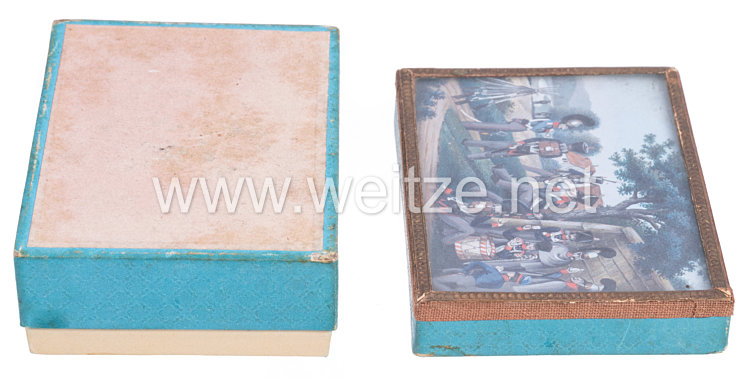
Prussia - Patriotic Box from the Period Shortly After the Wars of Liberation
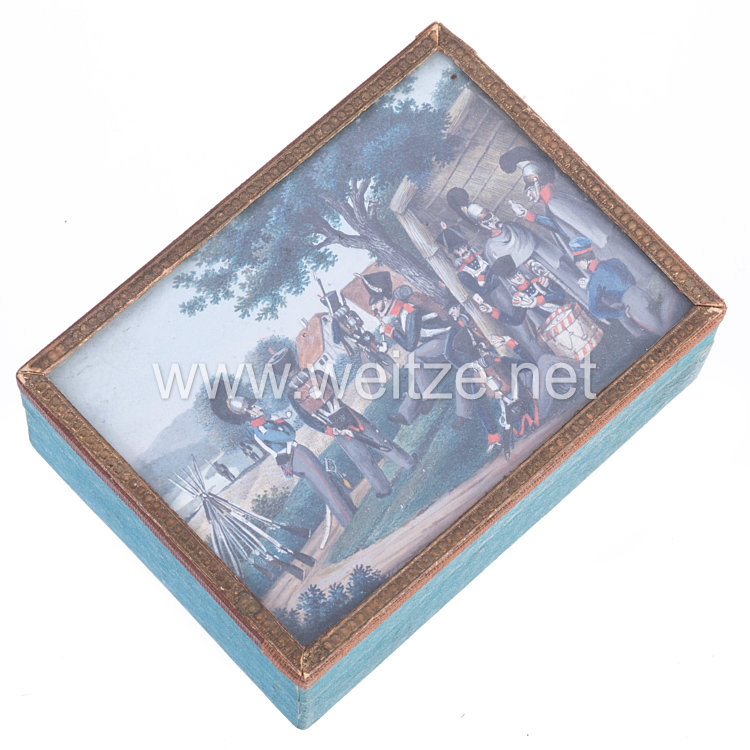
This small patriotic casket from around 1820/30 represents a fascinating testament to the post-Napoleonic era in Prussia. Following the victorious Wars of Liberation (1813-1815) against Napoleonic rule, the Kingdom of Prussia experienced an unprecedented wave of patriotic enthusiasm that manifested itself in numerous commemorative pieces and devotional objects.
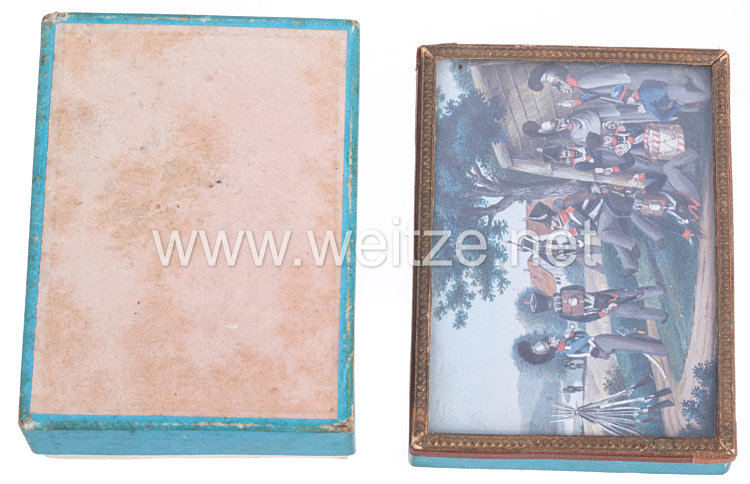
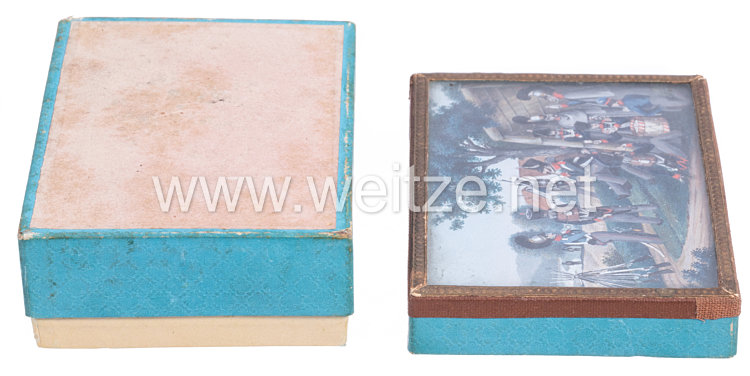
The casket is made of hard cardboard and covered with color-printed paper – a typical manufacturing technique of the first half of the 19th century. Particularly noteworthy is the print on the lid, protected under glass, depicting a camp scene from the Wars of Liberation. The soldiers shown wear the blue small uniform that was introduced for the Prussian army in 1813.
The uniform reform of 1813 was a significant watershed in Prussian military history. Under the reformer Gerhard von Scharnhorst and his successor August Neidhardt von Gneisenau, the Prussian army was fundamentally modernized. The new blue uniform was not only more practical and cost-effective to produce, but also symbolized the break with the outdated structures of the ancien régime. The depicted line infantry formed the backbone of the Prussian armed forces, while the cuirassiers, as heavy cavalry, represented an elite unit.
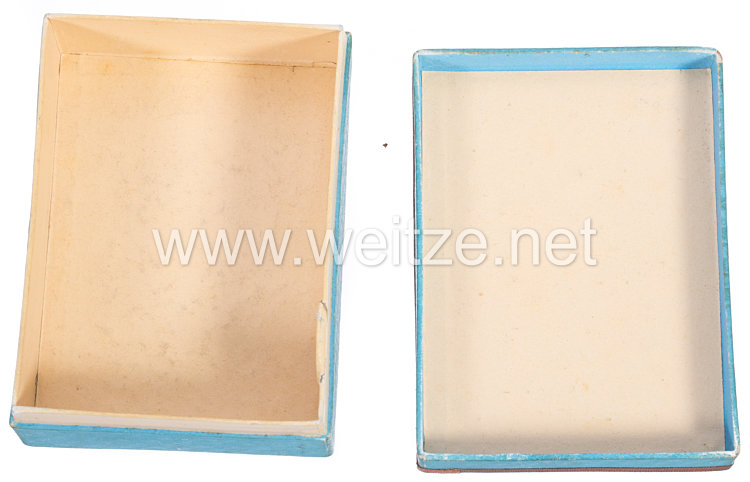
Such patriotic souvenirs were produced in large numbers in the years after 1815. They served not only as mementos of the successful war years, but also for storing small valuables, jewelry, or personal items. The compact dimensions of approximately 9x3.4x6.5 cm make it clear that this was an intimate, personal object, possibly intended for the desk or dresser.
The Wars of Liberation had profound effects on Prussian society. The Battle of Leipzig (1813), also known as the Battle of Nations, and the final victory at Waterloo (1815) became national myths. The memory of these events was kept alive through numerous monuments, medals, prints, and everyday objects such as this.
The craftsmanship of such caskets was quite sophisticated. Color printing on paper required multiple print runs, and the processing under glass protected the image from damage and fading. The fact that this object has survived almost 200 years, albeit with typical signs of aging, speaks to the quality of workmanship.
In the context of Prussian militaria, this casket represents an example of the culture of remembrance of the early 19th century. Unlike official military decorations or weapons, such objects were aimed at the general population and contributed to the construction of a national identity. They were part of a broader visual culture that included battle paintings, lithographs, porcelain, and other utilitarian objects with patriotic motifs.
The depiction of camp scenes was a popular motif in military art of this period. They showed not only the battle itself, but also the daily life of soldiers, which contributed to the humanization and romanticization of military service. The joint representation of infantry and cavalry also emphasized the camaraderie and cohesion of the different branches of service.
Today, such patriotic caskets are valued collector's items that offer important insights into the mentality history of the post-Napoleonic era. They document how military successes were integrated into everyday life and used to strengthen national consciousness.