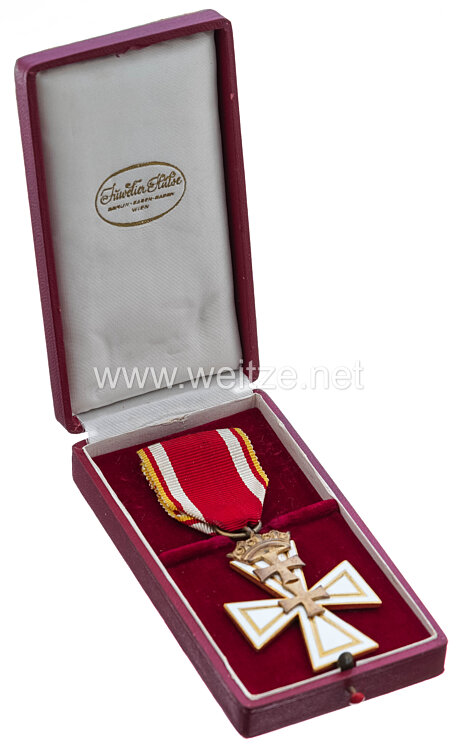
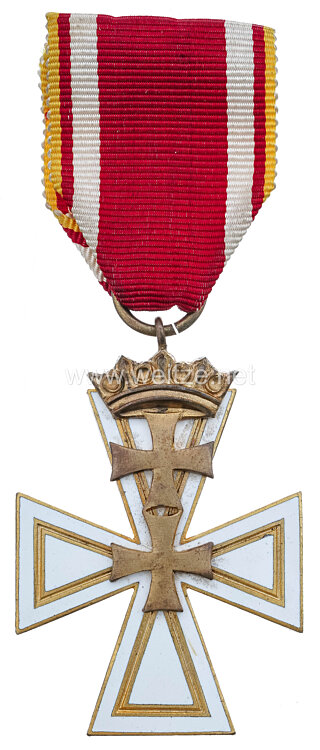
The Danzig Cross 2nd Class represents one of the rarest and most historically significant decorations from the brief National Socialist period of the Free City of Danzig. This award embodies a remarkable chapter of European history immediately preceding the outbreak of World War II.
The Free City of Danzig had been a city-state under League of Nations supervision since the Treaty of Versailles in 1919, with a predominantly German population. During the 1930s, the NSDAP gained increasing influence in the city, and with the rise to power of Gauleiter Albert Forster, Danzig became a flashpoint of German-Polish tensions.
On August 31, 1939, just one day before the German invasion of Poland, Albert Forster, as Head of State of the Free City of Danzig, instituted the Danzig Cross. The timing was of supreme political symbolism: the decoration was intended to recognize the merits of those who had contributed to building up the NSDAP in the Danzig Gau and the National Socialist state, as well as to the defense of Danzig before this date.
The design of the cross was created by Benno von Arent, the Reich Stage Designer, who was responsible for numerous National Socialist ceremonies and productions. Von Arent excelled at translating political symbolism into aesthetic forms, and the Danzig Cross demonstrates his characteristic combination of traditional heraldic elements with Nazi iconography.
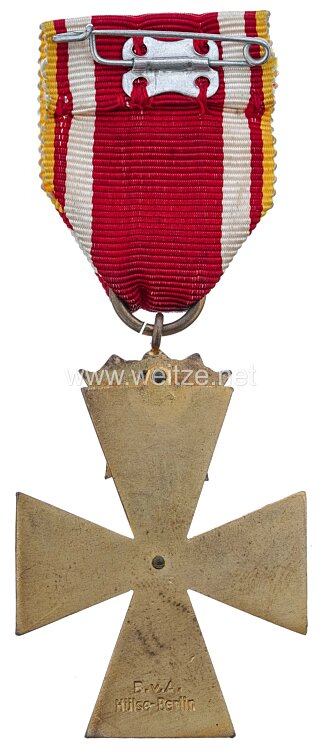
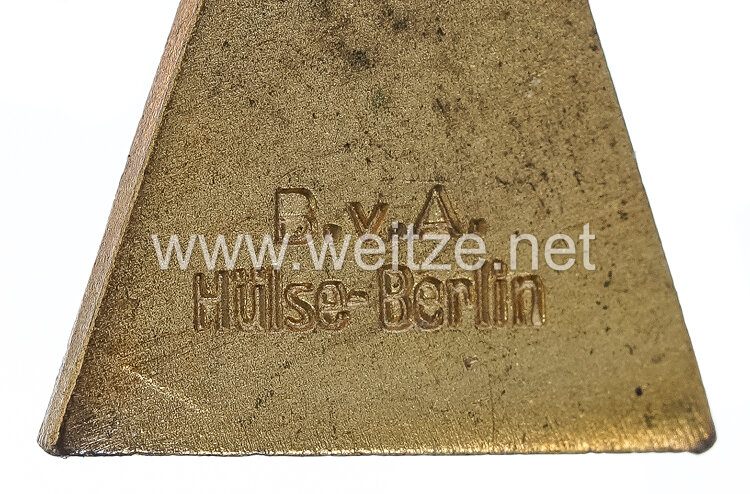
This example of the 2nd Class consists of gilt and enameled base metal with riveted appliqués. The reverse marking “B.v.A. Hülse-Berlin” identifies the renowned manufacturer. The firm Juwelier Hülse maintained branches in Berlin, Baden-Baden, and Vienna, and ranked among the leading producers of orders and decorations in the Third Reich.
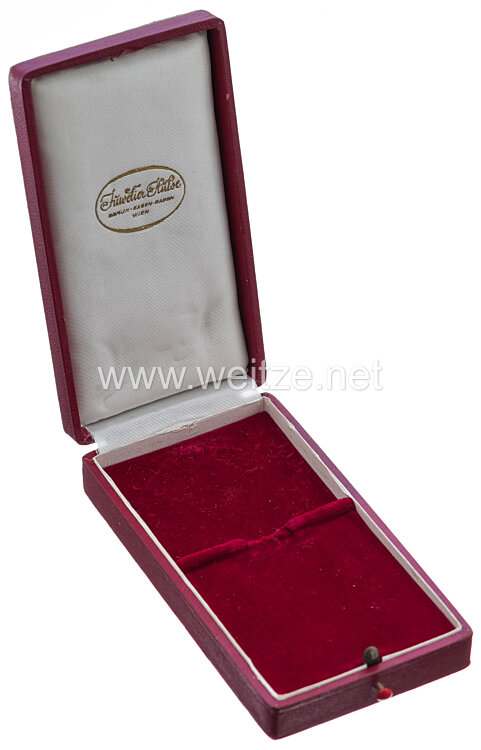
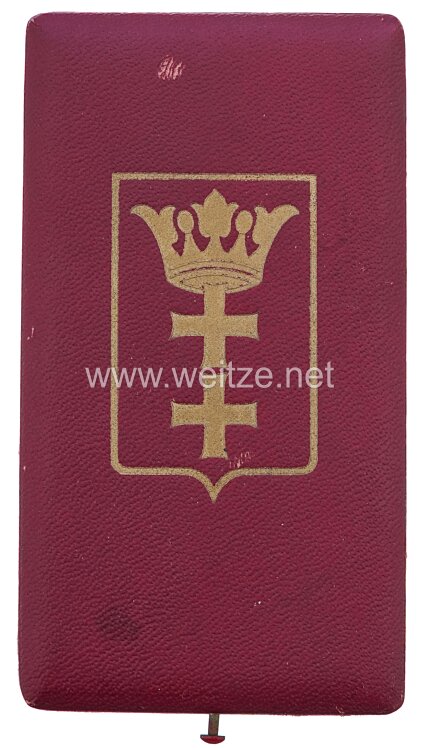
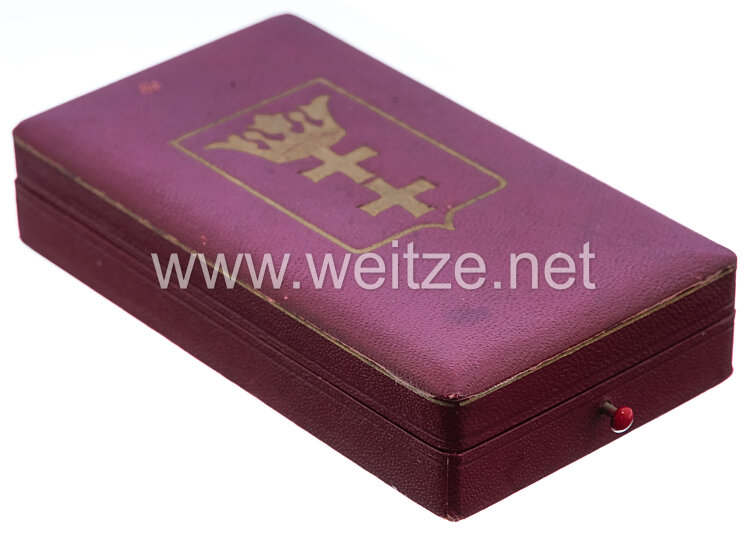
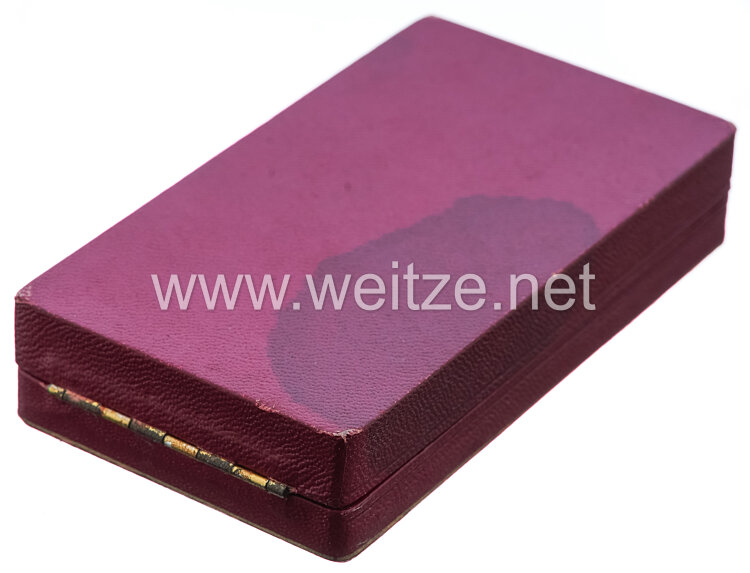
The accompanying presentation case underscores the official character of the award. The lid displays the coat of arms of the City of Danzig with its two crowns, referencing the city's historical connections to Poland and the Holy Roman Empire. The burgundy velvet lining and silk interior with the maker's mark represent the highest standards of German order manufacturing of that era.
Awards of the Danzig Cross took place primarily on October 24, 1939, the traditional day of commemoration for Danzig National Socialists. This date commemorated a significant event in the history of the NSDAP in Danzig. By this time, the Free City had already been de facto incorporated into the German Reich, following the German attack on Poland on September 1, 1939, and the occupation of Danzig.
As a state decoration, the Danzig Cross received recognition through a Führer decree of May 1, 1941, placing it on equal footing with the decorations of other German states. This legal recognition conferred official status within the entire German Reich and allowed recipients to wear the decoration alongside other state orders and decorations.
The Danzig Cross was awarded in several classes, with the 2nd Class representing a significant grade. The hierarchy of the decoration reflected the National Socialist obsession with rankings and symbolic differentiation. The number of actual awards remained relatively small, making the decoration a rare collector's item today.
From a historical perspective, the Danzig Cross documents the final months before the outbreak of World War II and the National Socialist efforts to legitimize and consolidate their rule over Danzig. The decoration embodies the appropriation of state symbolism for political purposes and the creation of a loyalty system through honors and decorations.
The preservation of such objects in museums and collections today serves historical education and research. They enable understanding of the mechanisms of totalitarian rule, including the use of symbols, awards, and rituals to consolidate political power. The Danzig Cross remains a significant artifact from a dramatic and tragic period of European history.