Prussia Silver Pocket Watch as Honorary Gift from the Royal Powder Factory Spandau to “Karl Zeletzki for 25 Years of Loyal Service...”

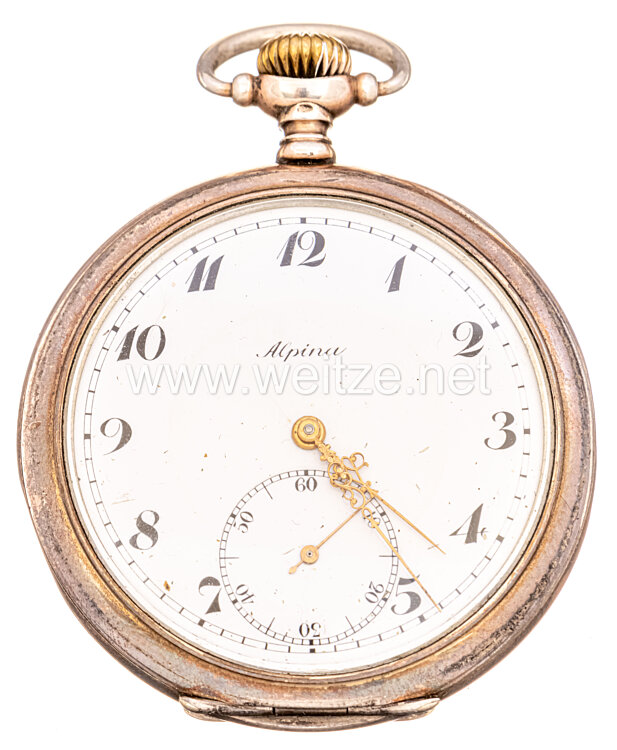
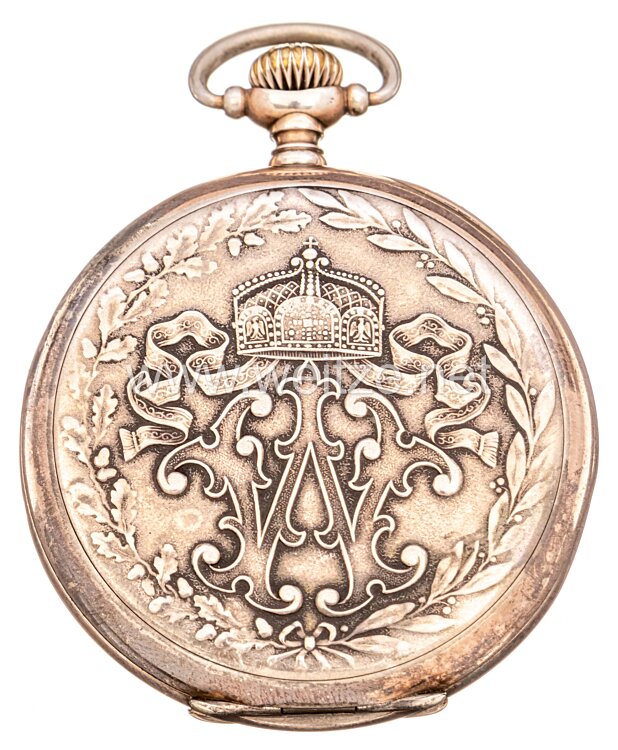
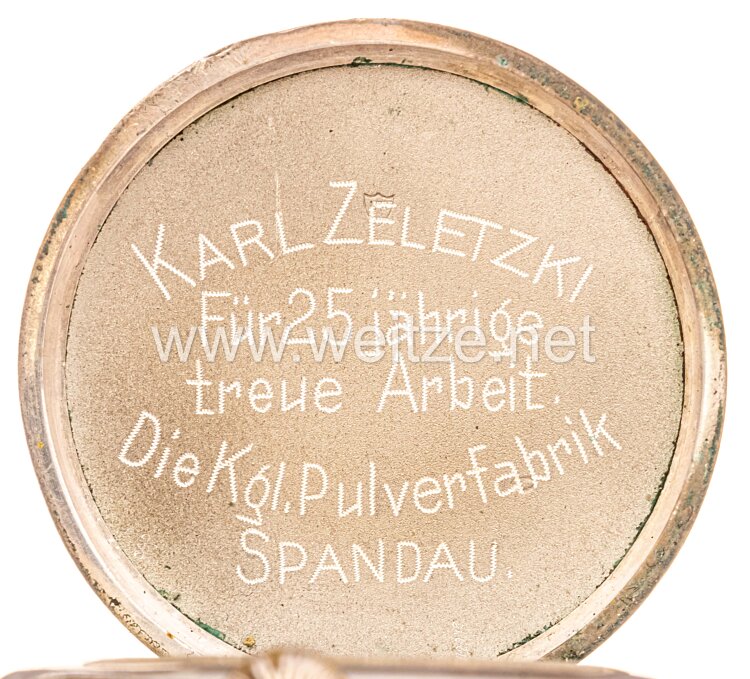
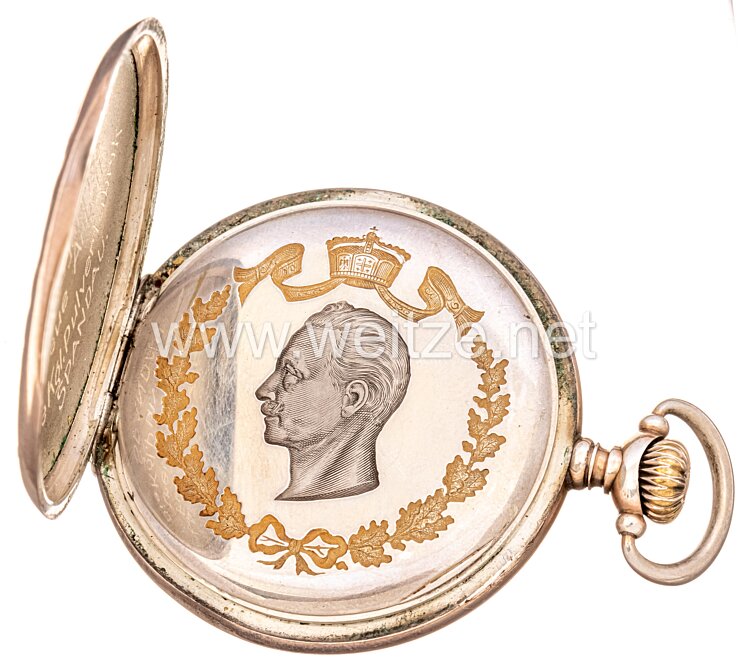
Circa 1910. Pocket watch with silver case and enameled dial with small seconds, the lever escapement in working order (no guarantee), dial marked by manufacturer “Alpina”, outer lid decorated with the Imperial Crown and cipher “W” within oak leaf wreath, inner lid with dedication “Karl Zeletzki for 25 Years of Loyal Service, the Royal Powder Factory Spandau”, outer movement cover with finely engraved portrait of Kaiser Wilhelm II in gilt oak leaves with the Imperial Crown, cover firmly set in frame. Condition 2.
465044
1.350,00

Prussia Silver Pocket Watch as Honorary Gift from the Royal Powder Factory Spandau to “Karl Zeletzki for 25 Years of Loyal Service...”

This silver pocket watch represents a remarkable testimony to the Wilhelmine era and the tradition of royal commemorative gifts for long and faithful service. It was presented around 1910 by the Royal Gunpowder Factory Spandau to Karl Zeletzki on the occasion of his 25th work anniversary.

The Royal Gunpowder Factory Spandau (Königliche Pulverfabrik Spandau) was one of the most important armaments establishments of the German Empire. Founded in the 17th century, the facility experienced considerable expansion during industrialization and the increased militarization under Kaiser Wilhelm II. In the years before World War I, the gunpowder factory employed several thousand workers and produced various types of gunpowder and explosives for the Prussian and later Imperial Army. The factory was part of a comprehensive military-industrial complex in Spandau, which also included rifle factories and other armaments enterprises.

The practice of presenting valuable commemorative gifts to long-serving employees was widespread in Wilhelmine Germany and corresponded to the pronounced culture of hierarchy and loyalty of this epoch. Particularly in state and royal enterprises, such anniversaries were celebrated ceremonially. The 25-year service anniversary, also known as the Silver Service Jubilee, represented an important milestone and was honored accordingly.

The artistic design of the pocket watch reflects the symbolism of the Hohenzollern monarchy. The outer lid displays the Imperial Crown and the cipher “W” (for Wilhelm) in an oak leaf wreath – classic symbols of sovereignty. Oak leaves had symbolized strength, permanence, and loyalty since antiquity, qualities also associated with the Prussian state. The Imperial Crown symbolized the authority of the Kaiser and the German Reich.

Particularly noteworthy is the movement cover with the finely engraved portrait of Kaiser Wilhelm II in gilded oak leaves. This representation of the monarch on a commemorative gift underscores the personal character of the recognition in the name of the King and Kaiser. Wilhelm II, who reigned from 1888 to 1918, maintained a special relationship with the army and the armaments industry, which he regarded as guarantors of German power.

The engraving inside the lid – “Karl Zeletzki for 25 years of faithful work, the Royal Gunpowder Factory Spandau” – documents not only the recognition of an individual worker but also the social-historical reality of the Imperial armaments industry. The emphasis on “faithful work” reflects the Prussian virtues of duty and loyalty. At a time when labor disputes and socialist movements were increasing, such honors also served as means of employee retention and loyalty assurance.

The watch itself comes from the manufacturer Alpina, a renowned Swiss watch brand that was already known for high-quality timepieces in the 19th century. The choice of a Swiss movement for a Prussian commemorative gift demonstrates the international integration of the luxury goods market, even though the symbolic design was purely German-patriotic.

The silver case and enameled dial with small seconds correspond to the technical and aesthetic standards of high-quality pocket watches of the pre-war period. The lever escapement, a precise mechanical regulating system, was state-of-the-art at that time and ensured reliable timekeeping.

Such commemorative gifts were presented in ceremonial settings, often in the presence of management and the workforce. They served not only for individual recognition but also as demonstrations of corporate welfare and monarchical grace. The recipient received a status symbol that made visible his social advancement and importance to the enterprise.

In the historical context of the approaching First World War, this pocket watch gains additional significance. The Spandau Gunpowder Factory would play a central role in the ammunition supply of German armies during the war years. The long-serving workers honored around 1910, such as Karl Zeletzki, formed the experienced backbone of wartime production.

After the collapse of the monarchy in 1918 and the restrictions of the Treaty of Versailles, the Spandau Gunpowder Factory lost its former importance. Such Imperial-era commemorative gifts became historical documents of a vanished epoch. Today they are valuable testimonies to the labor and social history of the German Empire as well as the material culture of Wilhelmine loyalty and honor practices.

r