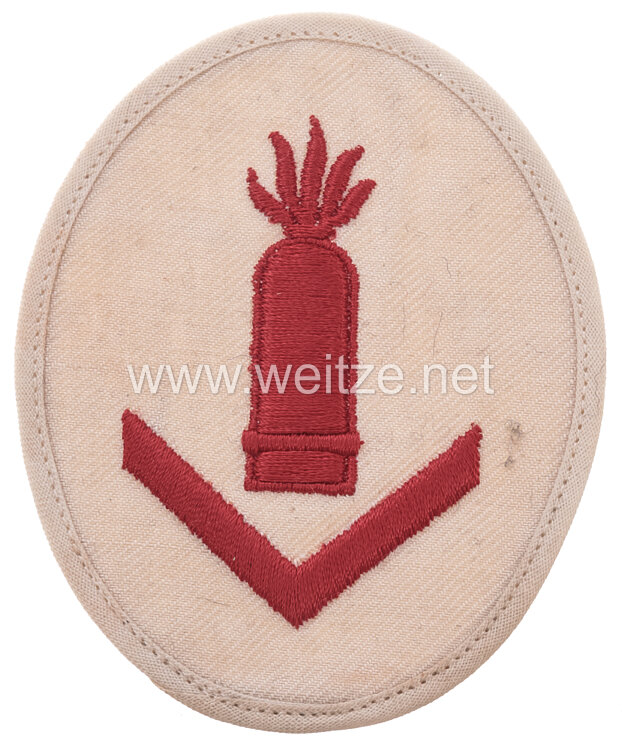
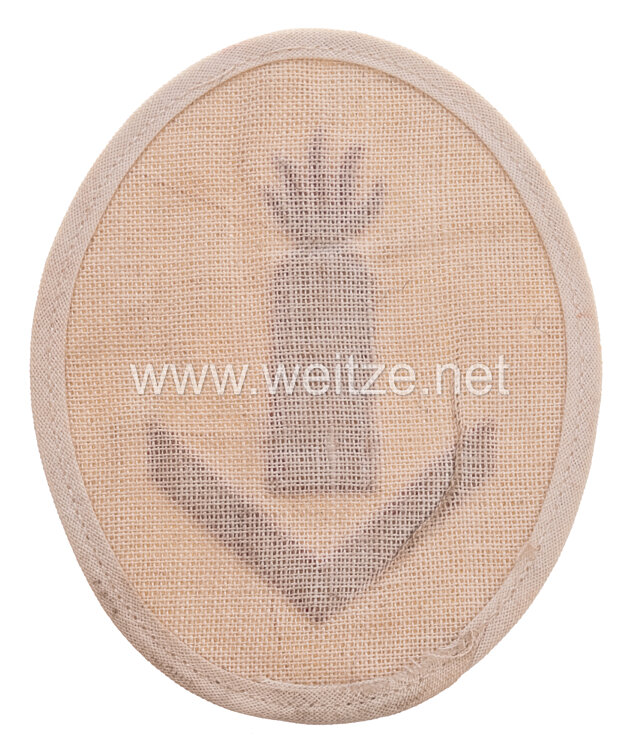
Kriegsmarine Sleeve Insignia Special Training Gunnery Commander for Naval and Anti-Aircraft Artillery
The Kriegsmarine sleeve badge for special training as Gun Commander for Naval and Anti-Aircraft Artillery represents a fascinating testament to the complex training and qualification system of the German Navy during World War II. This specialized insignia embodies the increasing importance of dual artillery training during an era when aerial threats to warships were steadily mounting.
The Kriegsmarine introduced an extensive system of sleeve badges during the war to visibly identify specialized skills and completed special courses. These badges were worn on the white summer uniform and served both to identify specialist personnel and to boost morale through visible recognition of special qualifications.
The role of Gun Commander (Geschützführer) was one of the most responsible positions aboard a warship. A gun commander was not only responsible for the technical operation of weapon systems but also had to make tactical decisions, lead his crew, and work with precision under extreme pressure. The combination of training for naval artillery and anti-aircraft artillery (Flak) was particularly demanding and became more common only as the war progressed, when the air threat from Allied aircraft increased dramatically.
Training to become a gun commander took place at specialized naval schools and lasted several months. The courses included theoretical instruction in ballistics, target identification, range estimation, and fire control, as well as practical exercises with various caliber weapons. Naval artillery required knowledge of ship movements, wave action, and calculating lead angles for moving targets at sea. Anti-aircraft artillery, on the other hand, demanded quick reaction capability, altitude calculation, and understanding of aircraft speeds and maneuvers.
The design of such sleeve badges followed the guidelines of the Kriegsmarine uniform regulations. Typically, they were manufactured in dark blue thread on a white cloth background and displayed symbolic representations of the respective specialization. The badges were worn on the left upper arm of the white uniform, a uniform primarily used in warmer climates or during the summer months.
The historical context of this specialization is closely linked to the development of naval warfare during World War II. At the beginning of the war in 1939, artillery training still focused on naval combat—that is, engagements between surface ships. The devastating losses from air attacks, such as the sinking of the Bismarck in May 1941 or the constant threats from British torpedo bombers and dive bombers, led to a reassessment of priorities.
From 1942 onwards, anti-aircraft armament on German warships was systematically strengthened. New ship classes received significantly more anti-aircraft guns, and existing ships were retrofitted. This required additional specialized personnel. Training gun commanders who mastered both types of artillery became a strategic necessity, as they could be deployed flexibly and made more efficient use of the Kriegsmarine's limited personnel resources.
The bearers of such badges were usually non-commissioned officers or experienced Maate (roughly equivalent to the rank of sergeant), who had distinguished themselves through special achievements and reliability. The special training also offered career opportunities and was often associated with promotions or better pay.
The sleeve badge system was part of a larger tradition of maritime distinctions dating back to the 19th century. The Imperial Navy had already used similar systems, and the Kriegsmarine deliberately built on these traditions to foster continuity and esprit de corps.
After the war ended in 1945, all Kriegsmarine insignia and badges became obsolete. Today, such sleeve badges are sought-after collector's items that provide important insights into the organizational and training structure of the Kriegsmarine. They document the technical complexity of naval warfare and the high demands placed on personnel. The condition of such historical textiles varies considerably, depending on storage and use over the decades.