Königreich Bayern Rote Uniform des Hausritterordens vom Hl. Georg
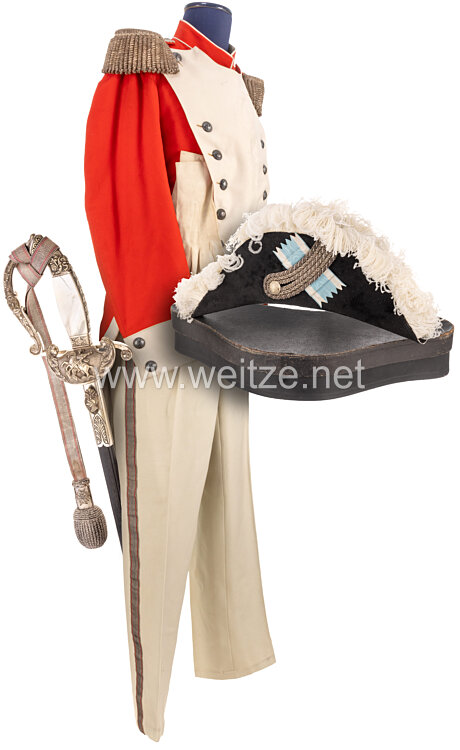
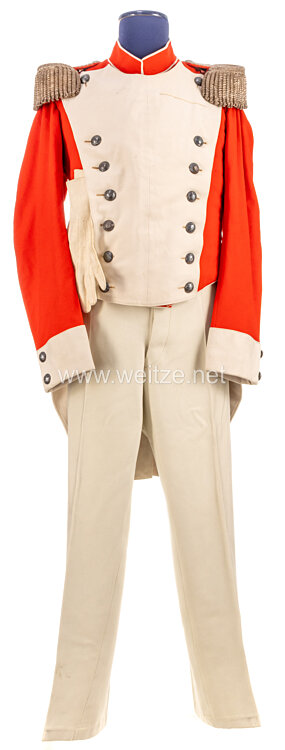
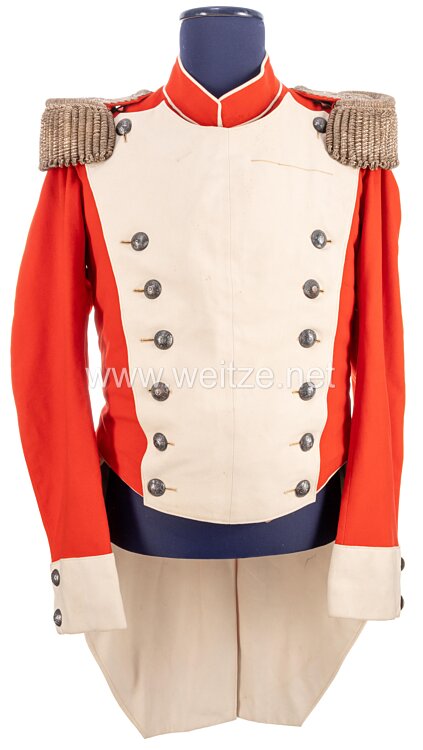
Um 1900. Das Ensemble bestehend aus dem Zweispitz, der Uniformjacke mit den Epauletten und den weißen Handschuhen, der weißen Hose und dem dazugehörigen Degen.
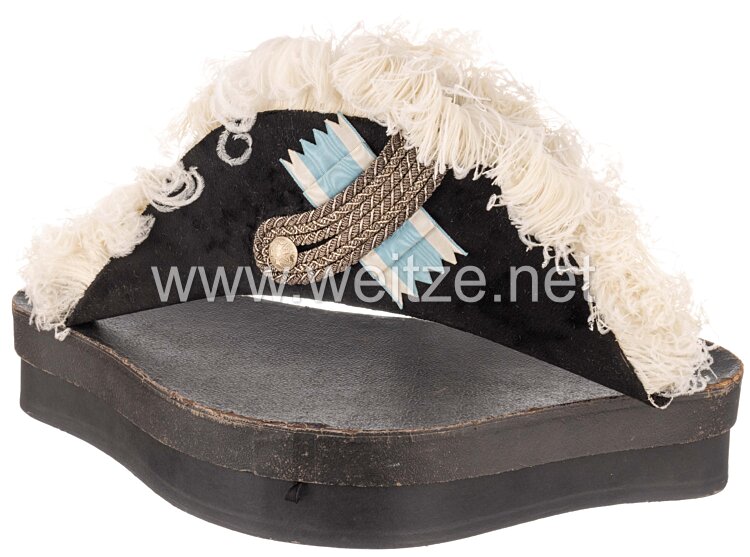
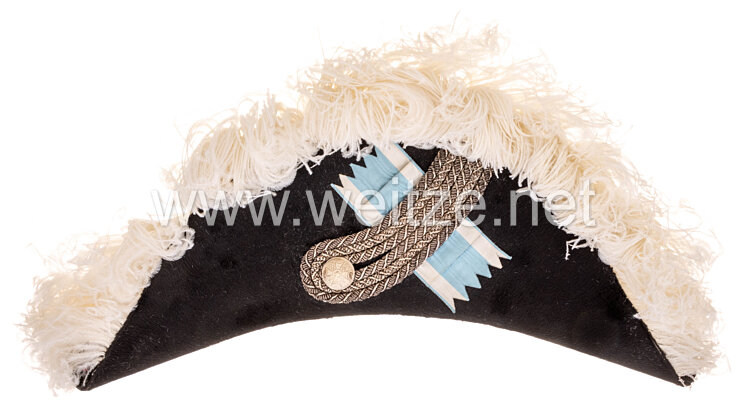
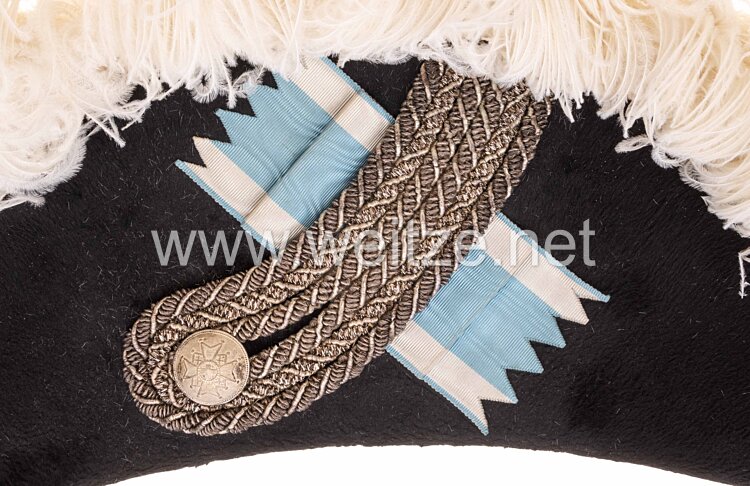
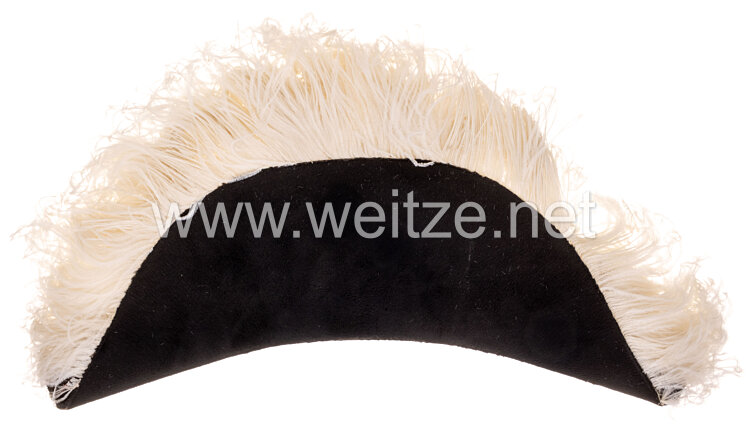
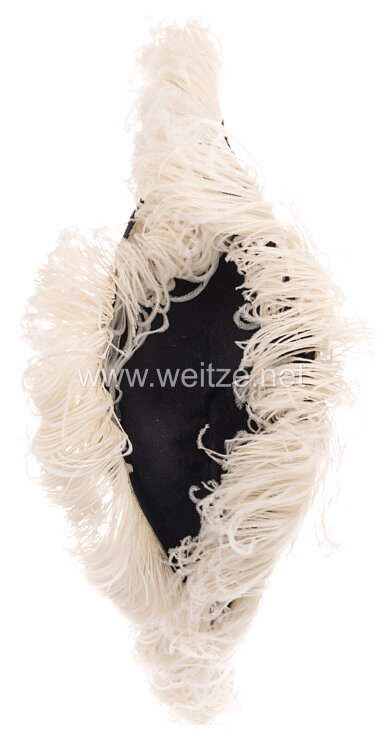
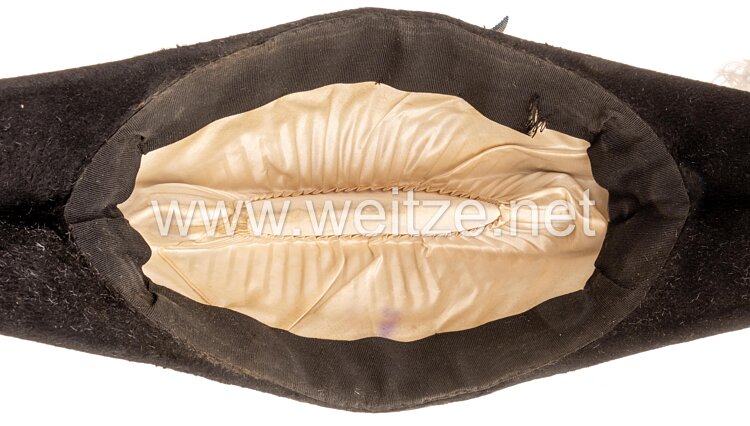
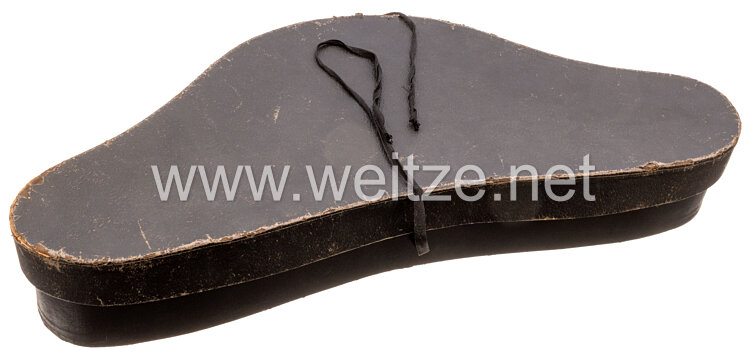
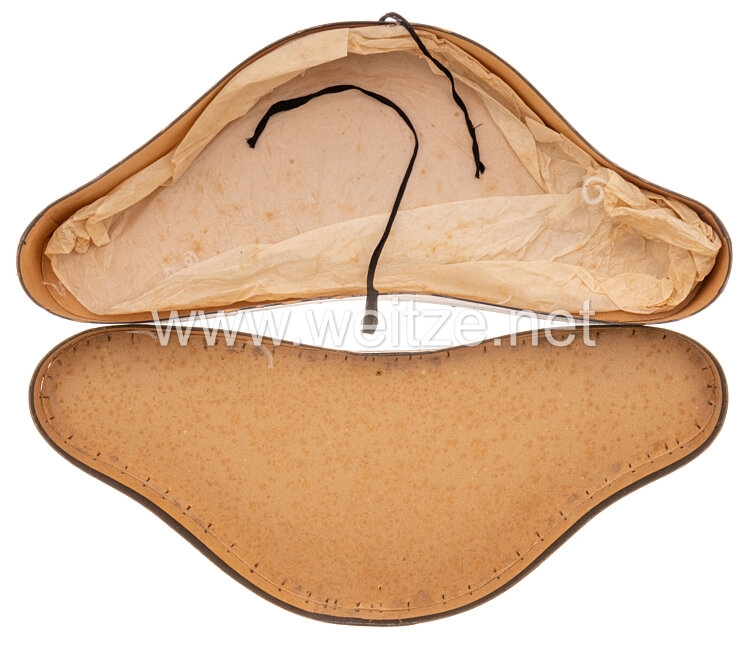
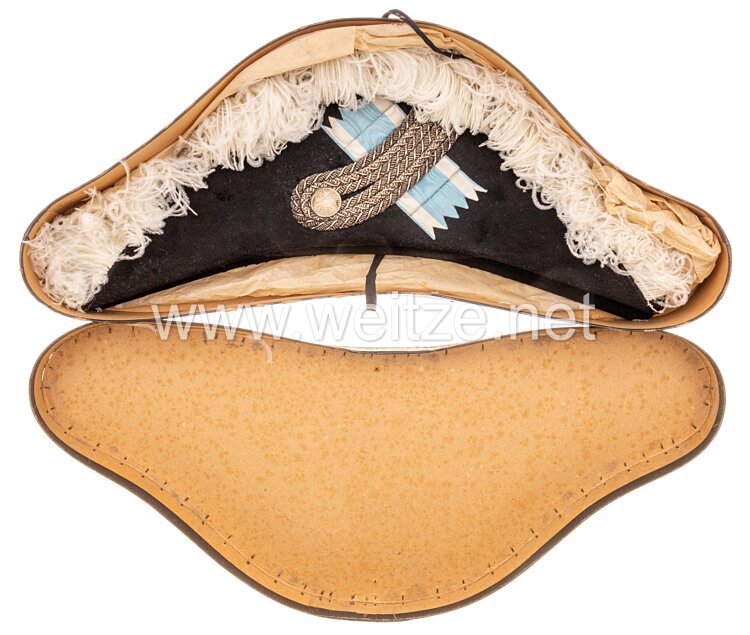
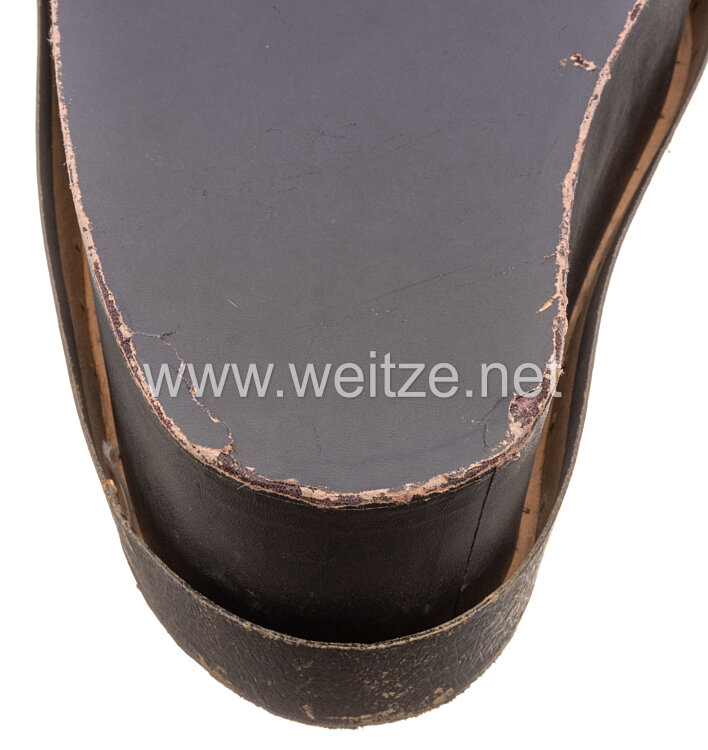
Der Zweispitz aus schwarzem Nadelfilz mit weißen Federn, auf der rechten Seite mit silberner Agraffe auf blau-weißem Seidenband, der silberne Knopf mit dem Emblem des Georg-Ordens. Innen mit schwarzem Seiden-Schweißband und weißem Seidenfutter. Im originalen Karton.
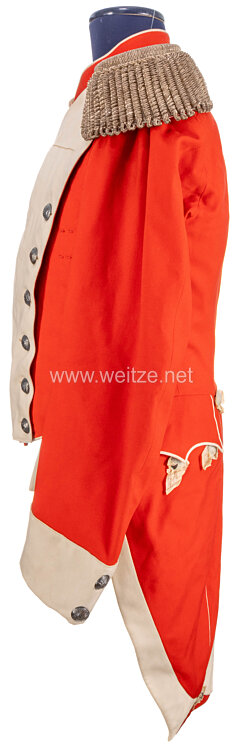
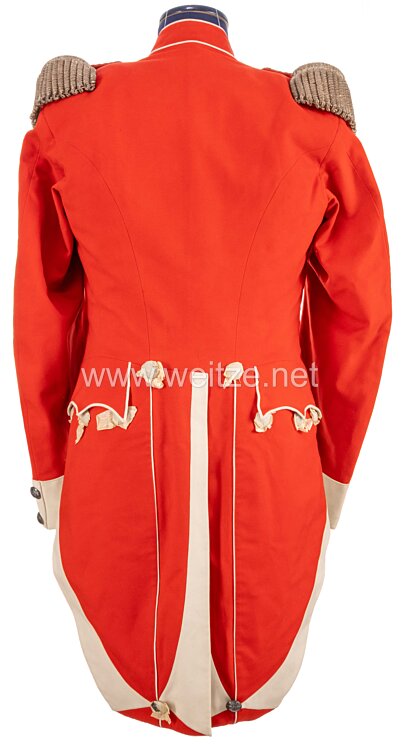
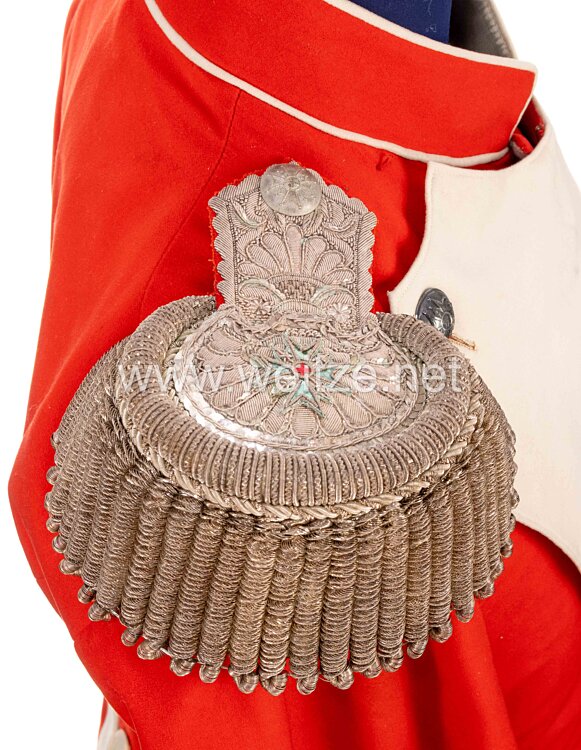
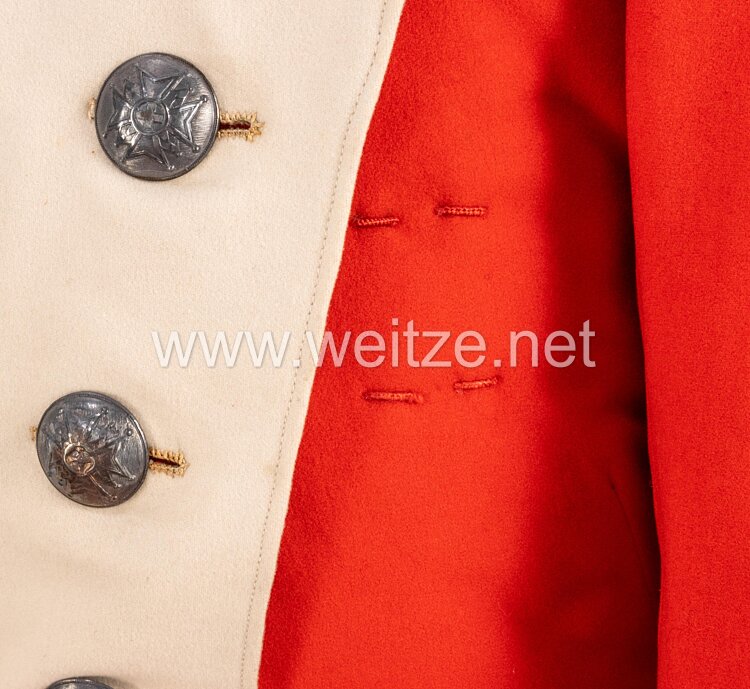
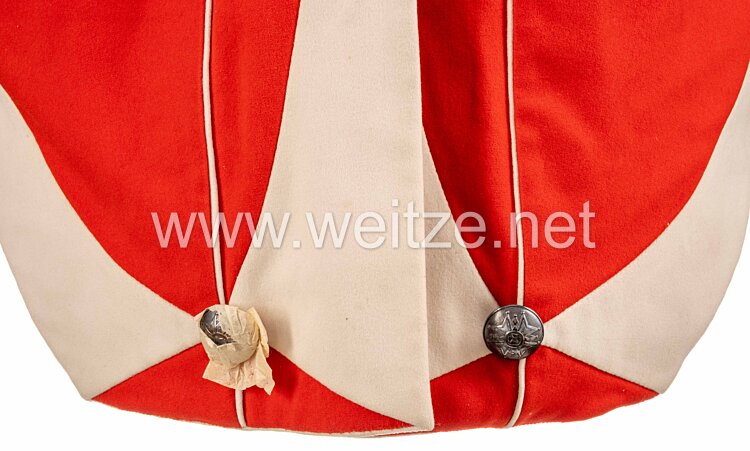
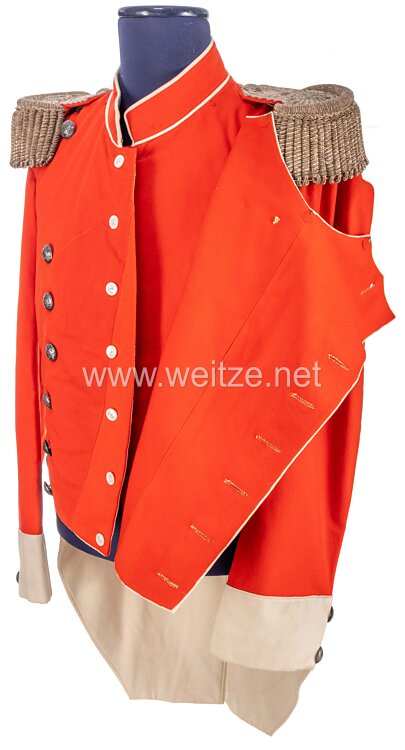
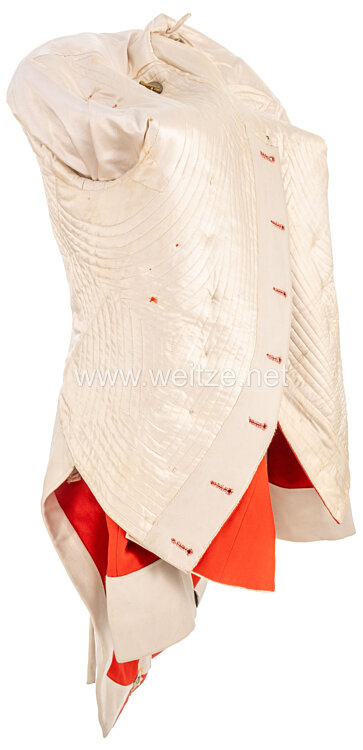
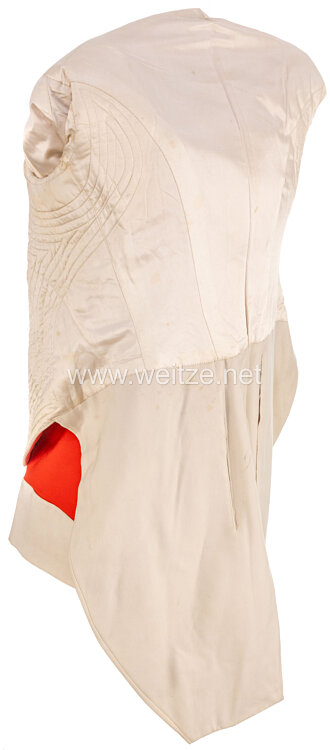
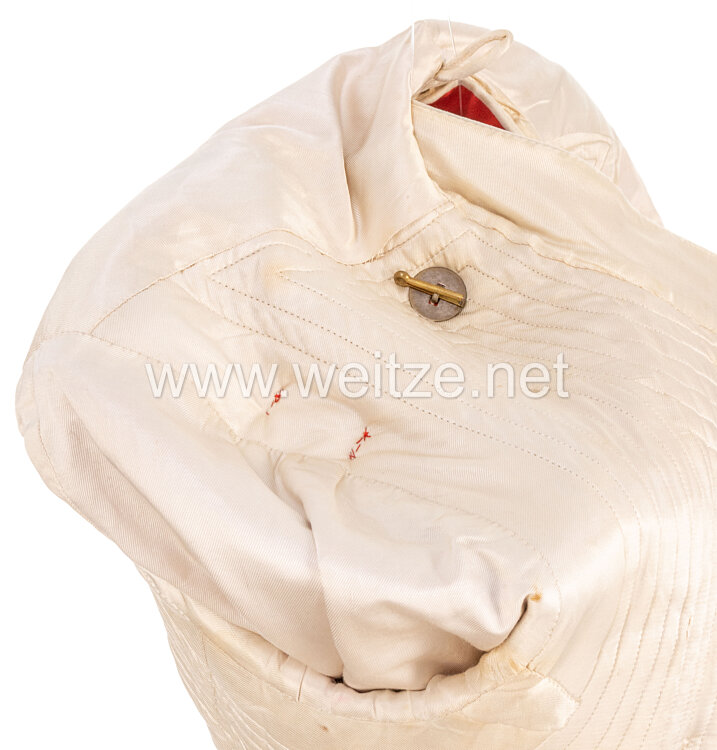
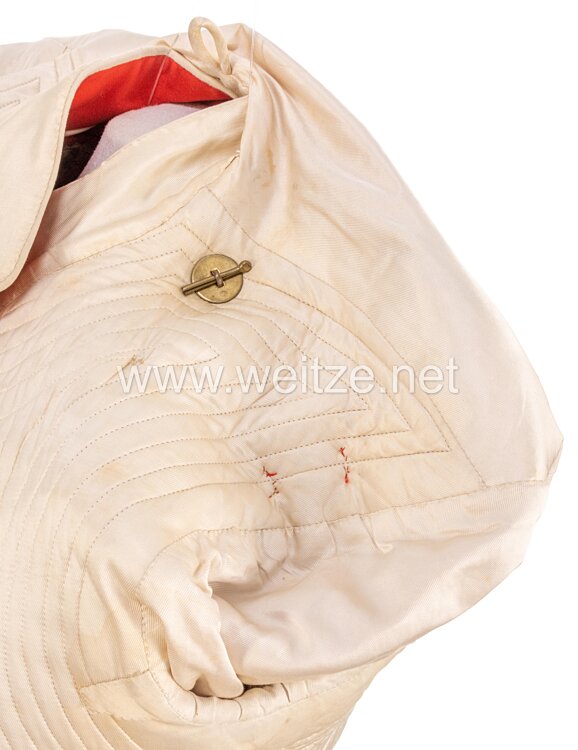
Roter Frack mit weißen Ärmelaufschlägen und Vorstößen, zwei Reihen a je 7 silberner Knöpfe mit dem Emblem des Georg-Ordens, vorne auf dem Frack aufgelegt die weiße Parade-Rabatte, auf den Schultern die Silber gestickten und mit Pailletten und dem Georg-Kreuz verzierten großen Epauletten mit silbernen starren Kantillen. Innen der Frack mit gesteppter weißer Seide gefüttert.
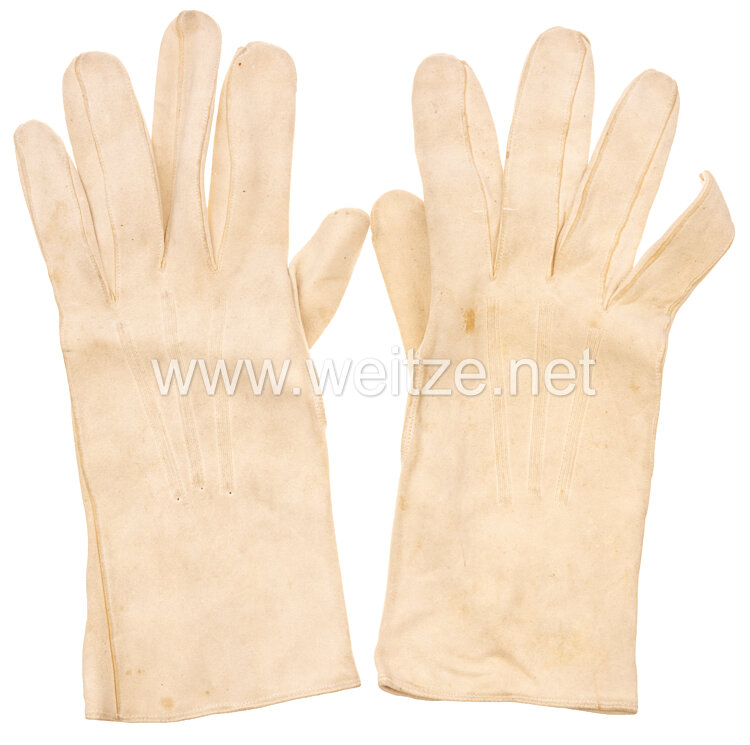
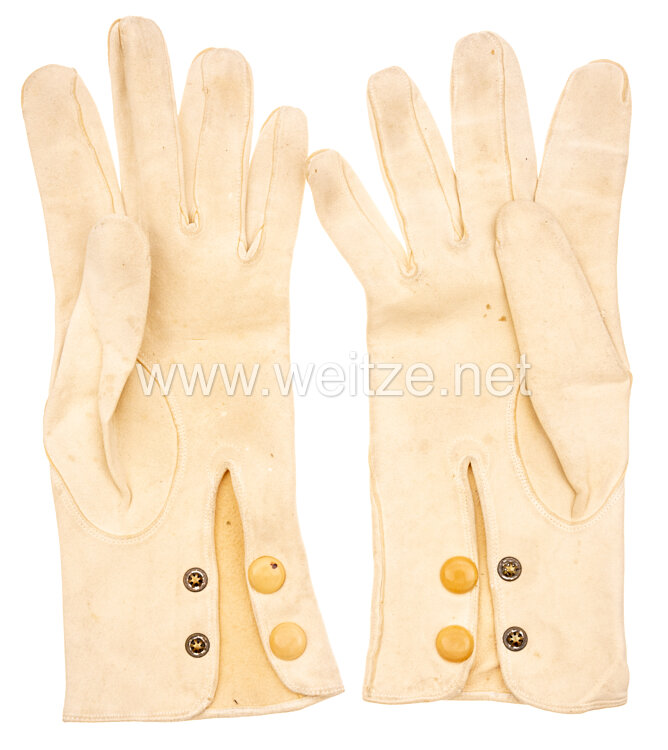
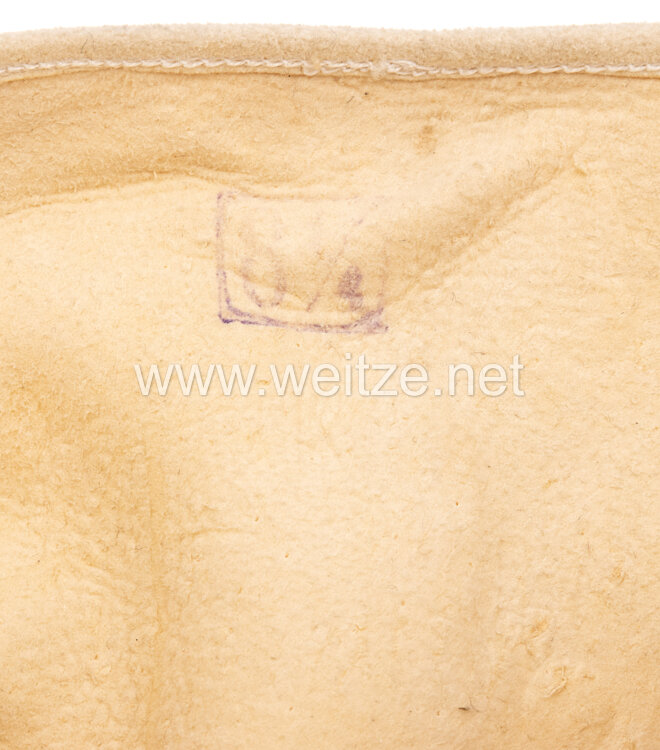
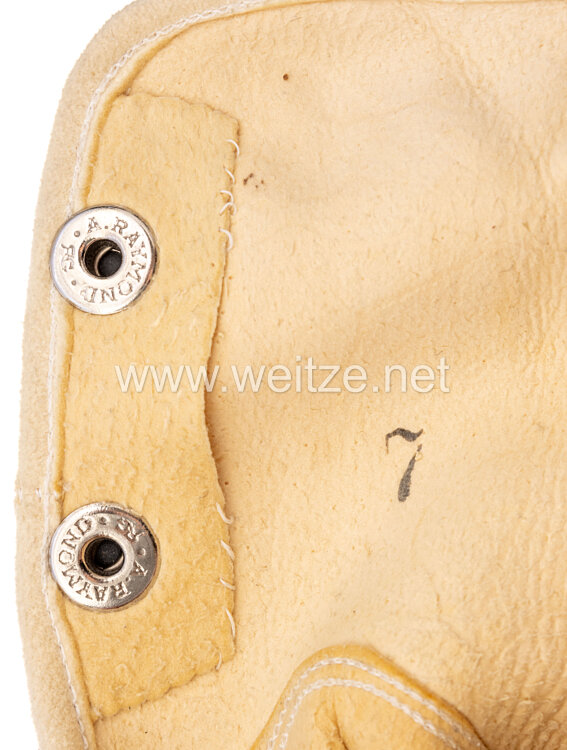
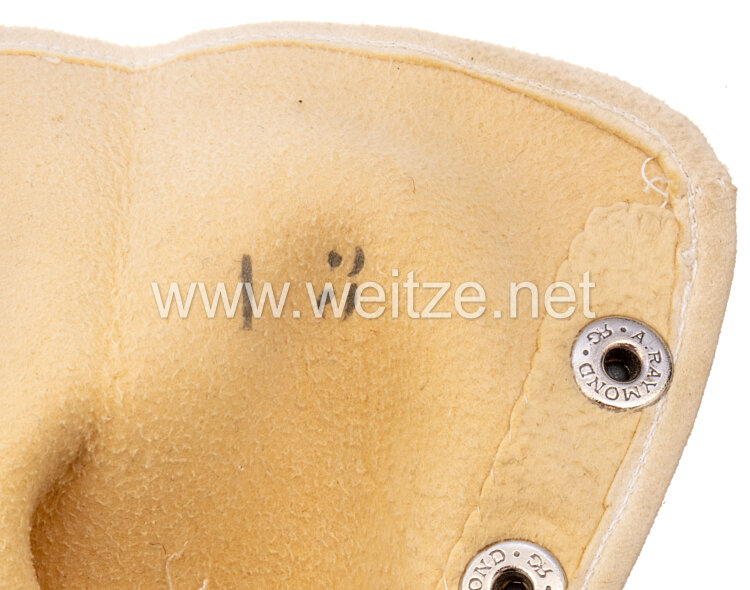
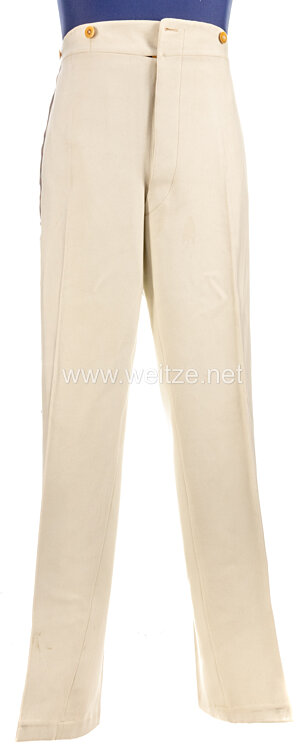
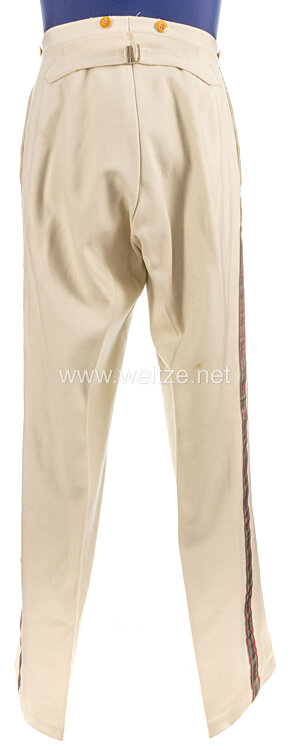
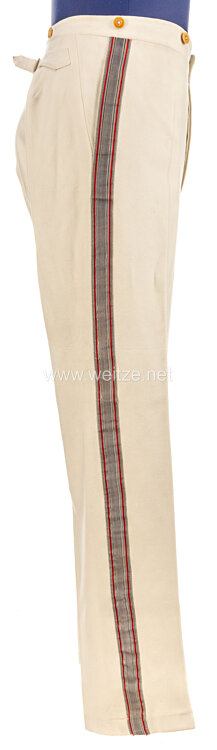
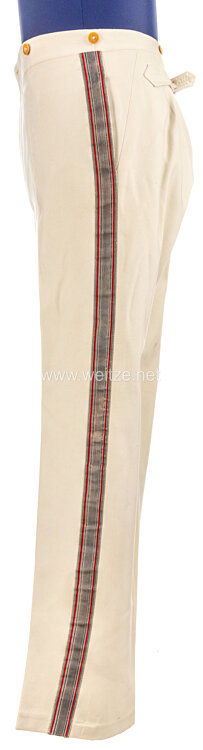
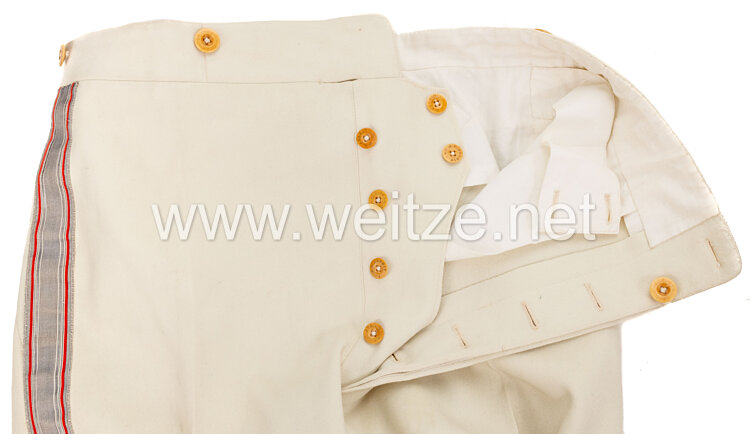
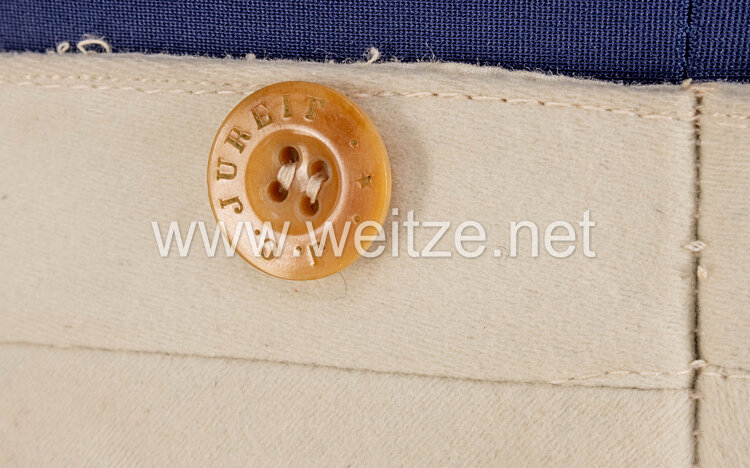
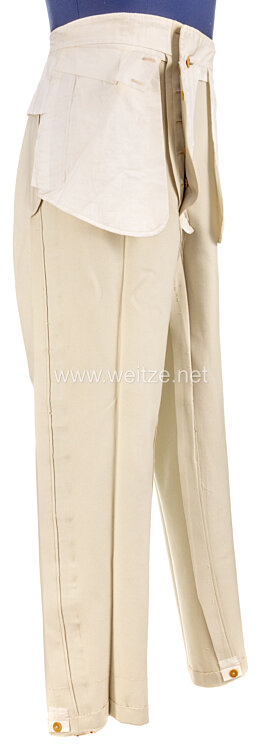
Dazu die weiße Stoffhose mit Silber gestickten Lampassen mit roten Durchzügen und die weißen Handschuhe zum Frack.
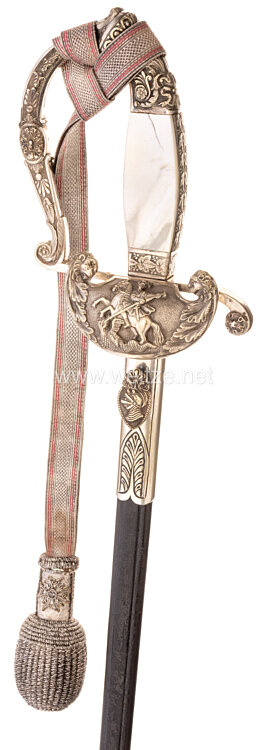
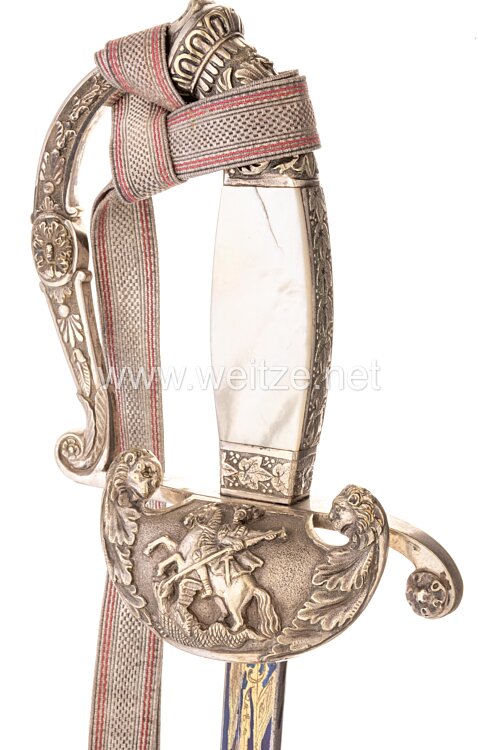
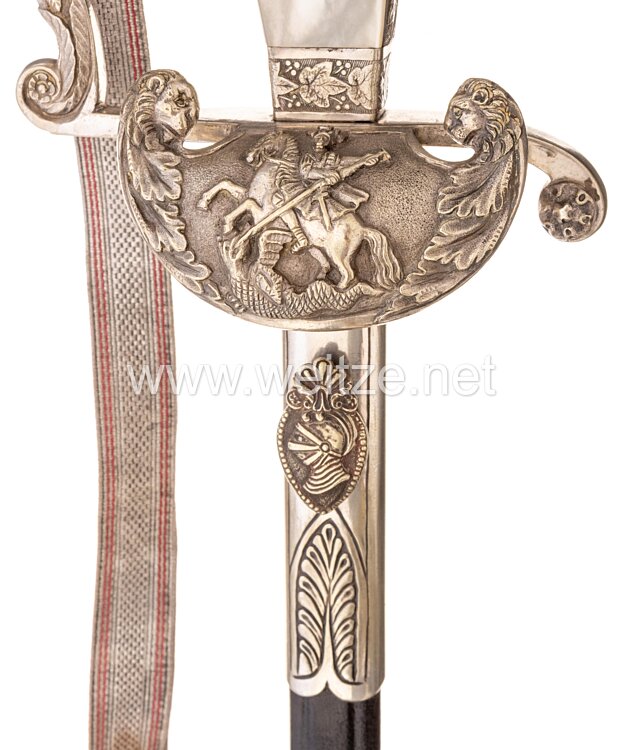
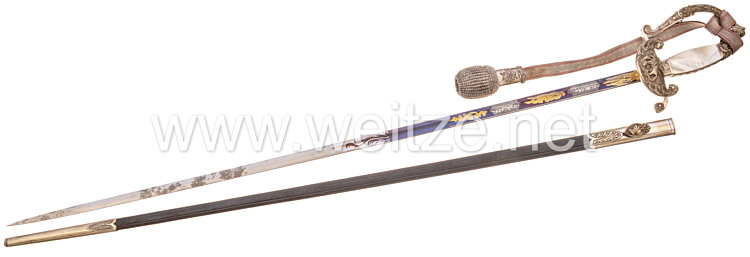
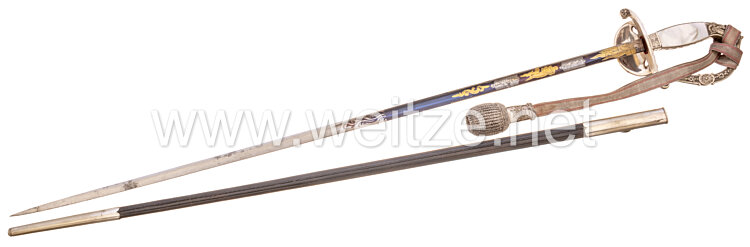
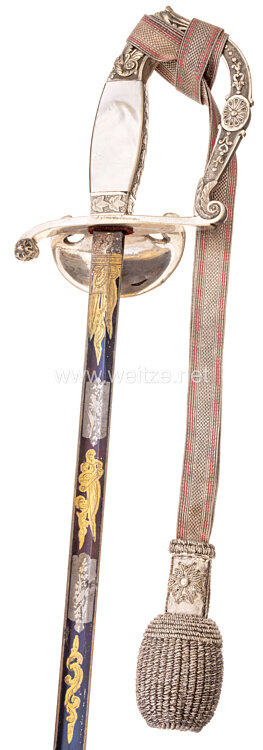
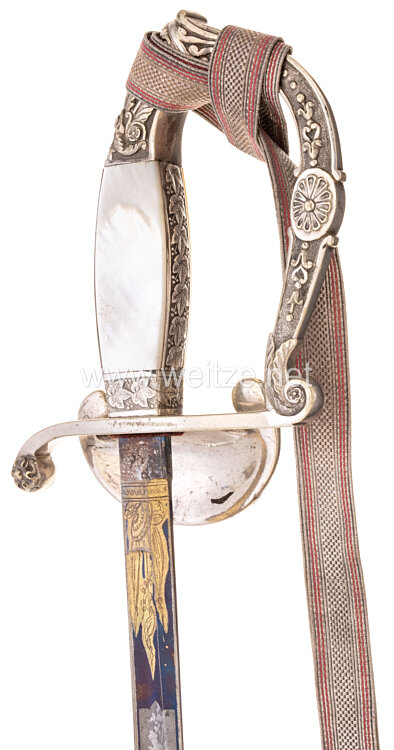
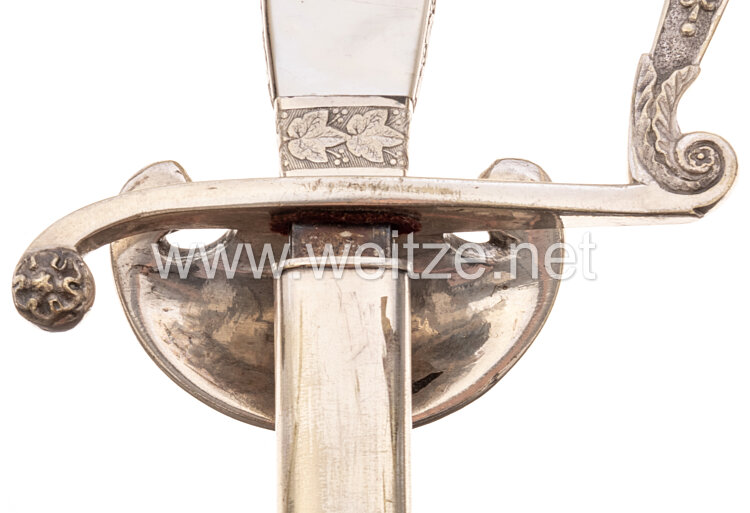
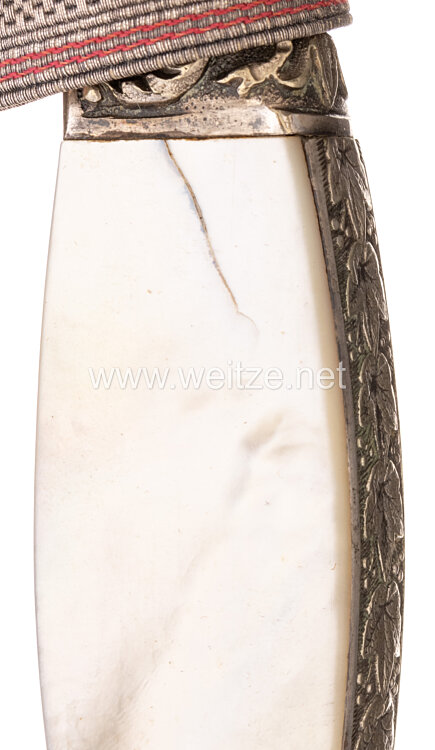
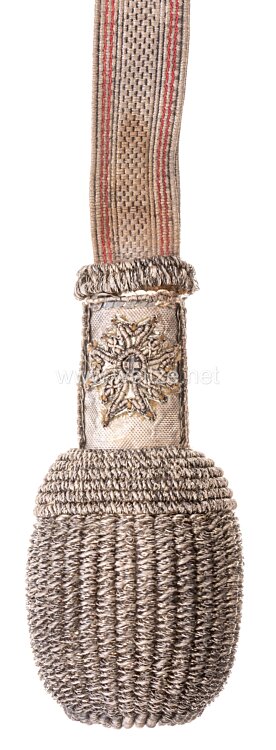
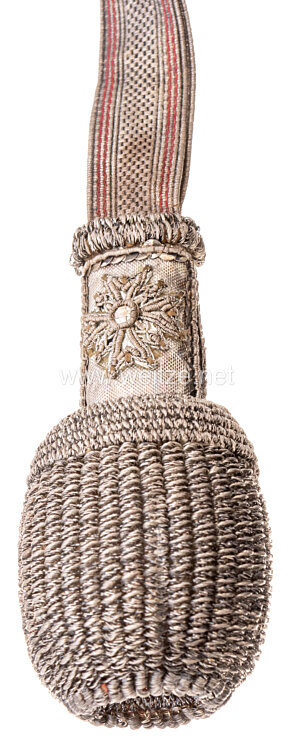
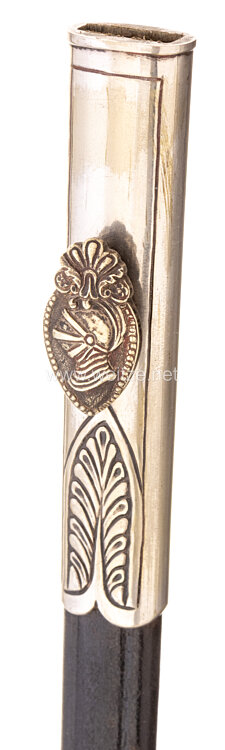
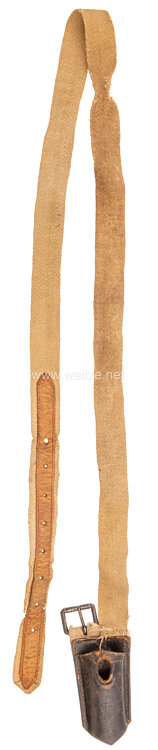
Prächtiger, Silber montierter Degen. Die Klinge 76 cm lang und 1.5 cm breit, das vordere Ende zweischneidig, das untere Ende beidseitig gekehlt, gebläut und mit vergoldeten Gravuren verziert, terzseitig auf der Fehlschärfe der Lieferant «Joh. Stroblberger München». Fein ziseliertes silbernes Gefäß mit floraler Ornamentik, vorne auf dem Stichblatt der Hl. Georg, der Drachen tötet, Perlmuttgriffschalen. Anhängend das Portepee des Ordens aus Silbergeflecht mit roten Durchzügen und dem Georgskreuz auf dem Stängel. Lederscheide mit neusilbernen Beschlägen, das Mundblech sitzt locker auf. Dazu der Trageriemen für den Degen.
Alle Teile in schönem Erhaltungszustand! Ein prächtiges Ensemble von hoher Qualität!
Der Hausritterorden vom Heiligen Georg ist der Hausorden der bayerischen Kurfürsten, gegründet 1729. Benannt ist er nach dem Heiligen Georg, dem Schutzpatron der Ritter. Er war der höchste Orden des Adels des Kurfürstentums und des Königreichs Bayern.
Die Mitglieder teilten sich auf 6 Großkomture (Großkreuz-Ritter), 12 Komture und Ritter auf, die Zahl der jährlichen Neuaufnahmen war auf 6 beschränkt. Großmeister ist stets der Chef des Hauses Wittelsbach, männliche Mitglieder des königlichen Hauses wurden im Rang von Großprioren aufgenommen.
Der Zweispitz aus schwarzem Nadelfilz mit weißen Federn, auf der rechten Seite mit silberner Agraffe auf blau-weißem Seidenband, der silberne Knopf mit dem Emblem des Georg-Ordens. Innen mit schwarzem Seiden-Schweißband und weißem Seidenfutter. Im originalen Karton.
Roter Frack mit weißen Ärmelaufschlägen und Vorstößen, zwei Reihen a je 7 silberner Knöpfe mit dem Emblem des Georg-Ordens, vorne auf dem Frack aufgelegt die weiße Parade-Rabatte, auf den Schultern die Silber gestickten und mit Pailletten und dem Georg-Kreuz verzierten großen Epauletten mit silbernen starren Kantillen. Innen der Frack mit gesteppter weißer Seide gefüttert.
Dazu die weiße Stoffhose mit Silber gestickten Lampassen mit roten Durchzügen und die weißen Handschuhe zum Frack.
Prächtiger, Silber montierter Degen. Die Klinge 76 cm lang und 1.5 cm breit, das vordere Ende zweischneidig, das untere Ende beidseitig gekehlt, gebläut und mit vergoldeten Gravuren verziert, terzseitig auf der Fehlschärfe der Lieferant «Joh. Stroblberger München». Fein ziseliertes silbernes Gefäß mit floraler Ornamentik, vorne auf dem Stichblatt der Hl. Georg, der Drachen tötet, Perlmuttgriffschalen. Anhängend das Portepee des Ordens aus Silbergeflecht mit roten Durchzügen und dem Georgskreuz auf dem Stängel. Lederscheide mit neusilbernen Beschlägen, das Mundblech sitzt locker auf. Dazu der Trageriemen für den Degen.
Alle Teile in schönem Erhaltungszustand! Ein prächtiges Ensemble von hoher Qualität!
Der Hausritterorden vom Heiligen Georg ist der Hausorden der bayerischen Kurfürsten, gegründet 1729. Benannt ist er nach dem Heiligen Georg, dem Schutzpatron der Ritter. Er war der höchste Orden des Adels des Kurfürstentums und des Königreichs Bayern.
Die Mitglieder teilten sich auf 6 Großkomture (Großkreuz-Ritter), 12 Komture und Ritter auf, die Zahl der jährlichen Neuaufnahmen war auf 6 beschränkt. Großmeister ist stets der Chef des Hauses Wittelsbach, männliche Mitglieder des königlichen Hauses wurden im Rang von Großprioren aufgenommen.