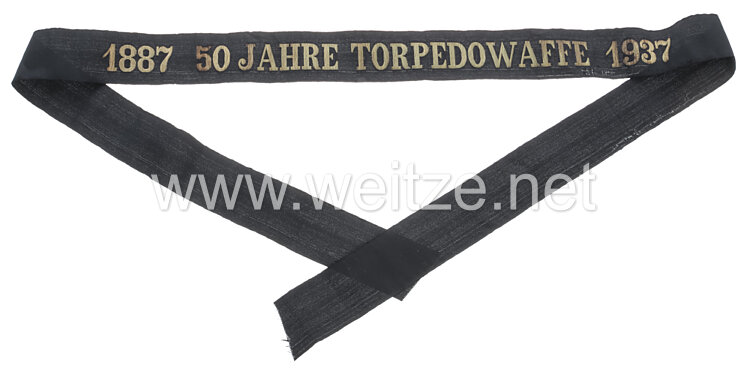
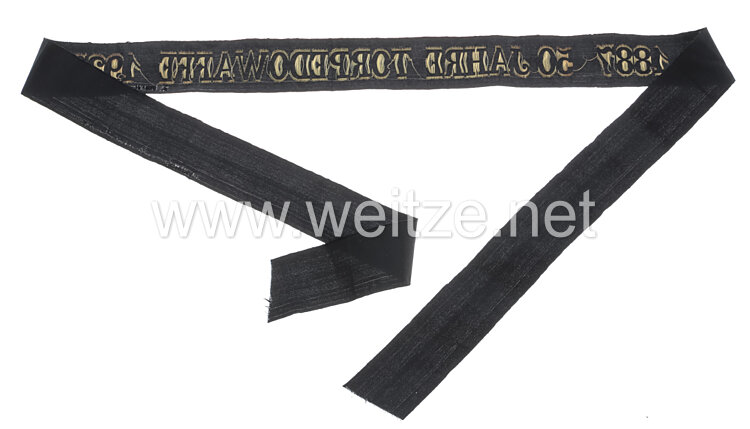
Kriegsmarine Commemorative Cap Tally “1887 50 Jahre Torpedowaffe 1937”
The Kriegsmarine Tradition Cap Tally “1887 50 Jahre Torpedowaffe 1937” (1887 50 Years Torpedo Weapon 1937) represents a significant commemorative piece from German naval history. This cap tally was produced to celebrate the 50th anniversary of the torpedo weapon in the German Navy and connects maritime tradition with the technological development of naval warfare in the early 20th century.
Historical Background of the Torpedo Weapon
The introduction of the torpedo weapon into the German Navy in 1887 marked a turning point in naval strategy. Under Kaiser Wilhelm I and the leadership of Admiral Leo von Caprivi, the Imperial Navy began systematically integrating torpedo boats and later torpedo boat destroyers into its fleet. The torpedo weapon revolutionized naval warfare, as it gave even smaller vessels the ability to effectively engage larger warships.
By 1937, the year of the jubilee, torpedo technology had developed considerably. The Kriegsmarine, officially established as the successor to the Reichsmarine in 1935, possessed modern torpedo boats, destroyers, and submarines equipped with advanced torpedoes. The jubilee year of 1937 fell during a time of intense rearmament under the National Socialist regime and preparation for future conflict.
Cap Tallies in the Kriegsmarine
Cap tallies were an integral component of naval uniforms and served to identify ship assignment or special units. According to naval uniform regulations, sailors and petty officers of the Kriegsmarine wore black cap tallies on their peaked caps. These tallies were traditionally inscribed in Latin script, using gold or silver metallic threads.
Tradition and commemorative cap tallies like this example were issued for special occasions. They documented important anniversaries, fleet visits, or significant events in naval history. The metal thread execution indicates high-quality manufacturing, where gold-colored or silver threads were woven into the black base fabric.
The Inscription and Its Significance
The inscription “1887 50 Jahre Torpedowaffe 1937” in old Latin script clearly identifies the occasion of manufacture. The use of Latin script (as opposed to Fraktur or Sütterlin) corresponded to naval traditions and ensured better international readability. The symmetrical arrangement of the years around the central message followed the aesthetic conventions of maritime cap tallies.
Such commemorative tallies were often worn during official celebrations, fleet parades, or special events. In 1937, various ceremonies likely took place to honor the 50-year existence of the torpedo weapon, during which members of torpedo boat flotillas and submarine units wore these special cap tallies.
Technical Characteristics and Manufacturing
The length of 100 centimeters corresponds to standard measurements for Kriegsmarine cap tallies, which were wrapped around the head and tied at the back. The ends of the tally traditionally hung down over the collar. The mentioned adhesive traces suggest that the tally may have been subsequently fixed for collection purposes or mounted in an album, a practice commonly employed in the post-war period.
The manufacture of such cap tallies was carried out by specialized textile manufacturers that executed orders for the Navy. The metal threads were incorporated during the weaving process, creating a permanent and abrasion-resistant inscription. The quality of execution varied depending on the manufacturer and intended use.
Collector Value and Historical Significance
Today, such tradition cap tallies are sought-after collector's items that provide insight into naval history and the formation of traditions within the Kriegsmarine. They document not only technical developments such as the introduction of the torpedo weapon but also the manner in which the Navy cultivated and transmitted its history and traditions.
The year 1937 marks an important point in the history of the Kriegsmarine, as it precedes the outbreak of World War II but already falls within a phase of intense military preparation. Such objects are therefore important historical witnesses for military-historical research and help to understand the development and self-representation of the German Navy during this period.
Cap tallies from this era serve as tangible connections to the sailors who served and the traditions they upheld, offering modern researchers and collectors a window into the ceremonial and daily life of the Kriegsmarine during the interwar period and the build-up to global conflict.