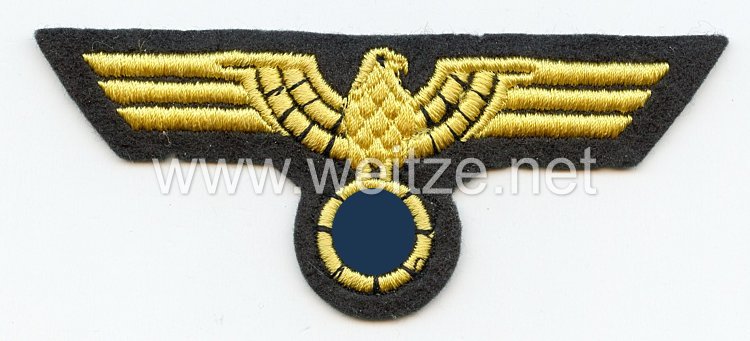
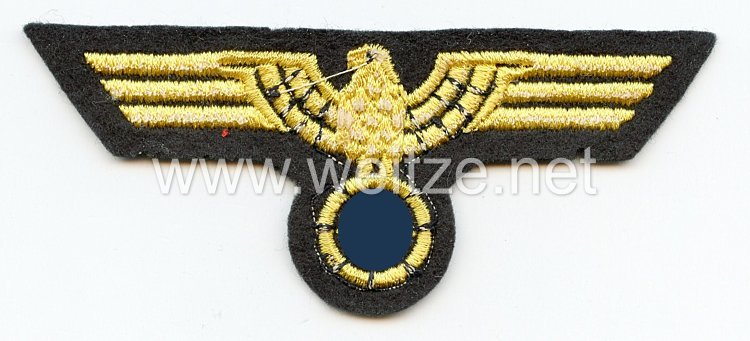
Kriegsmarine Breast Eagle for Enlisted Personnel Coastal Artillery and Ground Units

machine-embroidered version on dark green, condition 2.
448843
65,00

Kriegsmarine Breast Eagle for Enlisted Personnel Coastal Artillery and Ground Units

The Kriegsmarine Breast Eagle for Enlisted Personnel of Coastal Artillery and Land Units represents a characteristic insignia of the German Navy during World War II. This machine-embroidered version on dark green base fabric differed significantly from the breast eagles worn by seagoing crews and marked the special status of land-based naval units.

Historical Background and Development

With the buildup of the German Kriegsmarine after 1935, a complex system of rank insignia and uniform components was established. The breast eagle, also referred to as the national emblem (Hoheitsadler), was a mandatory element of all Wehrmacht uniforms and symbolized allegiance to the National Socialist state. The Kriegsmarine distinguished between different versions depending on branch and purpose of use.

The Coastal Artillery of the Kriegsmarine formed an essential component of German coastal defense. These units were responsible for protecting harbors, naval bases, and strategically important coastal sections. Their duties included repelling enemy naval forces and securing sea routes. The coastal artillery operated heavy guns of various calibers installed in fortified positions.

Uniform Regulations and Wear

According to Kriegsmarine clothing regulations, the breast eagle was worn on the right breast of the uniform jacket, above the breast pocket. The dark green version was characteristic of naval land units and differed from the blue versions worn by ship crews. This coloring was intended to provide better camouflage during land operations while simultaneously indicating membership in land-based formations.

Machine embroidery was the standard production method for enlisted ranks and non-commissioned officers without portepee. It was more cost-effective and faster to produce than hand-embroidered variants reserved for higher ranks. The eagle displayed the stylized national emblem with spread wings and a swastika in its talons, in accordance with official specifications from the High Command of the Kriegsmarine.

Organizational Classification

The coastal artillery was organizationally subordinate to the Naval Command Offices (Marinekommandanturen) and, together with other shore establishments, formed an important part of the maritime defense infrastructure. In addition to pure coastal defense, the Kriegsmarine's land units also included naval infantry, anti-aircraft units, and security forces. These troops also wore the dark green breast eagle and were frequently involved in ground combat operations.

During the course of the war, coastal artillery gained increasing importance, particularly after the construction of the Atlantic Wall beginning in 1942. The fortifications along the European coasts were equipped with thousands of guns operated by naval personnel. These soldiers wore the characteristic dark green breast eagles as a mark of their affiliation with the Kriegsmarine while serving in land-based positions.

Manufacturing and Materials

Machine embroidery was typically executed with gray or silver-colored thread on dark green base fabric. The quality of execution varied depending on the time of manufacture and supplier. During the war years, numerous private textile companies were contracted to produce uniform insignia, leading to variations in workmanship quality. The base fabric usually consisted of wool felt or a cotton-wool blend suitable for sewing onto uniforms.

Collector Value and Historical Significance

Today, these breast eagles are sought-after collector's items that represent important testimonies of military history. They document the organizational structure of the Kriegsmarine and the distinction between different branches of service. Condition, manufacturing quality, and authenticity are decisive factors in the historical and collector evaluation of such pieces. Examples in good condition with verifiable provenance are particularly valuable for military-historical collections and museums.

The dark green breast eagle serves as a tangible reminder of the extensive land operations conducted by the Kriegsmarine, which extended far beyond traditional naval warfare. These insignia represent the thousands of sailors who served in coastal fortifications, contributing to the defense of occupied territories throughout the war. As historical artifacts, they provide valuable insights into the material culture and organizational complexity of the German military during the Second World War.