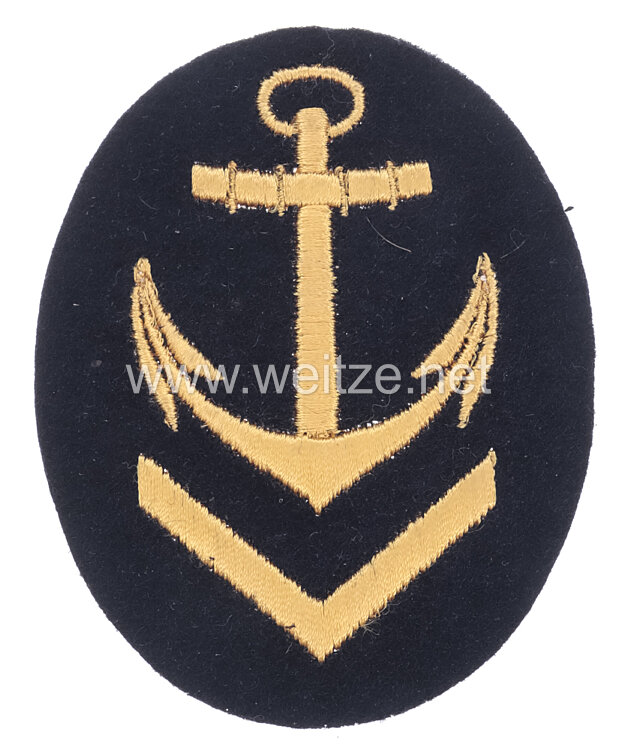
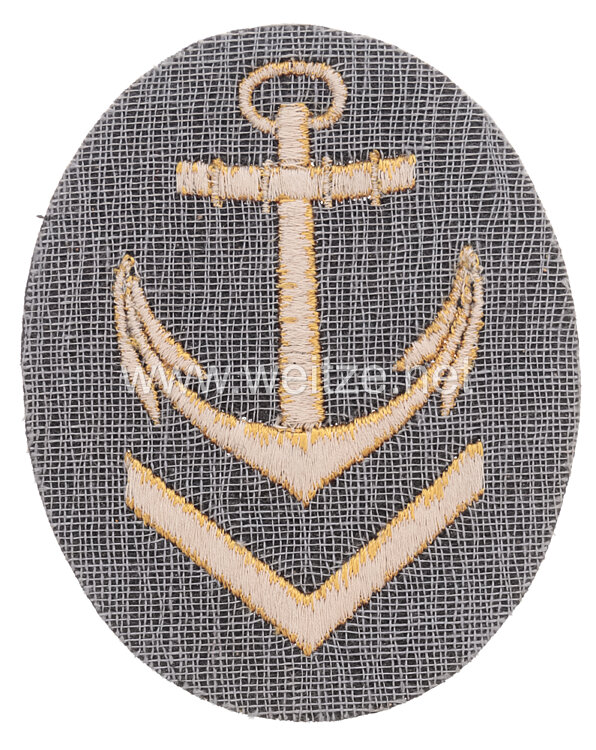
Kriegsmarine Sleeve Insignia Obermaat (Chief Petty Officer Second Class) Wehrersatzwesen (Recruitment and Replacement Service)
The Kriegsmarine sleeve insignia for Obermaat in the Wehrersatzwesen represents a characteristic rank badge of the German Navy during World War II. This machine-embroidered badge, designed for the blue shirt of naval uniforms, documents the complex organizational structure of German naval forces between 1935 and 1945.
The Kriegsmarine, officially established on June 1, 1935, as the successor organization to the Reichsmarine, developed a comprehensive system of rank insignia and specialization badges. The rank of Obermaat (literally “senior mate”) corresponded to the middle non-commissioned officer level and was positioned between Maat and Bootsmann (Boatswain). This rank group formed the backbone of the maritime forces and represented experienced specialists responsible for training and leading junior enlisted ranks.
The Wehrersatzwesen (military replacement/recruitment system) designates the administrative and organizational structure responsible for recruiting, registering, and managing conscripts. Personnel in the Wehrersatzwesen were not primarily intended for frontline deployment but for administrative, training, and management tasks in the homeland. This included examining recruits, assigning them to units, managing personnel files, and coordinating between military needs and civilian resources.
The sleeve insignia of the Kriegsmarine followed precise uniform regulations laid down in various service regulations and uniform specifications. The markings for the blue shirt differed from badges for other uniform components such as the blue dress coat or white summer uniform. Machine embroidery enabled standardized production and ensured uniformity across different manufacturing sites.
The wearing of sleeve insignia was strictly regulated. Rank badges were worn on the upper arm, with the position and number of chevrons or other symbols indicating the respective rank. For the Obermaat, these typically consisted of two chevrons arranged one above the other. Additional career badges or special qualifications could supplement the basic markings.
The specific design for the Wehrersatzwesen suggests a special use. While regular naval units wore their standard insignia, the Wehrersatzwesen possibly developed its own variants or additional markings to clarify the administrative function. This facilitated quick identification of personnel with specific responsibilities within the complex military bureaucracy.
The machine manufacturing of such badges developed into a significant industry in the 1930s. Numerous textile companies in Germany received contracts for producing uniform components. Quality varied by manufacturer and production period, with badges from the early war years tending to be of higher quality than later productions under material shortages.
Historically, this sleeve insignia reflects the increasing importance of the administrative infrastructure necessary for maintaining German armed forces. As the war progressed, the Wehrersatzwesen gained significance as frontline losses required a constant supply of trained personnel. Wehrersatzwesen offices coordinated conscriptions, managed exemptions for essential war workers, and organized basic military training.
The preservation of such uniform components today provides important insights into the organizational structure of historical armed forces. They document not only military hierarchies but also the social order and administrative complexity of totalitarian warfare. For military history collections and museums, authentic sleeve insignia represent important study objects that contribute to reconstructing uniforms and identifying historical photographs.
The condition and manufacturing technique of these insignia also reveal information about wartime production. Machine embroidery allowed for mass production while maintaining relatively consistent quality standards. The use of specific thread colors, backing materials, and stitching patterns can help authenticate pieces and determine their approximate production date.
These artifacts serve as tangible connections to individuals who served in administrative capacities, often overlooked in traditional military narratives focused on combat operations. The Wehrersatzwesen personnel played crucial roles in sustaining the war effort through their organizational and administrative expertise.