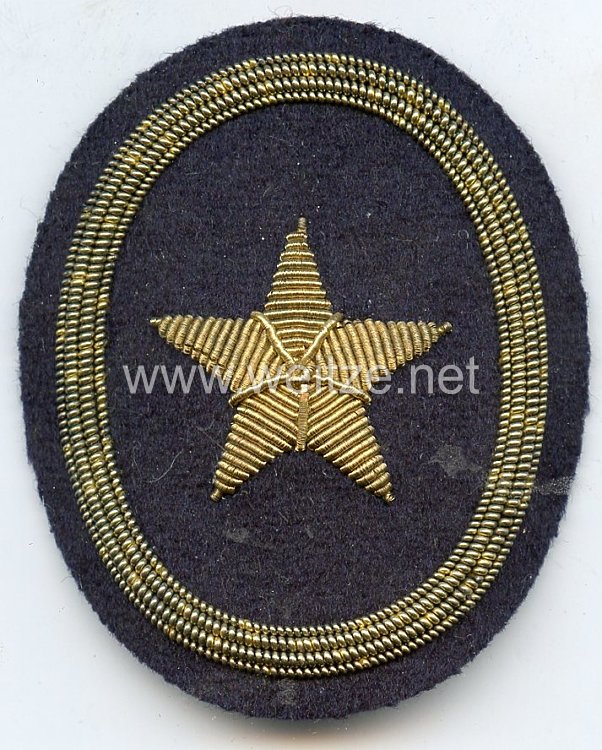
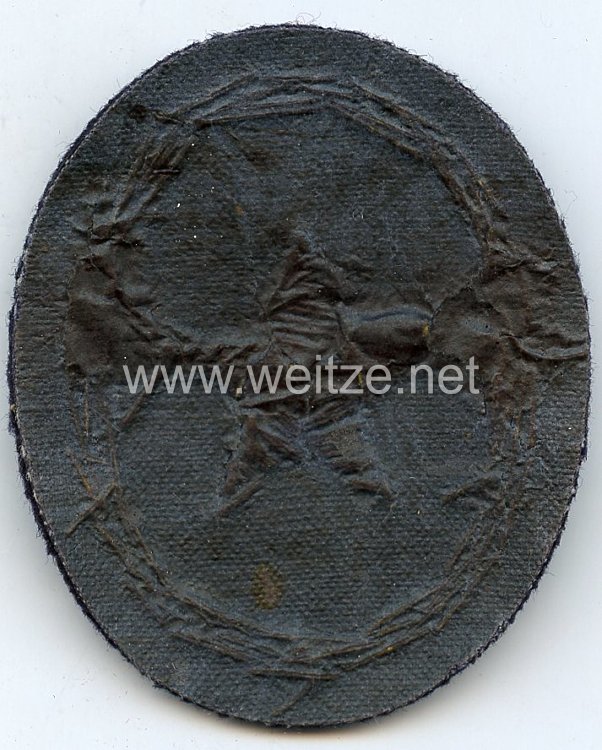
Kriegsmarine Sleeve Insignia Cadets Seaman Career Track

Metal thread hand-embroidered version, condition 2+.
439443
60,00

Kriegsmarine Sleeve Insignia Cadets Seaman Career Track

The Kriegsmarine sleeve insignia for cadets of the naval career path represents a significant example of military rank identification within the German Navy during World War II. These insignia served to clearly identify military status and career group within the complex hierarchy of German naval forces between 1935 and 1945.

The Kriegsmarine was officially established on June 1, 1935, as the successor to the Reichsmarine, forming one of the three branches of the Wehrmacht. With its founding, a comprehensive system of rank insignia, uniform regulations, and distinctions was introduced, oriented toward traditional maritime customs while also reflecting the specific requirements of the National Socialist military apparatus.

The cadets of the naval career path formed the future officers for deck and navigation positions in the Kriegsmarine. Unlike other career paths such as engineering, medical, or administrative services, the naval career path focused on classical nautical and tactical skills of naval warfare. Training for these cadets took place at the Naval Academy Mürwik in Flensburg, as well as aboard training cruisers and other instructional vessels.

The described hand-embroidered execution with metal thread represents the higher-quality variant of such insignia. While simpler versions were machine-made on cloth backing, hand-embroidered examples were typically intended for officers and higher ranks. The metal thread used was usually silver-plated or tinned copper wire, embroidered onto a dark blue cloth background, corresponding to the characteristic coloring of Kriegsmarine uniforms.

The sleeve insignia was worn according to the Dress Regulations for the Kriegsmarine at specified positions on the uniform sleeve. The precise design of these insignia was meticulously regulated in official Kriegsmarine clothing regulations, including size, placement, and quality of execution. Specific markings were designated for cadets that indicated their status as officer candidates while simultaneously showing their not-yet-completed training.

The naval career path was traditionally the most prestigious career within the navy, as it led directly to ship command and leadership positions. Cadets of this career path underwent demanding multi-year training that combined theoretical studies in navigation, tactics, seamanship, and weapons science with practical seafaring. Upon successful completion, they were promoted to Leutnant zur See (Sub-Lieutenant) and could continue their careers as naval officers.

The craftsmanship quality of hand-embroidered insignia reflects maritime uniform traditions reaching back to the 18th and 19th centuries. Such embroidery work was often produced by specialized military effects companies or naval tailors who possessed the necessary expertise and official authorization. The quality grade of 2+ indicates very good preservation condition, which is remarkable for textiles from this era.

In the context of naval history, such sleeve insignia document not only the formal structures of military organization but also the material culture and self-conception of the Kriegsmarine. They were integral components of uniforming that made affiliation, rank, and function recognizable at a glance – an essential requirement in military daily life aboard ship and ashore.

Today, authentic Kriegsmarine sleeve insignia represent important study objects for military historians, uniform researchers, and museums. They enable detailed insights into the organizational structure, hierarchies, and visual codes of German naval warfare during World War II and contribute to understanding the complex history of this epoch.