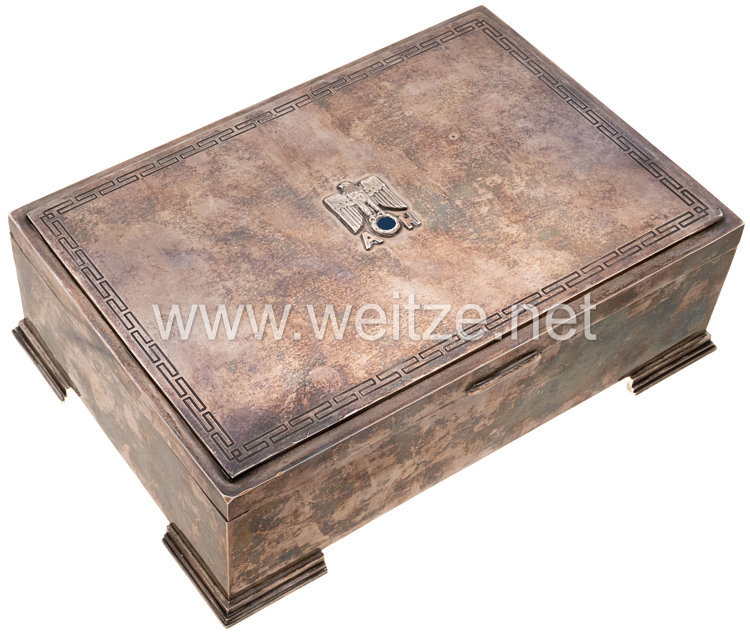
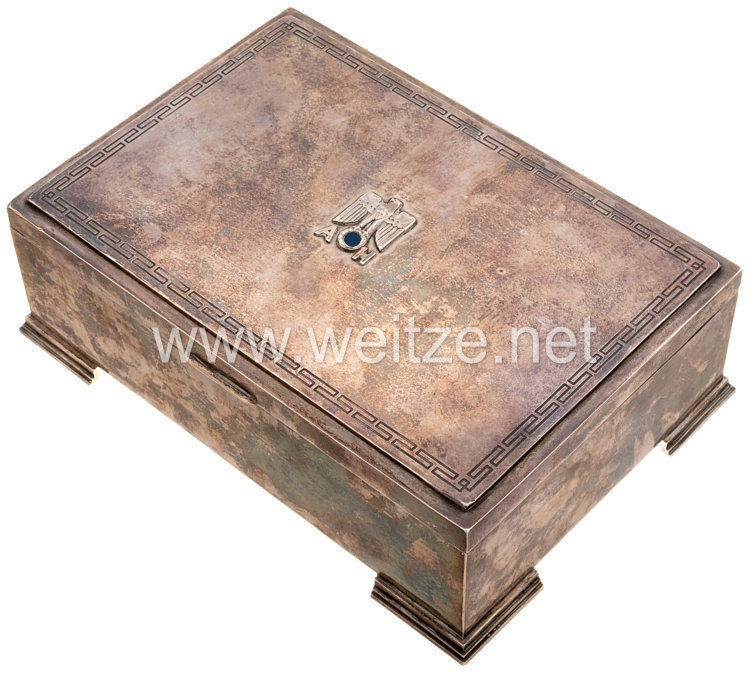
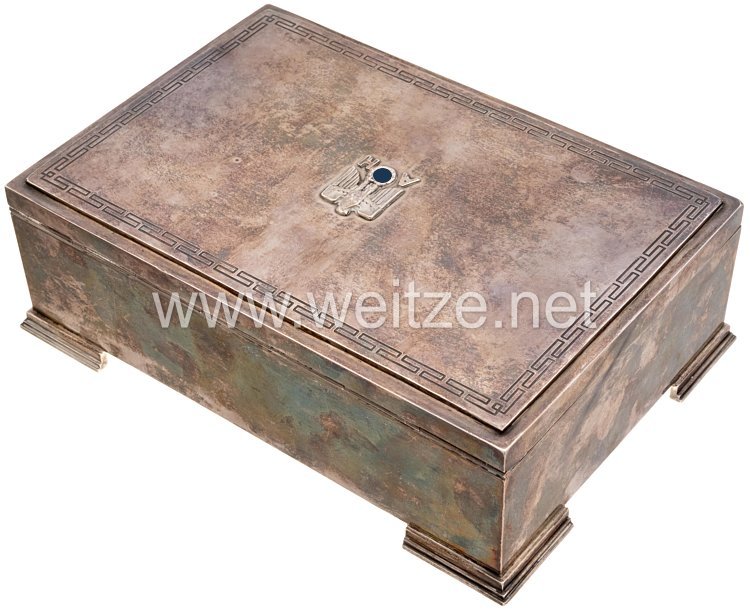
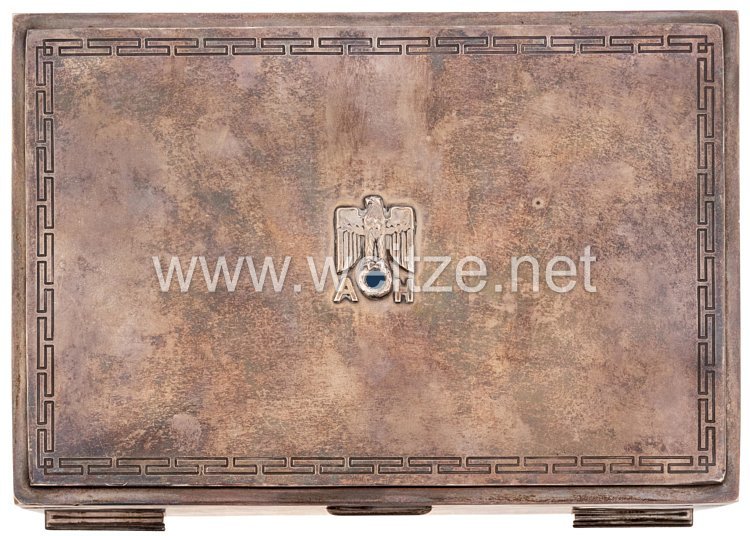
III. Reich Adolf Hitler: silberne Zigarrendose aus dem Tafelsilber der Neuen Reichskanzlei, Berlin
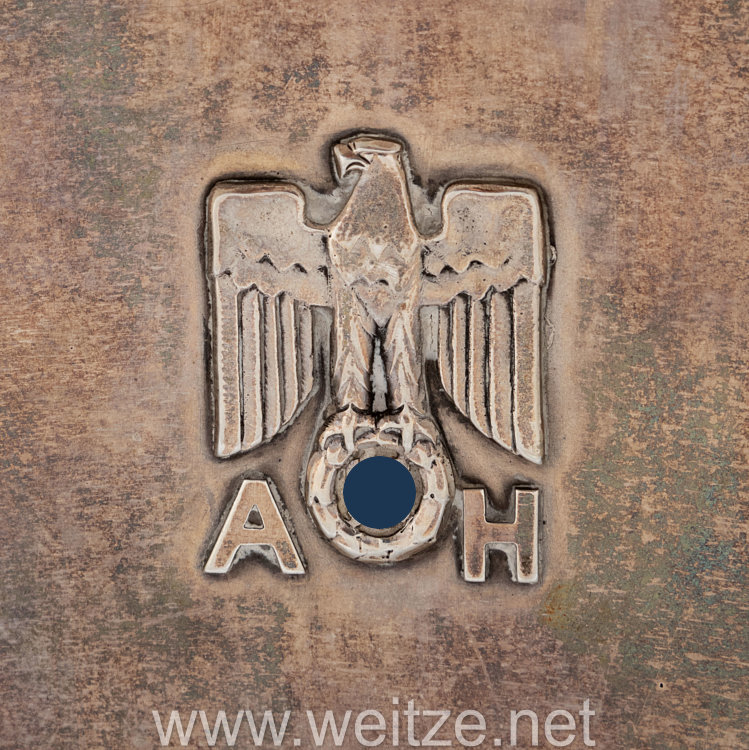
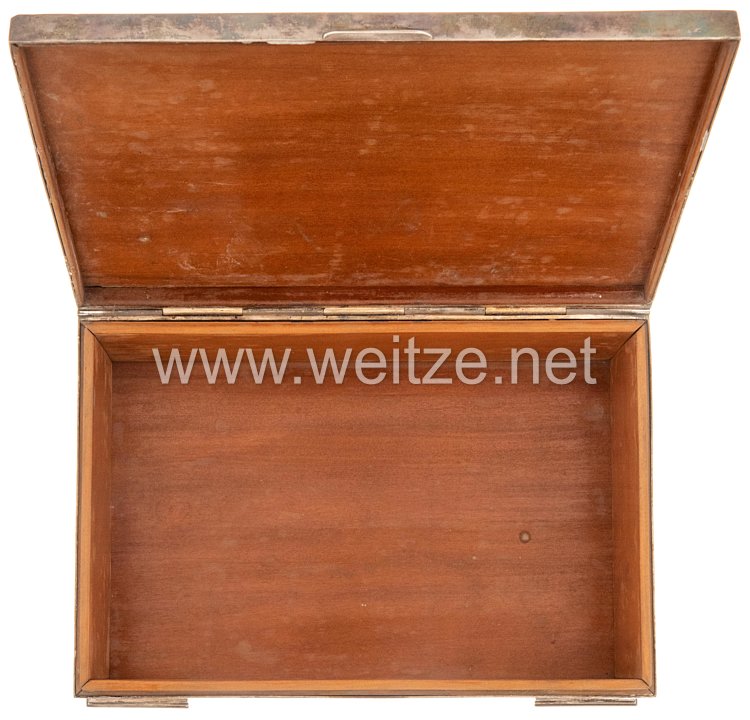
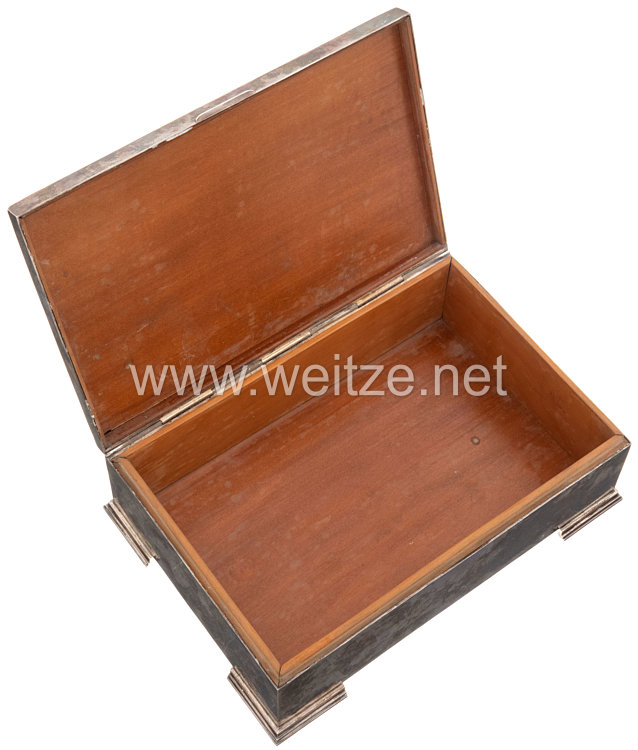
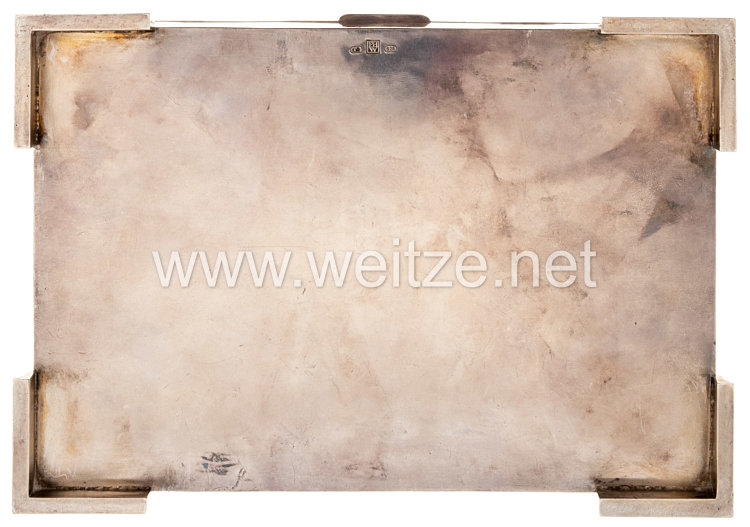
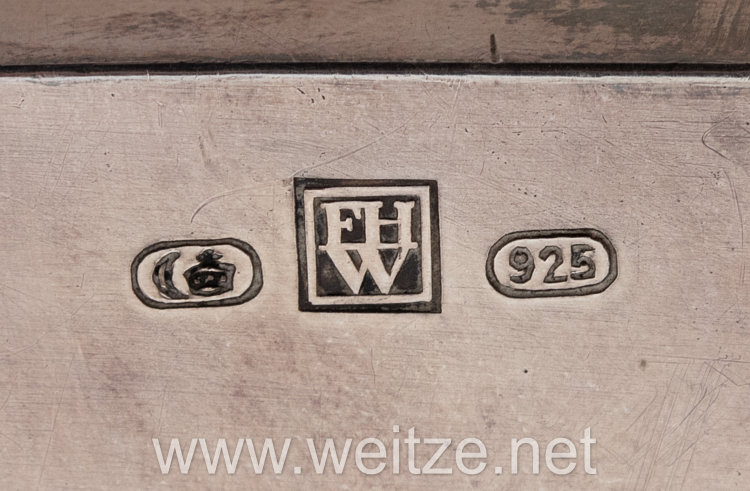
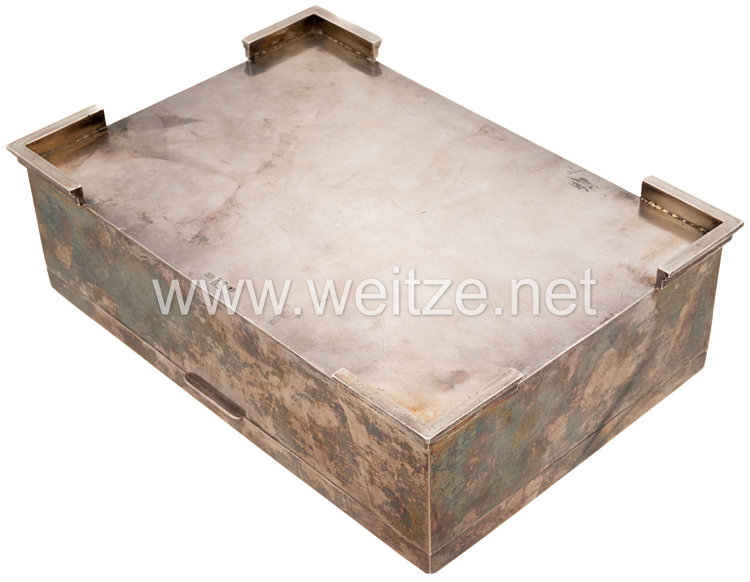
um 1938/39. Silberne Zigarrenkiste mit hochpolierten Oberflächen, auf dem Deckel zentrisch aufgelegter Hoheitsadler mit den Initialen"A H", auf dem Deckel mit umlaufendem Mäanderband. 3-stufige Standfüße. Im Boden mit Juwelierspunze "FHW" der Juweliere Hermann und Franz Wandinger München und Feingehaltspunze "925" Silber neben Halbmond und Krone. Die Innenauskleidung aus fein gemasertem Zedernholz. Maße 7 x 22,4 x 15,5 cm. Gewicht ca. 1220 Gramm. Leichte Altersspuren, ungereinigt, mit schöner Patina. Zustand 2.
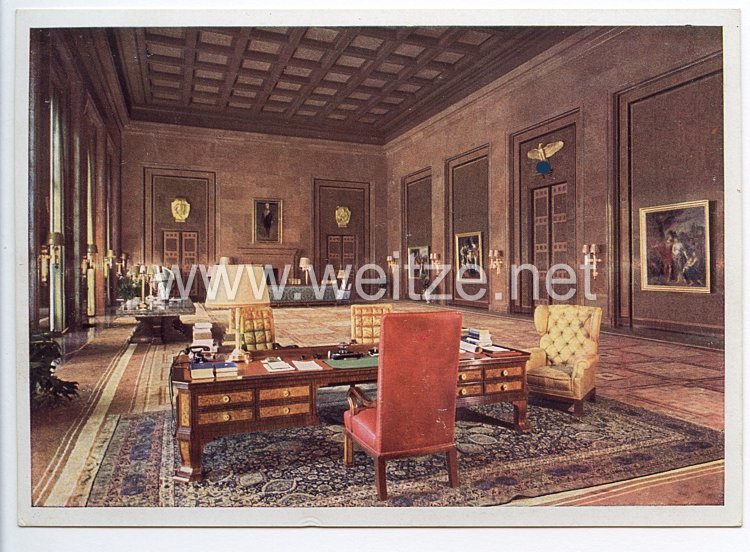
Obwohl Hitler selbst Nichtraucher war, durften Tabakwaren bei großen Empfängen in der Neuen Reichskanzlei für seine hochrangigen Staatsgäste nicht fehlen. Unter den Rauchutensilien seines persönlichen Tafelsilbers, wie etwas den Zigarettendosen in unterschiedlichen Größen, den Haltern für Zündholzschachteln oder auch dem Zigarrenabschneider, zählt die Zigarrendose zu dem am seltensten anzufindenden Objekten.
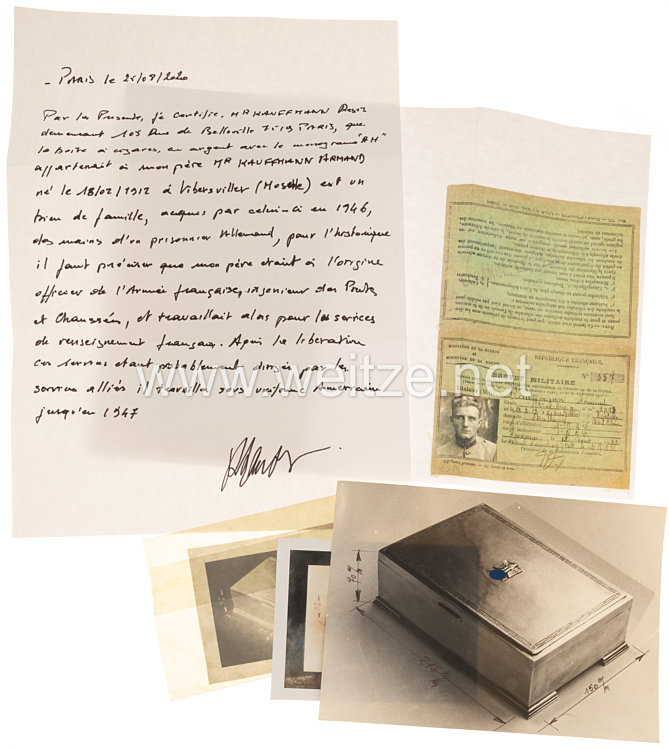
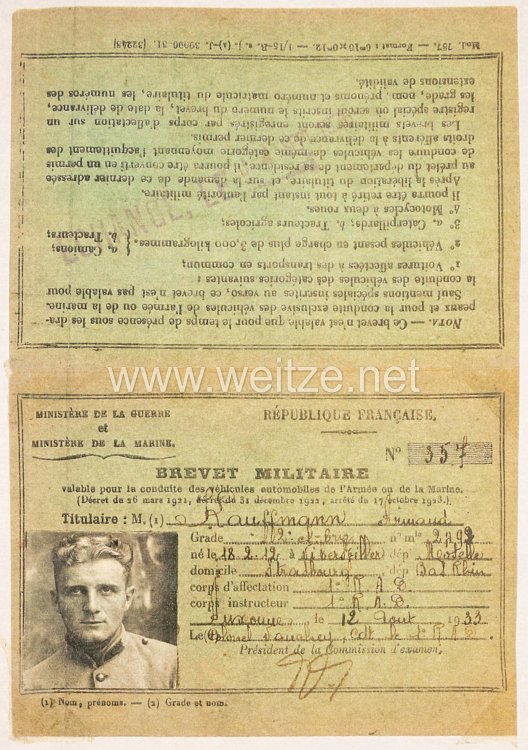
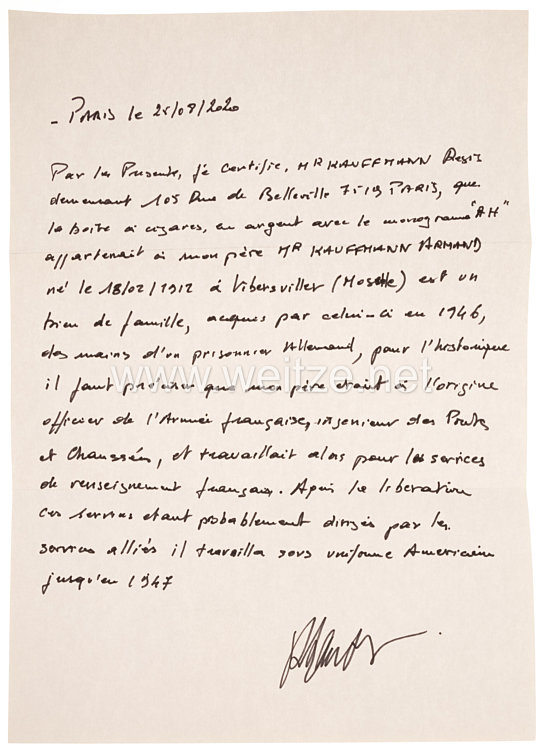
Bei diesem Stück handelt es sich um die Kriegsbeute des französischen Lieutenant Armand Kauffmann, der 1946 als Verhöroffizier bei der US Armee diente. Er erhielt diese Zigarrenkiste von einem deutschen Kriegsgefangenen in Berchtesgaden im Austausch für seine Freilassung. Anbei die Farbfotokopie des französischen Militärausweises (1933), ein Fotonegativ und Abzüge der Kiste aus den 1950er Jahren sowie die Erklärung des Sohnes, von dem wir diese Kiste erwerben konnten. Mit dieser historischen Provenienz wohl einmalig.
Die letzte Zigarrenkiste wurde im Jahr 2005 auf der 48. Auktion von Hermann Historica für EUR 37.000,-- plus Aufgeld zugeschlagen.
Obwohl Hitler selbst Nichtraucher war, durften Tabakwaren bei großen Empfängen in der Neuen Reichskanzlei für seine hochrangigen Staatsgäste nicht fehlen. Unter den Rauchutensilien seines persönlichen Tafelsilbers, wie etwas den Zigarettendosen in unterschiedlichen Größen, den Haltern für Zündholzschachteln oder auch dem Zigarrenabschneider, zählt die Zigarrendose zu dem am seltensten anzufindenden Objekten.
Bei diesem Stück handelt es sich um die Kriegsbeute des französischen Lieutenant Armand Kauffmann, der 1946 als Verhöroffizier bei der US Armee diente. Er erhielt diese Zigarrenkiste von einem deutschen Kriegsgefangenen in Berchtesgaden im Austausch für seine Freilassung. Anbei die Farbfotokopie des französischen Militärausweises (1933), ein Fotonegativ und Abzüge der Kiste aus den 1950er Jahren sowie die Erklärung des Sohnes, von dem wir diese Kiste erwerben konnten. Mit dieser historischen Provenienz wohl einmalig.
Die letzte Zigarrenkiste wurde im Jahr 2005 auf der 48. Auktion von Hermann Historica für EUR 37.000,-- plus Aufgeld zugeschlagen.