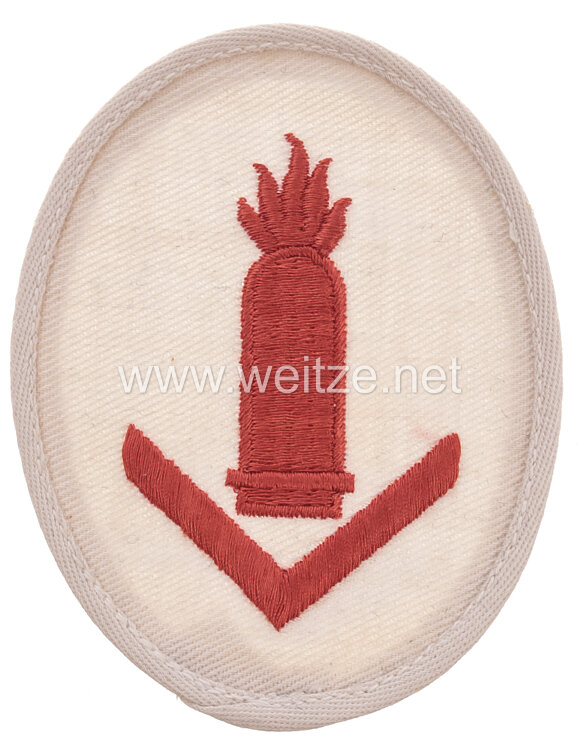
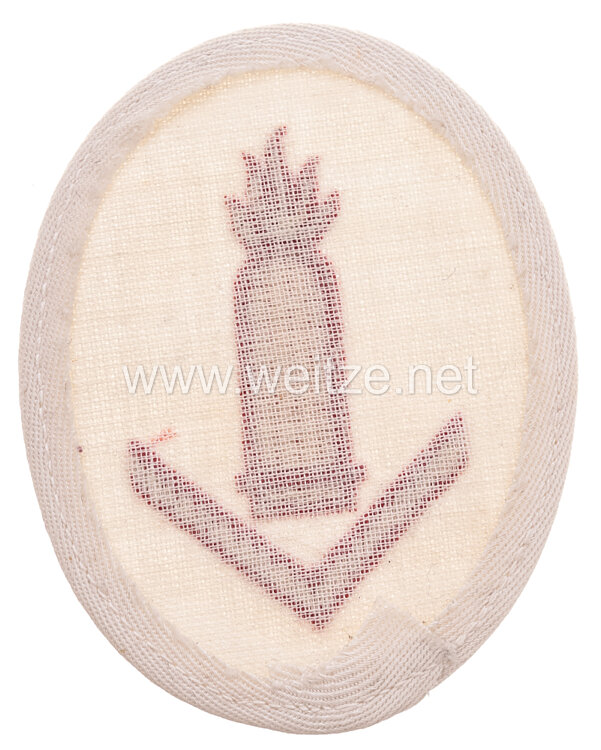
Kriegsmarine Sleeve Insignia Special Training Gunnery Leader for Naval Target and Anti-Aircraft Artillery

For the white blouse, condition 2.
466341
25,00

Kriegsmarine Sleeve Insignia Special Training Gunnery Leader for Naval Target and Anti-Aircraft Artillery

The Kriegsmarine Sleeve Badge for Special Training as Gun Commander for Naval and Anti-Aircraft Artillery represents a fascinating chapter in German naval history during World War II. These special badges were part of a complex system of qualification insignia that the Kriegsmarine developed to visibly demonstrate the technical expertise and specialization of its crew members.

The introduction of these specialized badges occurred in the early 1940s, when the increasing complexity of modern weapon systems required highly specialized training. The badge for Gun Commander for Naval and Anti-Aircraft Artillery was awarded to petty officers and enlisted men who had completed comprehensive training in the operation and command of both naval guns for engaging surface targets and anti-aircraft artillery. This dual qualification was particularly valuable as warships increasingly faced threats from the air.

The training to become a Gun Commander was demanding and included both theoretical and practical components. Candidates had to acquire extensive knowledge in ballistics, fire control, target identification and tracking, as well as maintenance and upkeep of complex weapon systems. Training took place at specialized naval schools, including the Naval Artillery Schools in various German coastal cities. After successful examination, graduates received the right to wear the corresponding sleeve badge.

The badge itself was worn on the left upper arm of the white summer blouse according to the Kriegsmarine dress regulations. The white blouse was part of the summer uniform and was worn particularly in warmer climates or during the summer months. The position on the sleeve was precisely prescribed and was typically located between the shoulder and elbow. The design followed strict naval guidelines regarding size, material, and execution.

The materials and manufacture of these badges varied throughout the war. Early examples were often produced in high-quality execution with fine embroidery on dark cloth. As the war progressed and material shortages increased, simplified versions were produced, sometimes in woven or printed form. The badges were manufactured both by government facilities and private contractors fulfilling orders from the Naval Clothing Offices.

The significance of these special badges went beyond mere identification. They contributed to morale and esprit de corps by acknowledging the special skills and hard work of the wearers. In the strictly hierarchical structure of the Kriegsmarine, such qualification badges represented a form of recognition that could be earned regardless of rank. A simple sailor with multiple special badges could enjoy considerable respect.

Gun commanders played a crucial role aboard warships. They were responsible for operating the main armament and had to make quick, precise decisions in combat situations. The combination of naval and anti-aircraft artillery training became particularly important after 1942, when Allied air attacks on German warships intensified. The ability to effectively engage both surface targets and aircraft significantly increased the survivability of the ships.

After the war ended in 1945, these badges lost their official function with the dissolution of the Kriegsmarine. Today they are significant military-historical collectibles that provide insight into the system of military training and decorations of the Third Reich. The condition of such badges varies greatly, with well-preserved examples being particularly valued by collectors.

The study of these sleeve badges enables historians to trace the development of naval doctrine and adaptation to new methods of warfare. The specialization in artillery operation reflects the technological development of naval warfare, where fire control systems, radar, and improved anti-aircraft systems became increasingly important. These badges are therefore not merely military equipment items, but also witnesses to a military-technical era.

From a collecting perspective, authenticity verification requires careful examination of materials, construction techniques, and manufacturing details. Original wartime badges typically show characteristic features of period production methods, including specific thread types, backing materials, and construction techniques that distinguish them from post-war reproductions. Such technical analysis forms an essential part of military collecting and historical research.

r