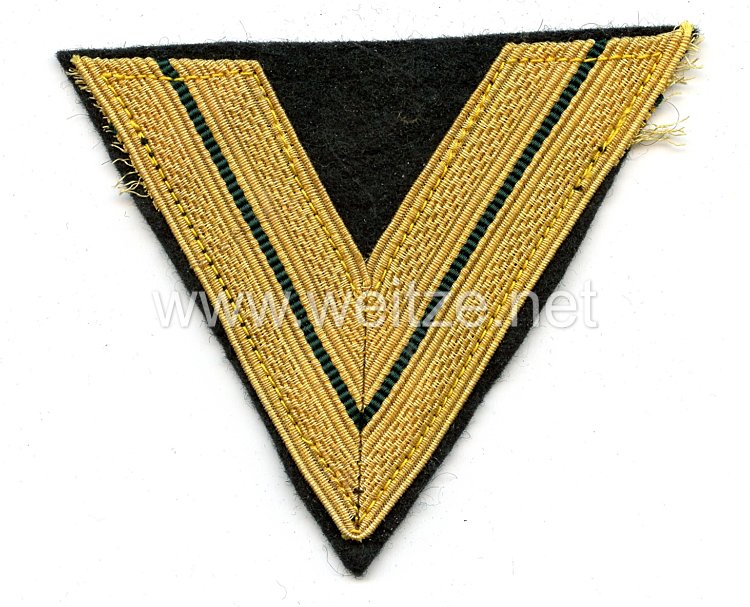
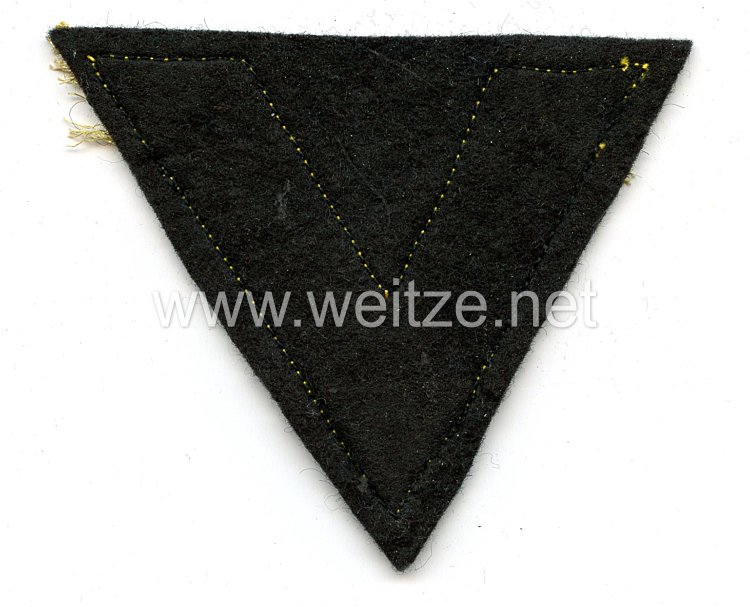
Kriegsmarine Sleeve Insignia Leading Seaman for Field Gray Uniform
The Kriegsmarine sleeve badge for Obergefreiter on field-grey uniform represents an authentic testament to German naval uniform tradition during World War II. This specific badge was manufactured on dark green cloth and represents the rank of Obergefreiter (Senior Lance Corporal) of the Kriegsmarine, worn on the field-grey uniform.
The Kriegsmarine, the official designation of the German Navy from 1935 to 1945, developed a complex system of rank insignia and service grade identifications. Following the reintroduction of universal conscription in 1935 and the buildup of the new Wehrmacht, uniform regulations were fundamentally revised. The Kriegsmarine distinguished itself significantly in its uniforming from the Army and Air Force, yet retained certain traditional elements of the Imperial Navy.
The rank of Obergefreiter represented the second level in the hierarchy of enlisted ranks, standing above the simple sailor or Gefreiter (Lance Corporal). This rank was typically awarded after a certain period of service and upon proven performance. Identification was accomplished through specific sleeve badges sewn onto the uniform.
The field-grey uniform was actually atypical for the Kriegsmarine, which normally wore dark blue uniforms. Field grey was the characteristic color of Army uniforms. However, there were certain situations and operational areas where naval personnel also wore field-grey uniforms. This particularly concerned:
Naval personnel deployed in ground units or special commands frequently wore field-grey uniforms. The naval infantry, coastal artillery units, and certain special forces fell into this category. Members of naval divisions, which were increasingly deployed in ground combat toward the end of the war, also wore field-grey uniforms.
The dark green cloth of the badge is characteristic of the Kriegsmarine. While the Army used yellow or gold backing for their insignia, the Kriegsmarine traditionally used dark green or dark blue cloth as base material for their rank badges. This coloring enabled quick identification of the service branch, even when field-grey uniforms were worn.
The manufacture of such sleeve badges was carried out by specialized manufacturers authorized by the Wehrmacht leadership. Quality varied depending on the manufacturer and production period. Early war years generally showed higher manufacturing quality with finer embroidery and better materials. As the war progressed and material shortages increased, simplified versions were produced.
The fact that this specimen is described as unworn significantly increases its historical and collector value. Unworn badges were either in depots, with manufacturers, or for other reasons never attached to uniforms. They show the original condition without signs of wear, fading, or damage.
The wearing regulations for sleeve badges were detailed in the corresponding uniform regulations of the Kriegsmarine. The badges were usually worn on the left upper arm, in a precisely specified position. Correct placement was part of military discipline and was checked during inspections.
In the context of military history, such uniform components document the organizational structure and hierarchy of the Wehrmacht. The various service grades, their identification, and associated responsibilities were essential for the functionality of the military organization. The Obergefreiter typically already had some experience and could be entrusted with leading small groups or special tasks.
Today, such sleeve badges are important study objects for military historians and uniform specialists. They assist in authenticating uniforms in museums and collections and contribute to understanding military organizational structures. Condition 2 (in the usual collector grading scale of 1-6, where 1 is mint) indicates a very well-preserved piece that might show minimal storage traces but is overall in excellent condition.
The collecting and study of such insignia serves an important educational purpose, helping researchers and students understand the complex organizational structure of World War II military forces. These artifacts provide tangible connections to historical events and the individuals who served, offering insights into military culture, hierarchy, and the material culture of warfare.