Wehrmacht Army Overseas Cap of an Officer and Wehrmacht Official

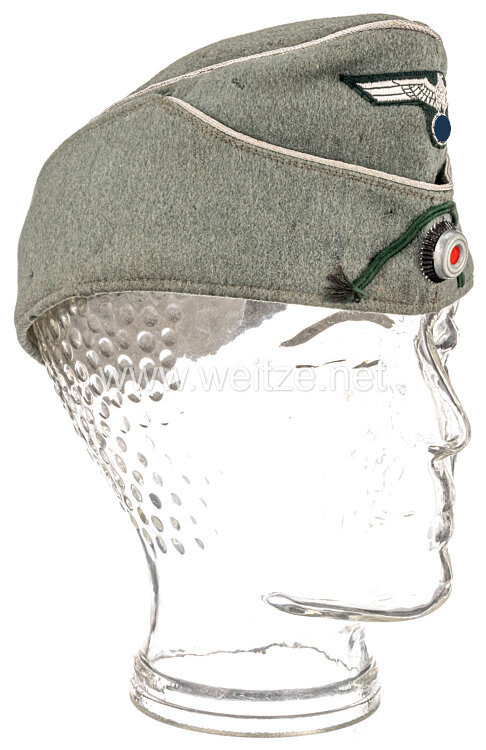
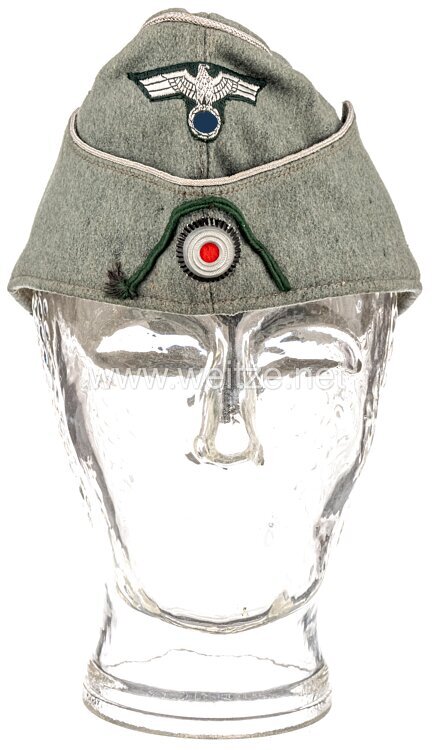
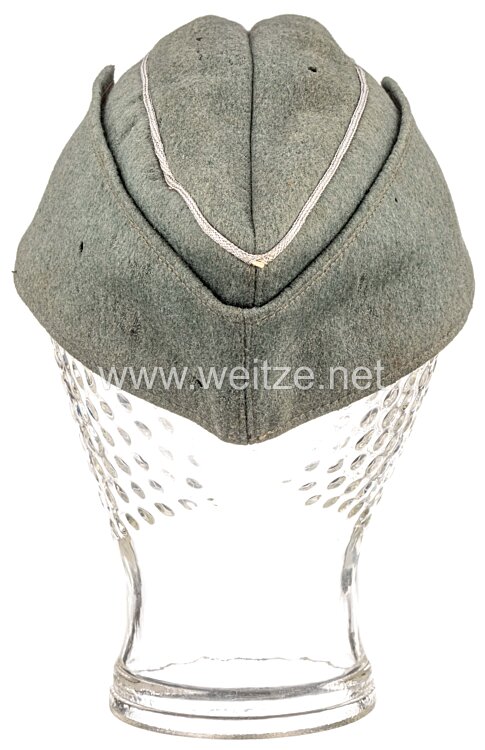
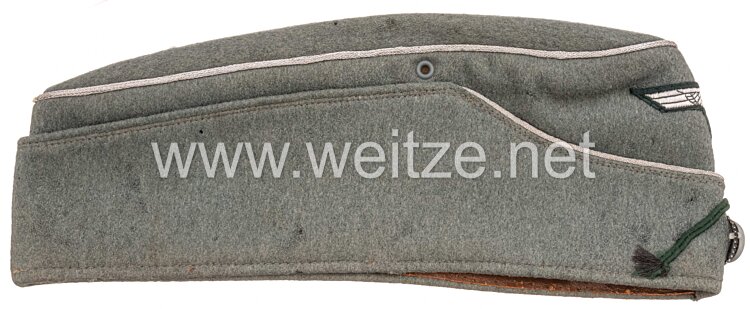
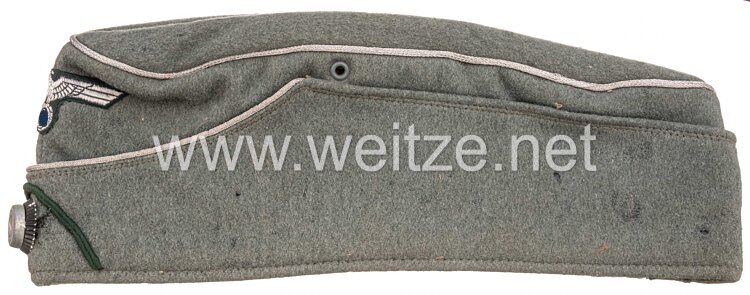
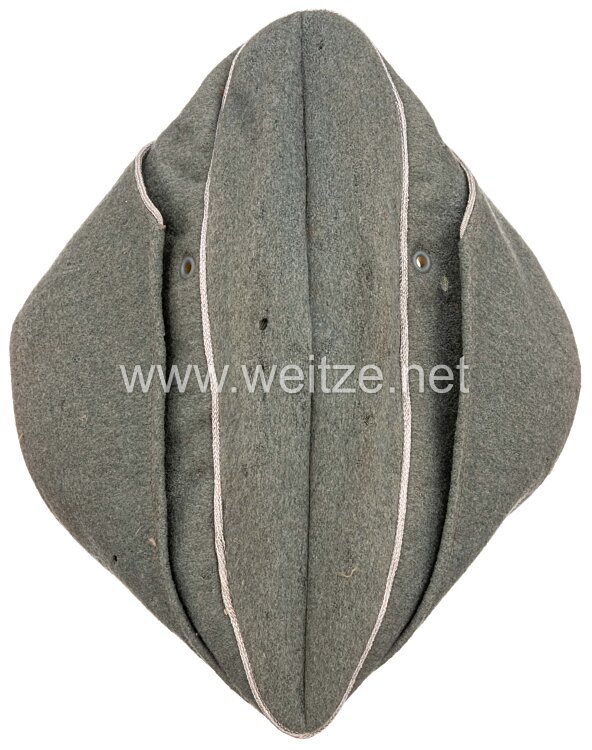
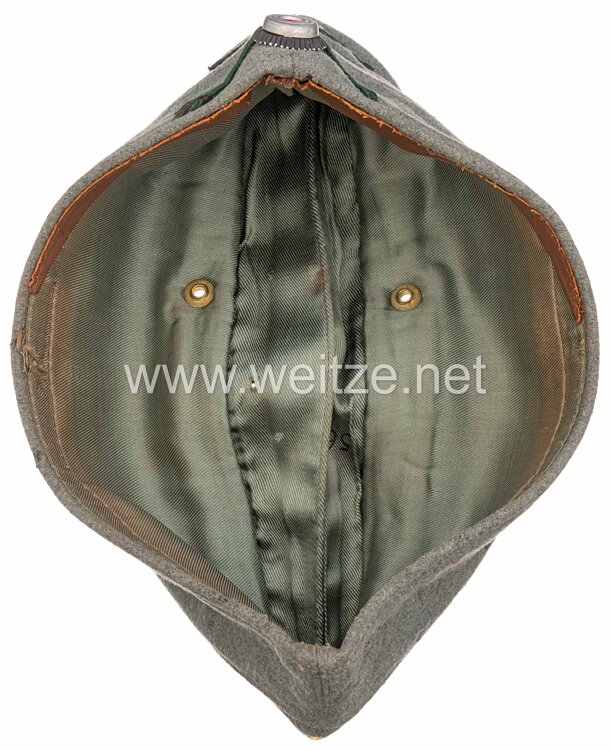
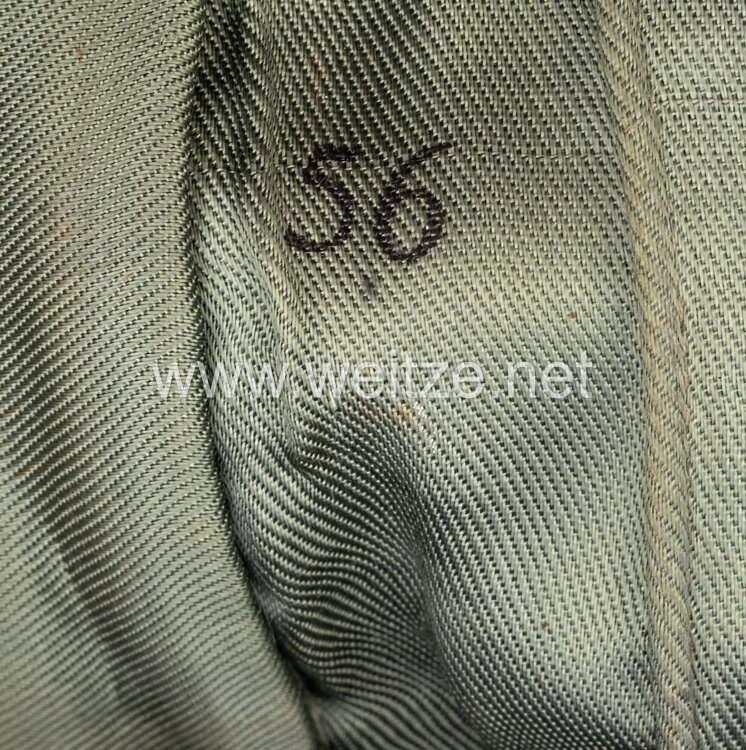
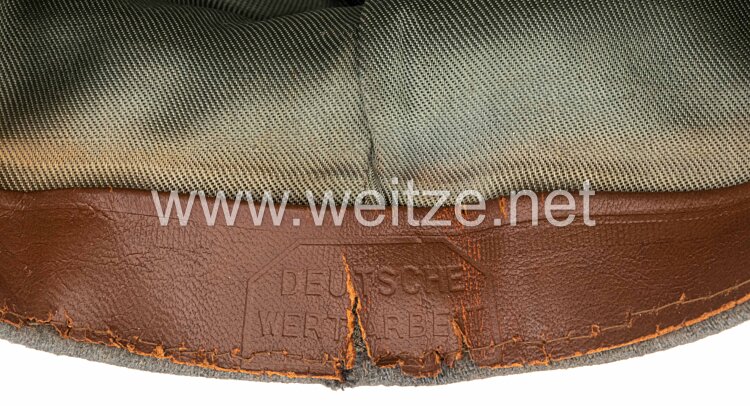
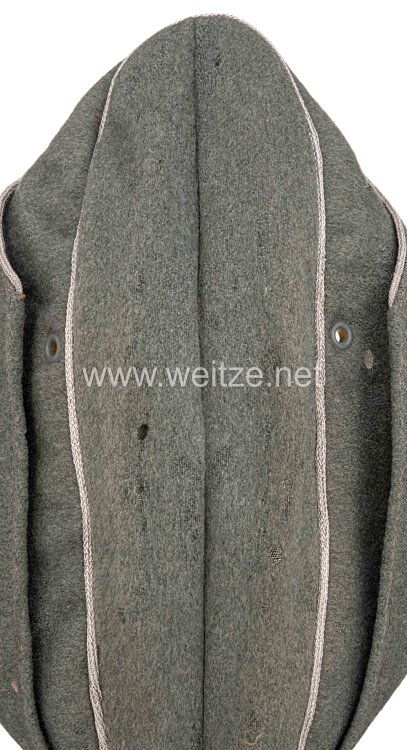
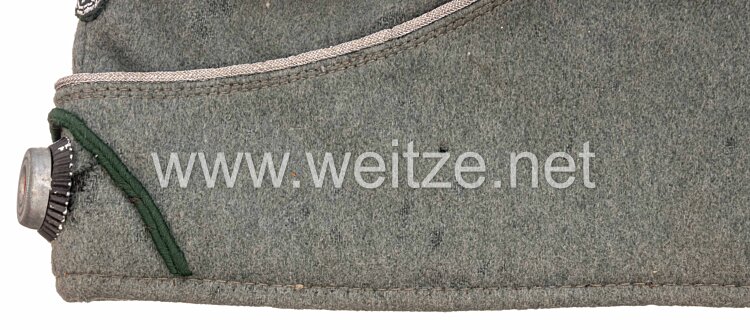
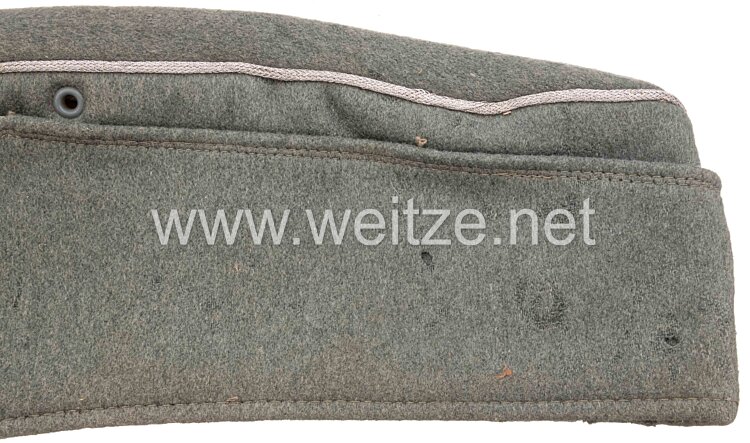
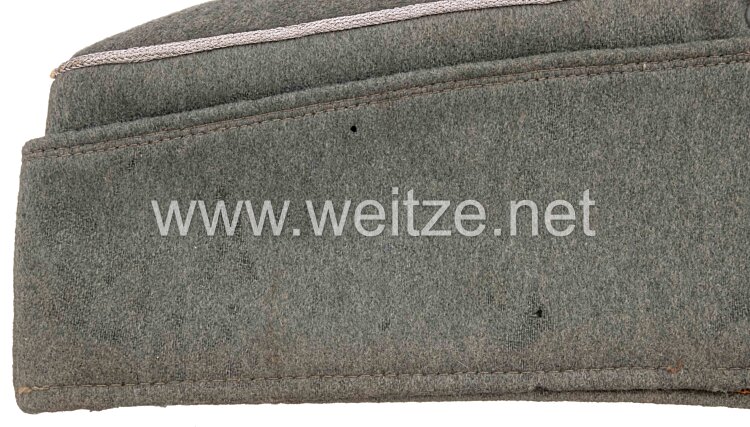
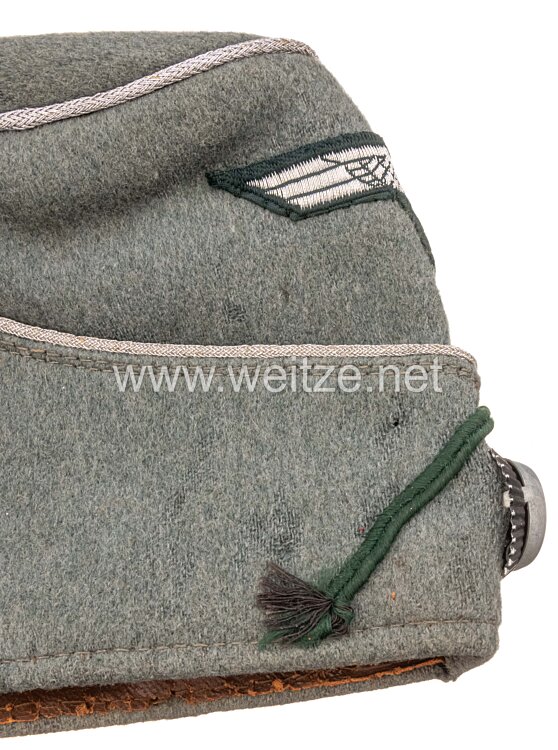
Constructed of field-gray wool cloth, trimmed throughout with silver piping, complete with metal thread-woven overseas cap eagle and cockade made of fine zinc, the soutache chevron in dark green. Interior with brown sweatband leather and green silk lining, head size marked 56. Moth damage, leather lining damaged, condition 2-.
465840
600,00

Wehrmacht Army Overseas Cap of an Officer and Wehrmacht Official

The present Schiffchen (also known as garrison cap or side cap) represents a characteristic piece of headgear from the Wehrmacht during World War II. This particular version was designated for officers and Wehrmacht officials of the Army, clearly identifiable by its silver piping.

The side cap was worn in the Wehrmacht as a practical alternative to the peaked cap, particularly for indoor service, activities where the peaked cap was impractical, or in the field. Its introduction occurred during the Reichswehr era and was adopted into the Wehrmacht after 1935. The Army Service Regulations (H.Dv.) precisely regulated the appearance and wearing conditions of this headgear.

The manufacture from field-grey cloth corresponds to the standardized coloring of the Wehrmacht Army. The surrounding silver piping was the characteristic mark for officers and Wehrmacht officials of officer rank. Enlisted men and non-commissioned officers wore side caps without this piping or with different specifications. The Waffenfarbe (branch color) was indicated by the so-called Soutache chevron – in this case dark green, which could be assigned to various branches including mountain troops, Panzergrenadiers, or certain administrative services.

The insignia on the side cap followed strict regulations: The Wehrmacht eagle was attached on the right side, while the cockade in the Reich colors of black-white-red was positioned on the left side. On this specimen, both insignia are crafted as metal-thread embroidery and from fine zinc respectively, indicating high-quality manufacture. As the war progressed, increasingly simpler materials were used as metal and quality fabrics became scarce.

The interior fittings with brown sweatband leather and green silk lining correspond to the typical manufacture of officers' caps. The sweatband served to absorb moisture and provide wearing comfort, while the silk lining was a sign of the higher quality of officers' equipment. The indicated size 56 corresponds to an average measurement.

Production of such side caps was carried out by various Army Clothing Offices and private contractors. Officers were generally required to procure their uniforms and equipment themselves, which led to quality differences. Wehrmacht officials, however, often received their equipment through allocation.

The stated condition with moth damage and damaged leather lining is typical for textiles from this period that have been stored for decades. Wool was particularly susceptible to moth infestation, and leather undergoes natural wear and deterioration through drying out.

Historically speaking, this side cap represents the German military tradition of differentiated uniforming according to rank and branch of service. The Wehrmacht adopted many traditions from the Imperial Army and the Reichswehr while simultaneously modernizing cut and materials. After 1945, such uniform pieces were mostly confiscated or destroyed by the Allies, which is why preserved specimens possess collector value today and represent important testimonies of military history.

r