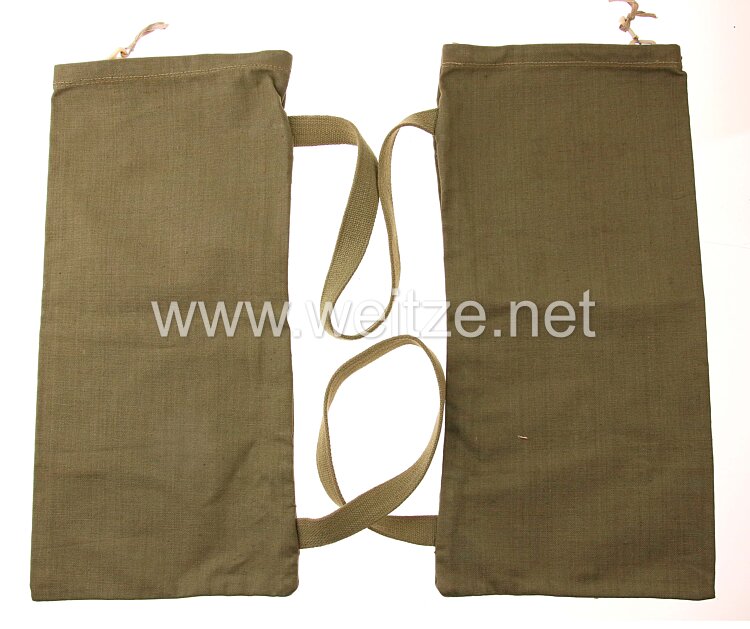
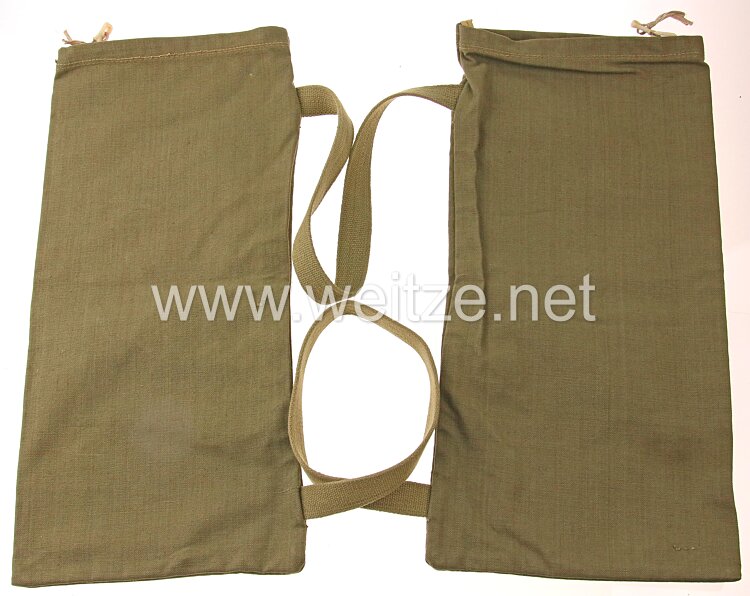
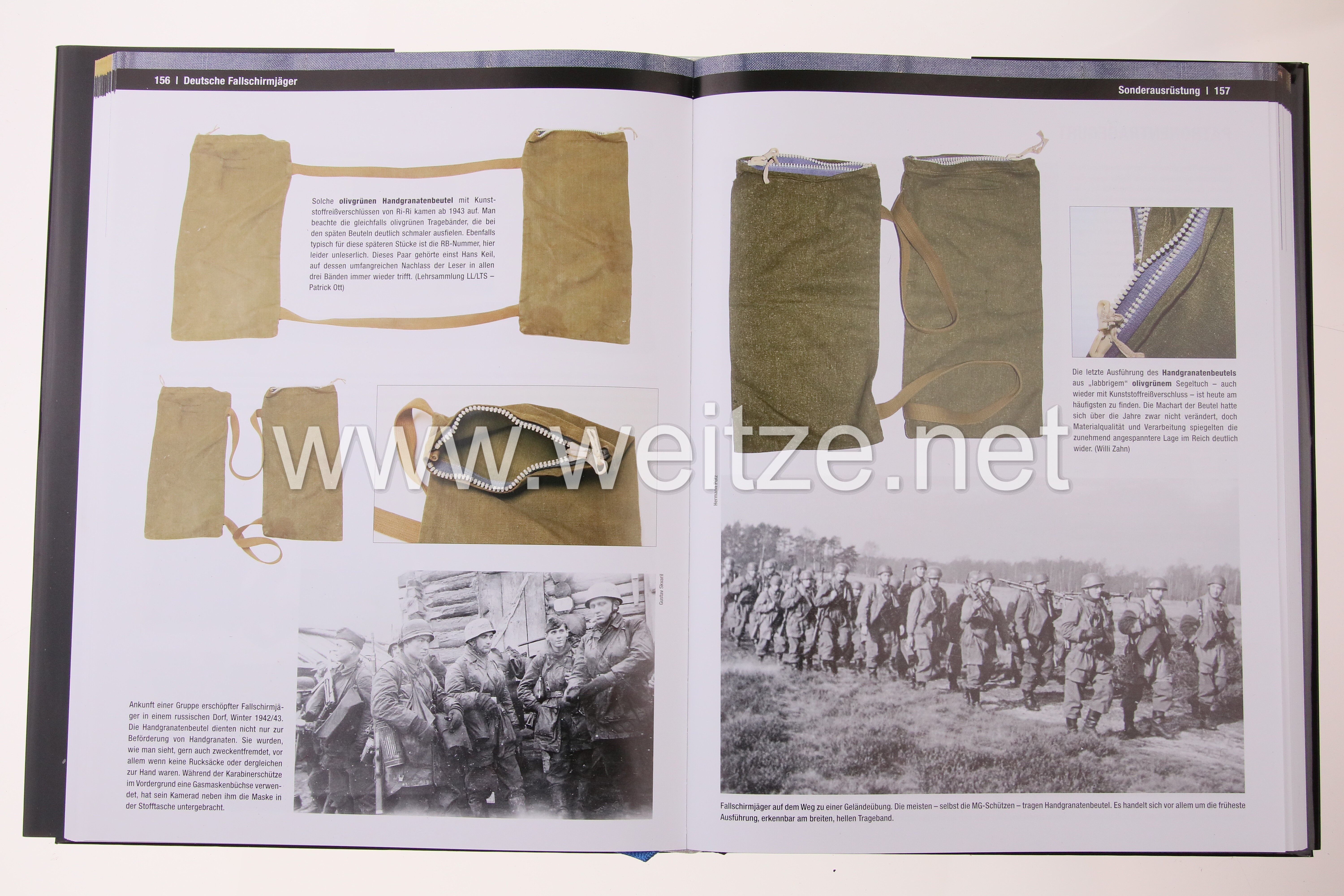
Luftwaffe Hand Grenade Pouch for Paratroopers

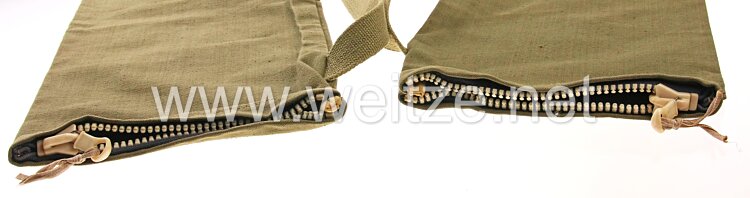
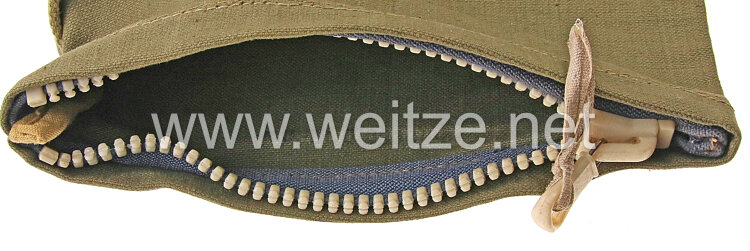
Circa 1943, olive-colored linen, fasteners manufactured by “Ri-Ri”. Interior marked with RB Nr. 0/0838/00. Condition 2+.
286740
2.500,00

Luftwaffe Hand Grenade Pouch for Paratroopers

The Luftwaffe Hand Grenade Pouch for Paratroopers represents a characteristic piece of equipment of German airborne troops during World War II. This specimen, manufactured around 1943 from olive-colored linen, embodies the specialized equipment developed for the particular requirements of paratroopers.

The Wehrmacht's Fallschirmjäger formed an elite unit within the Luftwaffe and were first deployed on a large scale during the Western Campaign of 1940. The spectacular operations at the capture of the Belgian Fort Eben-Emael and later during the invasion of Crete in 1941 made this force world-famous. The special requirements of parachute jumping and subsequent combat necessitated completely novel equipment.

This hand grenade pouch bears fasteners from the “Ri-Ri” company, a renowned Swiss manufacturer of zippers that also supplied German orders during the war. The use of Ri-Ri fasteners was a mark of quality and testifies to the high priority given to equipping this elite unit. Inside is found the RB number 0/0838/00, a Reich operational number that identified the manufacturer or supplier and was part of the Wehrmacht's comprehensive procurement system.

The development of special equipment for paratroopers began as early as the late 1930s. The olive-colored linen was characteristic of Luftwaffe equipment and deliberately differed from the color tones of Army equipment. This color choice was intended both to mark affiliation with the Luftwaffe and to provide practical camouflage properties.

The hand grenade pouch was an indispensable part of combat equipment. Paratroopers typically jumped armed only with pistol and knife, while heavier weapons and equipment were dropped in separate weapon containers. However, the hand grenade pouch belonged to the personal equipment carried on the body, which underscores the special importance of hand grenades in close combat.

The dating to around 1943 is significant for several reasons. At this time, German paratroopers had already completed their major airborne operations. After the devastating losses during the invasion of Crete in 1941, Hitler decided not to conduct any more major airborne operations. The paratroopers were increasingly employed as elite infantry, such as at Monte Cassino in 1944 or during the Battle of the Bulge.

The production of equipment in 1943 took place under increasingly difficult conditions. Allied bombing raids on German industry were intensifying, and material shortages were beginning to make themselves felt. Nevertheless, the production of equipment for elite units such as the paratroopers continued to be prioritized.

The RB numbering system was part of the strict organization of the German armaments economy. Each manufacturer received a unique number that made it possible to monitor production and quality. This systematic approach reflected the German administrative tradition and enabled efficient control even with decentralized production.

The condition rating of 2+ for this specimen indicates well-preserved equipment that has survived the decades. Such equipment items are today important witnesses to military history and enable the study of the material culture and technical developments of this era.

The paratroopers enjoyed high esteem within the Wehrmacht. Their special training, the high physical requirements, and their combat deployments made them a true elite. This was also reflected in their equipment, which was more thoughtfully designed and of higher quality in many details than the standard equipment of other troop units.

For collectors and historians, such equipment items offer valuable insights into the organization, logistics, and material culture of the Wehrmacht. They complement written sources and help to draw a more complete picture of the military reality of World War II.

The specific markings and manufacturing details of such items allow researchers to trace supply chains, understand production priorities, and reconstruct the complex industrial organization that supported Germany's military forces. Each surviving piece of equipment represents a tangible connection to the historical events and the individuals who served during this tumultuous period.