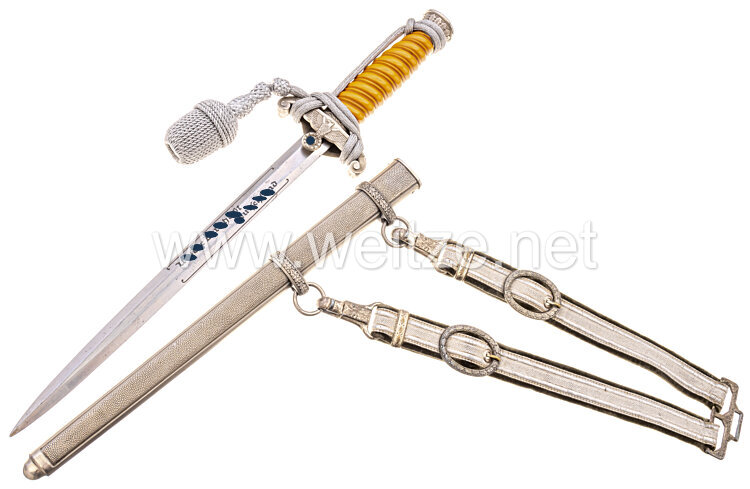
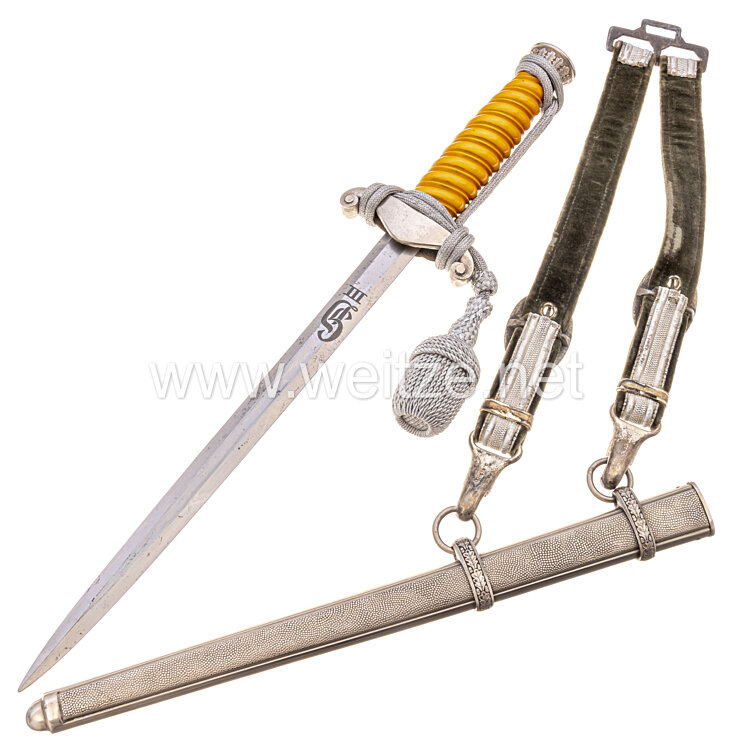
Wehrmacht Heer Officer's Dagger with Blade Etching of an Officer from Infantry Regiment "Großdeutschland" III. Battalion
Extremely rare, we are not aware of any other example.
The Wehrmacht Heer Officer's Dagger represents one of the most significant items of equipment in German military history between 1935 and 1945. As a ceremonial sidearm, it served not only as a badge of rank for officers but also documented the military tradition and identity of its bearers.
The introduction of the Army Officer's Dagger was established by the Army regulation of July 8, 1935, which detailed its appearance and manner of wearing. The dagger was a mandatory component of parade uniform for all officers from lieutenant upward. Its basic form followed classic German military traditions and showed clear references to the officer sabers of the Imperial Army.
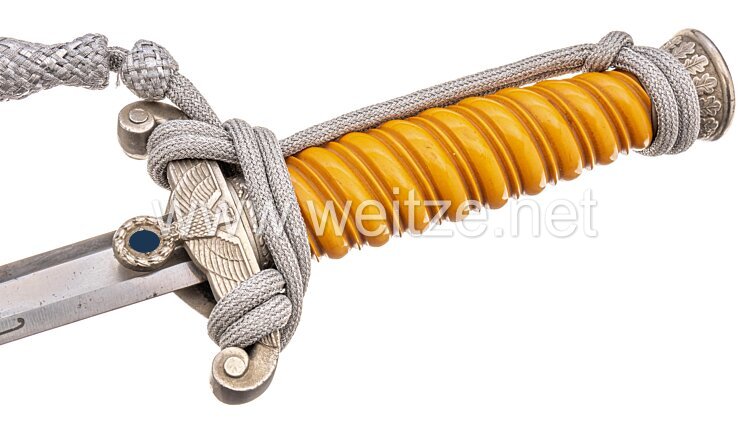
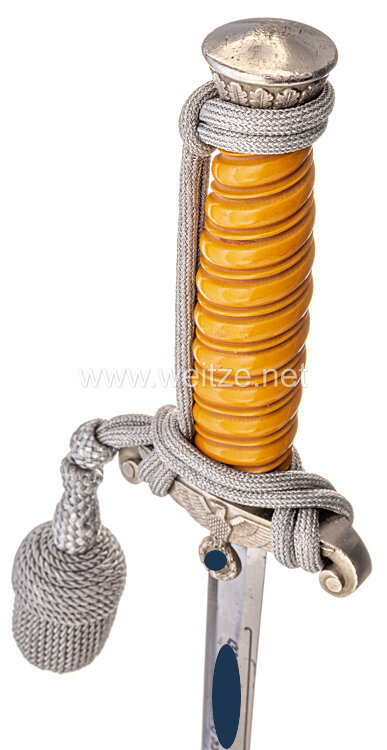
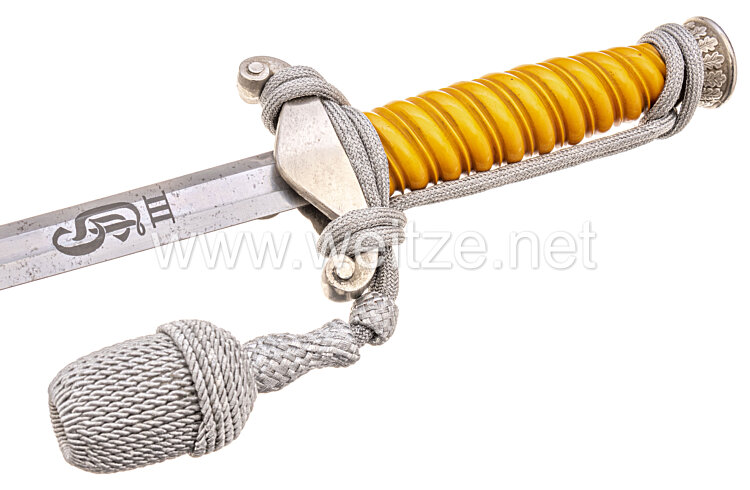
The typical construction featured a grip made of orange-colored celluloid or Bakelite, enclosed by nickel-plated metal fittings with characteristic oak leaf and acorn motifs. The pommel displayed the German eagle with swastika, while the crossguard took the form of a stylized eagle's head. The double-edged blade was typically about 25 cm long and was produced either plain or with various etchings.
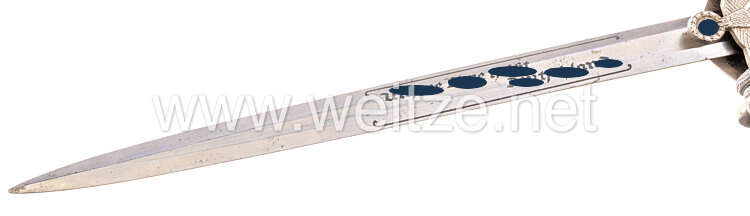
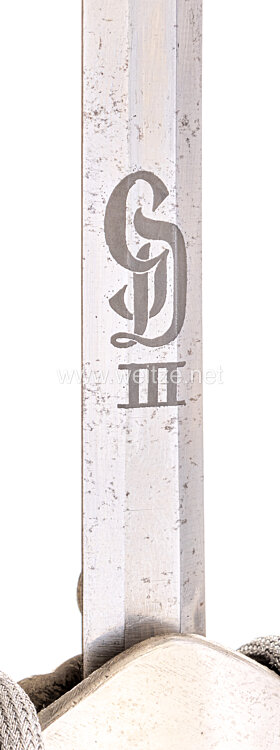
Of particular historical significance are daggers with personalized blade etchings that reference specific military units. The Infantry Regiment “Großdeutschland” occupied an outstanding position within the Wehrmacht. Originally established in 1921 as the “Wachregiment Berlin” (Berlin Guard Regiment), it was renamed “Infantry Regiment Großdeutschland” in 1939 and developed into one of the most elite formations of the German armed forces.
The regiment was distinguished by particularly strict selection criteria. Only soldiers with impeccable conduct, above-average height, and proven military aptitude were accepted. From 1942, the regiment was expanded into the Panzergrenadier Division “Großdeutschland” and fought on all major fronts of World War II, from France through the Soviet Union to the retreat into Germany.
The III. Battalion formed an integral component of this formation and participated in numerous significant engagements. The regimental cipher “GD” above the Roman numeral “III” clearly identified the bearer as a member of this specific unit. Such personalizations were typically undertaken on the private initiative of officers and not centrally issued.
The inscription “Unsere Ehre heißt Deutschland” (Our Honor is Called Germany) represents one of various patriotic mottoes that could be found on officer daggers. Unlike the SS motto “Meine Ehre heißt Treue” (My Honor is Loyalty), this formulation was not uniformly prescribed but reflected personal or regiment-specific pride. The etching was applied through a chemical process in which the polished blade surface was selectively treated to make the motif permanently visible.
The manufacture of such daggers was carried out by various Solingen blade manufacturers such as Eickhorn, WKC, Alcoso, and other traditional weapons forges. Around 1939, the presumed year of manufacture, production reached its peak. Quality varied depending on the manufacturer and time of order, with early examples generally exhibiting higher craftsmanship than later wartime productions.
The complete ensemble included the Portepee, a carrying device made of braided cords in the Reich colors of silver and black, as well as the hanger made of black leather with nickel-plated fittings. These components enabled proper wearing on the belt of parade uniforms.
The historical classification of such objects requires differentiated consideration. On one hand, they document craft traditions and military organizational structures; on the other hand, they are inseparably connected with the National Socialist regime and its crimes. The Regiment “Großdeutschland,” despite its military reputation, was part of the Wehrmacht and thus integrated into the warfare of the NS state.
For military historical research, personalized daggers offer valuable insights into the structure and self-representation of military elite units. The rarity of examples with verifiable battalion affiliation makes them significant study documents for researching Wehrmacht organization and the individual equipment practices of German officers during the period from 1935 to 1945.
These artifacts serve as tangible connections to a complex and difficult period of history, requiring careful study and contextualization. They remind us of the importance of understanding military material culture within its broader historical, political, and ethical framework, ensuring that such objects are approached with scholarly rigor and historical responsibility.