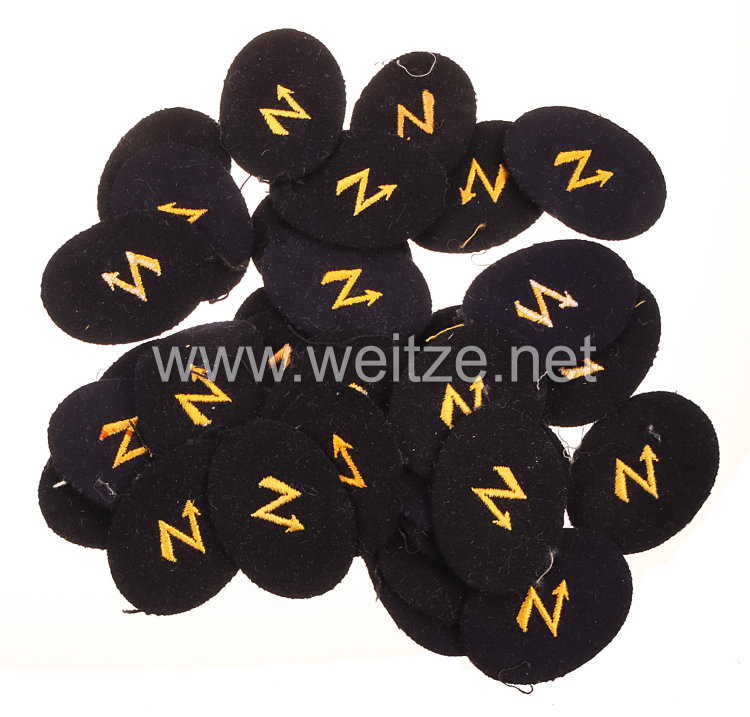
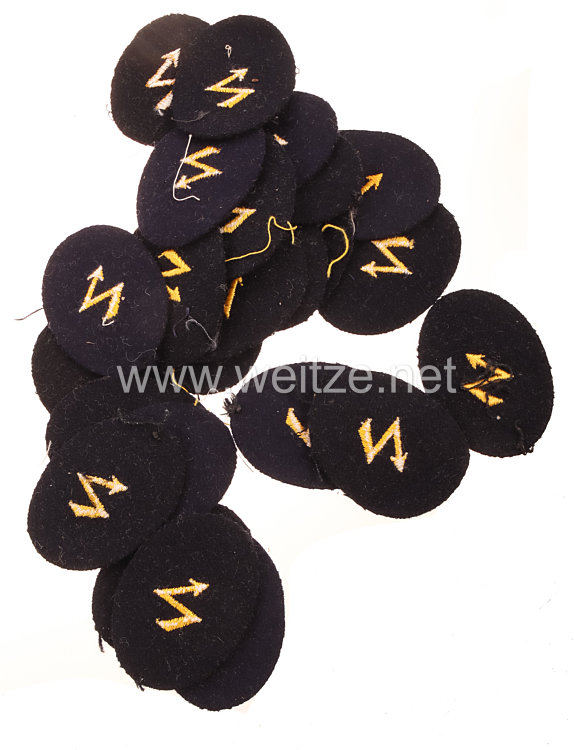
Kriegsmarine Single Sleeve Insignia for Communications Officers

Machine-embroidered version, Condition 2.

Price per piece: 10 Euro.

Condition may vary.
441039
8,00

Kriegsmarine Single Sleeve Insignia for Communications Officers

The Kriegsmarine Single Sleeve Insignia for Signals Officers represents a fascinating artifact from German naval uniforms during World War II. These machine-embroidered badges were worn by signals officers of the Kriegsmarine and served for immediate identification of their technical specialization within the complex organizational structure of the German Navy.

The Kriegsmarine, officially established on June 1, 1935, was the navy of the German Reich from 1935 to 1945. With the reintroduction of general conscription and the breaking of the Treaty of Versailles, Germany under National Socialist leadership began the massive expansion of its armed forces. The navy received particular attention as it was conceived as a strategic instrument to challenge British naval supremacy.

The Signals Service played an extraordinarily important role in the Kriegsmarine. Signals officers were responsible for all aspects of communication, including radio telegraphy, optical signaling, encryption and decryption of messages, as well as maintenance of complex communication equipment. The famous Enigma cipher machine, for example, fell under the responsibility of these specialists. The importance of these officers cannot be overestimated, as effective communication was essential for coordinating fleet operations, submarine warfare, and tactical maneuvers.

The Kriegsmarine uniform regulations were detailed and strictly enforced. Officers' sleeve insignia were worn on both sleeves of the service jacket and indicated the respective branch of service or technical specialization. The signals badge typically consisted of a stylized lightning bolt symbol, symbolizing the electrical nature of communication technology, often combined with additional elements such as crossed flags or signaling devices.

The machine-embroidered execution was widespread among Kriegsmarine insignia. This manufacturing method enabled efficient production while maintaining high quality and durability. Unlike hand-embroidered variants, which were often privately procured by officers and more finely crafted, machine-embroidered badges represented the standard version available through official procurement channels. The embroidery was typically done on dark blue cloth background, matching the basic color of naval uniforms.

The structure of German naval officers was hierarchically organized. Officers underwent demanding training at the Naval Academy Mürwik in Flensburg-Mürwik, the central educational institution for officer candidates. Signals officers received additional specialized technical training, as they had to work with state-of-the-art communication systems.

During the course of the war, the role of signals officers became increasingly critical. The Allied decryption of German radio traffic, particularly by the codebreakers at Bletchley Park, had devastating effects on German naval warfare. The submarine war in the Atlantic was largely determined by the struggle for information superiority. German signals officers were constantly engaged in improving encryption methods and ensuring communication security.

After the war's end in 1945, the Kriegsmarine was dissolved. Uniform parts and insignia were confiscated by the Allies, though many were retained by former naval personnel as personal mementos or entered collections worldwide as war trophies. Today, such badges are sought-after military historical collector's items that provide important insights into the organization and structure of the German Kriegsmarine.

The military-historical significance of these sleeve insignia lies in their function as primary source objects. They document the visual culture and symbolism of military hierarchies as well as specialization within the navy. For historians and collectors, they offer tangible connections to a significant, albeit dark, period of German history.

These insignia remain important educational tools, helping us understand the technical sophistication and organizational complexity of the Kriegsmarine's communications network, which played such a crucial role in naval operations throughout World War II.

r