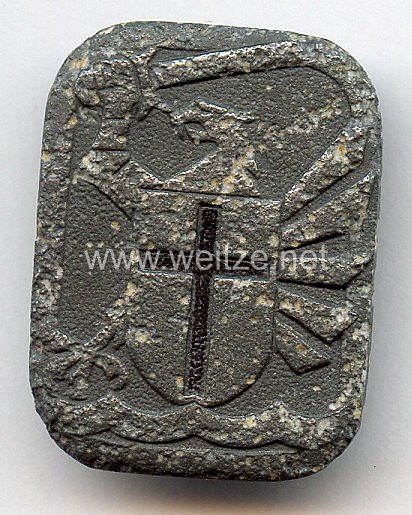
Army - Regimental Badge of the 121st Infantry Division (Grenadier Regt. 408)

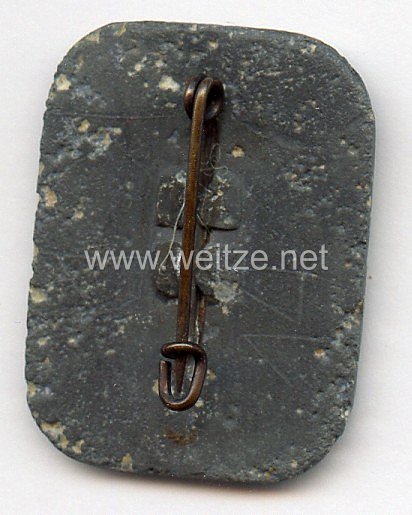
Fine zinc construction, on pin, condition 3.
325439
165,00

Army - Regimental Badge of the 121st Infantry Division (Grenadier Regt. 408)

The regimental badge of the 121st Infantry Division, specifically of Grenadier Regiment 408, represents a fascinating testimony to the military tradition and identity of the German Wehrmacht during World War II. This type of badge served not only as an identifying feature but also as a symbol of unity and regimental pride among soldiers.

The 121st Infantry Division was formed in October 1940 in Stuttgart as part of the 14th mobilization wave. The division consisted of various units, including Infantry Regiments 405, 408, and 488. Grenadier Regiment 408 formed an essential component of this division and participated in numerous operations during the war.

The manufacture of such regimental badges typically occurred in fine zinc, a material distinguished by its durability and the possibility for detailed workmanship. Zinc production allowed for the creation of high-quality badges even with limited resources during wartime. The attachment via pin on the reverse side was the standard method for wearing the badge on the uniform.

Regimental badges were not officially authorized awards by the Wehrmacht in the sense of official decoration systems. Rather, they were unofficial tradition and commemorative badges, often commissioned by the units themselves. They were frequently produced by private manufacturers and purchased by soldiers at their own expense. These badges contributed to strengthening esprit de corps and served as personal mementos of shared experiences.

The 121st Infantry Division was initially stationed on the Western Front and was later transferred to the Eastern Front, where it was deployed from 1941 onwards as part of Operation Barbarossa. The division participated in heavy fighting in Russia, particularly in the central sector of the Eastern Front. Throughout the war, the division suffered considerable losses and was repeatedly restructured and replenished.

The design of regimental badges varied greatly and often reflected regional characteristics, historical references, or symbolic elements that were significant to the respective unit. Many badges displayed coats of arms, military symbols, geographical references, or heraldic elements. The artistic design was often undertaken by experienced engravers who delivered high-quality craftsmanship despite wartime conditions.

Within the context of the Wehrmacht's military hierarchy and order, these badges served an important psychological function. They reinforced the sense of belonging to a specific combat community and helped maintain troop morale. In a time of extreme stress and danger, they offered soldiers a symbolic anchor for their identity.

The condition designation “Condition 3” in militaria collecting terminology indicates a used but still well-preserved state. This means the badge shows visible signs of use, which however do not detract from its authenticity and historical significance. Such signs of wear can be regarded as evidence of actual military use.

After the war's end, many of these regimental badges were kept by returning soldiers as personal mementos. In the post-war period, a collector's market for military equipment and badges gradually developed, which continues to exist today. For military historians and collectors, these objects represent important sources for researching organizational structure, unit history, and the material culture of the Wehrmacht.

The scholarly examination of such objects requires a critical and contextual approach. They serve as material witnesses to a dark epoch of German history and must be viewed within the framework of comprehensive historical reappraisal. Their value lies not in glorifying military traditions but in their contribution to understanding the complex social, cultural, and organizational structures of the Wehrmacht and its role in World War II.