German Empire World War I Canteen M 1915/17

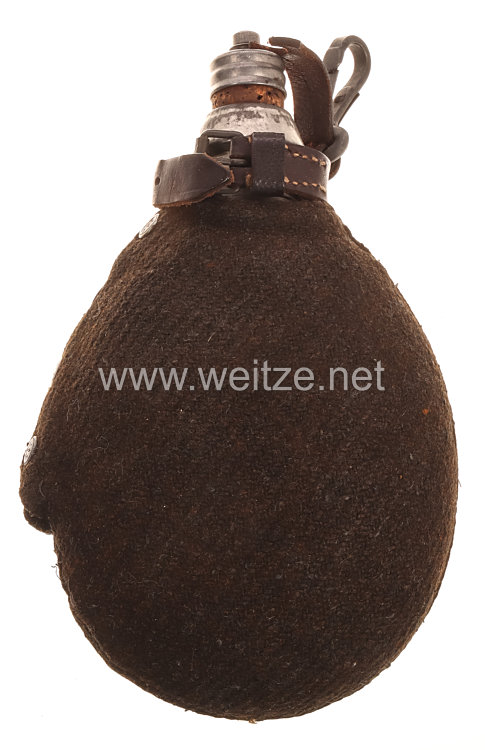
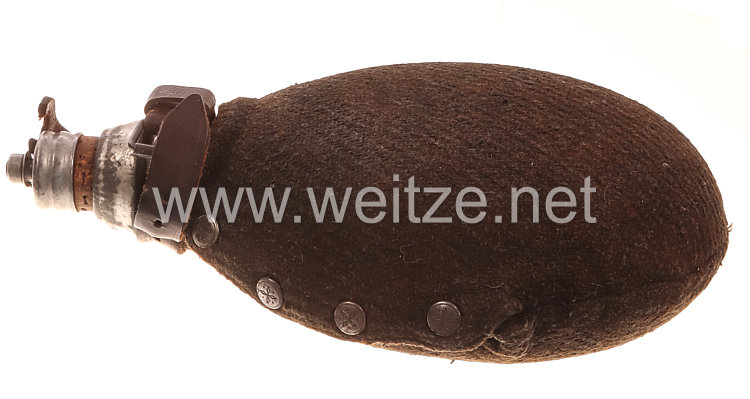
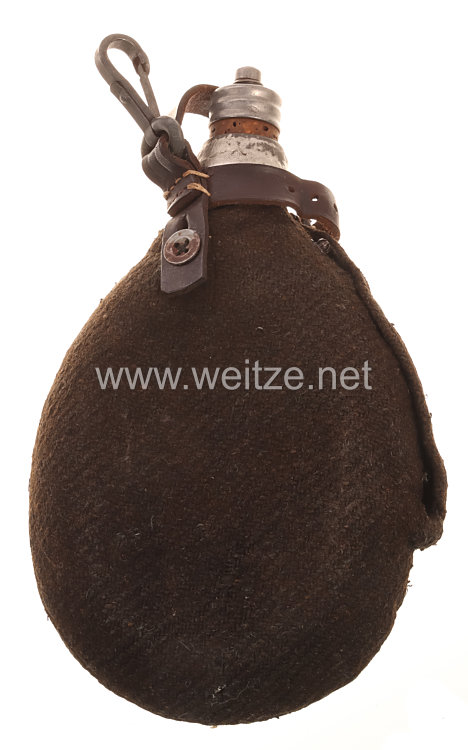
Circa 1917/18. Olive-painted steel canteen with the logo of the “Knecht” company, with fabric cover with snap fasteners, complete with carrying strap and cork stopper. The strap at the stopper is torn. Condition 2.
449339
250,00

German Empire World War I Canteen M 1915/17

The German field flask M 1915/17 represents a significant piece of equipment from World War I and embodies the technological and industrial development of German military equipment during the years 1915 to 1918. This field flask was developed in response to experiences from the first years of the war and the necessity for simplified, more cost-effective production.

At the beginning of World War I, the German Army still used the traditional field flask M 1887 and its variants, which were manufactured from aluminum. However, with the progression of the war and increasing raw material shortages in the German Empire, alternative materials became necessary. Aluminum was needed for more critical war purposes, particularly for aircraft construction. This led to the development of steel field flasks from 1915 onwards.

The present field flask was manufactured by the company Knecht, one of numerous suppliers employed during the war for military equipment production. The characteristic company logo on the flask enables clear identification of the manufacturer and is a typical feature of the marking practices of that time. The German military administration required all suppliers to clearly mark their products for quality control and traceability purposes.

The construction from sheet steel was a pragmatic solution to material shortages. The sheet steel was coated with an olive-colored lacquer that served multiple functions: it protected the metal from corrosion, reduced light reflections at the front, and corresponded to general camouflage guidelines that became increasingly important during the war. The olive-green coloring became standard for German military equipment and replaced the more conspicuous colors of the pre-war period.

The fabric cover with snap buttons served several practical purposes. It insulated the flask to protect its contents from freezing in cold weather and to keep it cool in warm weather. Additionally, it dampened sounds that could arise from metal objects clanging together – an important aspect in trench warfare, where silence could mean the difference between life and death. The cover also provided additional protection for the sheet steel and prevented direct contact with the skin in extreme temperatures.

The carrying strap system (Beriemung) was an essential element of the field flask. It enabled the soldier to carry the flask on the belt or over the shoulder and was designed to provide quick access to drinking water. The straps were typically made from leather or textile material. The mentioned tear in the strap at the stopper is an authentic testament to actual field use and the stresses to which these equipment items were subjected.

The cork stopper was the standard closure solution for field flasks of this era. Cork provided good sealing, was lightweight, and relatively resistant to the rigors of field service. The stopper was typically attached to the flask with a chain or strap to prevent loss – losing the closure would have rendered the flask unusable.

The capacity of these field flasks was usually about 0.8 to 1 liter, which was considered sufficient for a soldier's daily needs between resupply opportunities. In the trenches of the Western Front, where soldiers often had to endure for days without relief, a functioning field flask was vital for survival.

The dating to around 1917/18 falls within the final years of the war, a time of intense military operations and simultaneous economic exhaustion of the German Empire. The material battle of World War I required massive production of equipment items. Millions of field flasks were manufactured to meet the needs of an army of several million soldiers.

The preservation of this field flask in Condition 2 (a common classification in the militaria collecting scene, indicating good to very good condition with minor signs of use) makes it a valuable historical document. It offers insights into the everyday equipment of the German soldier and the industrial production of World War I.

Today, such field flasks are important collectibles and study objects for military historians. They document not only military history but also the social and economic historical developments of one of the most defining periods of the 20th century. Each preserved field flask tells the story of the millions of soldiers who carried them and the industrial efforts of a nation in total war.

r