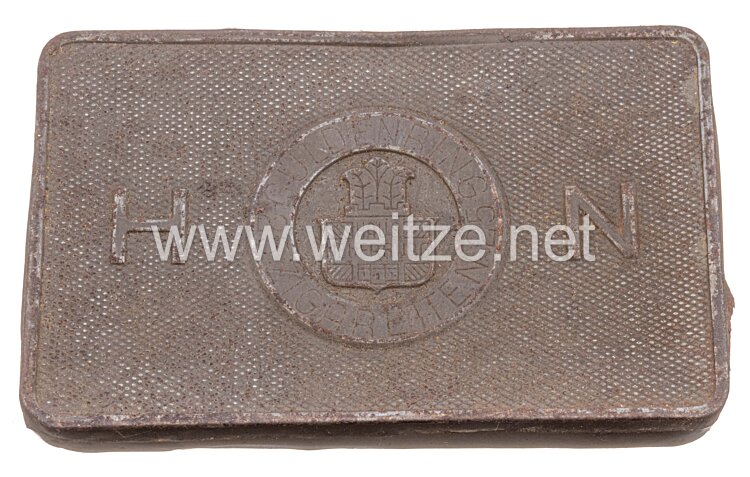
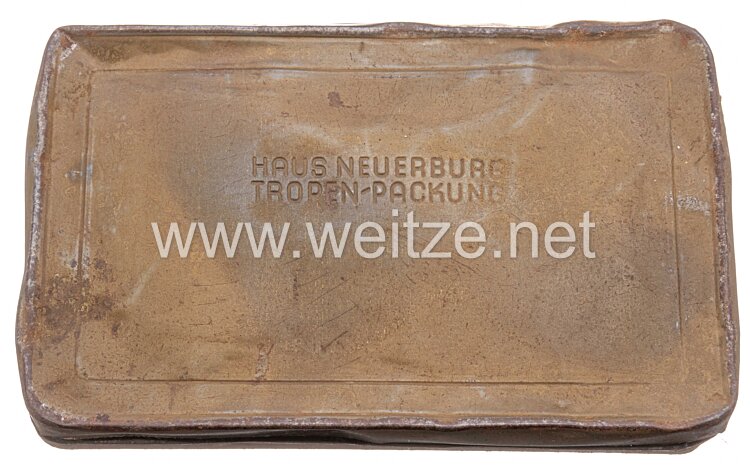
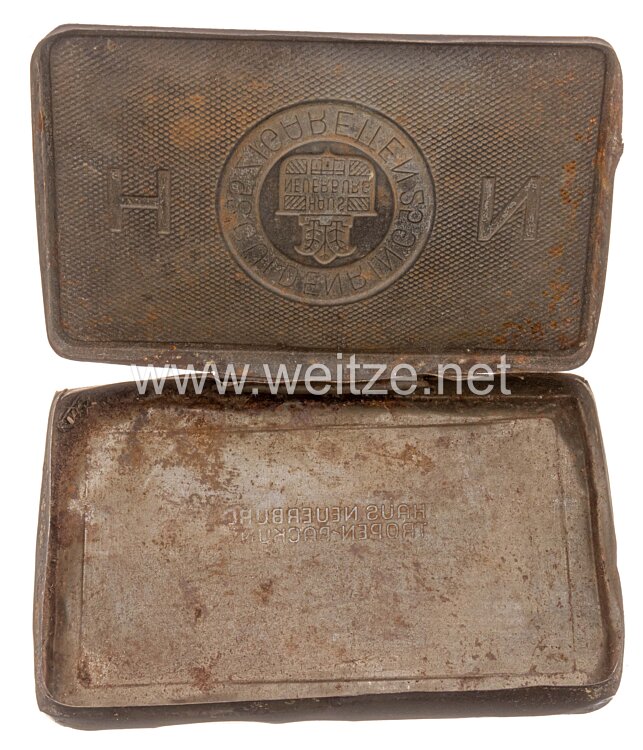
German Empire 1871-1918 Cigar Box “Haus Neuerburg Tropenpackung”
This cigar box from Haus Neuerburg labeled as “Tropenpackung” (tropical packaging) dates from around 1910 and represents a fascinating chapter in German colonial history and the military supply logistics of the German Empire (1871-1918). Although seemingly a civilian product, this tin box is directly connected to Germany's colonial expansion and the supply of troops and civilian personnel in the German protectorates in Africa, Asia, and the South Pacific.
The German Empire acquired several colonial territories between 1884 and 1899, including German East Africa (present-day Tanzania, Rwanda, and Burundi), German South-West Africa (present-day Namibia), Cameroon, Togo, as well as German New Guinea and various South Pacific islands. Supplying the Schutztruppe (protection forces) stationed there, colonial officials, and German settlers posed considerable logistical challenges. Particularly in tropical climate zones, the preservation of consumer goods was problematic.
The designation “Tropenpackung” was not a marketing gimmick but referred to special packaging technologies developed for export to tropical regions. Tobacco products such as cigars were extremely popular among German military personnel and colonial officials but suffered from high humidity, extreme temperatures, and pests in the tropics. Tin boxes like the present example offered substantially better protection than conventional wooden crates or cardboard packaging. They were hermetically soldered or tightly sealable and protected contents from moisture, insects, and mechanical damage during long sea voyages.
Haus Neuerburg was one of several German companies specializing in the manufacture and distribution of tobacco products. The firm recognized early the potential of the colonial market and developed special product lines for export. The robust tin packaging with printed company logo served not only product protection but also brand recognition in remote colonial areas. Such packaging was often reused after consumption of the contents – as storage containers for ammunition, documents, medical supplies, or personal items.
The Schutztruppen of the German Empire stationed in the colonies consisted of professional German officers and non-commissioned officers as well as indigenous soldiers, the so-called Askari. For the German members of these troops, tobacco products were an important part of supplies and contributed to maintaining morale. The army administration organized regular supply ships that transported military equipment as well as luxury goods to the colonies. Private firms like Neuerburg supplemented this official supply through direct trade.
The period around 1910, from which this box dates, was a phase of relative stability in the German colonies after various uprisings – such as the Maji Maji Rebellion in German East Africa (1905-1907) and the Herero Uprising in German South-West Africa (1904-1908) – had been suppressed. Colonial infrastructure was expanded, plantations established, and trade intensified. During this phase, the supply of European consumer goods, including tobacco products, reached its peak.
The use of tin plate for packaging was already established around 1900 but remained relatively expensive. Investment in such robust packaging was worthwhile primarily for higher-quality products and long-distance trade. Typical construction consisted of tinned steel plate protected against corrosion. The lithography process enabled direct printing of the tin surface with multi-colored motifs and lettering, making these tins attractive advertising vehicles.
With the outbreak of World War I in 1914, the German colonies quickly became theaters of war. British, French, Belgian, and South African troops conquered nearly all German protectorates by 1918. Supply lines collapsed, and articles like Neuerburg cigars no longer reached their tropical destinations. After the Treaty of Versailles in 1919, Germany was forced to cede all colonies, ending the market for tropical packaging.
Today, such Tropenpackungen are rare testimonies to German colonial history. They document not only the commercial development of the colonies but also the everyday culture of Europeans stationed there. For collectors of military-historical objects, they are of interest as they illustrate the civil-military supply infrastructure of the Empire. The condition of such objects varies greatly; many show – like the present example – signs of use, deformation, or corrosion, which underscores their authentic history.