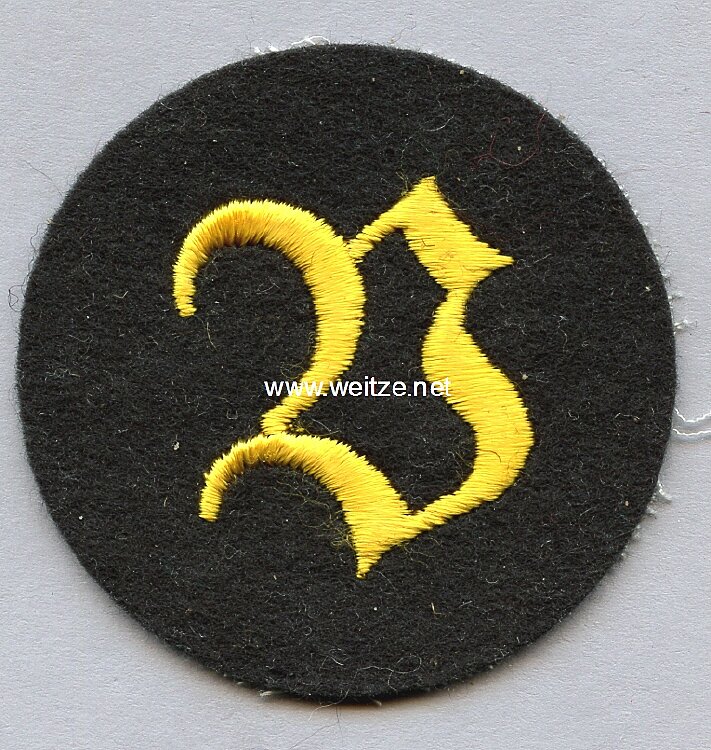
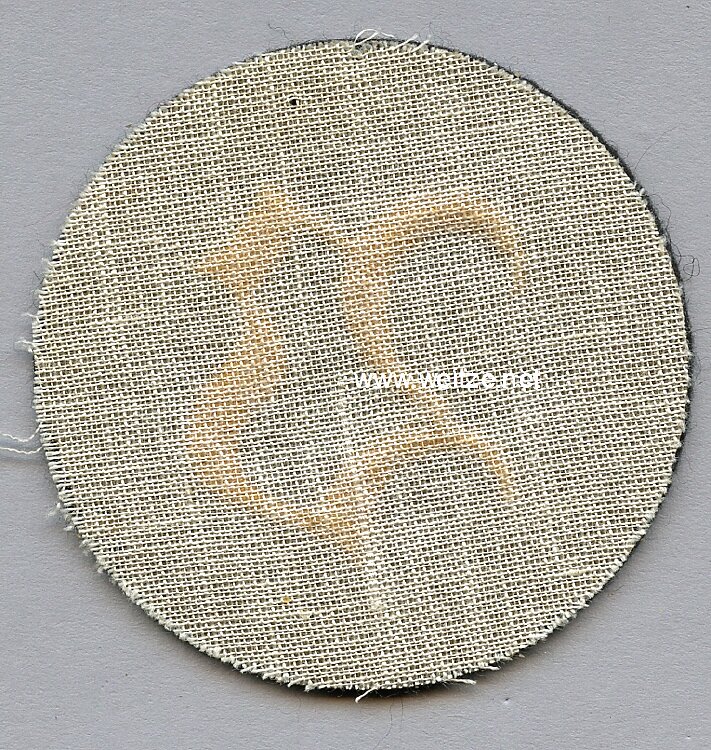
Wehrmacht Heer Sleeve Insignia for Paymaster Candidates / Administration Non-Commissioned Officers

machine-embroidered on dark green, condition 2+.
163838
12,00

Wehrmacht Heer Sleeve Insignia for Paymaster Candidates / Administration Non-Commissioned Officers

The Wehrmacht Heer sleeve insignia for Zahlmeister-Anwärter (Paymaster Candidates) and Administrative Non-Commissioned Officers represents a fascinating example of the complex rank insignia and specialization system employed in the German Wehrmacht between 1935 and 1945. This machine-embroidered badge on dark green base cloth was an essential component of the uniform and served for immediate identification of members of the administrative service within the Army structure.

The Wehrmacht, officially established on March 16, 1935, developed a sophisticated system of rank insignia, career badges, and specialization insignia to clearly identify the various functions and ranks within its armed forces. Administrative officials played a crucial role in the logistical and financial organization of the Wehrmacht. Zahlmeister (Paymasters) were responsible for pay, rations, and other financial matters of the troops, while administrative non-commissioned officers handled administrative tasks at various levels of the military hierarchy.

The sleeve insignia was worn on the left upper arm of the uniform in accordance with Army Service Regulations (Heeresdienstvorschriften - HDv). The dark green base color was characteristic of Army uniforms and differed from the colors of the Luftwaffe (blue-grey) and the Kriegsmarine (dark blue). Machine embroidery was a common manufacturing method for sleeve insignia during World War II, particularly from the later war years when industrial mass production gained importance.

The position of Zahlmeister-Anwärter was a training rank for future paymasters. These candidates underwent specialized training in financial and administrative matters before becoming full-fledged paymasters. The administrative non-commissioned officers formed the backbone of military administration at the NCO level and served in units from company to division level.

The organizational structure of Wehrmacht administration was regulated by several ordinances and regulations. The Military Pay Ordinance (Wehrsoldordnung) and the Reich Pay Scale (Reichsbesoldungsordnung) defined the pay and status of these administrative specialists. The system of career insignia was continuously developed and modified through various Army Regulation Bulletins (Heeres-Verordnungsblätter - HVBl).

The manufacture of such insignia was carried out by various authorized manufacturers throughout the German Reich. Machine embroidery enabled faster and more cost-effective production compared to hand-embroidered variants, which were often preferred for higher officer ranks. The quality of execution varied depending on the manufacturer and time of production, with earlier war years generally showing higher quality than later productions.

In the context of military history, such specialization insignia illustrate the complexity of modern warfare, which extended far beyond pure combat operations. The Wehrmacht required extensive administrative personnel to manage the logistical challenges of supplying millions of soldiers on multiple fronts. Administrative units were essential for maintaining combat effectiveness through proper pay, rations, and material supply.

After 1945, all Wehrmacht insignia and uniforms were banned by the Allied occupation powers. Today, such objects are of historical and collectors' interest. They serve as material witnesses to a significant, though dark, period of German and European history. The preservation and documentation of such artifacts is important for historical research and understanding the organizational structures of totalitarian military apparatuses.

The present example of a sleeve insignia for Zahlmeister-Anwärter and administrative non-commissioned officers thus represents not only a single military rank badge but stands symbolically for the entire system of military administration and organization in the Third Reich. It commemorates the thousands of individuals who served in administrative functions and whose role in military history is often overlooked, even though they were fundamentally important to the functioning of the Wehrmacht.

r