Luftwaffe Officer's Dagger with Etched Blade!

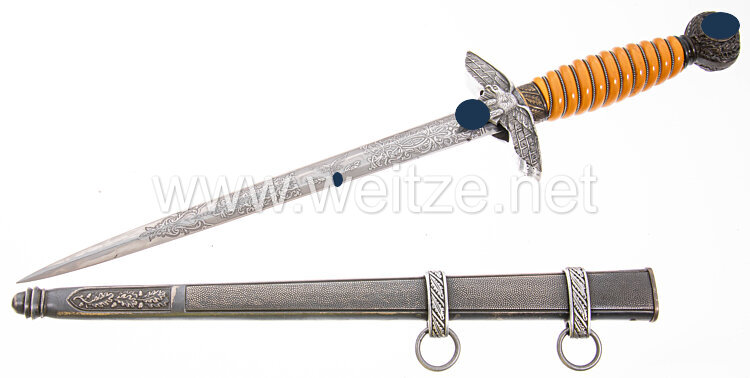
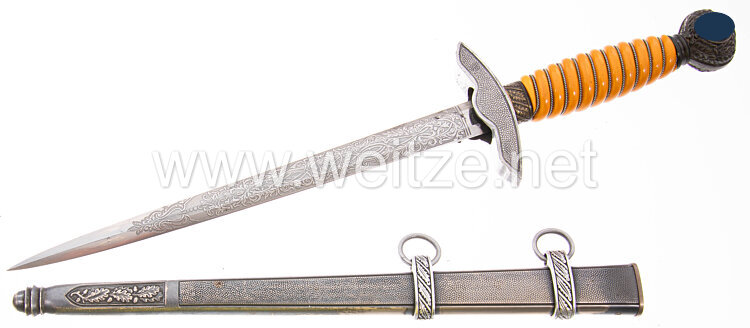
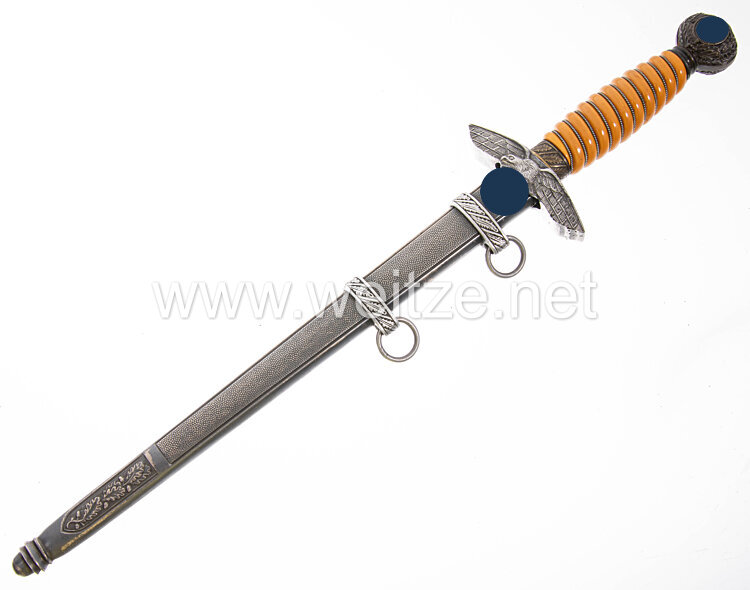
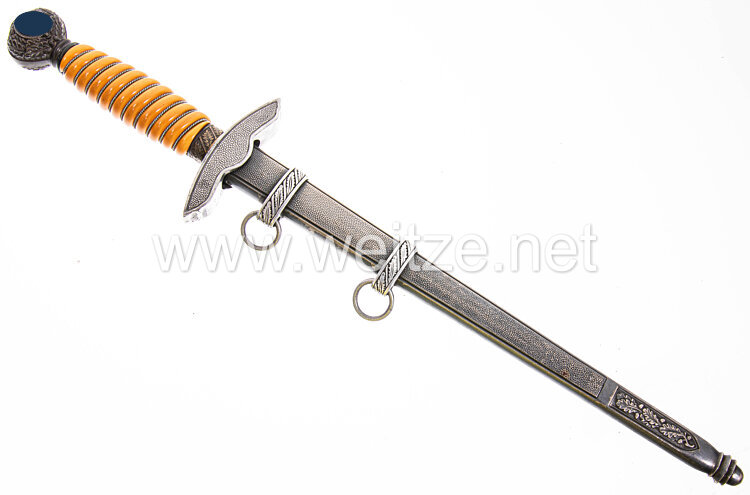
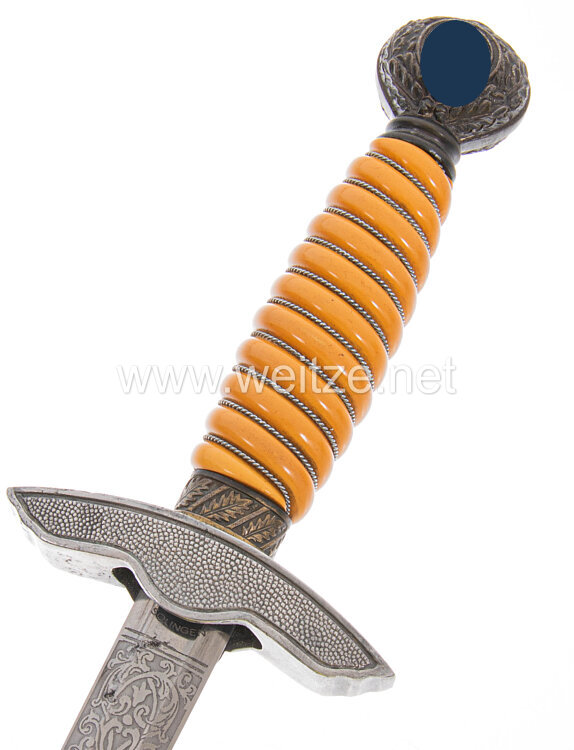
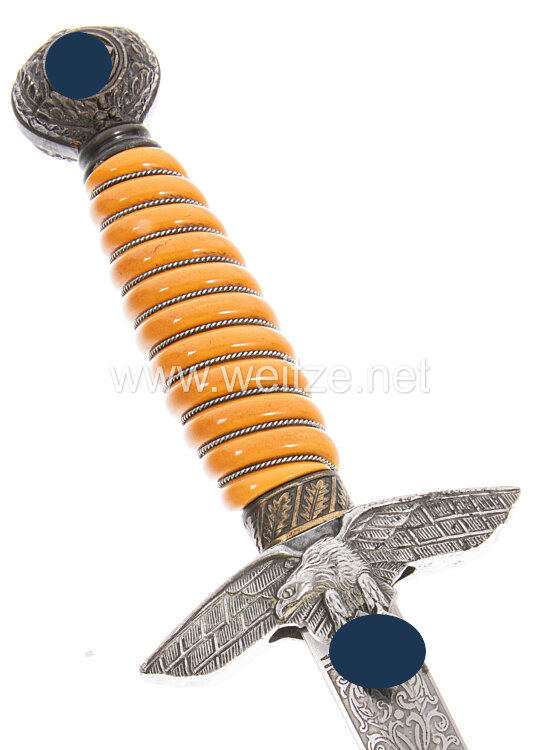
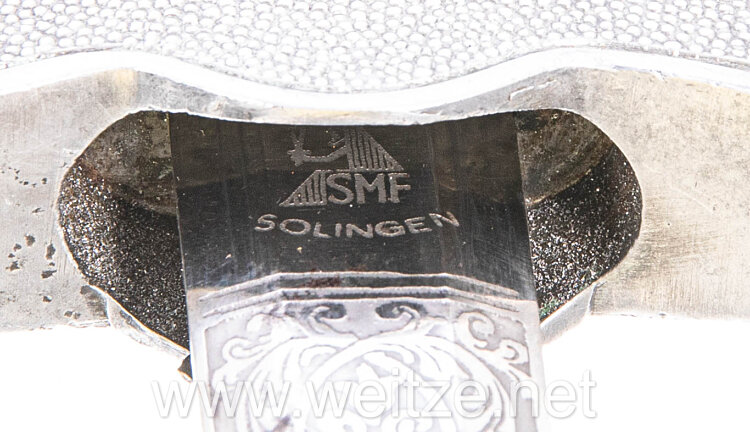
The blade with decorative etching on both sides, floral scrollwork and Luftwaffe eagle, maker's mark of “SMF Solingen”, pommel and crossguard are made of aluminum, the pommel slightly darkened, the sunwheels still show a trace of gilding, orange plastic grip with fine wire wrapping, tinted steel scabbard is undamaged, the fittings also in aluminum. A beautiful dagger in good condition. Condition 2


452038
4.500,00

Luftwaffe Officer's Dagger with Etched Blade!

The Luftwaffe Officer's Dagger represents one of the most characteristic pieces of equipment of the German Air Force during World War II. As a ceremonial weapon and symbol of officer status, this dagger embodied the military tradition and esprit de corps of the Luftwaffe, officially established in 1935.

The introduction of the Luftwaffe officer's dagger occurred in 1934, even before the Luftwaffe was officially presented to the public on March 1, 1935. The dagger was prescribed through the Heeresverordnungsblatt (Army Regulation Gazette) as part of the officer's uniform and had to be purchased by officers themselves. This represented a significant investment, as these daggers were handcrafted and of high quality.

The design of the Luftwaffe officer's dagger followed a uniform pattern based on traditional German edged weapons. The blade was typically made of high-quality steel and featured a double-edged form with a length of approximately 25 to 26 centimeters. Particularly characteristic was the double-sided decorative etching, depicting floral vines, oak leaves, and the Luftwaffe eagle with swastika. These etchings were applied through an elaborate chemical process and demonstrated the high craftsmanship of the Solingen blade smiths.

The maker's mark on the blade, in this case “SMF Solingen”, refers to the firm Sägewerkzeug- und Maschinenfabrik, one of the recognized manufacturers of militaria in the famous blade city of Solingen. Other well-known manufacturers included Eickhorn, WKC (Weyersberg, Kirschbaum & Co.), Carl Eickhorn, and Alcoso. Each manufacturer had to adhere to strict quality standards prescribed by the Luftwaffe administration.

The grip of the dagger traditionally consisted of orange-colored plastic (Bakelite or celluloid), wrapped with fine metal wire in a spiral pattern. This wrapping served not only aesthetic purposes but also provided practical grip security. The orange color was specifically chosen for the Luftwaffe and distinguished it clearly from the daggers of other Wehrmacht branches.

The crossguard and pommel were made of aluminum, a material that symbolically represented the connection to aviation. The pommel was decorated with the characteristic sunwheel motifs, originally gilded. This gilding wore away over time through handling and environmental factors, which is commonly observed in surviving examples. The crossguard often also featured fine engravings or stylized wing motifs.

The scabbard of the Luftwaffe officer's dagger was made of sheet steel and finished with a tinted or lacquered surface, typically in a blue-gray color. The scabbard bands and fittings were also made of aluminum and often displayed Luftwaffe symbols. The scabbard featured two suspension rings to which leather loops were attached for wearing the dagger on the belt.

The wearing regulations for the officer's dagger were precisely defined. It was worn during parades, ceremonial occasions, and in certain service situations, but not in frontline combat. The dagger was attached to the belt on the left side and hung at a specific angle. Officers from the rank of lieutenant upward were authorized to wear the dagger.

Production of Luftwaffe officer's daggers continued throughout the war, although toward the war's end, simplifications in manufacturing were implemented due to material shortages and changed priorities. Early examples from 1934 to 1939 generally show higher quality in workmanship and material selection than later wartime productions.

From a historical perspective, these daggers today represent important testimonies of military history and the craft tradition of German weapon smiths. They document the uniform and equipment regulations of the Wehrmacht and reflect the military culture of that era. Collectors and military historians particularly value well-preserved examples with original etching, complete scabbard, and verifiable maker's marks.

Condition grades vary considerably. Many daggers were damaged, disassembled, or altered after the war's end. Examples in good condition with all original parts and recognizable gilding are correspondingly rarer and historically more valuable for research purposes.

The dagger described represents a typical example of Luftwaffe officer's edged weapons, manufactured by an established Solingen firm. The preservation of the decorative etching, the intact scabbard, and the remnants of the original gilding on the sunwheels make it a significant artifact for understanding the material culture and military traditions of the German Luftwaffe during the 1930s and 1940s.