Germany Canteen/Sutler Flask

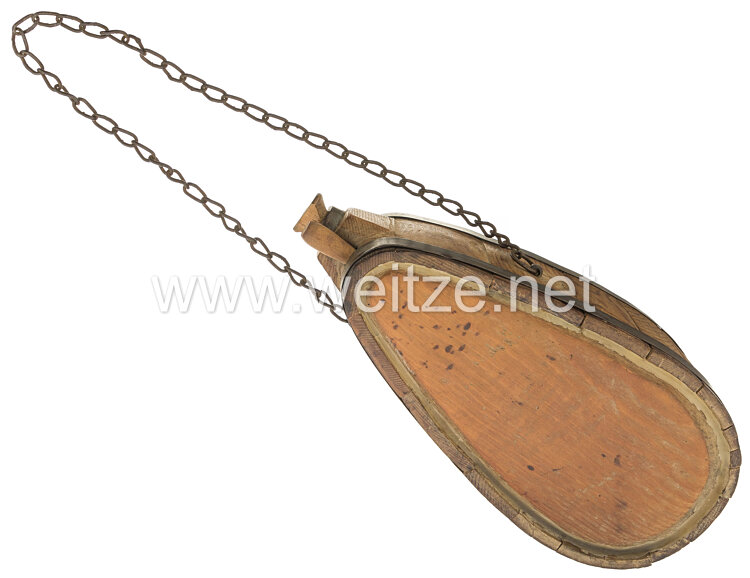
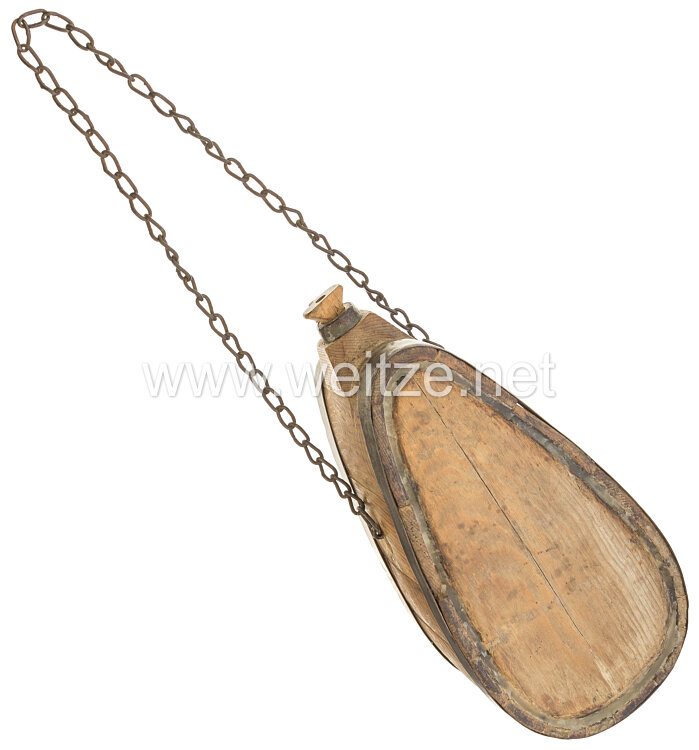
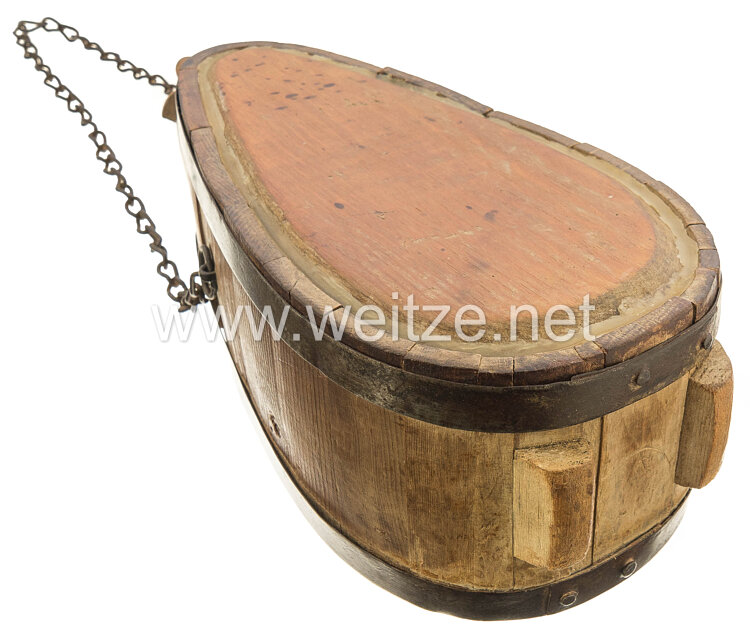
Circa 1800. Pear-shaped wooden flask, 32.5 cm high, with iron fittings and iron carrying chain. Scratched into the underside “5[?]”, on the side “ATI”. The seam between lateral and outer wooden elements sealed with wax. Condition 2.
452738
180,00

Germany Canteen/Sutler Flask

This wooden canteen or sutler's flask represents a characteristic example of military supply equipment from around 1800. With its pear-shaped form, iron fittings, and iron carrying chain, it embodies the practical field equipment of European armies during the Coalition Wars and Napoleonic era.

Historical Context and Use

Around 1800, Europe was experiencing a period of intense military conflict. The French Revolution and subsequent Napoleonic Wars (1799-1815) led to a fundamental reorganization of armies and their supply systems. In this context, sutlers played an indispensable role in providing troops with food, beverages, and other necessities.

The German term “Labe” derives from Middle High German meaning “refreshment” or “sustenance” and referred specifically to providing liquids to wounded or exhausted soldiers. Refreshment flasks were carried by sutlers as well as by surgeons and medical personnel.

Construction and Materials

The wooden construction of such flasks reflected both material scarcity and the practical requirements of the time. Wood was considerably more durable than glass or ceramic and easier to procure. The pear-shaped design with a height of 32.5 cm corresponded to a common capacity of approximately one to one-and-a-half liters, sufficient for serving multiple persons or for extended personal use.

The iron fittings served multiple purposes: they reinforced structurally vulnerable areas of the wooden body, secured the closure, and enabled attachment of the carrying chain. Sealing the joints with wax was a proven method for ensuring liquid-tightness. This technique had been used for centuries with wooden vessels and was particularly common with military field flasks.

Markings and Identifications

The scratched markings “5[?]” on the bottom and “ATI” on the side are typical of military equipment from this era. Such markings served for inventory control and attribution to specific units, companies, or individual sutlers. Numbering systems were common in Prussian, Austrian, and other German armies to manage equipment and document losses.

The Sutler System Around 1800

The sutler system had a long tradition in European armies. Sutlers were civilian merchants who traveled with the army and sold soldiers goods beyond regular supply provisions. In the German states, sutlers were regulated through special ordinances. The Prussian Military Regulations of 1743 and later supplements precisely defined which goods could be sold at what prices.

Sutlers frequently carried brandy, beer, wine, and simple foodstuffs. Storage flasks served both as transport containers and sales vessels. The robust construction was necessary as these flasks had to withstand the rigors of marches, transport on wagons, and the harsh conditions of field life.

Medical Applications

Beyond commercial use by sutlers, such flasks also had a medical function. Field surgeons and physicians used similar containers for medicinal alcohol, employed for wound disinfection but also for strengthening wounded soldiers. The refreshment station was a fixed component of caring for wounded soldiers on the battlefield.

Military Organization and Supply

The late 18th and early 19th centuries saw significant reforms in military organization and logistics. The wars of this period involved unprecedented numbers of soldiers operating far from their home territories for extended periods. The French Revolutionary armies pioneered new systems of requisitioning and supply, while traditional armies like Prussia and Austria maintained more regulated sutler systems.

The Imperial Austrian Army regulations specified that each regiment could have a certain number of licensed sutlers, known as Marketender. These individuals required official permission and were subject to inspection. Similar regulations existed in most German states, ensuring some degree of quality control and preventing excessive prices.

Comparable Objects and Collections

Similar wooden sutler flasks can be found in various military history collections, including the Bavarian Army Museum in Ingolstadt, the Military History Museum in Dresden, and the Museum of Military History in Vienna. These institutions preserve extensive holdings of equipment from the Napoleonic period.

Museums also hold examples of glass and ceramic flasks, but wooden specimens are particularly valued due to their relative rarity. Wood, while practical in field use, was vulnerable to deterioration, making well-preserved examples like this one historically significant.

Social History

Sutlers occupied a unique position in military society. Often including women and families, they formed part of the army's extensive camp followers. Female sutlers were particularly common and played important roles in caring for wounded soldiers and maintaining morale. Contemporary accounts and artworks frequently depict sutlers on the battlefield and in camp, highlighting their integral role in military operations.

Condition and Significance

The indicated condition rating of 2 suggests a well-preserved, authentic flask with minor signs of use. The preservation of wooden flasks over more than two centuries is remarkable, as the material is susceptible to moisture, pests, and mechanical damage. The presence of original iron fittings and carrying chain significantly enhances both historical and collector value.

Such objects are important material witnesses to military history and provide immediate insight into the living conditions and material culture of soldiers and sutlers around 1800. They document the pragmatic solutions developed during a time when armies often had to operate in the field for months and depended on functioning supply organizations.

r