Bavarian Military Hirschfänger Experimental Pattern of 1783
Blade width approx. 3.9 cm.
Blade length approx. 72.6 cm.
Overall length approx. 87.8 cm.
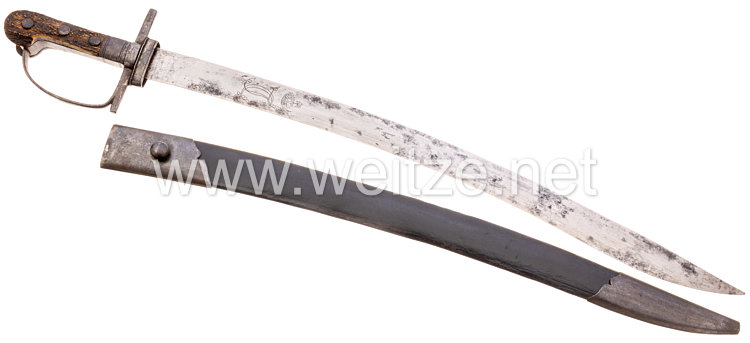
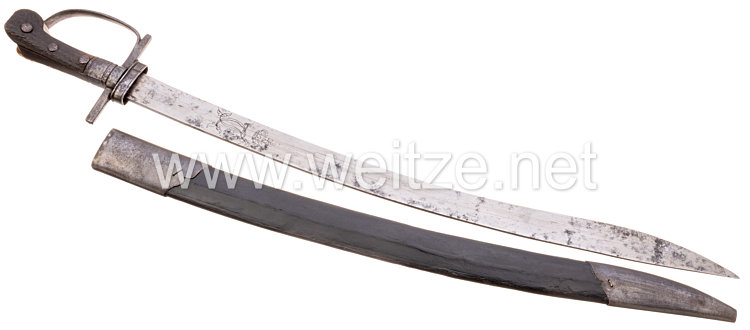
The Bavarian military hunting sword (Hirschfänger) experimental pattern of 1783 represents a fascinating chapter in the history of European military antiques of the late 18th century. This trial model emerged during an era of military transformation, when European armies began systematically modernizing their equipment and armament.
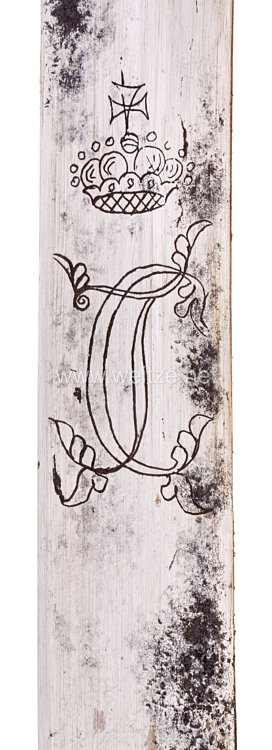
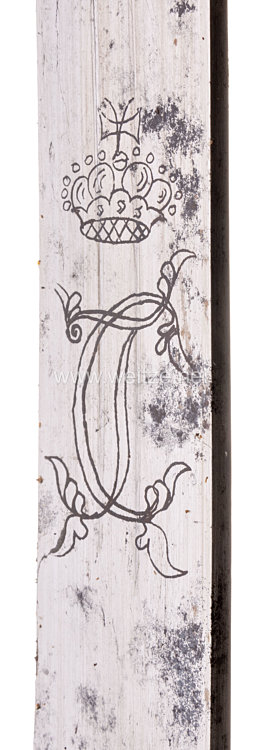
In the second half of the 18th century, the Electorate of Bavaria under the rule of Elector Carl Theodor (1777-1799) experienced significant military reforms. The engraved monogram “CT” on the blade refers to this ruler, who initiated extensive modernizations of the Bavarian army after assuming the Bavarian electoral dignity. The development of new side arms was part of these systematic military reforms.
The term Hirschfänger (literally “deer catcher”) originally designated a hunting weapon used for dispatching wounded game, particularly deer. In the military context, the Hirschfänger evolved into a status symbol and practical weapon for officers and certain troop types. The adoption of this designation into the military sphere underscores the close connection between hunting culture and military ceremonial in absolutist Europe.
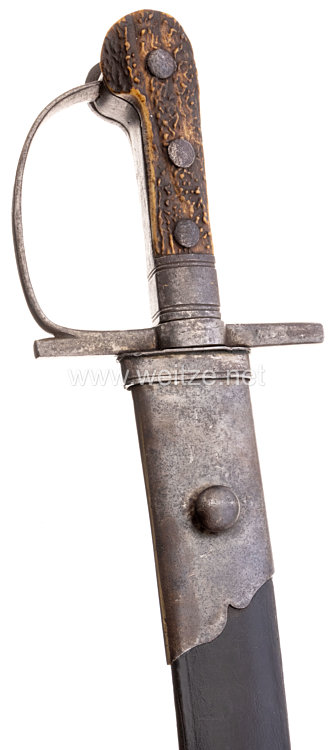
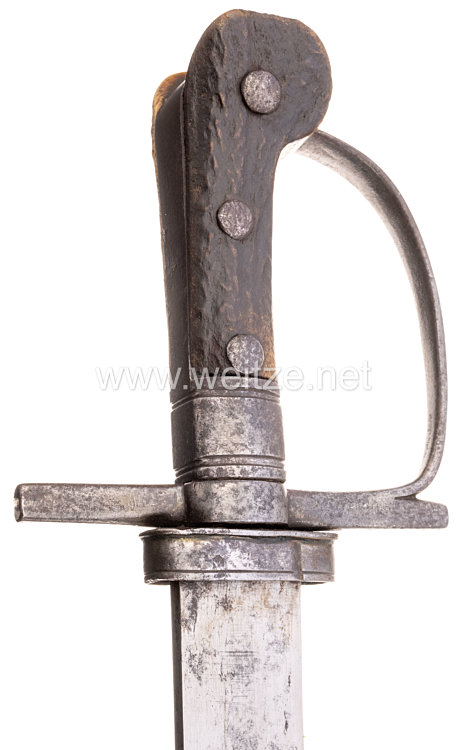
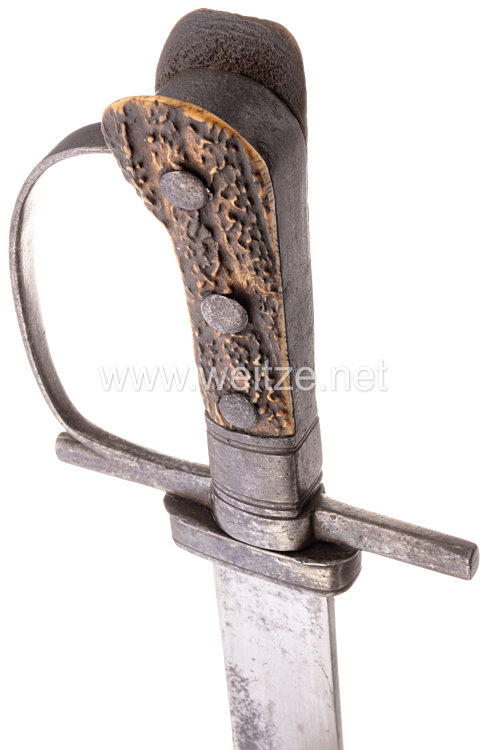
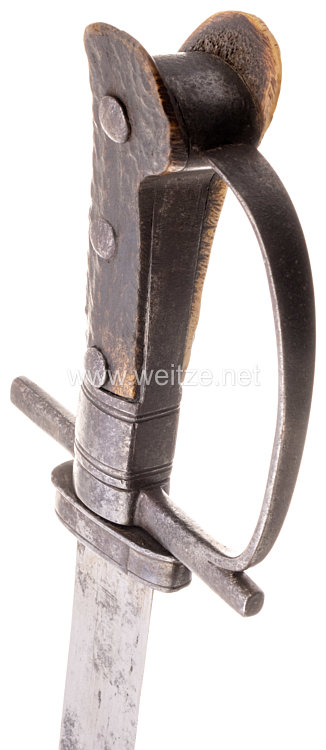
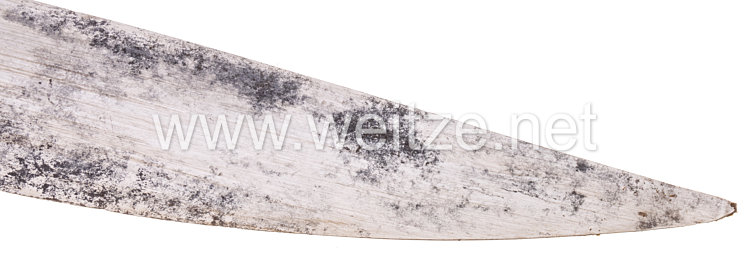
The experimental pattern of 1783 displays characteristic construction features that distinguish it from later standardized models. The heavy iron hilt with cross-shaped guard follows traditional European sword construction forms. Particularly remarkable is the combination of European and Oriental-appearing elements: the stag horn grip scales with their ear-shaped formations toward the pommel, together with the wedge-shaped blade reminiscent of a yatagan, create an unusual stylistic synthesis.
These Oriental influences are no coincidence. In the 18th century, intensive cultural and military exchange existed between the Ottoman Empire and European powers. After the successfully repelled Turkish Wars, Ottoman weapons and stylistic elements found their way into European armories. The characteristic yatagan blade, a forward-widening, curved blade form of Ottoman origin, was valued for its cutting effectiveness.
The construction details of the experimental pattern demonstrate artisanal quality: the riveted stag horn grip scales ensure a firm seat on the tang while simultaneously providing a practical, non-slip grip. Stag horn was a preferred material for grip scales, as it was robust, available, and comfortable to handle. The cross-shaped guard served to protect the hand in combat and corresponded to contemporary construction principles.
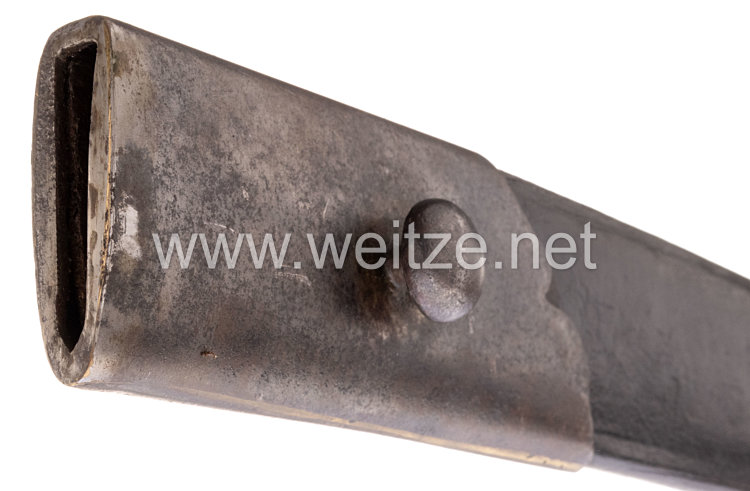
The black leather covering of the wooden scabbard with its iron fittings was typical for military side arms of this period. The leather protected the wood from weather effects and mechanical wear, while the iron fittings provided additional stability and served as attachment points for the carrying device.
The fact that this is an experimental pattern explains the extreme rarity of this weapon. Trial models were manufactured in very small numbers to evaluate new designs before deciding on possible series production. Many of these experimental weapons were melted down again or reworked after testing, which is why surviving examples are of extraordinary historical value today.
The dimensions with a blade length of approximately 72.6 cm and an overall length of circa 87.8 cm with a blade width of 3.9 cm classify this weapon as a substantial side arm that could be employed as both a cutting and thrusting weapon. These dimensions were typical for military hunting swords of the period and offered a compromise between manageability and combat value.
The military historian Gerd Maier, a recognized expert on Bavarian edged weapons, has documented such pieces in his standard work. The scientific recording and cataloging of these rare weapons is of crucial importance for understanding Bavaria's military development in the late 18th century.
The historical classification of such experimental patterns is not always simple. The unusual design led to misinterpretations in the past, such as “Bavarian Janissary side arm.” In reality, however, this is an originally Bavarian development project that merely borrowed stylistic elements from the Oriental sphere without having a direct connection to the Ottoman Janissaries.
The weapon's keilförmige (wedge-shaped) blade with its distinctive profile demonstrates the armorer's attempt to combine the cutting advantages of Oriental blade geometry with European hilt construction. This represents a pragmatic approach to weapon design, selecting the most effective features from different martial traditions.
Such experimental patterns provide valuable insights into the decision-making processes of 18th-century military procurement. The fact that this particular design did not advance to standard production suggests that practical testing revealed shortcomings, or that simpler, more cost-effective designs were preferred for mass production.
Today, such experimental patterns are of inestimable museum value. They document the experimental character of military weapon development and show which various approaches were examined before standardized models went into production. As testimony to Bavarian military history under Carl Theodor and as an example of cultural transfer between Orient and Occident in the 18th century, this Hirschfänger possesses outstanding scientific significance.