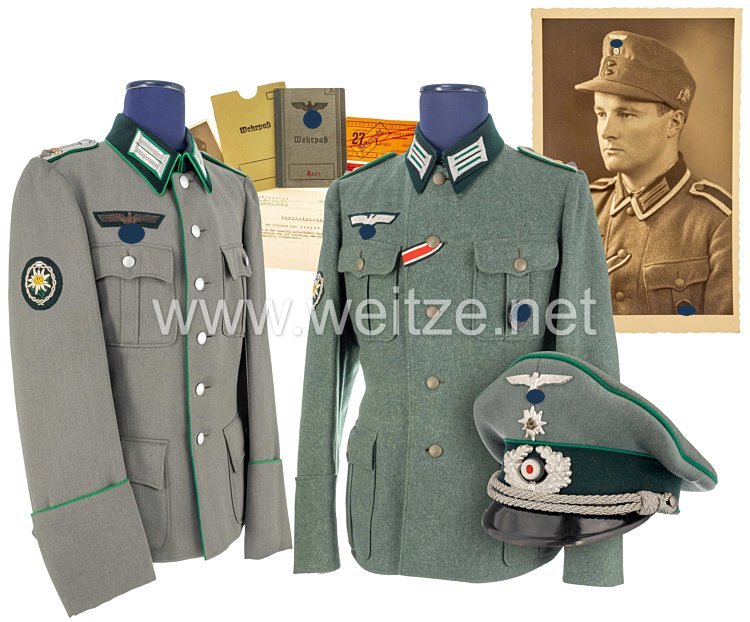
Wehrmacht Feldbluse, geschönte Feldbluse und Schirmmütze aus dem Besitz von Karl Breyer im Gebirgsjäger-Regiment 100
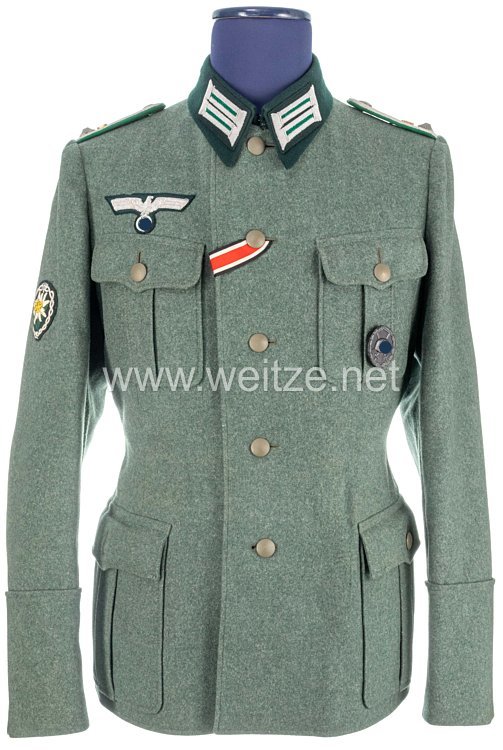
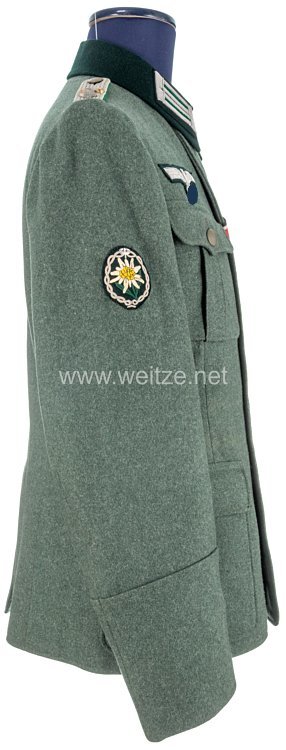
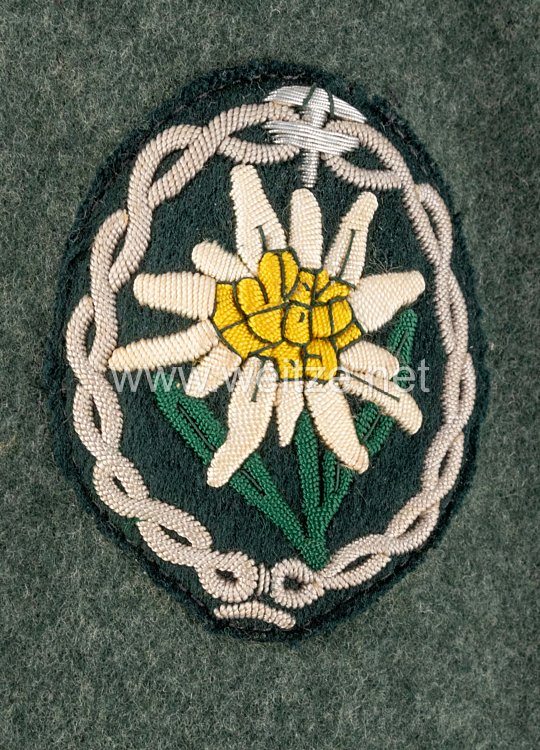
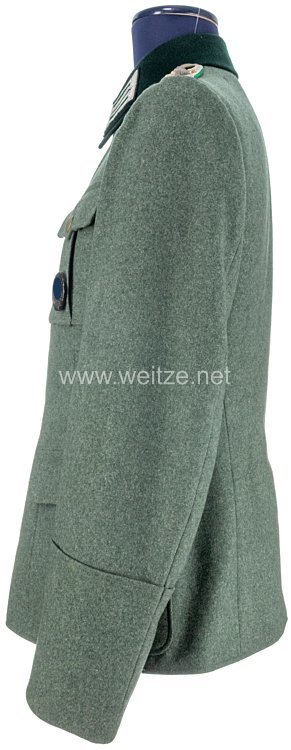
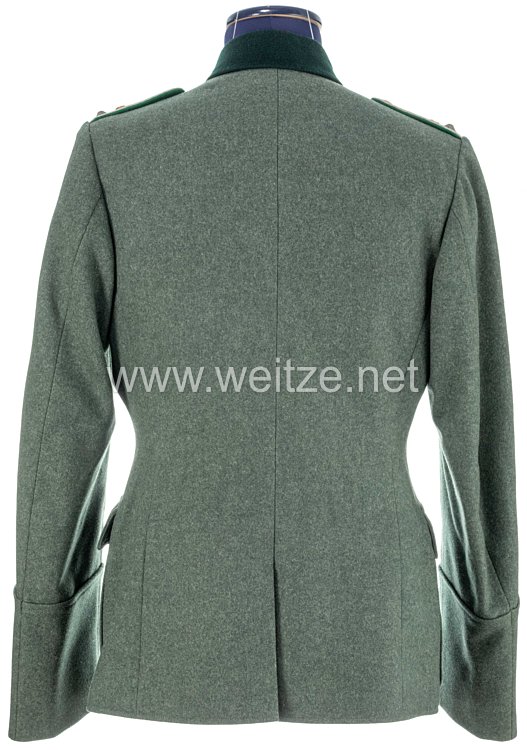
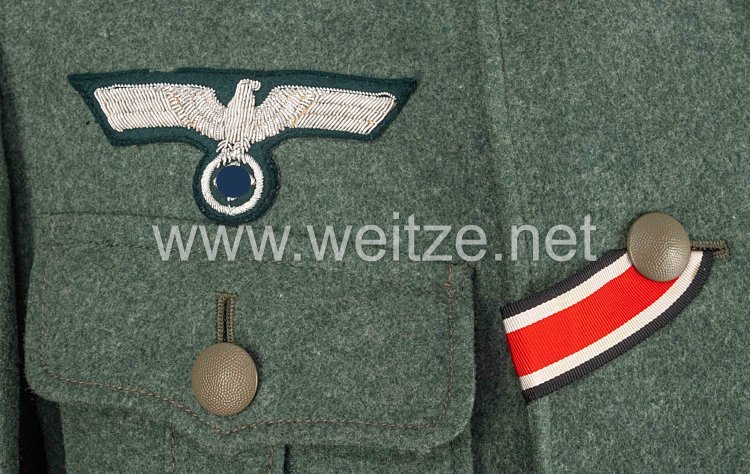
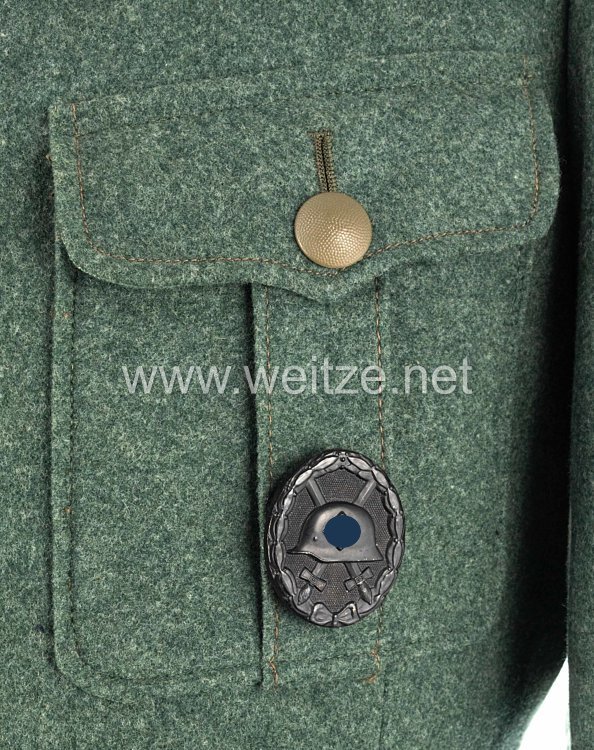
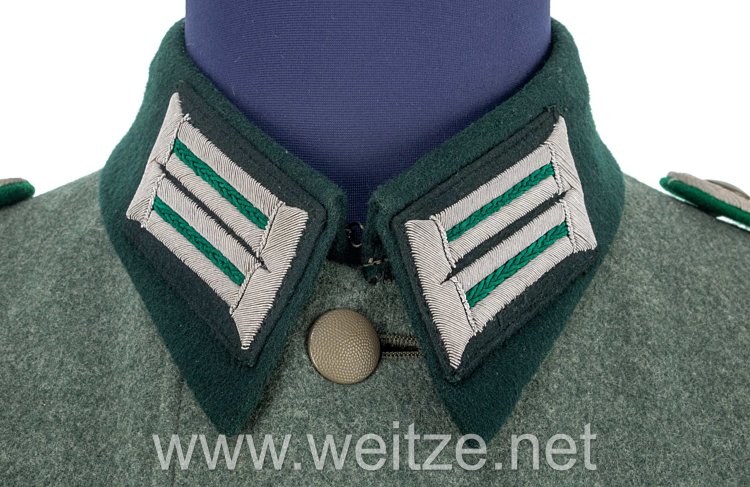
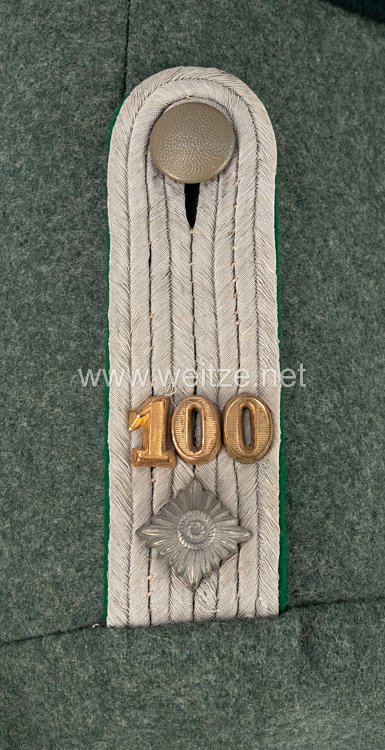
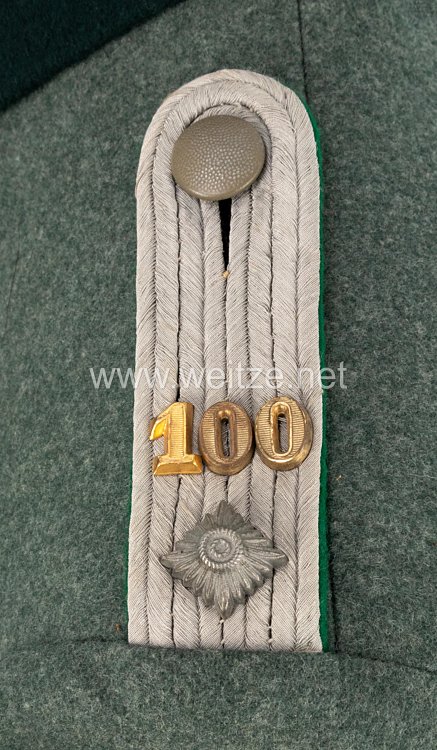
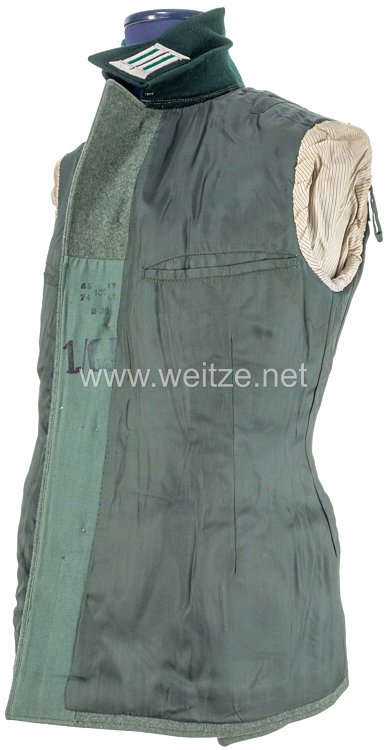
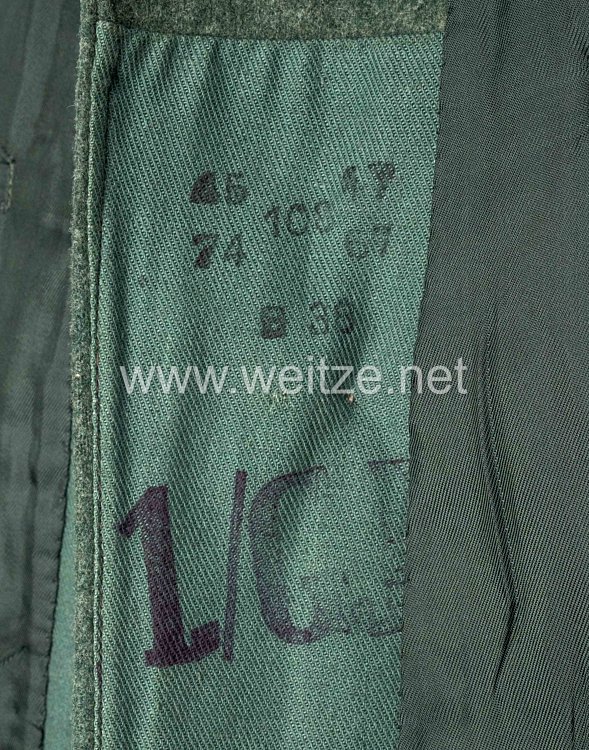
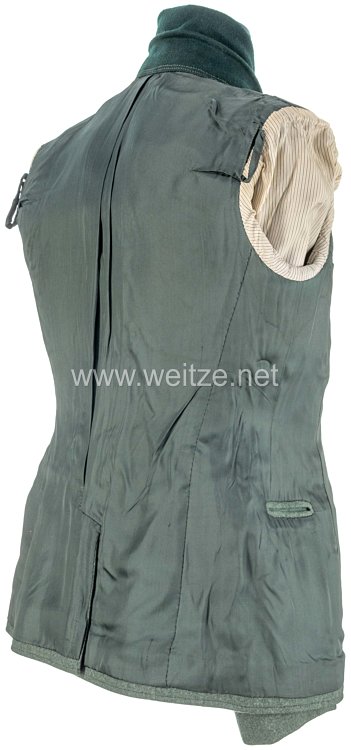
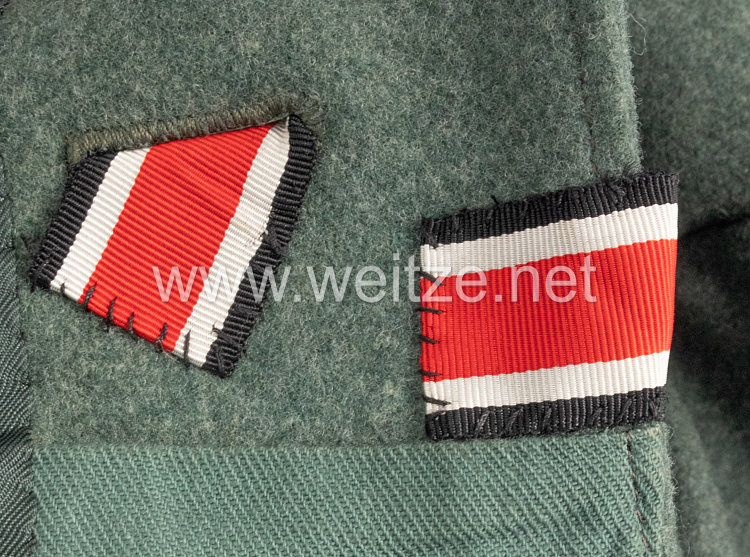
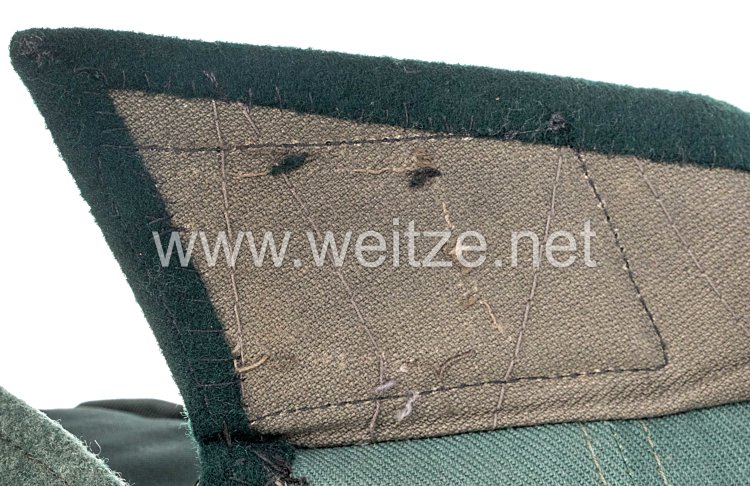
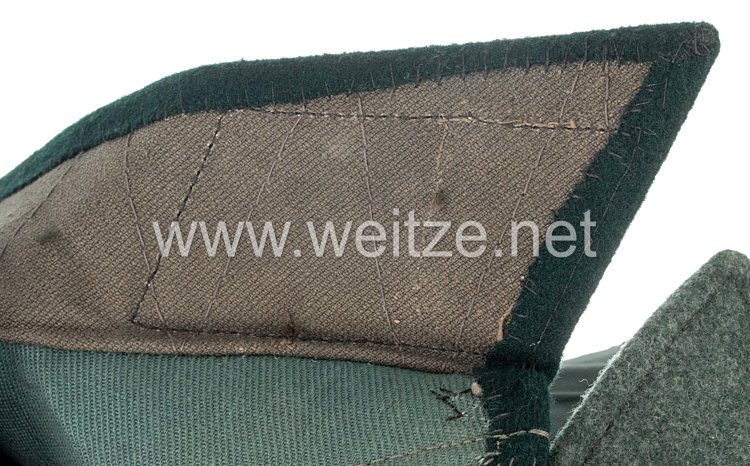
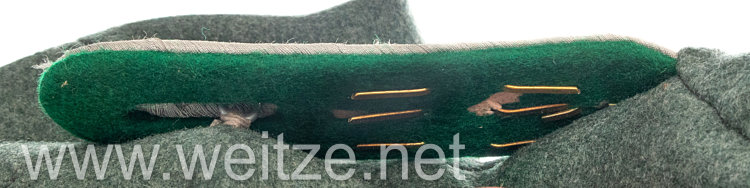
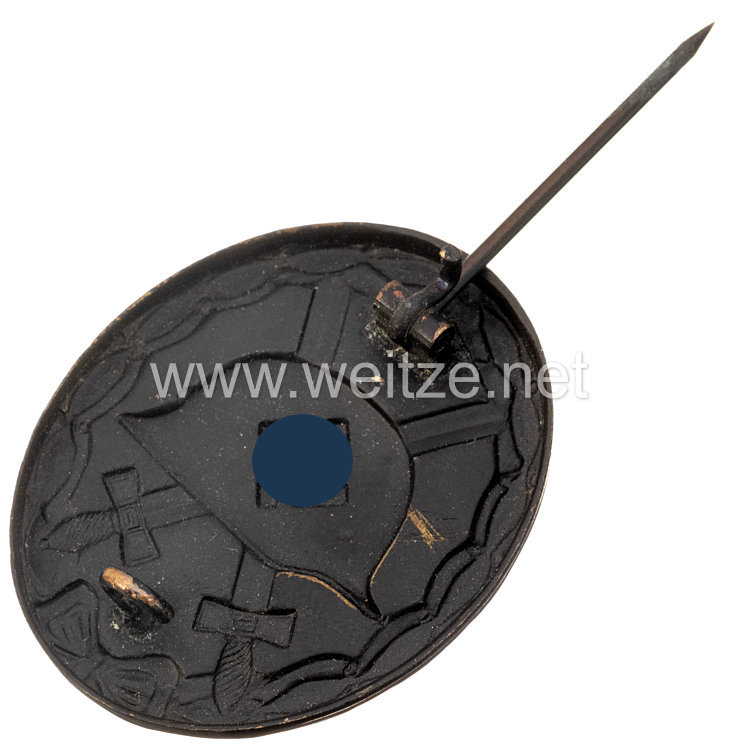
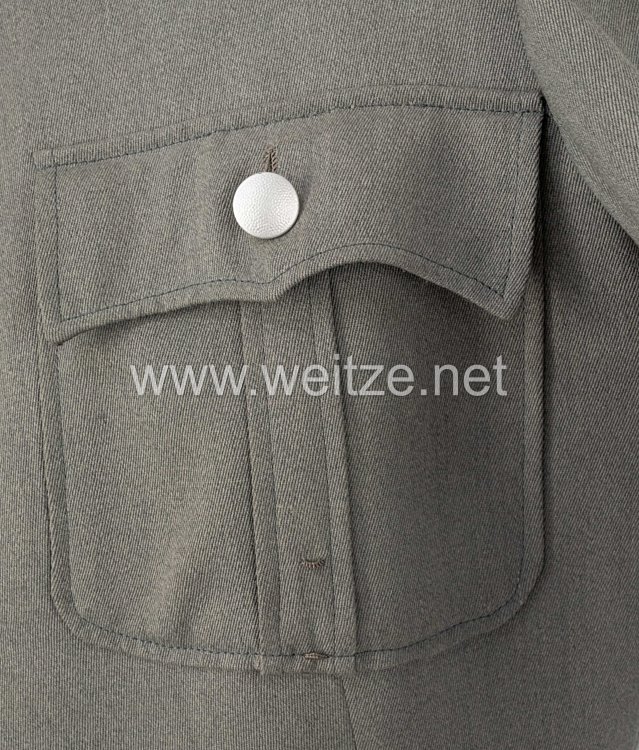
Bei der Feldbluse handelt es sich um eine Feldbluse M 38, ein Kammerstück, welche dann als Feldbluse für Offiziere auf der Kleiderkammer umgearbeitet wurde. Feldgraues Tuch, mit dunkelgrünem Kragen, die Ärmel mit angedeuteten Aufschlägen. Komplett mit allen Effekten Metallfaden handgestickter Brustadler auf dunkelgrün, maschinell vernäht (!), die Kragenspiegel ebenfalls maschinell vernäht. Eingenähte Schulterstücke mit vergoldeten Auflagen "100". Auf dem rechten Ärmel das Abzeichen für Gebirgsjäger in handgestickter Ausführung für Offiziere. Band zum EK 2 im Knopfloch auf der Brust aufgesteckt das Verwundetenabzeichen i Schwarz. Innen mit dunkelgrünem Futter in Offiziersqualität, mit eingenähtem Schlitz zum Tragen des Offiziersdolches. Auf der Knopfleiste noch sehr schön sichtbar die Kammerstempel ".. B 38" und "1./GJ.." (= 1. Kompanie, Gebirgs-Jäger...).Nur minimal getragen, in fast neuwertigem Zustand !
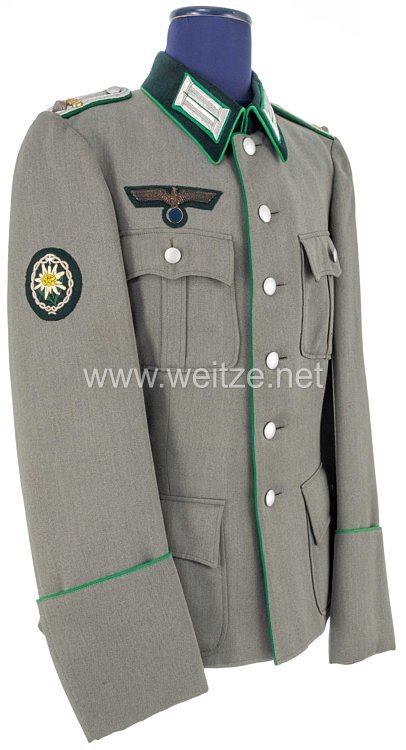
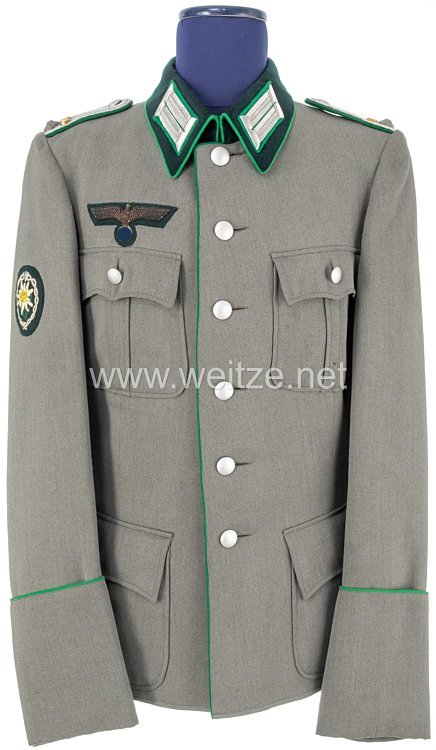
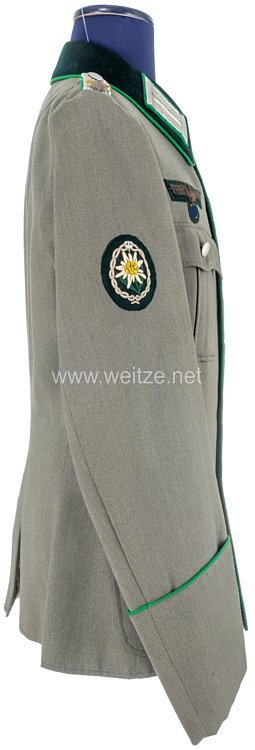
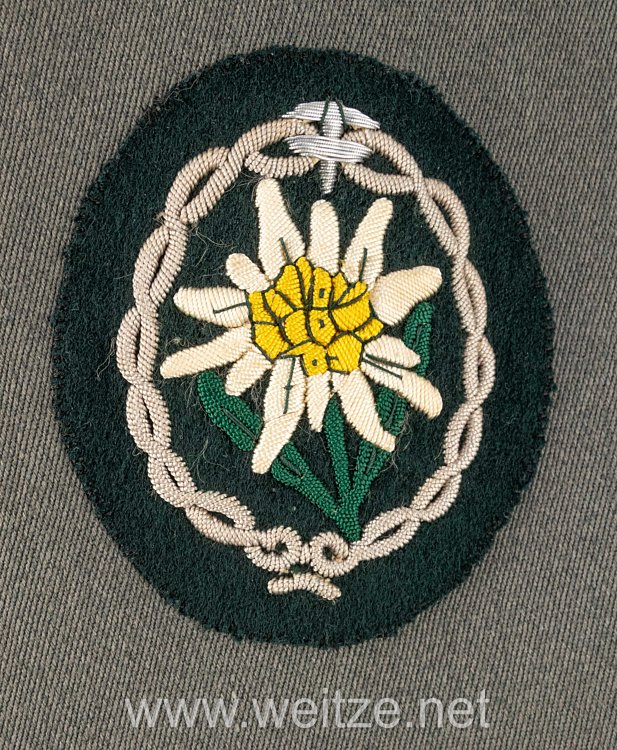
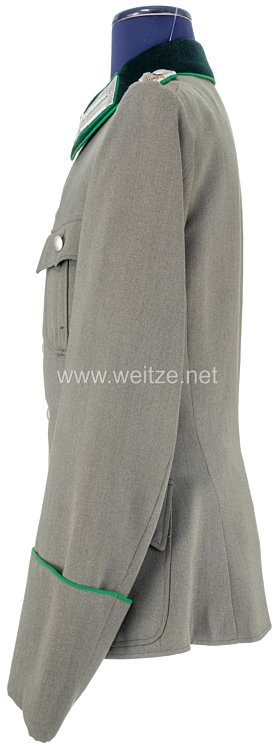
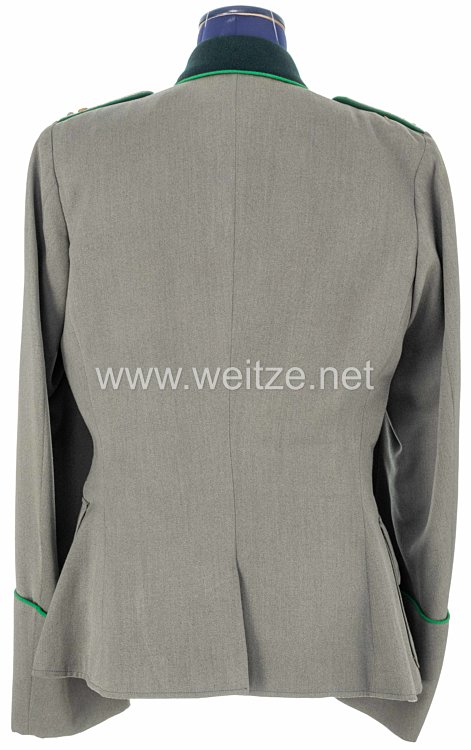
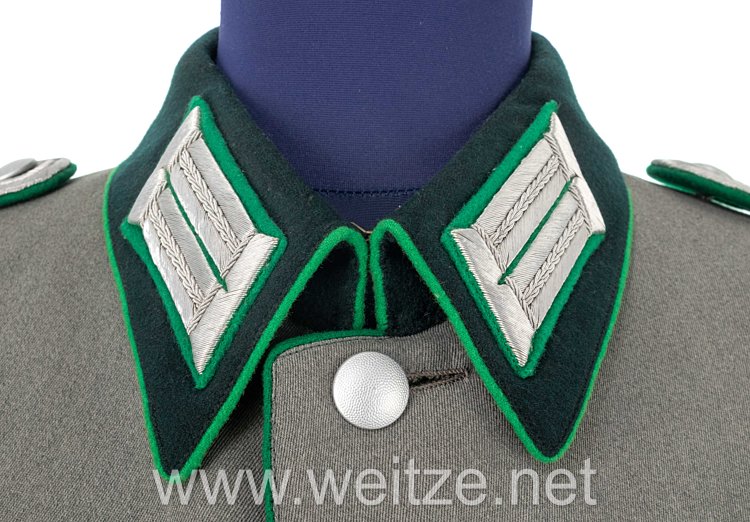
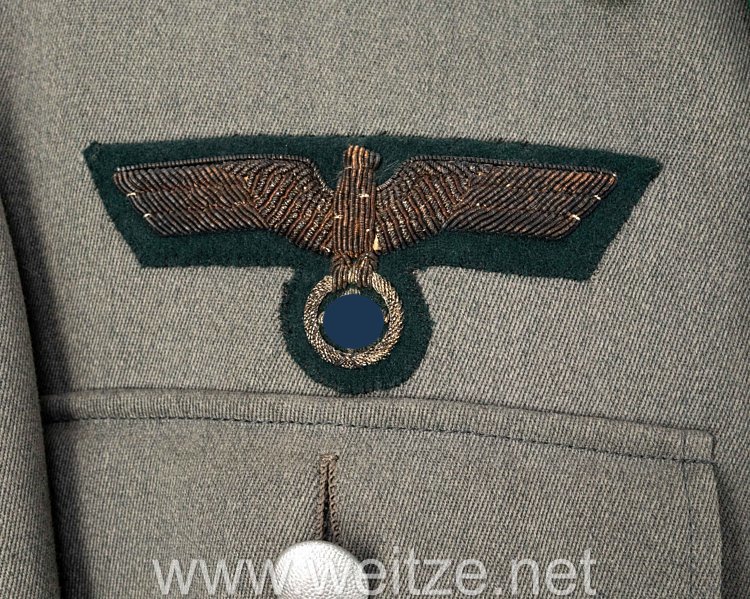
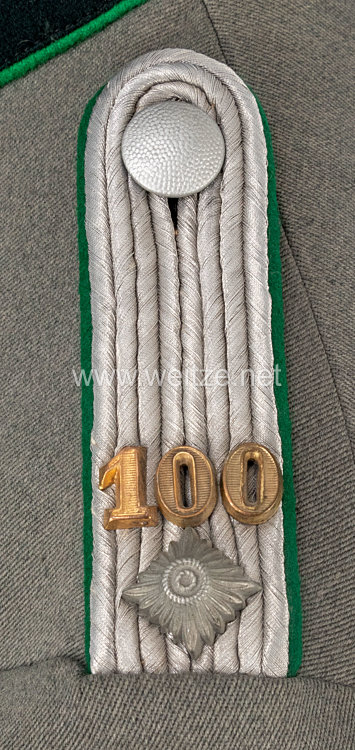
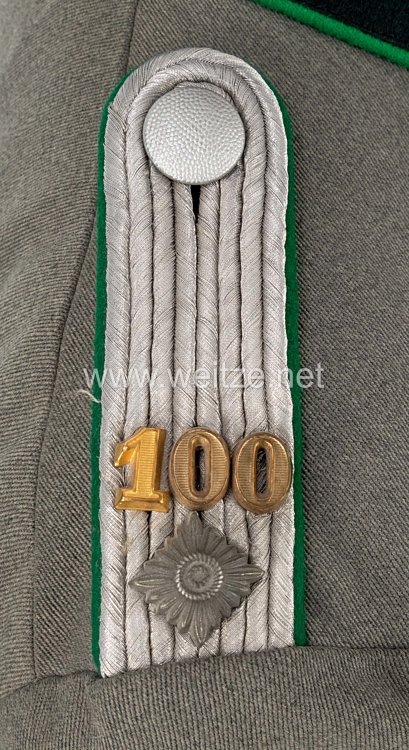
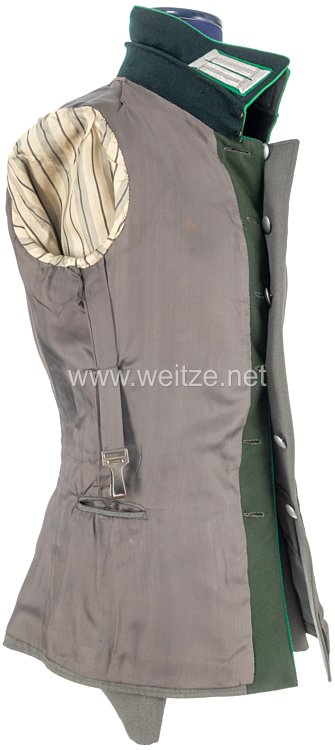
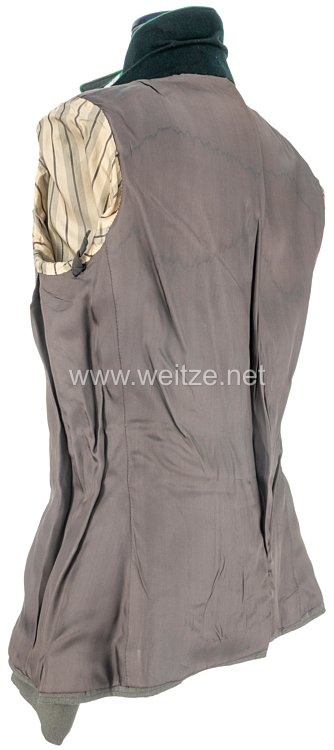
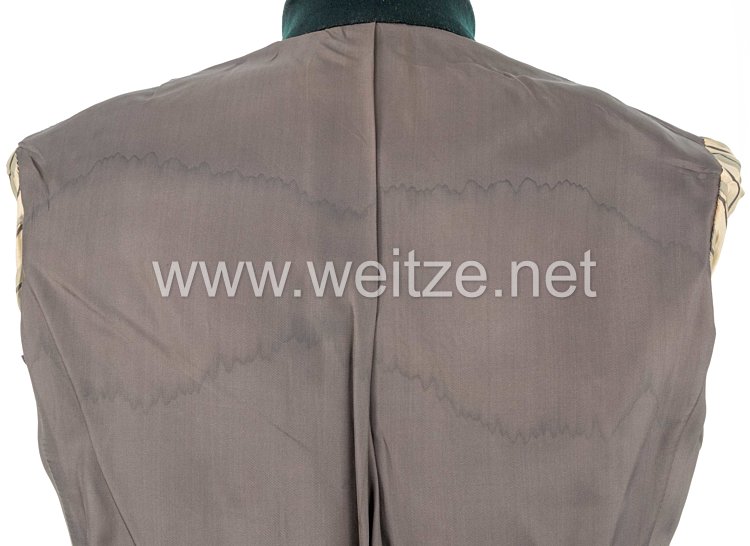
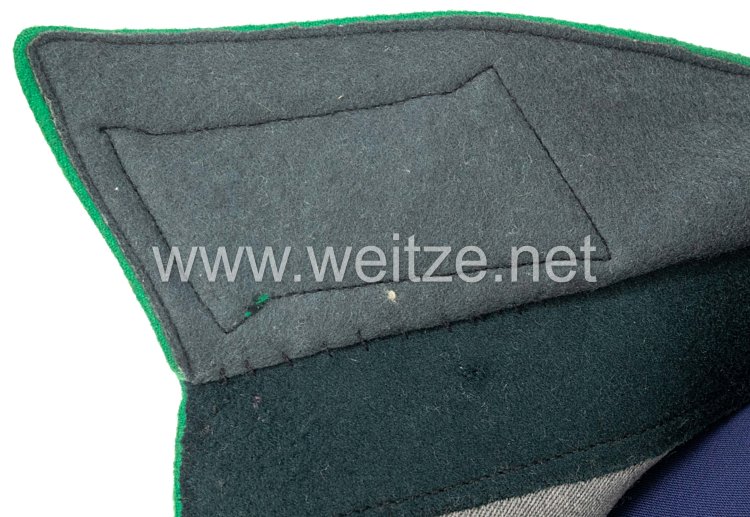
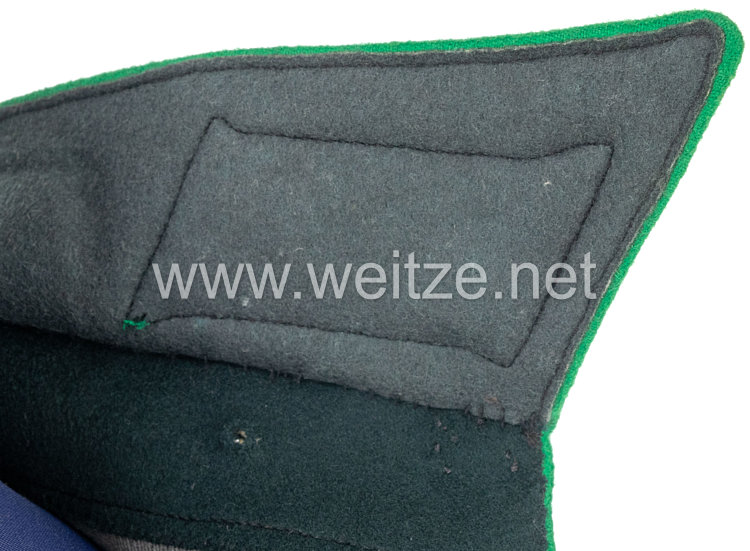
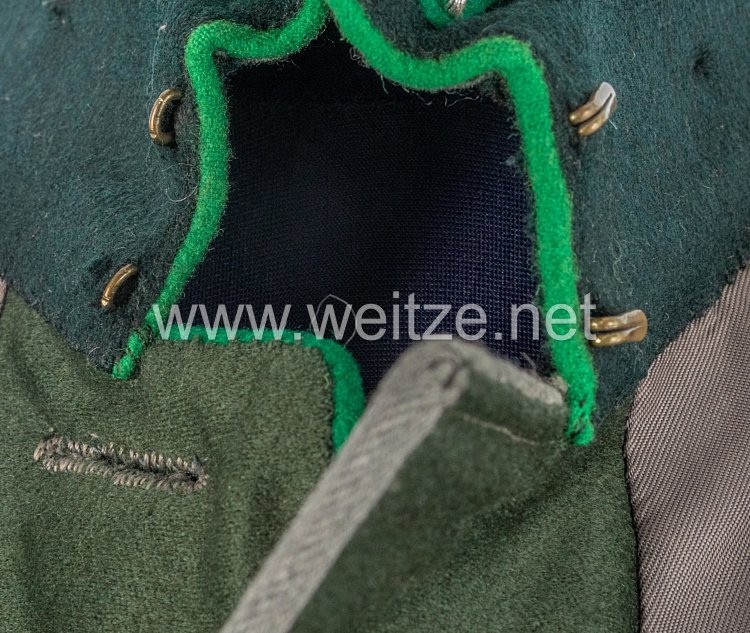
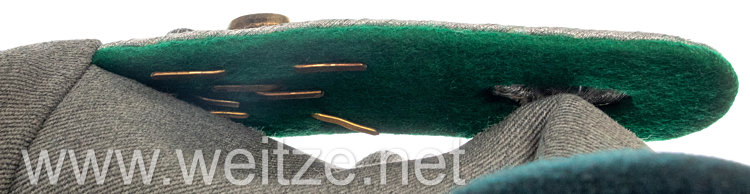
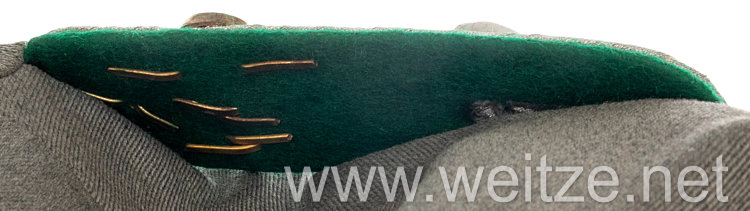
Die geschönte Feldbluse ist ein elegantes Eigentumstück, um 1940. Das Tuch aus leichtem feldgrauen Gabardine, dunkelgrüner Kragen, der Kragen und die Knopfleiste mit grüner Paspelierung. Komplett mit allen Effekten, Metallfaden-handgestickter Brustadler in Silber (nicht Aluminium !) auf dunkelgrünem Grund per Hand vernäht, die Kragenspiegel maschinell vernäht, glänzende eingenähte Schulterstücke mit vergoldeten Auflagen "100", Waffenfarbe grün. Auf der Brust Schlaufen für 1 Steckabzeichen. Auf den rechten Ärmel das Abzeichen für Gebirgsjäger in handgestickter Ausführung für Offiziere. Innen mit steingrauem Tuchfutter, seitlich mit eingenähtem Schlitz und Klipp zum Tragen des Offiziersdolches. Maße: Ärmellänge: 63 cm, Schulter: ca. 44 cm, Brustumfang: 92 cm, Rücken: 63 cm. Nur leicht getragen, Zustand 2+.
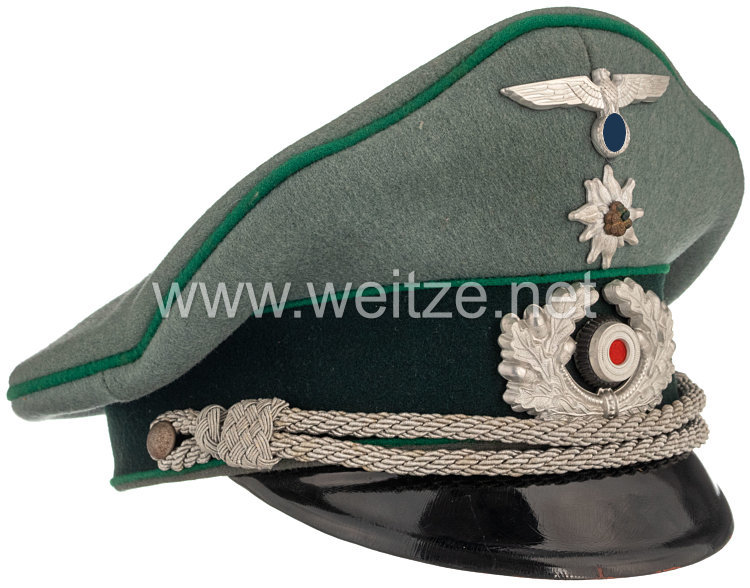
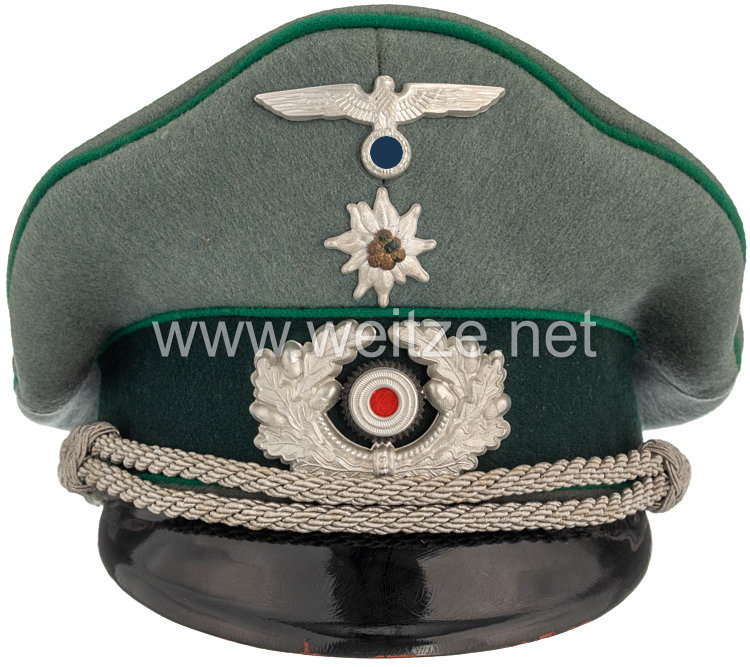
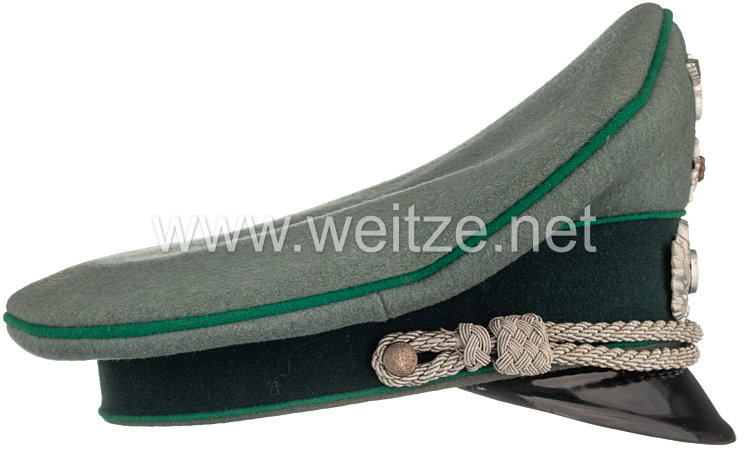
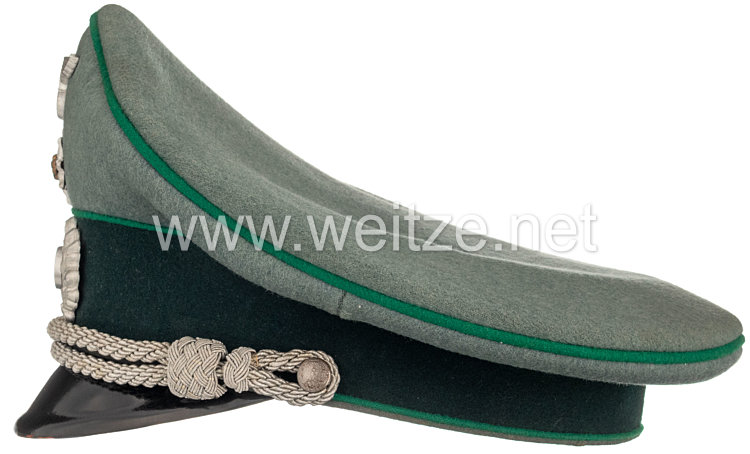
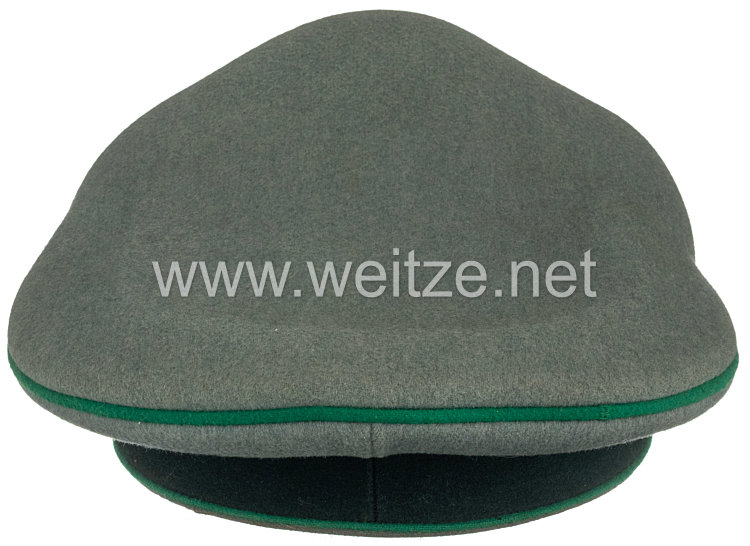
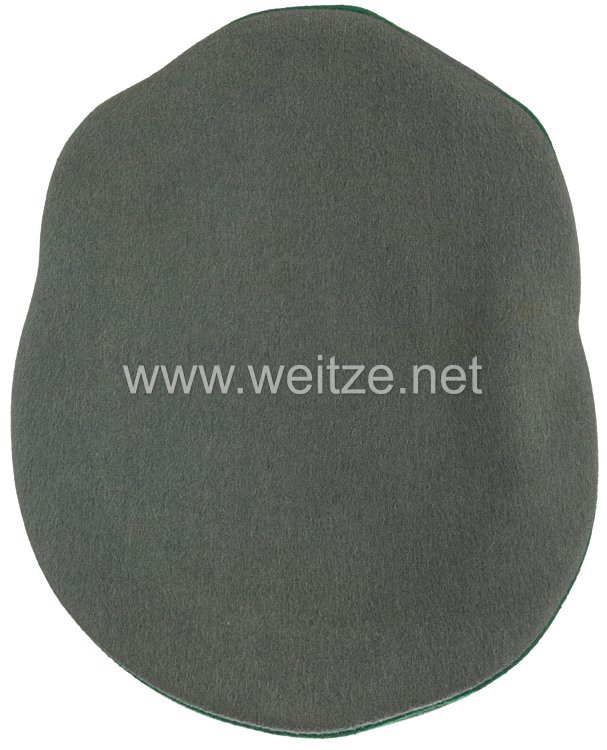
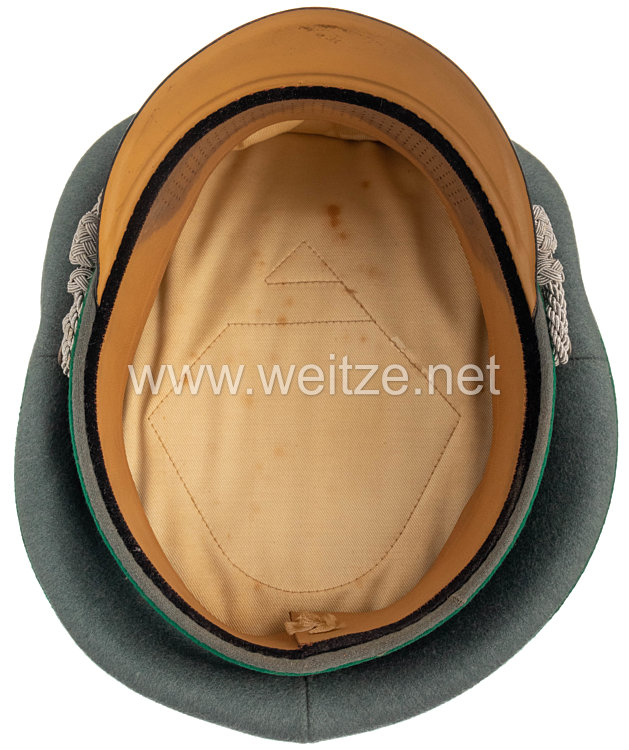
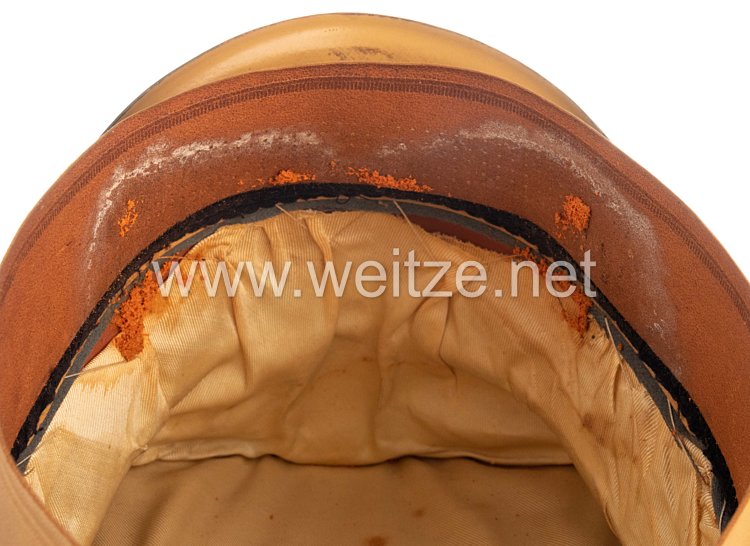
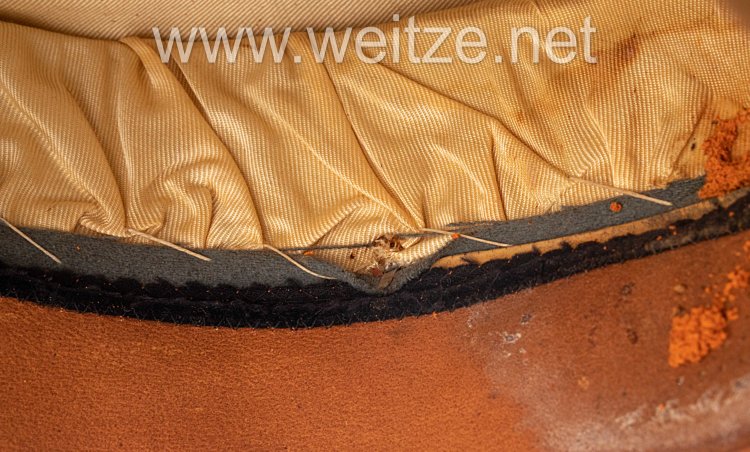
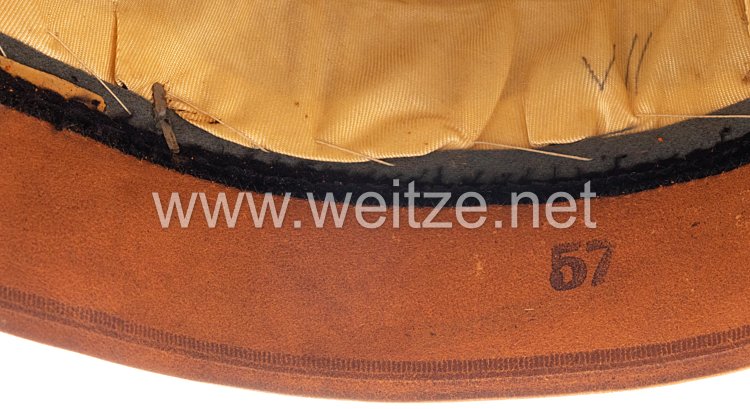
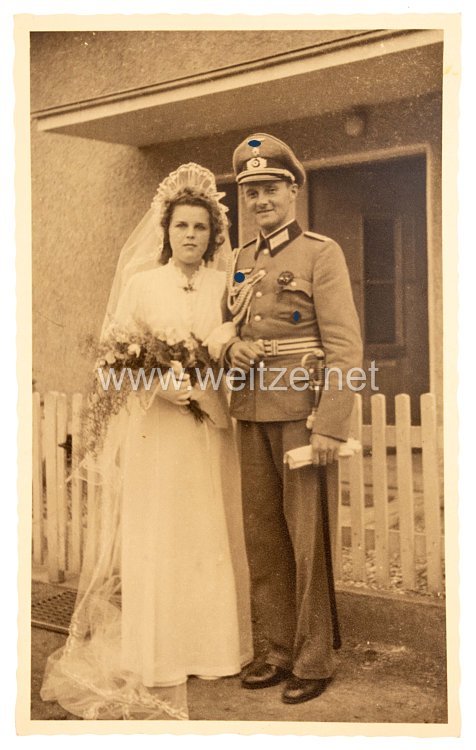
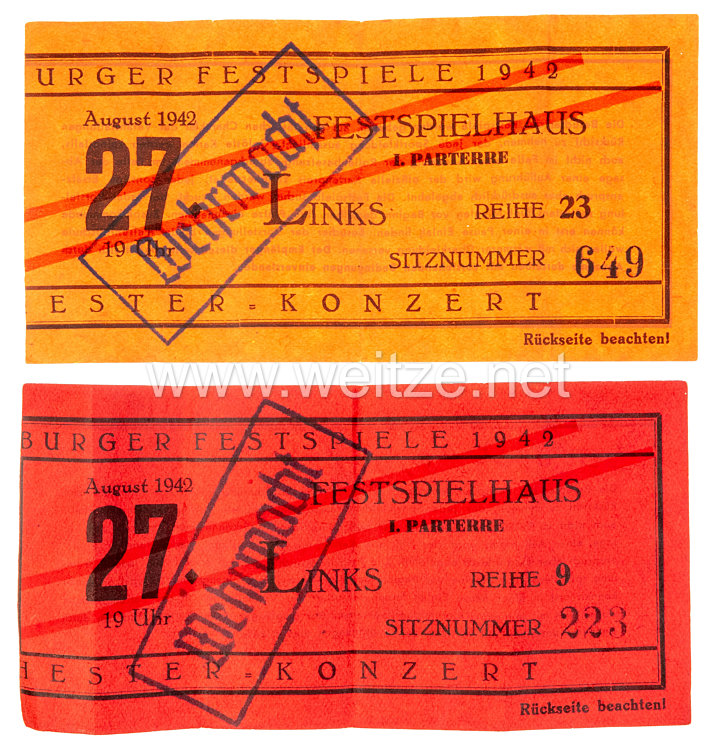
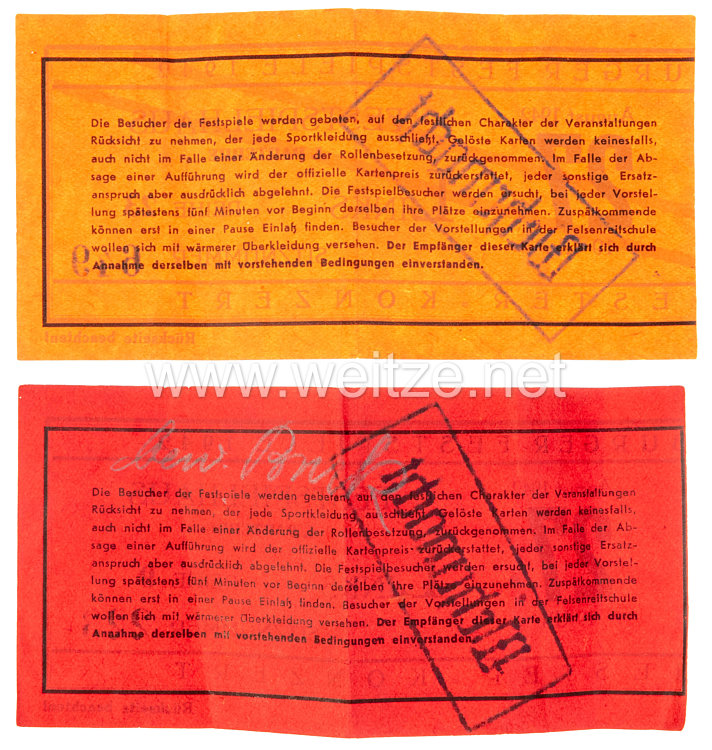
Schirmmütze für Offiziere der Gebirgsjäger, ein elegantes Eigentumstück, typische Fertigung der FA. Peküro. HOhe elegante Sattelform, komplett mit Hoheitsadler, Edelweiß, Eichenlaubkranz mit der Kokarde in Aluminium, Waffenfarbe grün, Innen mit hellem Schweißleder und schwarzer Samtkante, helles Futter, das Zelluloidtrapez herausgetrennt, Größe ca. 58. Nur leicht getragen, Zustand 2+. Dazu ein sehr schönes original Foto von Oberleutnant Breyer in genau dieser geschönten Feldbluse und dieser Schirmmütze ! Weiterhin 2 Eintrittskarten "Wehrmacht" der Salzburger Festspiele 1942 zu 2 Konzerten. Breyer hat im August 1942 auf Heimaturlaub seine Frau geheiratet und mit ihr die Festspiele in Salzburg besucht.
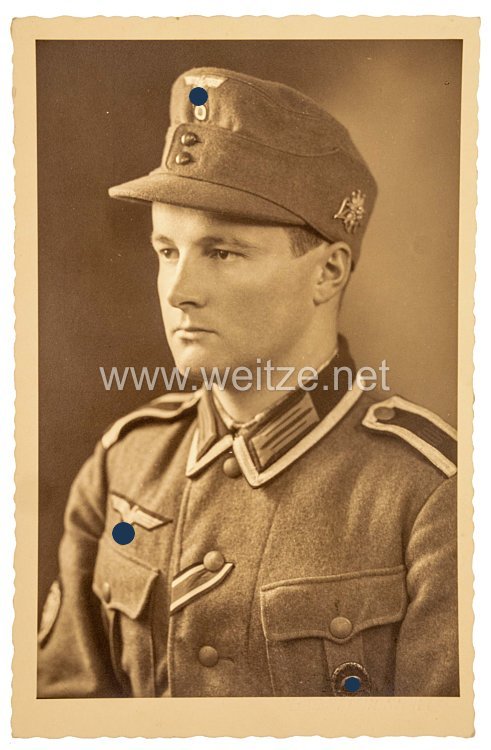
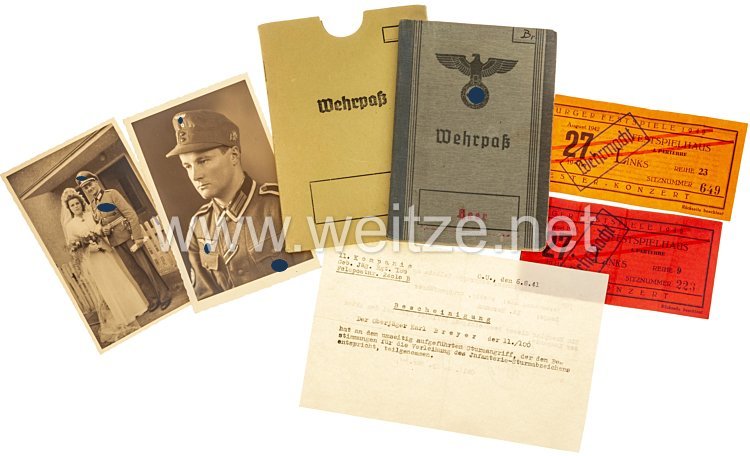
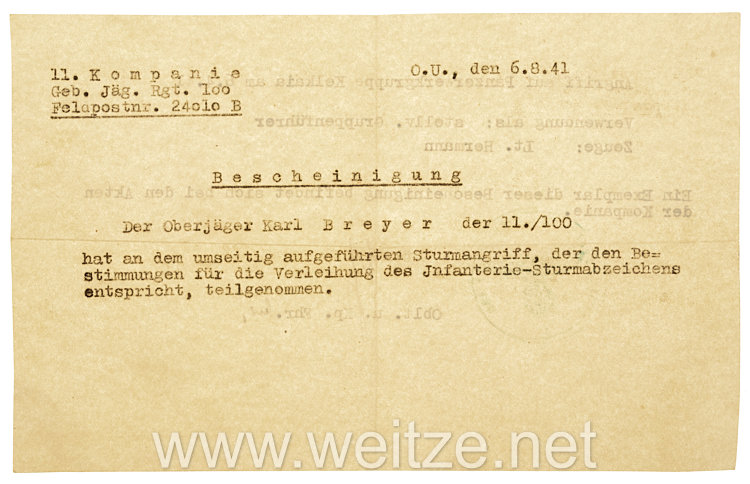
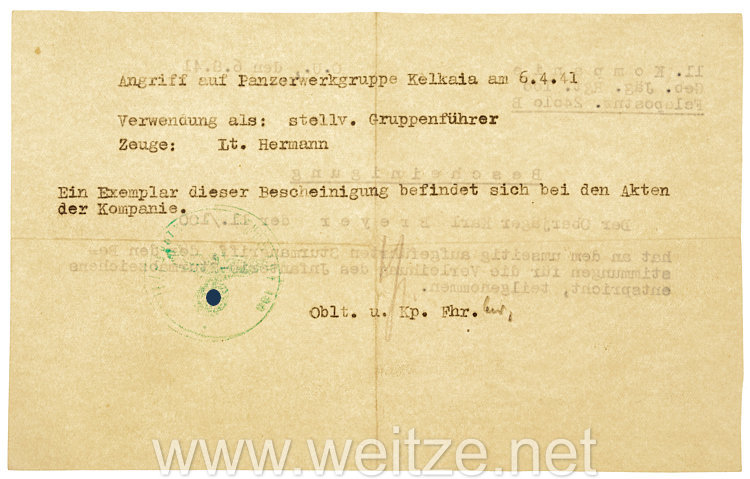
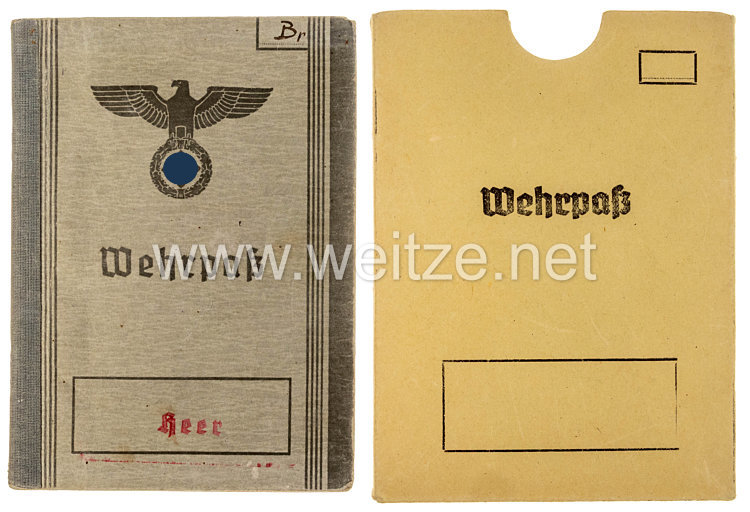
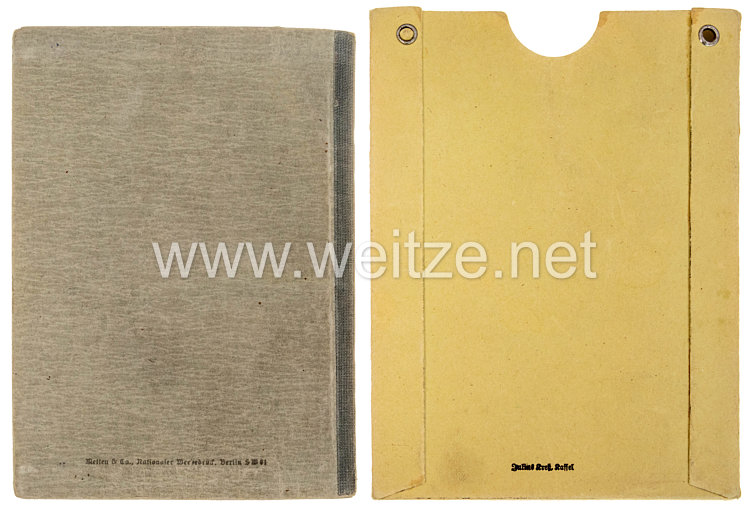
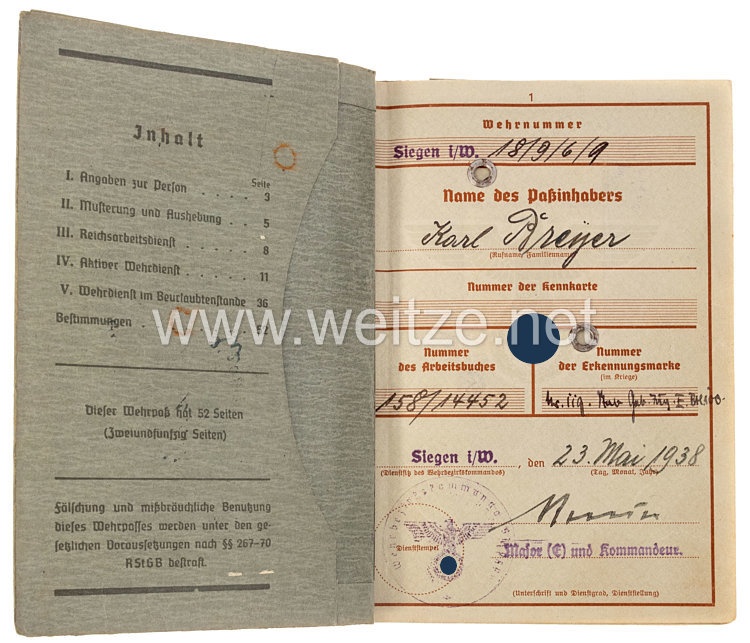
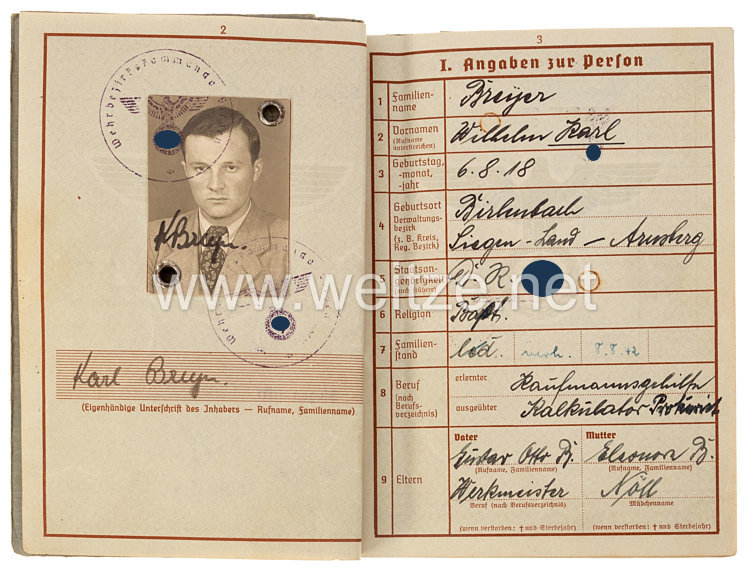
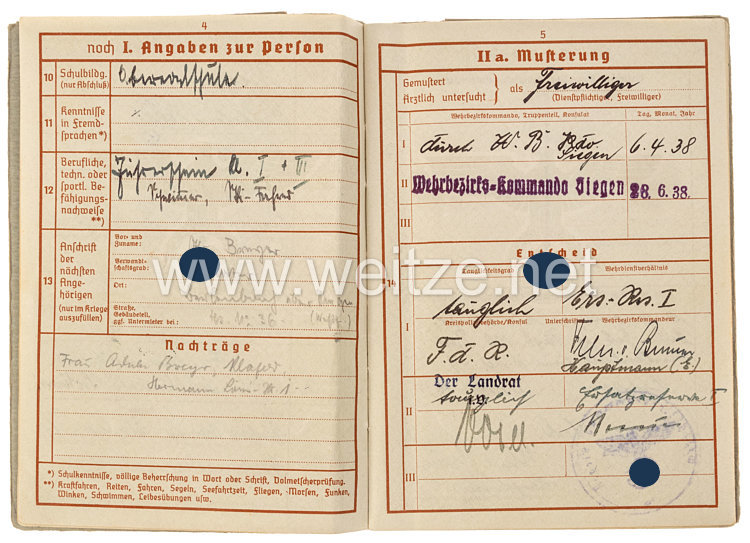
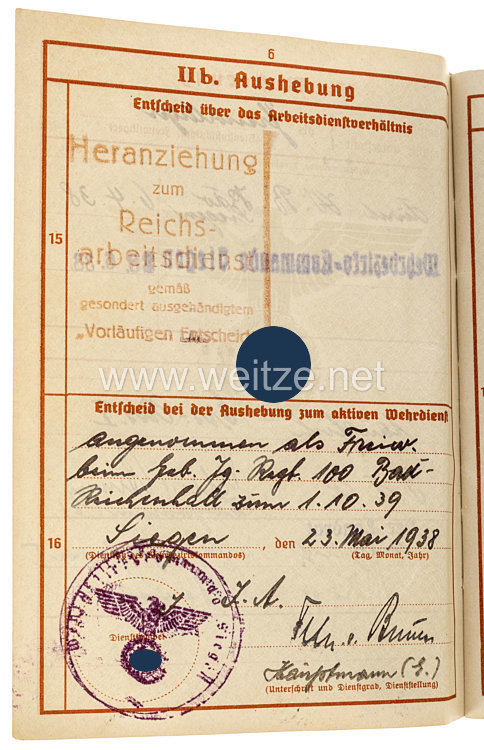
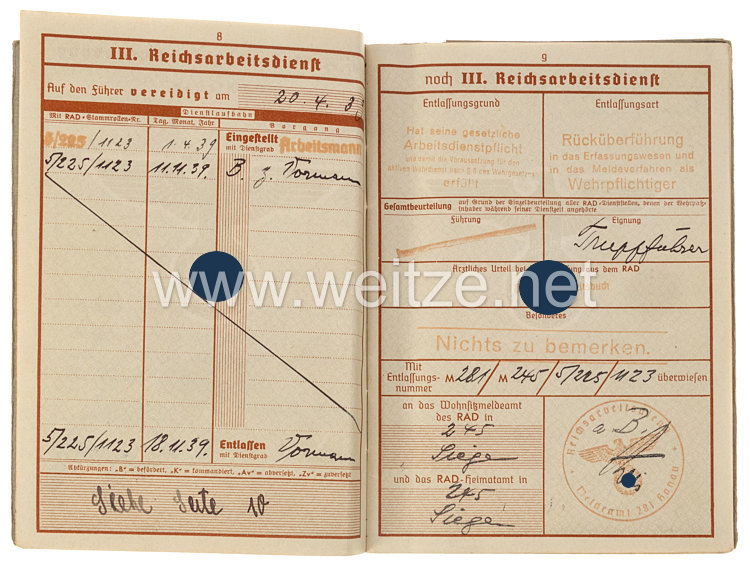
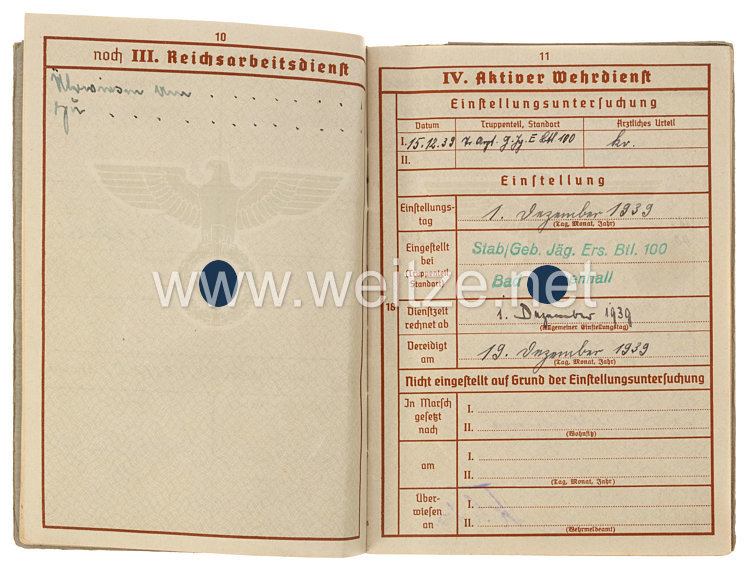
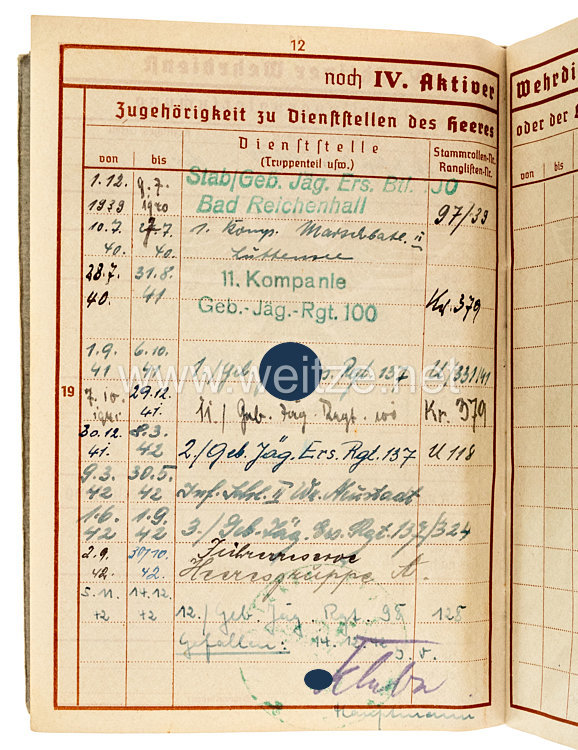
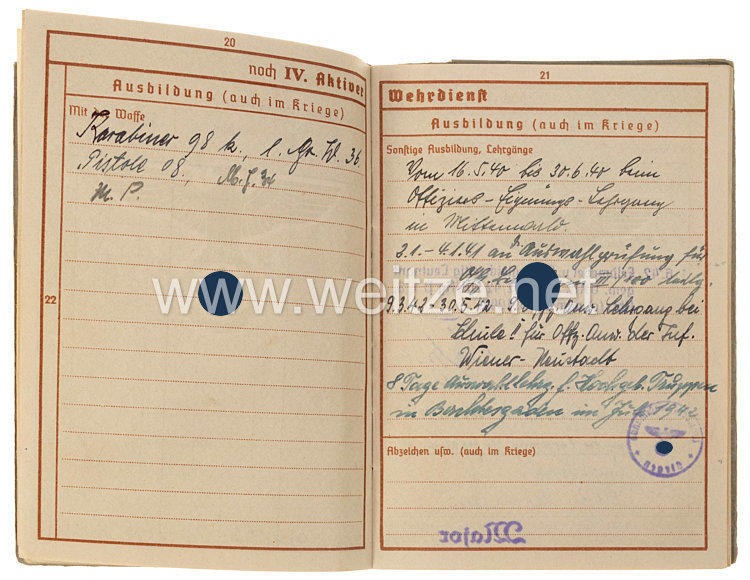
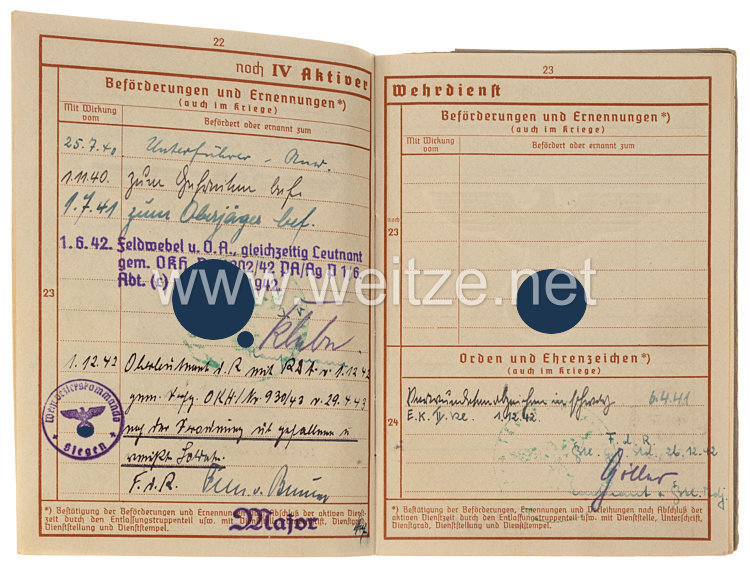
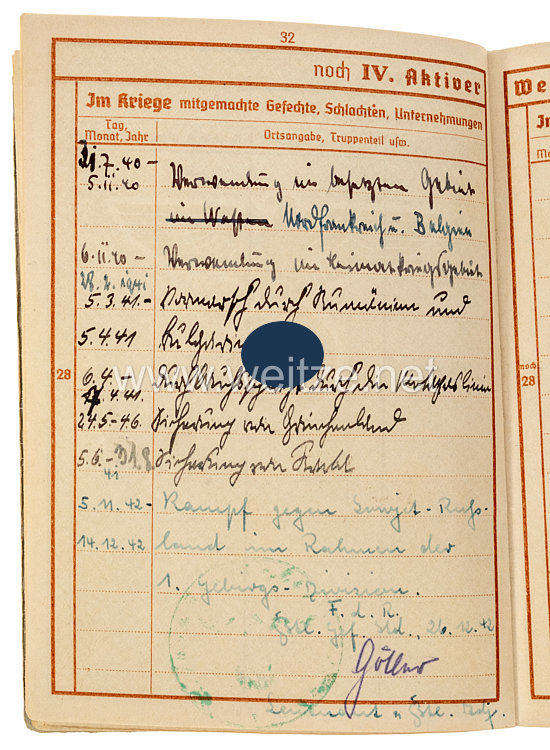
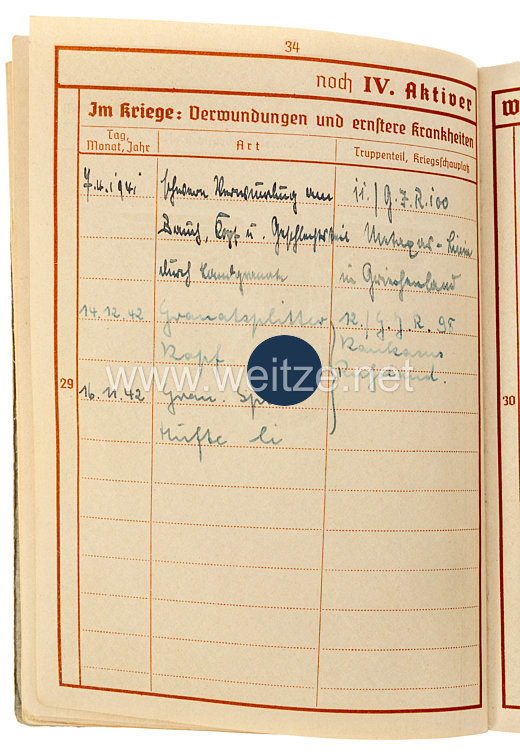
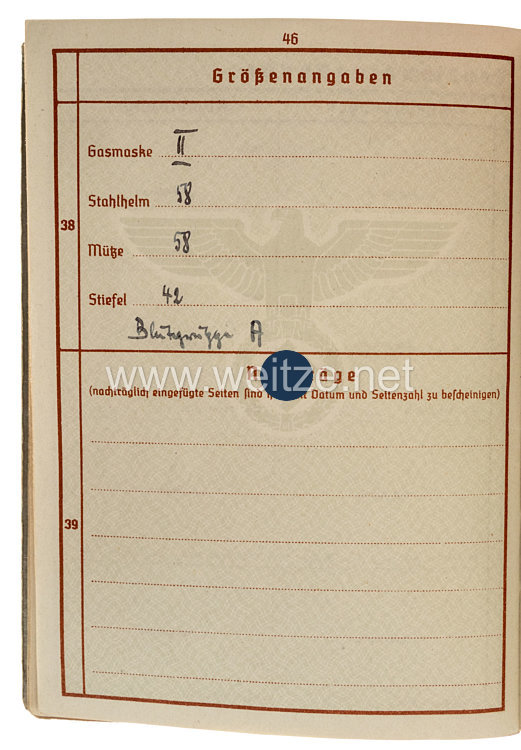
Dazu der Wehrpaß mit Schutzhülle, ausgestellt 1938, komplett mit allen Eintragungen bis zu seinem Tod, gefallen als Angehöriger 12./Geb.Jäg.Rgt. 98 im Kaukasus, Rußland am 14.12.1942. Die Beförderung zum Oberleutnant erfolgte am 12.12.1942. Eingetragene Auszeichnungen Verwundetenabzeichen in Schwarz am 6.4.1941, EK II. Kl. am 1.12.1942 . Dazu die Bescheinigung des 11. Kompanie Geb.Jäg.Rgt. 100 über einen Sturmangriff auf die Panzerwerkgruppe Kelkaia am 6.4.1941, "der den Bestimmungen für die Verleihung des Infanterie-Sturmabzeichens entspricht..". Weiterhin ein schönes Portraitfoto als Oberjäger.
Nach dem Tod von Oberleutnant Breyer verblieben die Uniformen gemeinsam mit seinem Wehrpaß bei der Witwe. Nach ihrem Tod konnten wir dieses wirklich schöne Ensemble im Januar 2021 erwerben.
Die geschönte Feldbluse ist ein elegantes Eigentumstück, um 1940. Das Tuch aus leichtem feldgrauen Gabardine, dunkelgrüner Kragen, der Kragen und die Knopfleiste mit grüner Paspelierung. Komplett mit allen Effekten, Metallfaden-handgestickter Brustadler in Silber (nicht Aluminium !) auf dunkelgrünem Grund per Hand vernäht, die Kragenspiegel maschinell vernäht, glänzende eingenähte Schulterstücke mit vergoldeten Auflagen "100", Waffenfarbe grün. Auf der Brust Schlaufen für 1 Steckabzeichen. Auf den rechten Ärmel das Abzeichen für Gebirgsjäger in handgestickter Ausführung für Offiziere. Innen mit steingrauem Tuchfutter, seitlich mit eingenähtem Schlitz und Klipp zum Tragen des Offiziersdolches. Maße: Ärmellänge: 63 cm, Schulter: ca. 44 cm, Brustumfang: 92 cm, Rücken: 63 cm. Nur leicht getragen, Zustand 2+.
Schirmmütze für Offiziere der Gebirgsjäger, ein elegantes Eigentumstück, typische Fertigung der FA. Peküro. HOhe elegante Sattelform, komplett mit Hoheitsadler, Edelweiß, Eichenlaubkranz mit der Kokarde in Aluminium, Waffenfarbe grün, Innen mit hellem Schweißleder und schwarzer Samtkante, helles Futter, das Zelluloidtrapez herausgetrennt, Größe ca. 58. Nur leicht getragen, Zustand 2+. Dazu ein sehr schönes original Foto von Oberleutnant Breyer in genau dieser geschönten Feldbluse und dieser Schirmmütze ! Weiterhin 2 Eintrittskarten "Wehrmacht" der Salzburger Festspiele 1942 zu 2 Konzerten. Breyer hat im August 1942 auf Heimaturlaub seine Frau geheiratet und mit ihr die Festspiele in Salzburg besucht.
Dazu der Wehrpaß mit Schutzhülle, ausgestellt 1938, komplett mit allen Eintragungen bis zu seinem Tod, gefallen als Angehöriger 12./Geb.Jäg.Rgt. 98 im Kaukasus, Rußland am 14.12.1942. Die Beförderung zum Oberleutnant erfolgte am 12.12.1942. Eingetragene Auszeichnungen Verwundetenabzeichen in Schwarz am 6.4.1941, EK II. Kl. am 1.12.1942 . Dazu die Bescheinigung des 11. Kompanie Geb.Jäg.Rgt. 100 über einen Sturmangriff auf die Panzerwerkgruppe Kelkaia am 6.4.1941, "der den Bestimmungen für die Verleihung des Infanterie-Sturmabzeichens entspricht..". Weiterhin ein schönes Portraitfoto als Oberjäger.
Nach dem Tod von Oberleutnant Breyer verblieben die Uniformen gemeinsam mit seinem Wehrpaß bei der Witwe. Nach ihrem Tod konnten wir dieses wirklich schöne Ensemble im Januar 2021 erwerben.