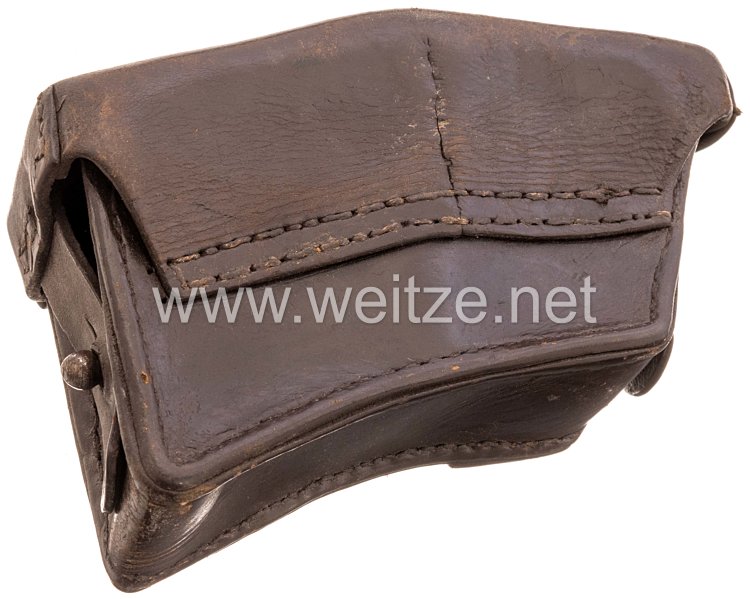
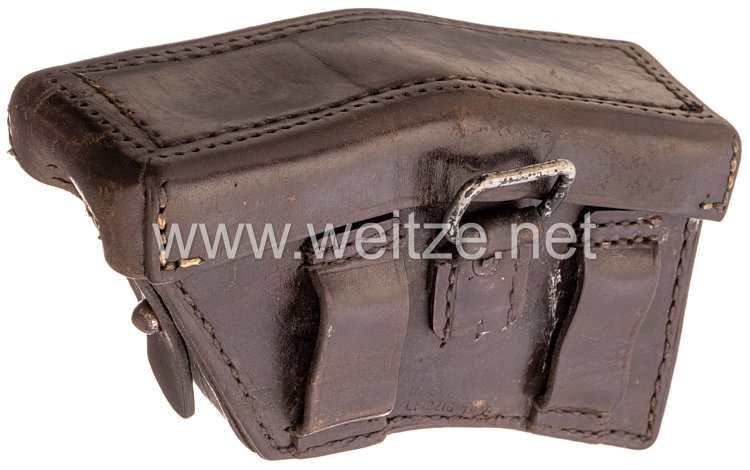
Austria/Austro-Hungarian Monarchy World War I Cartridge Pouch M 1888 - German Manufacture
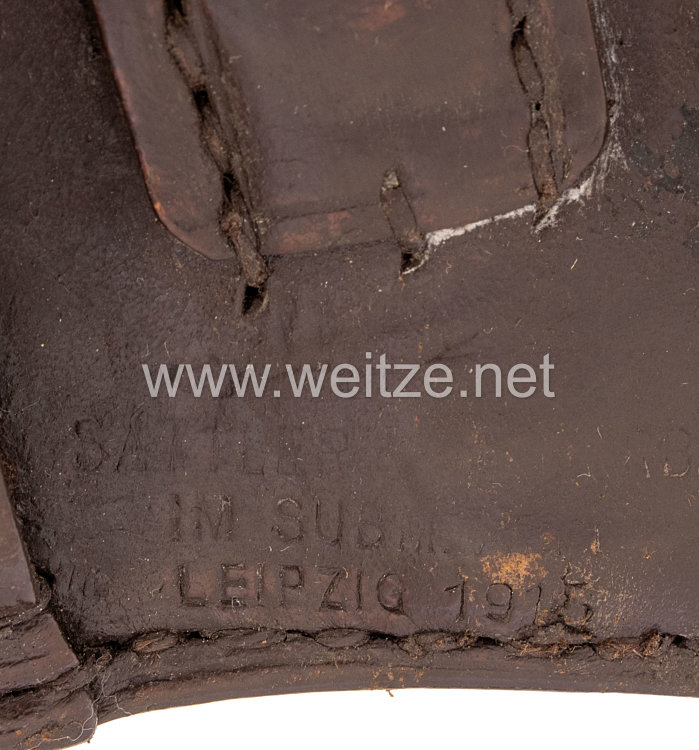
The Patronentasche M 1888 (cartridge pouch Model 1888) of the Austro-Hungarian Monarchy represents a characteristic piece of equipment used by the k.u.k. armed forces during World War I. This particular specimen was manufactured in 1915 in Leipzig and illustrates the extensive military cooperation between the Central Powers during the Great War.
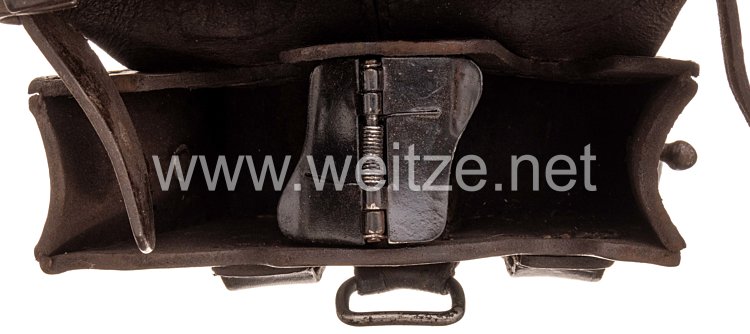
Model 1888 was originally introduced as part of the modernization of Austro-Hungarian infantry equipment when the military transitioned to the new Mannlicher rifle M 1888. The cartridge pouch was designed to accommodate 8×50mmR cartridges in loading clips, which were characteristic of the Mannlicher system. The robust construction of brown leather with metal fittings ensured durability under field conditions and protection of ammunition from weather exposure.
The German manufacture of this Austro-Hungarian equipment item is historically significant. With the outbreak of war in 1914, it quickly became apparent that the production capacity of the k.u.k. Monarchy was insufficient to meet the enormous material demands of the armed forces. The years-long trench warfare on multiple fronts – against Russia in the East, Italy in the South, and in the Balkans – led to unprecedented consumption of equipment and ammunition.
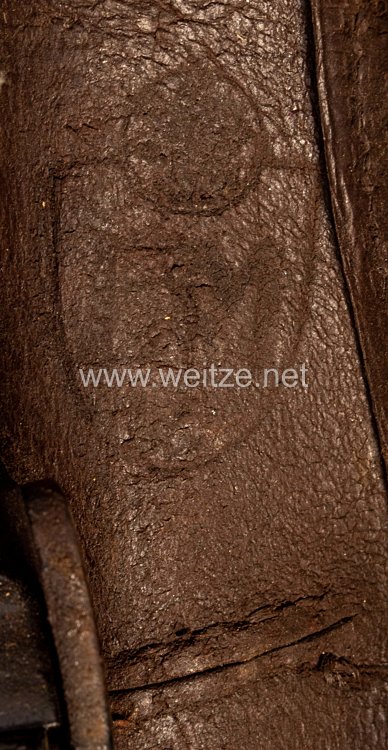
The German Empire, as the principal ally, increasingly took over the production of equipment items for the k.u.k. Army. Leipzig, as a major industrial center in Saxony, housed numerous saddleries and leather manufactories that converted their production capacities to military contracts. The stamp reading “Sattler im Sub Leipzig 1915” (Saddler in Sub[contractor] Leipzig 1915) refers to the subcontractor structure established during the war to maximize production output.
The year 1915 marks a particularly critical phase of World War I. The Austro-Hungarian Army had already suffered heavy losses in the Carpathians and against Russian offensives. The Gorlice-Tarnów Offensive in May 1915, a joint German-Austrian operation, demonstrated both the military necessity and logistical interconnection of the Central Powers. Standardized production of equipment items according to Austro-Hungarian specifications in German factories was an essential component of this warfare.
The Patronentasche M 1888 was typically worn on the belt, usually two pieces per soldier – one on each side. Each pouch could hold several loading clips with five cartridges each, providing the infantryman with a basic ammunition reserve immediately accessible. The design with metal fittings, typically made of brass or blackened steel, allowed for quick opening and closing even with cold or injured hands.
The leather processing followed military specifications that prioritized durability and functionality. The brown leather was tanned and treated to repel water while remaining flexible enough for daily use. The quality of German leather goods industry was internationally recognized, which further justified the choice of German manufacturers for Austro-Hungarian military equipment.
The economic mobilization of both monarchies during the war is exemplified in such objects. Civilian craft businesses were integrated into war production, with traditional saddleries applying their expertise in leather processing for military purposes. This led to standardization and rationalization of production, which, however, reached its limits due to increasing material shortages from 1916/17 onwards.
The condition of such cartridge pouches varies considerably. Classification as “Condition 2” indicates a well-preserved specimen in which the original form, fittings, and stampings are still clearly recognizable. This is remarkable, as leather equipment is particularly susceptible to deterioration through moisture, mold, and mechanical stress.
Today, such Kammerstücke – objects from military collections or depots – are important historical witnesses to the material culture of World War I. They document not only military equipment standards but also the economic and industrial interconnection of the Central Powers, the logistical challenges of modern mass warfare, and the transformation of civilian production capacities for military purposes.
The survival of manufacturer stamps and dates on these items provides valuable insights into the organization of wartime production. The Leipzig leather industry, with its long tradition dating back to medieval times, played a crucial role in supplying both German and allied forces with essential field equipment throughout the war years.