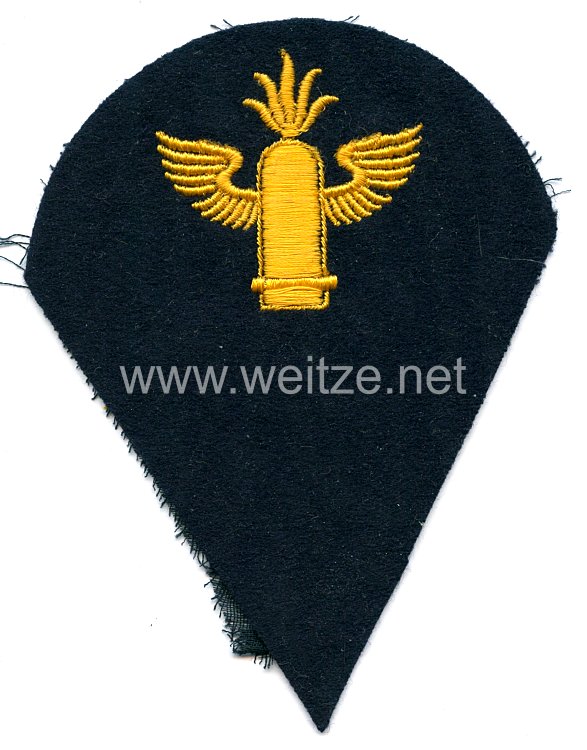
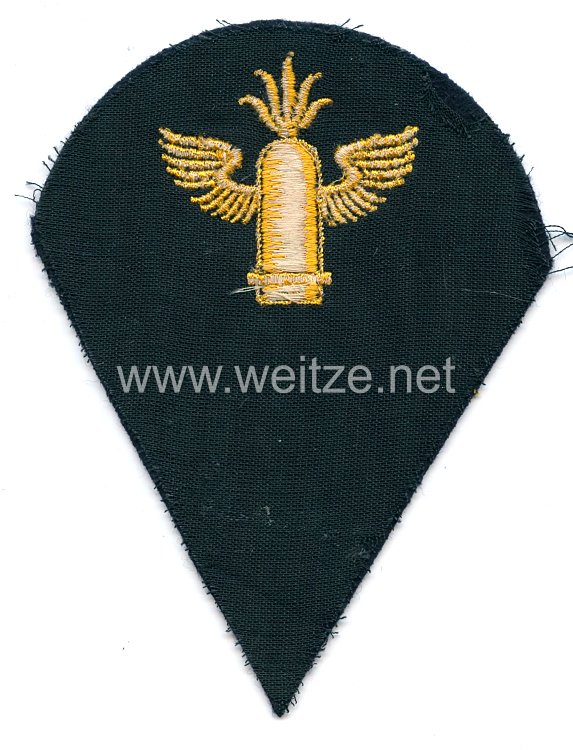
Kriegsmarine Sleeve Insignia Coastal Artillery Sailor
The Kriegsmarine sleeve insignia for coastal artillery sailors represents a fascinating example of German naval uniforms from the Second World War. These specialized badges were worn by members of the Coastal Artillery, an important defensive component of the German Kriegsmarine between 1935 and 1945.
The Coastal Artillery of the Kriegsmarine had the strategically important task of protecting German coasts, harbors, and sea routes from enemy attacks. These units were equipped with heavy guns that could be deployed against both naval targets and air raids. The coastal artillery formed an integral part of German coastal defense and became increasingly significant as the war progressed, particularly as Allied air raids and naval operations intensified.
The present badge is manufactured in the design for the Colani, referring to the characteristic dark blue sailor's uniform. The sleeve insignia were worn on the left upper arm according to the Kriegsmarine uniform regulations and served to identify the wearer's branch of service. The typical design of coastal artillery badges usually featured crossed guns or similar artillery symbols, sewn onto the dark uniform fabric in contrasting thread.
The introduction of specialized career badges in the Kriegsmarine occurred in the early years of the Third Reich. Following the official re-establishment of the German Navy in 1935, which represented a direct violation of the Treaty of Versailles, a comprehensive system of uniforms and insignia was developed. These badges were intended not only to mark different ranks but also to clearly indicate specific specializations and branches of service within the navy.
The sailor's uniform of the Kriegsmarine retained many traditional elements of the Imperial Navy, including the characteristic naval collar and dark blue color. The sleeve insignia had to be positioned according to precise regulations and meet specific dimensional requirements. Production was often carried out by specialized military tailors or licensed manufacturers who had to comply with the strict quality standards of the Wehrmacht.
The condition grade 2 of the badge indicates a good to very good state of preservation, which is remarkable for textile militaria from this era. Many of these badges were worn extensively during the war and therefore often show signs of use, repairs, or damage from the harsh conditions of military service.
Coastal artillery units were stationed along the entire German coast as well as in occupied territories. Particularly significant positions were located at the Atlantic Wall fortifications, which stretched from Norway to the Spanish border. These massive defensive installations were reinforced from 1942 onwards under the direction of Field Marshal Erwin Rommel and included numerous coastal batteries with heavy naval guns.
Training for coastal artillery sailors was demanding and included both theoretical and practical components. Soldiers had to be trained in the operation of complex fire control systems, rangefinders, and various types of guns. Many coastal artillerymen came from the regular fleet and already brought experience with naval weapons.
After the collapse of the Third Reich in May 1945, all German military uniforms and insignia became obsolete. Many uniform pieces were taken as souvenirs by Allied troops, while others were kept by German veterans. Today, original Kriegsmarine badges are sought-after collector's items and important historical documents that provide insight into the military organization and uniform traditions of the German Navy.
The study of such badges enables historians and collectors to better understand the complex structure of the Kriegsmarine and to document the various specializations within this branch of service. They are material witnesses to a significant, albeit dark, period of German and European history.