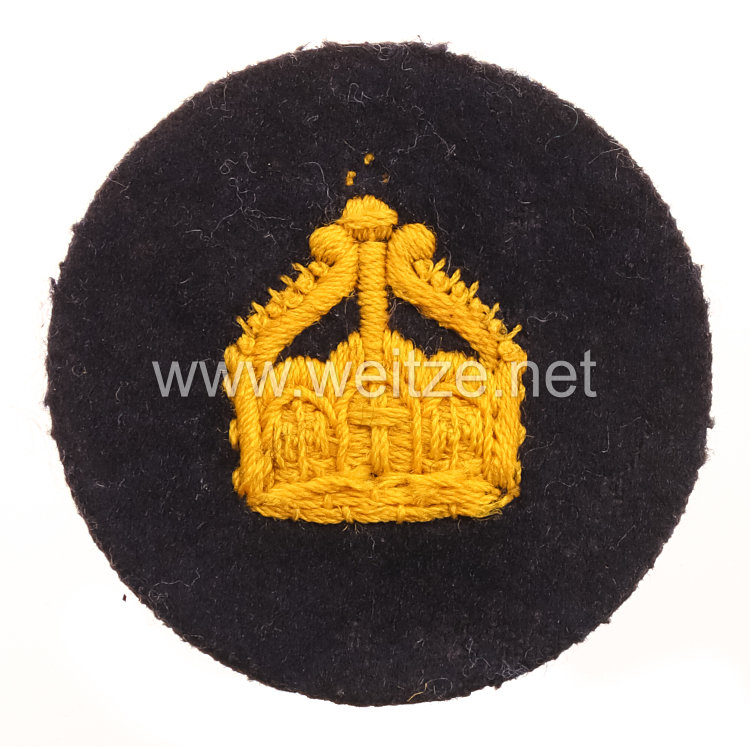
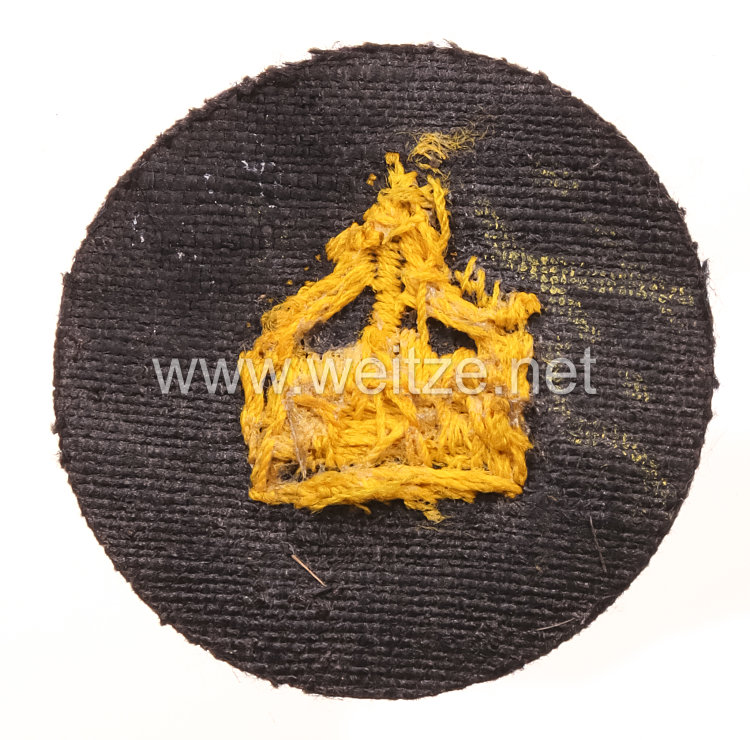
Imperial German Navy Sleeve Insignia for a Seaman of the S.M.Y. Hohenzollern

circa 1910. Version for the blue shirt, hand-embroidered. Unissued condition, condition grade 2. Very rare.
435737
200,00

Imperial German Navy Sleeve Insignia for a Seaman of the S.M.Y. Hohenzollern

The Imperial German Navy sleeve insignia for a Bootsgast (apprentice seaman) of the S.M.Y. Hohenzollern represents an exceptional artifact of maritime tradition in the German Empire. The Seiner Majestät Yacht Hohenzollern (His Majesty's Yacht Hohenzollern) was the most prestigious unit of the Imperial Navy and served as the representative state vessel of German Emperor Wilhelm II.

The S.M.Y. Hohenzollern, the third yacht bearing this name, was commissioned in 1893 and remained in active service until 1914. With a length of 117 meters and a displacement of approximately 4,000 tons, she was an impressive vessel that served both representative and military purposes. Emperor Wilhelm II, who had a particular passion for the navy, used the Hohenzollern for numerous state visits, diplomatic missions, and his famous cruises to Norway.

The crew of the imperial yacht was selected with the utmost care. Only the best and most reliable sailors of the Imperial German Navy received the honor of serving on this ship. Service time on the Hohenzollern was considered a special distinction and was extremely beneficial for a seaman's career. The crew not only had to be excellently trained in seamanship but also demonstrate impeccable conduct and flawless appearance, as they frequently came into contact with monarchs, heads of state, and high-ranking dignitaries.

The present sleeve badge was intended for the blue shirt of the working uniform. Various uniform variants existed in the Imperial Navy: the dark blue service dress, the white tropical uniform, and the blue working uniform. The sleeve badges were worn according to the uniform regulations of the Imperial Navy and indicated affiliation with specific ships or units.

The production as a hand-embroidered badge testifies to the high quality and special status of these insignia. While ordinary sleeve badges were often machine-made or woven, the badges for the imperial yacht received special artisanal treatment. The embroidery was typically executed with silk threads on dark blue woolen fabric, with gold or silver threads used for prominent details.

A Bootsgast was a sailor in one of the lowest rank groups of the Imperial Navy, comparable to today's seaman or private first class. The hierarchy on board was strictly regulated: above the Bootsgast stood the Matrose (seaman), Obermatrose (leading seaman), and then the non-commissioned and commissioned officer ranks. Despite the relatively low rank, a Bootsgast on the Hohenzollern was significantly more privileged than his comrades on ordinary warships.

The dating of around 1910 falls within a significant period of German naval history. Under Admiral Alfred von Tirpitz, the Imperial Navy experienced massive expansion. The Fleet Act and its amendments led to an unprecedented shipbuilding program intended to make Germany the second strongest naval power after Great Britain. This armament significantly contributed to the tensions that eventually led to World War I.

Emperor Wilhelm II spent many weeks per year aboard the Hohenzollern. The yacht served not only for representation but also as a floating command center and venue for diplomatic discussions. The Nordic cruises became famous, during which the Emperor regularly visited Norwegian fjords and pursued his passion for seafaring.

The unworn condition of the badge is remarkable and significantly increases its historical and collectible value. It may have been produced as a reserve or was intended for a sailor who never commenced his service on the Hohenzollern. The rarity of such badges is explained by the small size of the imperial yacht's crew and the short service period of this special unit, which ended with the outbreak of World War I in 1914.

After the outbreak of war, the Hohenzollern was initially used as an accommodation ship in Kiel, followed by decommissioning. In 1920, she was sold to a Norwegian whaling company and scrapped in 1923. The badges and uniform pieces of the crew became sought-after mementos and today are important testimonies of a vanished era of German naval history.

Such artifacts provide invaluable insights into the daily life, hierarchy, and traditions of the Imperial German Navy. They represent not merely military memorabilia but cultural artifacts that document the maritime ambitions of the German Empire and the personal interest of Kaiser Wilhelm II in naval affairs. The hand-embroidered quality and specific designation for the imperial yacht make this type of insignia particularly rare and historically significant in the study of pre-World War I German naval uniforms and traditions.