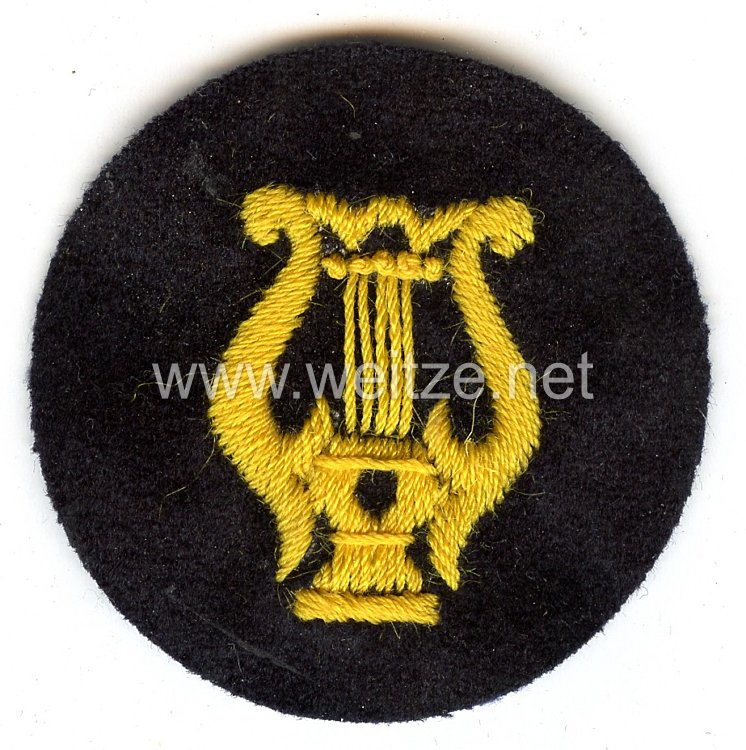
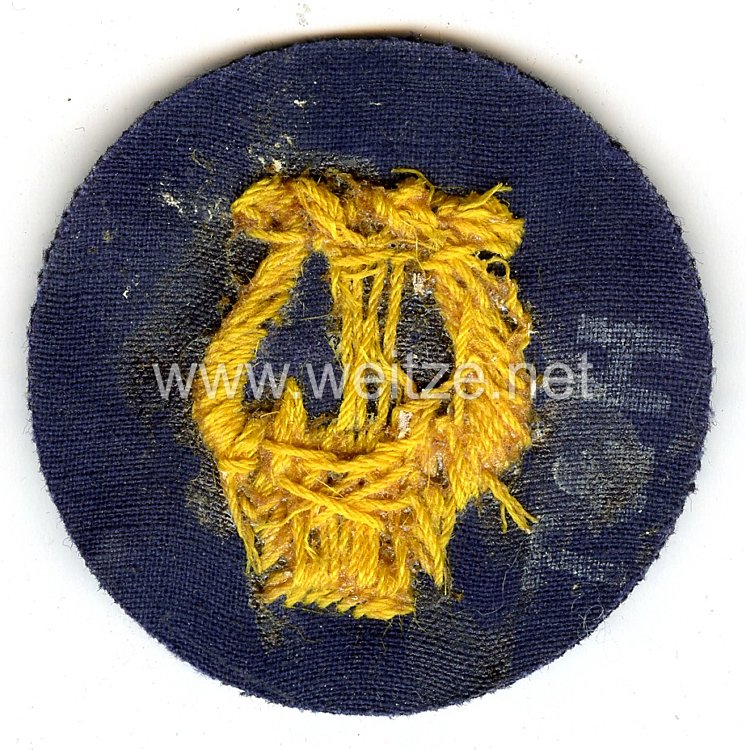
Kriegsmarine Enlisted Ranks Musician Sleeve Insignia

Hand-embroidered, variation for blue jumper. Unissued condition, condition grade 2+.
442836
90,00

Kriegsmarine Enlisted Ranks Musician Sleeve Insignia

The Kriegsmarine sleeve badge for enlisted musicians represents a fascinating testament to maritime tradition and military hierarchy in the German Reich during the period from 1935 to 1945. This hand-embroidered version designed for the blue blouse embodies the meticulous attention to detail with which the Kriegsmarine implemented its uniform regulations and identified various ranks and specializations within its enlisted personnel.

The Kriegsmarine was officially established on June 1, 1935, when the German Reich cast off the restrictions of the Versailles Treaty and reorganized its naval forces. Uniform regulations were detailed in the Anzugordnungen (dress regulations), which specified not only basic equipment but also all badges and their correct wearing methods. Musician ratings held a special position as they fulfilled both military and artistic functions.

Naval musicians had maintained a long tradition in German seafaring since the Imperial Navy. They were responsible not only for providing musical accompaniment for ceremonies, receptions, and official occasions but also contributed significantly to crew morale. Larger warships such as battleships, cruisers, and armored vessels routinely stationed music corps that performed on special occasions. The size of these music corps varied depending on ship type and could range from a few musicians on smaller units to complete orchestras on flagships.

The present sleeve badge was intended for wear on the blue blouse, an important component of the enlisted uniform. The blue blouse was worn during daily service and certain duties, distinguishing it from the parade uniform. The hand-embroidered execution indicates high-quality craftsmanship, with such badges either privately procured or manufactured by specialized military tailors.

The identification of musicians was accomplished through specific symbols, typically an embroidered lyre or other musical emblems worn on the upper arm. These badges enabled immediate identification of the wearer and their specialized function within the ship's crew. The coloring and design followed strict Kriegsmarine regulations and had to conform exactly to specifications laid down in service regulations.

The production of such badges required considerable craftsmanship. Specialized embroidery firms, often located in Northern Germany, manufactured these badges according to military specifications. Hand embroidery guaranteed higher quality and detail fidelity than machine-made variants but was also more expensive and time-consuming to produce.

In the context of the Kriegsmarine, uniform regulations played a central role in maintaining discipline and identity. Every badge, stripe, and decoration had a precise meaning and had to be worn correctly. Violations of uniform regulations could result in disciplinary consequences. The music corps themselves were subject to their own training regulations and had to meet both military and musical requirements.

The training of naval musicians took place in special facilities where, in addition to basic military training, intensive musical instruction occurred. This dual qualification made musicians valued members of ship crews. During port visits, they represented the Kriegsmarine externally and contributed to the projection of German naval power.

Following the end of World War II in 1945, the Kriegsmarine was dissolved, and its uniforms and badges became historical artifacts. Today, such objects serve as important sources for maritime historical research, documenting the organizational structure, hierarchies, and everyday culture of German naval forces of this era.

The unworn specimen in excellent condition enables collectors and historians to study the craftsmanship quality and details of period uniform equipment. Such objects contribute to understanding the material culture of the military and illustrate the importance attached to symbolic markings and external appearance in hierarchically structured organizations.

These badges also reflect the broader tradition of military music in naval forces worldwide. Music served practical purposes beyond ceremony—it regulated daily routines, communicated orders through various calls and signals, and provided entertainment during long deployments. The professional status accorded to naval musicians through distinctive insignia recognized their specialized skills and dual role as both sailors and performers.

r