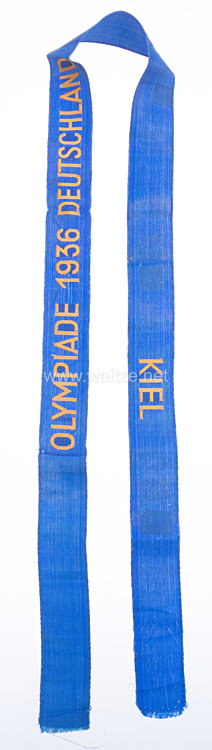
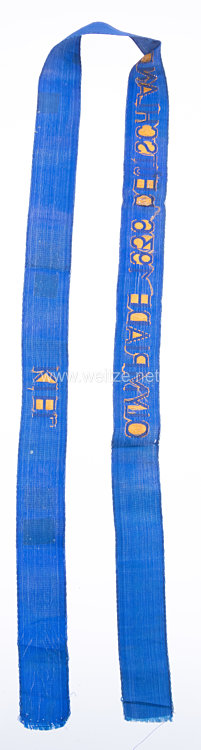
XI Olympic Games 1936 Berlin - Cap Tally for the Sailing Competitions in Kiel
The cap tally of the XI Olympic Games 1936 for the sailing competitions in Kiel represents a fascinating testament to Olympic history, connecting the maritime tradition of the German Kriegsmarine with the international sporting spirit of the Olympic Movement.
The 1936 Summer Olympics in Berlin were the first Games where sailing competitions did not take place at the main venue. Due to Berlin's geographical location as an inland city, the organizing committee selected the port city of Kiel on the Baltic Sea as the venue for the sailing regattas. This decision had historical precedent, as Kiel was already renowned as an important naval base and center of German sailing sport.
The sailing competitions took place from August 3-12, 1936 on the Kiel Fjord. A total of four boat classes were contested: the Olympic monotype, the Star class, the 6-meter class, and the 8-meter class. These competitions featured 260 sailors from 26 nations, underlining the international significance of this event.
The present cap tally bearing the inscription “Olympiade 1936 Deutschland Kiel” was specifically manufactured for members of the Kriegsmarine who were deployed in organizing and conducting the sailing competitions. Cap tallies had been an integral part of maritime uniform tradition since the 19th century, serving to identify ship assignment or special deployments.
The blue base color of the ribbon corresponds to the traditional color of the German Navy, while the yellow embroidery creates clear contrast and ensures legibility. This color combination was typical for official Kriegsmarine cap tallies during the Weimar Republic and National Socialist periods. The 103 cm length corresponds to standardized measurements for Kriegsmarine cap tallies, which were worn around the sailor's cap.
The organization of the sailing competitions presented a logistical challenge. The Kriegsmarine provided not only escort and safety vessels but also personnel for conducting the regattas, hosting international guests, and ensuring smooth operations. Naval personnel served as referees, course marshals, and organizers.
In historical context, the 1936 Olympic Games are inseparably linked with National Socialist propaganda. The Nazi regime used the Games as a platform for self-representation, attempting to project an image of a peaceful, cosmopolitan Germany. The integration of the Kriegsmarine into the Olympic Games in Kiel was part of this strategy to combine military strength with sporting excellence.
Nevertheless, the sailing competitions in Kiel largely proceeded in the sporting spirit. Germany won a gold medal in the Star class through Peter Bischoff and Hans-Joachim Weise, while other nations succeeded in the remaining classes. The international press reported positively on the organization and maritime atmosphere in Kiel.
From a collecting history perspective, such Olympic cap tallies are rare today. Many were reused after the Games or were lost during World War II. The visible signs of use, damage, and adhesive residue on the present example testify to its authentic use by a naval serviceman during the 1936 Olympic Games.
The historical significance of such objects lies in their function as material witnesses to a complex historical epoch. They document the connection between sport, politics, and military in the National Socialist era and remind us how the regime attempted to instrumentalize all areas of public life for its purposes.
For collectors and historians, Olympic cap tallies from 1936 offer unique insights into both maritime history and Olympic history. They complement our understanding of the organizational aspects of the Games and demonstrate how comprehensive the preparation and execution of such an international event was.