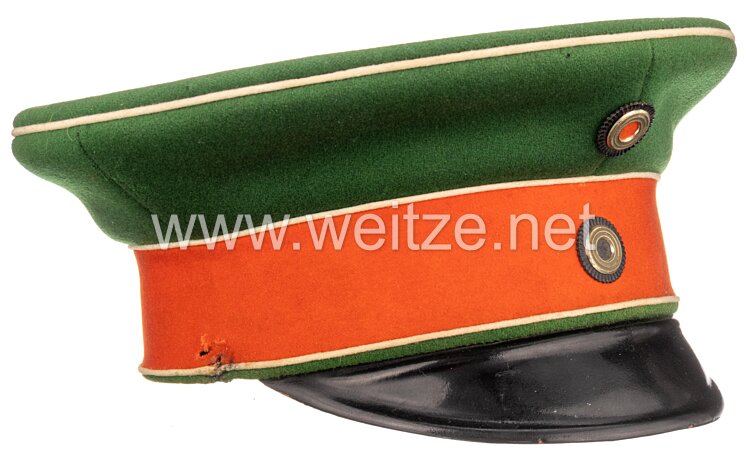
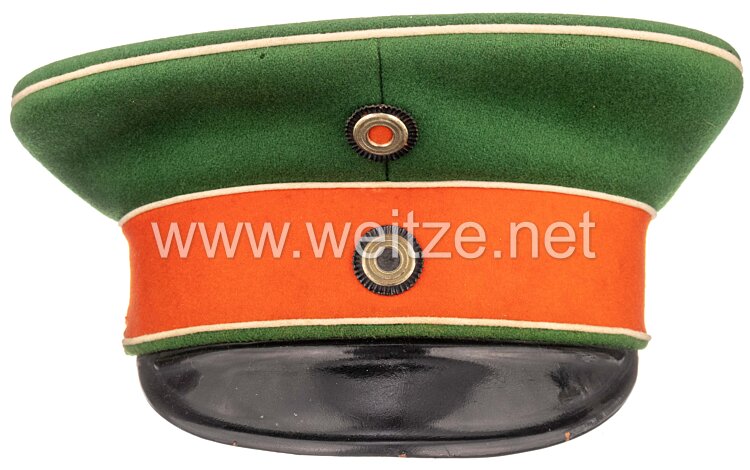
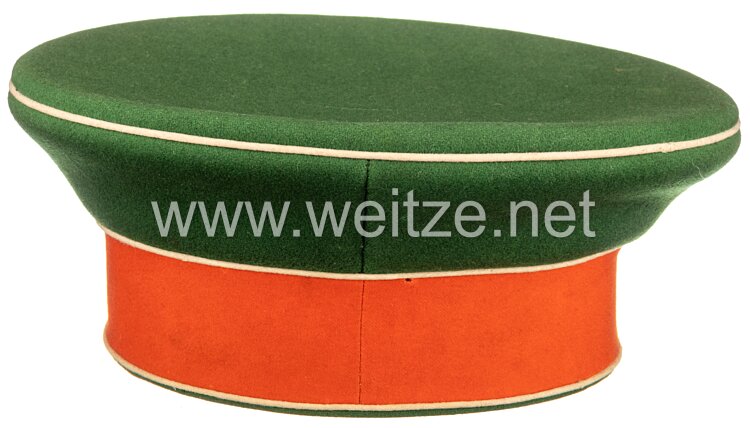
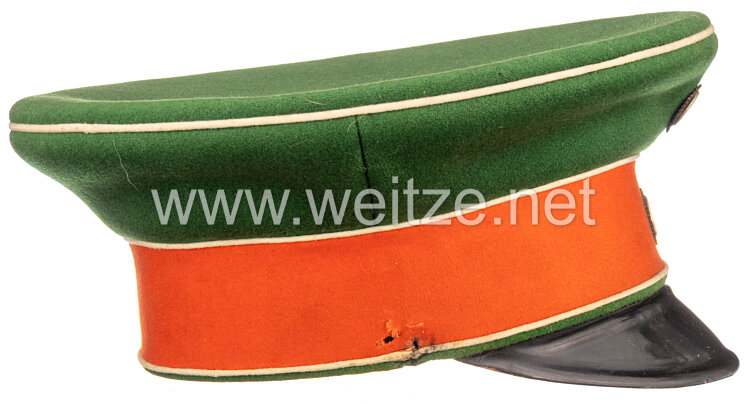
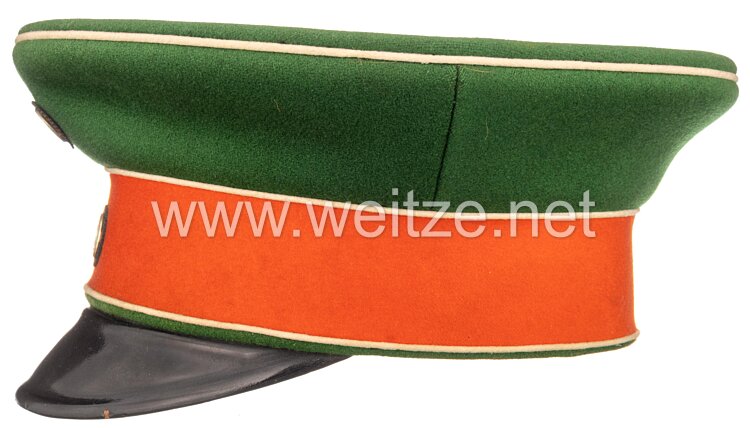
Prussian Visor Cap for an Officer of the 2nd Westphalian Hussar Regiment No. 11
The peaked cap (Schirmmütze) of the 2nd Westphalian Hussar Regiment No. 11 represents a significant part of Prussian military history in the late Imperial period. This regiment, stationed in Krefeld, belonged to the traditional hussar units of the Prussian army and played an important role in the military structure of the German Empire before World War I.
The 2nd Westphalian Hussar Regiment No. 11 was originally established as Hussar Regiment No. 11 and belonged to the cavalry of the Prussian army. The hussars, originally from Hungary, had become a permanent institution in European armies since the 18th century. In Prussia, these light cavalry units were particularly valued for their mobility, reconnaissance service, and their characteristic, colorful uniforms.
The officer's cap described here, dating from around 1910, corresponds to the dress regulations of the Prussian army of that era. The peaked cap had established itself during the 19th century as a practical alternative to the czapka and other traditional headgear. Particularly for service outside of parades, it offered greater comfort and practicality.
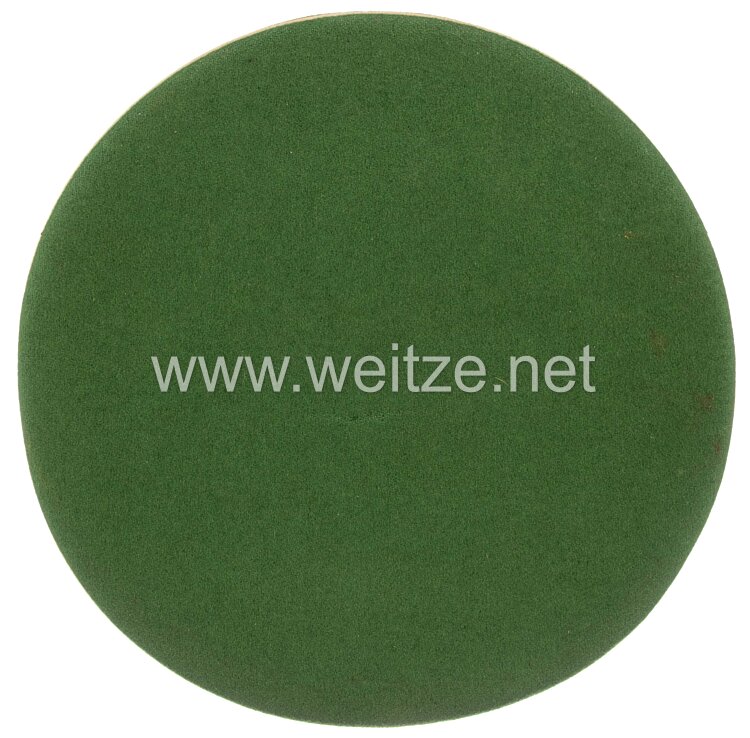
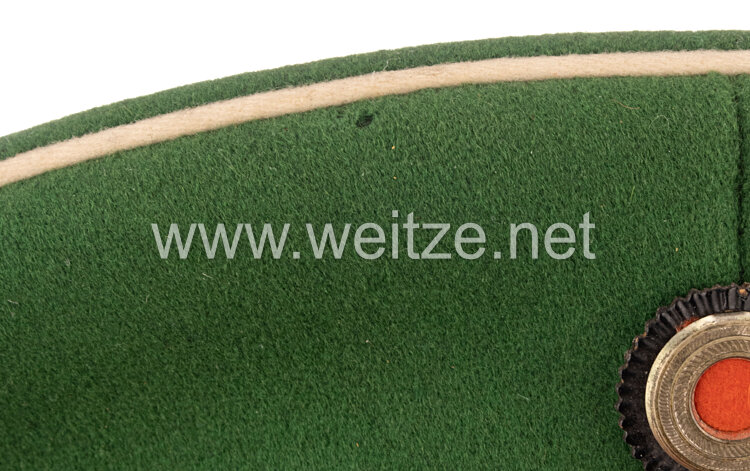
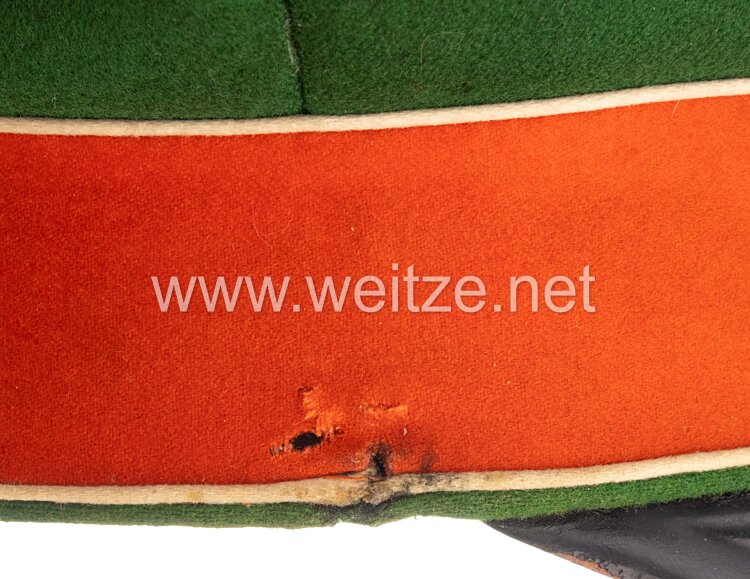
The coloring of the cap is characteristic of the regiment: the green cloth with red band and white piping precisely corresponded to the regimental colors. These color combinations were by no means arbitrary but followed strict regulations of the Dress Regulations for Officers of the German Army. Each regiment had its specific colors that reflected its identity and tradition. The red band color (the so-called “Bund”) was typical for various hussar regiments and served for quick identification.
The two cockades on the cap had special significance: the black-white-red Imperial cockade symbolized membership in the German Empire, while the black-white Prussian cockade indicated membership in the Kingdom of Prussia. This double cockade was characteristic of Prussian uniforms after the founding of the Reich in 1871.
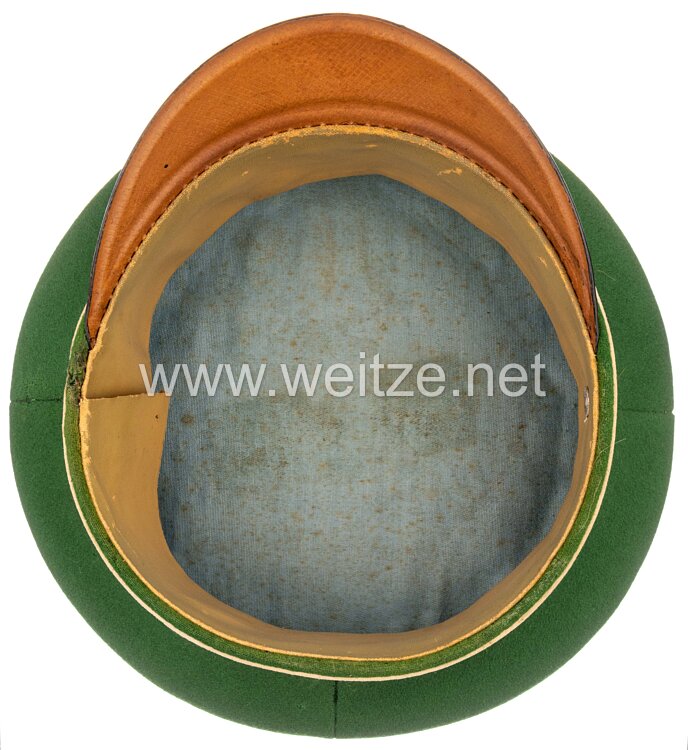
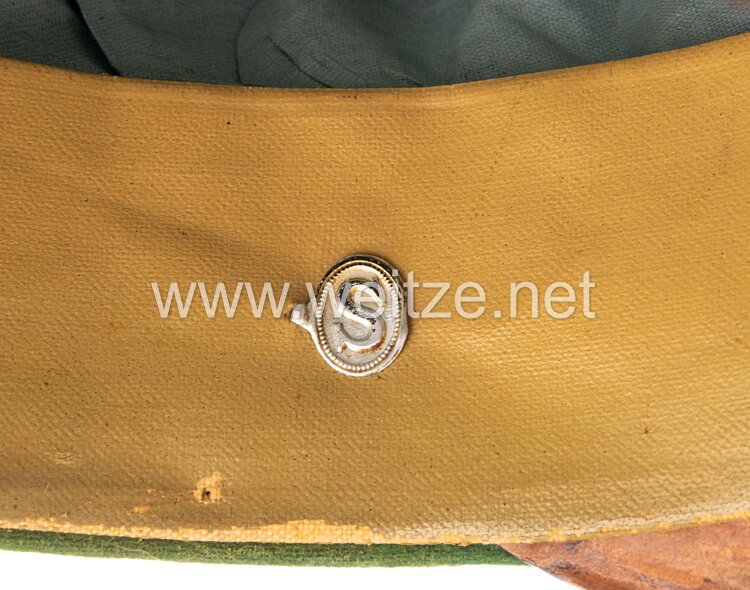
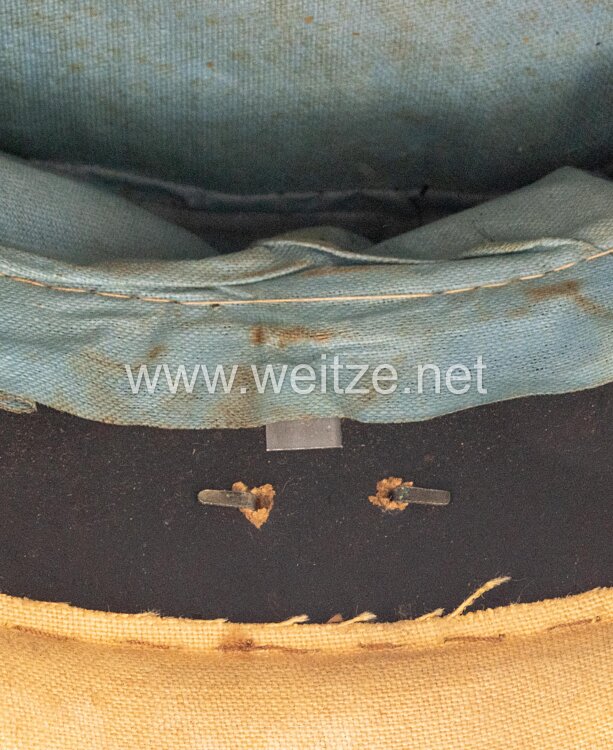
The inner sweatband in olive green with the applied initial “S” suggests manufacture by a specialized military outfitter. Such caps were frequently commissioned from renowned court suppliers or specialized craftsmen. The light blue wax lining was typical for high-quality officer caps and served both practical and aesthetic purposes.
Size 56 corresponds to a head circumference of approximately 56 centimeters and was an average size for officers of that time. The tall, elegant form of the cap corresponded to the fashionable ideal of the Wilhelmine era, in which military elegance and dignified appearance were of utmost importance.
The garrison location of Krefeld was of central importance to the regiment. The city in the Rhineland offered the necessary infrastructure for a cavalry regiment, including barracks, training grounds, and stables. The garrison town developed a close relationship with “its” regiment, and the hussars shaped the social life of the city.
Around 1910, the Prussian army was in a phase of modernization. Although cavalry was still considered an important component of the armed forces, technological changes were already emerging that would challenge its traditional role. Nevertheless, the hussar uniform retained its magnificent design, and officers wore their characteristic caps with pride.
The social position of a hussar officer was considerable. The officer corps belonged to the social elite of the Imperial period, and especially among the hussars, who were considered particularly fashionable, social selection was pronounced. The uniform and especially the peaked cap were visible signs of this privileged position.
Such uniform pieces were treated and maintained with the greatest care. An officer typically owned several caps for different occasions: parade caps, service caps, and caps for social life. The preserved cap in condition 2+ testifies to the high quality of manufacture and careful treatment by its wearer.
After World War I and the collapse of the monarchy in 1918, these uniform pieces lost their official function. Many became memorabilia or entered private collections. Today they are important historical witnesses of a vanished era and document the military culture of the German Empire.