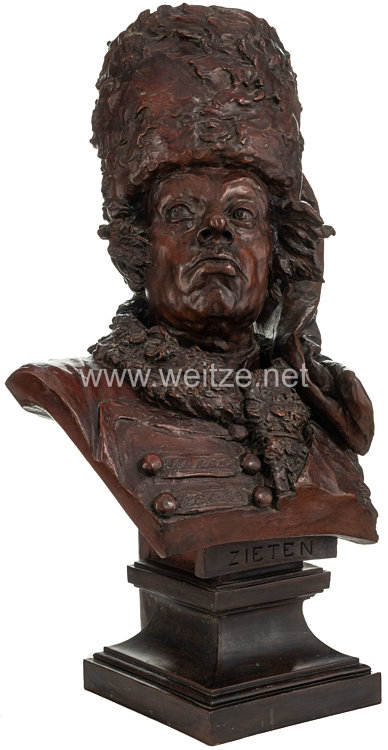
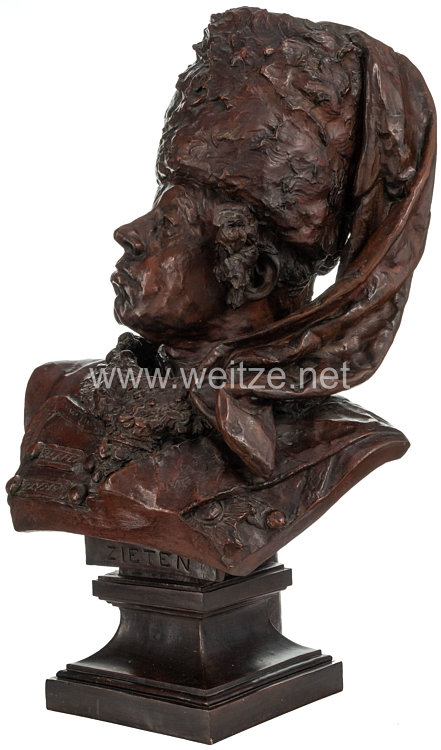
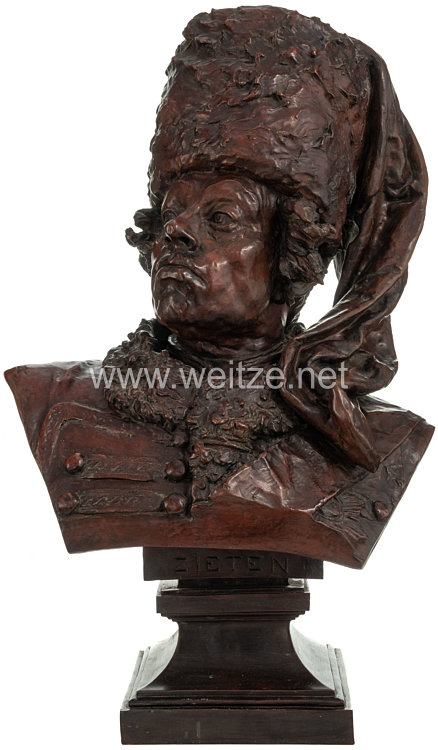
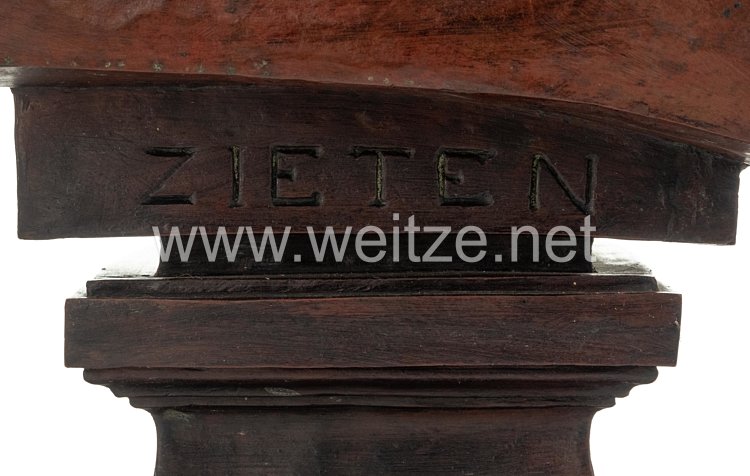
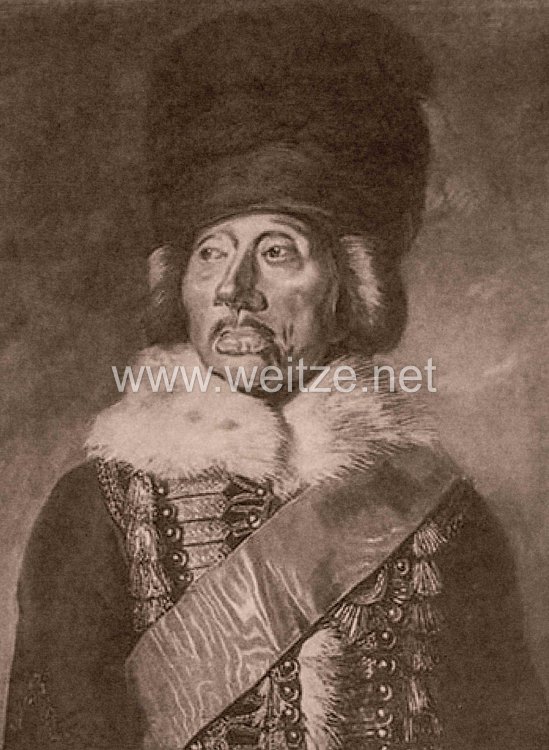
Königreich Preußen Große Büste des Generals Hans Joachim von Zieten unter Friedrich II.
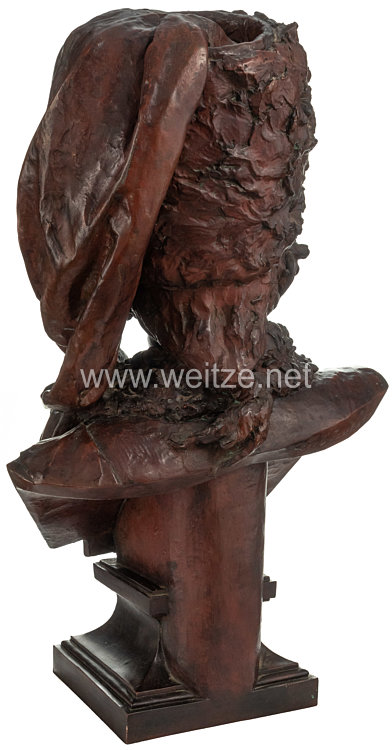
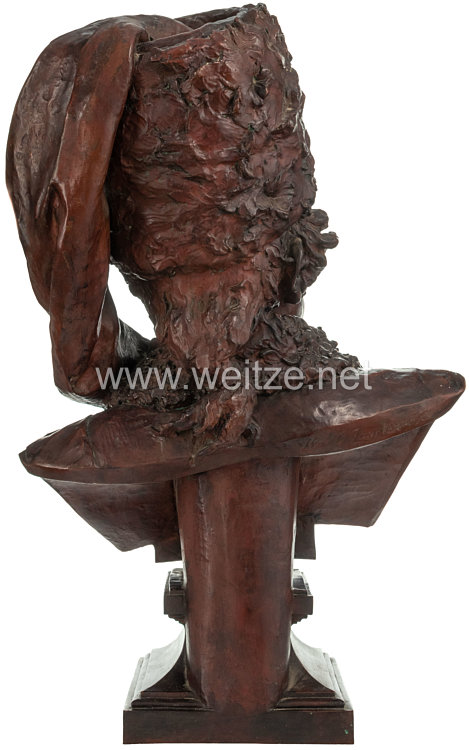
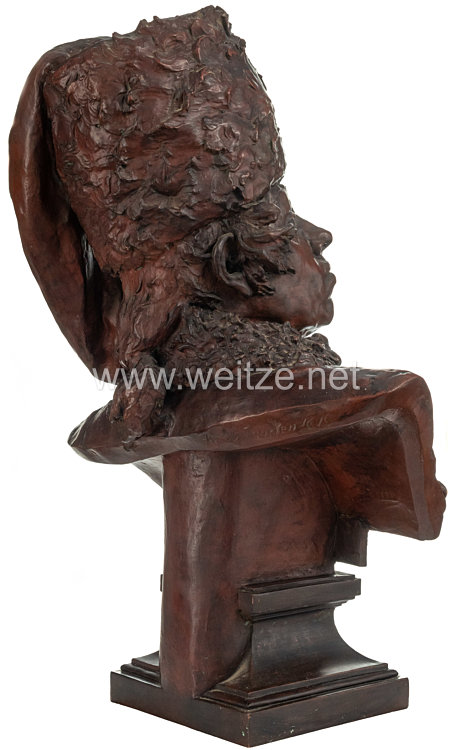
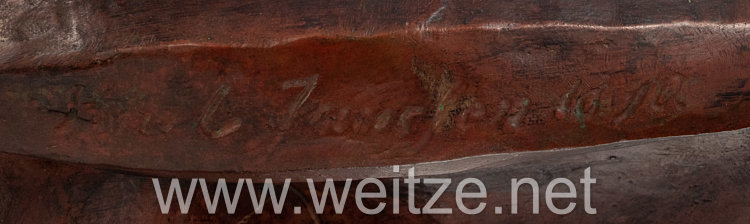
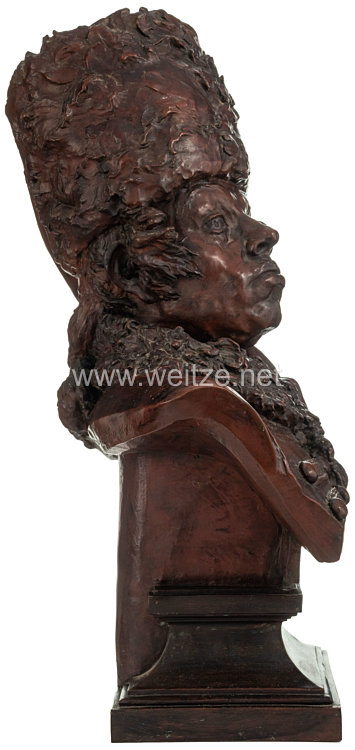
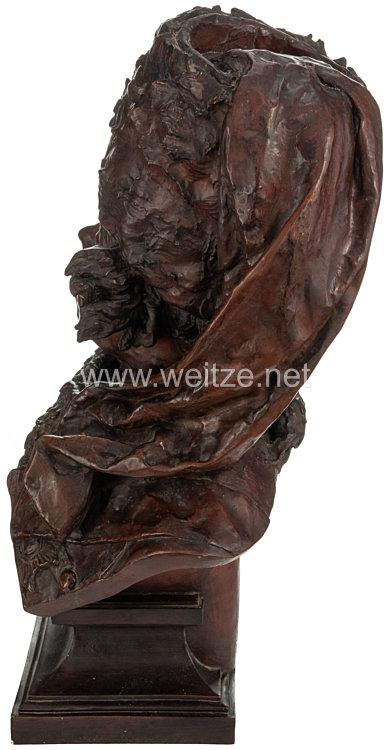
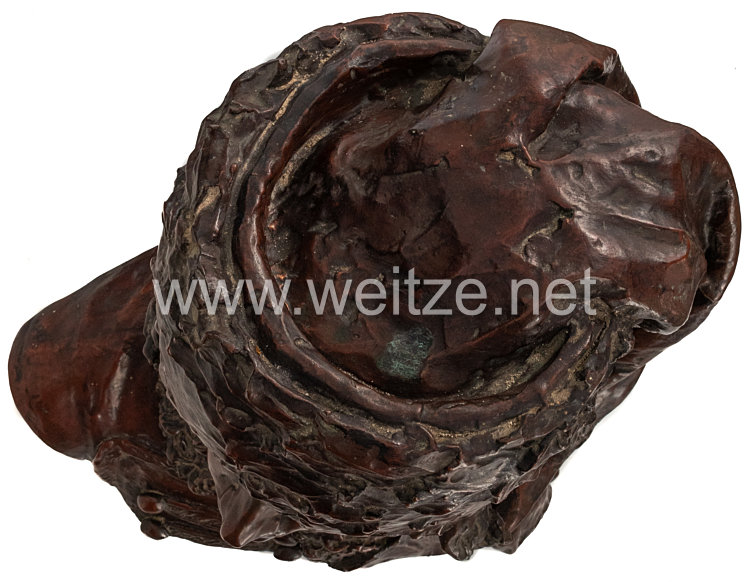
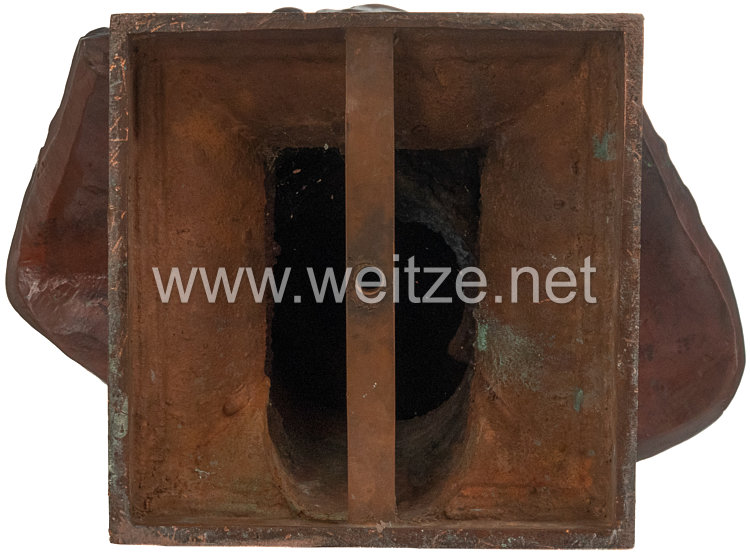
Anfertigung zum 300. Geburtstag Zietens 1899. Sehr detaillierte Darstellung Zietens in der Uniform als General der Husaren mit Flügelmütze und großen Ordensschmuck. Die Rundplastik in Bronze hohl gegossen und brüniert. Rückseitig mit Signatur des Künstlers "Karl Janssen", Werksnummer "1810". Höhe ca. 74 Kg, Gewicht ca. 30 Kg. Zustand 2.
Hans Joachim von Zieten, auch genannt Zieten aus dem Busch (* 14. Mai 1699 in Wustrau; † 27. Januar 1786 in Berlin) war einer der berühmtesten Reitergeneräle der preußischen Geschichte und ein enger Vertrauter Königs Friedrich des Großen. Seinen Ruhm verdankte er u.a. den außergewöhnlichen Erfolgen in den Schlesischen Kriegen. Noch lange nach seinem Tod genoss er ein hohes Ansehen und sein Leben und Wirken wurde häufig rezipiert.
Karl Ludwig Rudolf Janssen (* 29. Mai 1855 in Düsseldorf; † 2. Dezember 1927 ebenda) war ein deutscher Bildhauer. 1872–80 studierte er an der Königlich-Preußischen Kunstakademie in Düsseldorf. 1884 wurde er beauftragt, für den Besuch Kaiser Wilhelm I. in Düsseldorf die Plastik Vater Rhein und seine Töchter zu schaffen, die den Düsseldorfern so gut gefiel, dass die beiden zwölf Jahre später – also 1897 – beauftragt wurden, eine dauerhafte Fassung in Bronze als Brunnen zu fertigen. Ein Jahr zuvor hatte er den Auftrag für ein repräsentatives Kaiser-Wilhelm-Reiterstandbild ebenfalls zur allgemeinen Zufriedenheit gelöst.
Eine sehr schöne Arbeit! Aufgrund der Größe und Gestaltung als Rundplastik kann angenommen werden, dass die Plastik ursprünglich an einem prominenten Ort, etwa einem Schloss oder einer Kaserne, aufgestellt worden ist.
Aufgrund des Gewichtes wird eine Selbstabholung oder Übergabe auf einer Messe erbeten.
Hans Joachim von Zieten, auch genannt Zieten aus dem Busch (* 14. Mai 1699 in Wustrau; † 27. Januar 1786 in Berlin) war einer der berühmtesten Reitergeneräle der preußischen Geschichte und ein enger Vertrauter Königs Friedrich des Großen. Seinen Ruhm verdankte er u.a. den außergewöhnlichen Erfolgen in den Schlesischen Kriegen. Noch lange nach seinem Tod genoss er ein hohes Ansehen und sein Leben und Wirken wurde häufig rezipiert.
Karl Ludwig Rudolf Janssen (* 29. Mai 1855 in Düsseldorf; † 2. Dezember 1927 ebenda) war ein deutscher Bildhauer. 1872–80 studierte er an der Königlich-Preußischen Kunstakademie in Düsseldorf. 1884 wurde er beauftragt, für den Besuch Kaiser Wilhelm I. in Düsseldorf die Plastik Vater Rhein und seine Töchter zu schaffen, die den Düsseldorfern so gut gefiel, dass die beiden zwölf Jahre später – also 1897 – beauftragt wurden, eine dauerhafte Fassung in Bronze als Brunnen zu fertigen. Ein Jahr zuvor hatte er den Auftrag für ein repräsentatives Kaiser-Wilhelm-Reiterstandbild ebenfalls zur allgemeinen Zufriedenheit gelöst.
Eine sehr schöne Arbeit! Aufgrund der Größe und Gestaltung als Rundplastik kann angenommen werden, dass die Plastik ursprünglich an einem prominenten Ort, etwa einem Schloss oder einer Kaserne, aufgestellt worden ist.
Aufgrund des Gewichtes wird eine Selbstabholung oder Übergabe auf einer Messe erbeten.