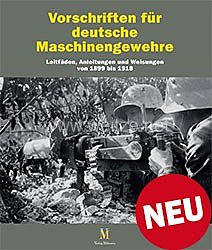
Dr. Frank Buchholz, Thomas Brüggen: Vorschriften für Deutsche Maschinengewehre - Leitfäden, Anleitungen und Weisungen von 1899 bis 1918
Verlag Militaria. SW-Band, 584 Seiten, Hardcover gebunden mit Schutzumschlag, Großformat: 29,5 x 26 cm.
Die waffentechnischen Entwicklungen gegen Ende des 19. und zu Beginn des 20. Jahrhunderts mündeten rasch nach Ausbruch des Ersten Weltkrieges 1914 in eine industrialisierte Massenkriegsführung, die durch den Einsatz von Maschinengewehren wesentlich mitgeprägt wurde. Galt vor dem Kriegsausbruch das Maschinengewehr noch eher als Hilfswaffe der Infanterie, so erwies es sich bereits in den ersten Kriegsmonaten als wichtigste Waffe im infanteristischen Feuerkampf. Die Entstehung der Maschinengewehrtruppen im deutschen Heer geht jedoch auf das Jahr 1901 zurück, als nach mehrjährigen Versuchen die ersten MG-Abteilungen aufgestellt wurden. Während der Arbeiten zum Text-Bildband „Deutsche Maschinengewehre – Entwicklung, Taktik und Einsatz von 1892 bis 1918“ stellten die Autoren Dr. Frank Buchholz und Thomas Brüggen bald fest, dass Originalvorschriften von Maschinengewehren sehr selten sind, und wenn, dann können sie oft nur noch in Archiven eingesehen werden. Daher reifte der Entschluss, einen Faksimile-Band zu publizieren, der die wichtigsten Dienstvorschriften, Anleitungen und Weisungen zum Einsatz von Maschinengewehren im deutschen Heer von 1899 bis 1918 beinhaltet. Dank der Unterstützung des Bayerischen Hauptstaatsarchivs/Abteilung Kriegsarchiv kann nun dieser Band vorgelegt werden. So können neben den Vorschriften zu den Maschinengewehren 08 und 08/15 auch Leitfäden bzw. Anleitungen zu so selten anzutreffenden Waffen, wie dem M.G. 99, dem M.G. 01, den verschiedenen Varianten des Parabellum und des Bergmann-MGs, des Dreyse-MGs sowie der Becker-Maschinenkanone und der Maschinenpistole 18 dem Leser zugänglich gemacht werden. Andere seltene Vorschriften, wie z.B. die Anleitungen zum indirekten Schießen, sind in diesem Band ebenfalls zu finden wie die Verwendung von Behelfslafetten, Zielfernrohren und anderen Zubehörteilen, die im deutschen Heer zum Einsatz kamen. Der vorliegende Band ist damit eine unentbehrliche Grundlage für alle interessierten Leser, die sich umfassend über den Einsatz von Maschinengewehren im deutschen Heer vor und während des Ersten Weltkrieges informieren wollen.
For deliveries to non-European countries, increased shipping costs may apply. We ask for a consultation. Pour les livraisons dans des pays non européens, des frais d'expédition plus élevés peuvent s'appliquer. Nous demandons une consultation.
Die waffentechnischen Entwicklungen gegen Ende des 19. und zu Beginn des 20. Jahrhunderts mündeten rasch nach Ausbruch des Ersten Weltkrieges 1914 in eine industrialisierte Massenkriegsführung, die durch den Einsatz von Maschinengewehren wesentlich mitgeprägt wurde. Galt vor dem Kriegsausbruch das Maschinengewehr noch eher als Hilfswaffe der Infanterie, so erwies es sich bereits in den ersten Kriegsmonaten als wichtigste Waffe im infanteristischen Feuerkampf. Die Entstehung der Maschinengewehrtruppen im deutschen Heer geht jedoch auf das Jahr 1901 zurück, als nach mehrjährigen Versuchen die ersten MG-Abteilungen aufgestellt wurden. Während der Arbeiten zum Text-Bildband „Deutsche Maschinengewehre – Entwicklung, Taktik und Einsatz von 1892 bis 1918“ stellten die Autoren Dr. Frank Buchholz und Thomas Brüggen bald fest, dass Originalvorschriften von Maschinengewehren sehr selten sind, und wenn, dann können sie oft nur noch in Archiven eingesehen werden. Daher reifte der Entschluss, einen Faksimile-Band zu publizieren, der die wichtigsten Dienstvorschriften, Anleitungen und Weisungen zum Einsatz von Maschinengewehren im deutschen Heer von 1899 bis 1918 beinhaltet. Dank der Unterstützung des Bayerischen Hauptstaatsarchivs/Abteilung Kriegsarchiv kann nun dieser Band vorgelegt werden. So können neben den Vorschriften zu den Maschinengewehren 08 und 08/15 auch Leitfäden bzw. Anleitungen zu so selten anzutreffenden Waffen, wie dem M.G. 99, dem M.G. 01, den verschiedenen Varianten des Parabellum und des Bergmann-MGs, des Dreyse-MGs sowie der Becker-Maschinenkanone und der Maschinenpistole 18 dem Leser zugänglich gemacht werden. Andere seltene Vorschriften, wie z.B. die Anleitungen zum indirekten Schießen, sind in diesem Band ebenfalls zu finden wie die Verwendung von Behelfslafetten, Zielfernrohren und anderen Zubehörteilen, die im deutschen Heer zum Einsatz kamen. Der vorliegende Band ist damit eine unentbehrliche Grundlage für alle interessierten Leser, die sich umfassend über den Einsatz von Maschinengewehren im deutschen Heer vor und während des Ersten Weltkrieges informieren wollen.
For deliveries to non-European countries, increased shipping costs may apply. We ask for a consultation. Pour les livraisons dans des pays non européens, des frais d'expédition plus élevés peuvent s'appliquer. Nous demandons une consultation.