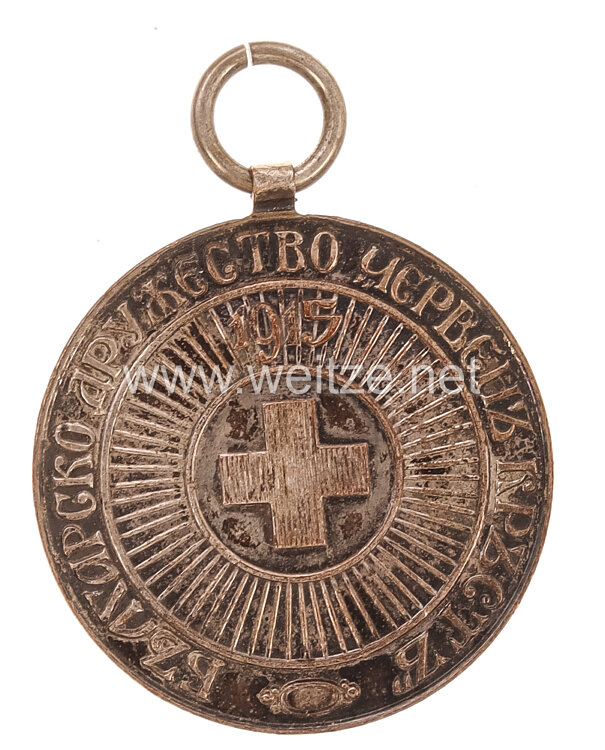
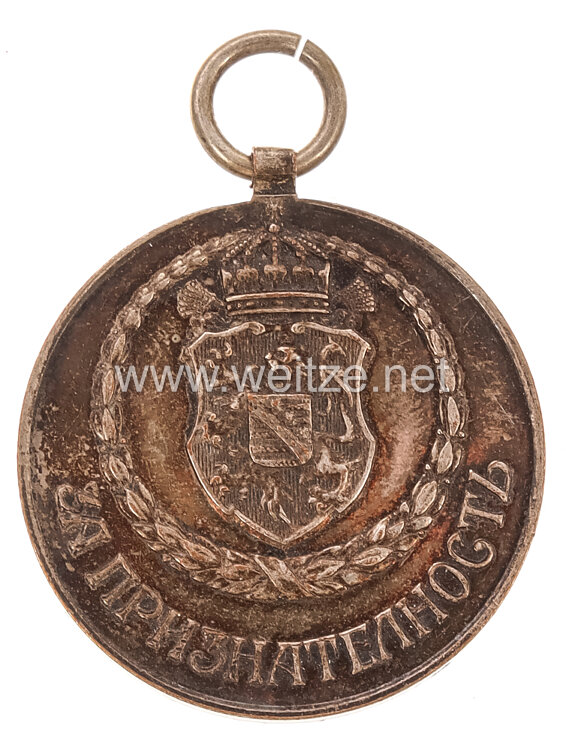
Bulgaria Silver Medal "Red Cross" 1915
The Bulgarian Red Cross Medal of 1915 represents a significant chapter in Bulgaria's humanitarian history during World War I. This decoration was created to recognize the selfless service of individuals who distinguished themselves in nursing, medical care, and humanitarian assistance during one of humanity's most devastating conflicts.
Historical Context and Introduction
The Bulgarian Red Cross was founded in 1878 and played a crucial role in providing medical care during the numerous conflicts in which Bulgaria was involved during the late 19th and early 20th centuries. The Red Cross Medal was officially instituted to honor those who provided humanitarian services under difficult wartime conditions. With Bulgaria's entry into World War I in October 1915 on the side of the Central Powers, the need for medical personnel and humanitarian support grew exponentially.
The First Model (1918-1929)
The specimen described here belongs to the first model of the Red Cross Medal, characterized by specific features: the date “1915” on the obverse and the absence of enamel. This variant was manufactured and awarded during the period from 1918 to 1929. The use of silver-plated base metal instead of solid silver reflects the economic difficulties Bulgaria faced during and after World War I.
The decision to retain the date 1915 honored the year Bulgaria entered the World War and humanitarian needs dramatically increased. The absence of enamel in this model distinguishes it from later, more elaborate versions and suggests a simplification of production, possibly due to material shortages in the postwar period.
Award Criteria and Recipients
The Red Cross Medal was awarded to various categories of individuals: nurses, doctors, medics, volunteer helpers, and others who distinguished themselves in humanitarian service. Both military and civilian personnel could receive this honor, provided they had demonstrated exceptional merit in nursing or medical care.
Particularly during the Balkan Wars (1912-1913) and World War I, Bulgarian hospitals and field hospitals were overwhelmed with wounded. Red Cross workers operated under extremely difficult conditions, often under fire and with inadequate medical resources. The medal recognized not only technical competence but also courage and dedication under life-threatening circumstances.
Bulgaria in World War I
Bulgaria's participation in World War I was complex and driven by territorial ambitions. After losses in the Second Balkan War of 1913, Bulgaria sought allies to regain lost territories. Entry on the side of the Central Powers in October 1915 led to successful campaigns against Serbia, but also to devastating losses on other fronts, particularly in Macedonia and at the Salonika Front.
The humanitarian costs were enormous: tens of thousands of Bulgarian soldiers were wounded or killed, and diseases such as typhus and cholera ravaged the trenches. The Red Cross played an indispensable role in caring for these wounded and maintaining morale both at the front and at home.
Materiality and Manufacture
The use of silver-plated base metal instead of solid silver was common during and after World War I. Bulgaria's economic situation after defeat in 1918 was catastrophic: the country had to pay reparations, lost territory, and suffered from hyperinflation. The production of decorations from less expensive materials was a practical necessity.
Despite the more modest materials, the medal retained its symbolic value. It represented state recognition for humanitarian services and remained a cherished decoration for its bearers.
Legacy and Significance
The Bulgarian Red Cross Medal of 1915 stands as testimony to humanitarian efforts during one of the darkest periods in European history. It commemorates the countless men and women who, regardless of the war's political circumstances, risked their lives to help others. Today, these medals are important historical artifacts that provide insight into Bulgaria's social history and the development of humanitarian organizations in the Balkans.
For collectors and historians, the first model with its characteristic features offers a fascinating glimpse into the material culture of wartime and postwar periods, as well as the ways nations honored their humanitarian helpers, even under economically difficult conditions.