U-Boat Front Clasp in Bronze
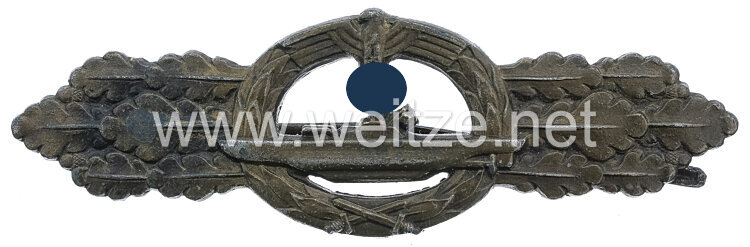
The U-Boat Front Clasp in Bronze ranks among the most significant decorations of the German Kriegsmarine during World War II. This special combat badge was instituted on May 13, 1944 by Grand Admiral Karl Dönitz, Commander-in-Chief of the Kriegsmarine, and was exclusively intended for U-boat crews who had distinguished themselves through exceptional service and bravery in submarine warfare.
The introduction of this decoration occurred at a time when the U-boat war had already passed its peak and German submarines were increasingly suffering heavy losses due to Allied countermeasures. The Front Clasp was meant to honor the extraordinary achievements and extreme risks that U-boat crews faced daily.
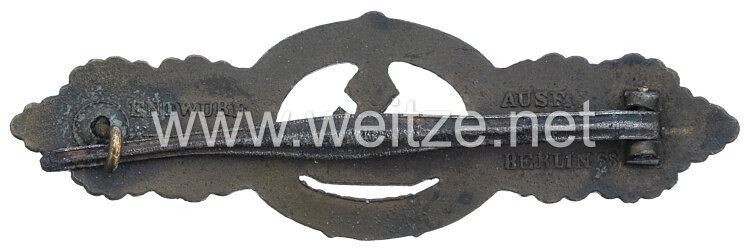
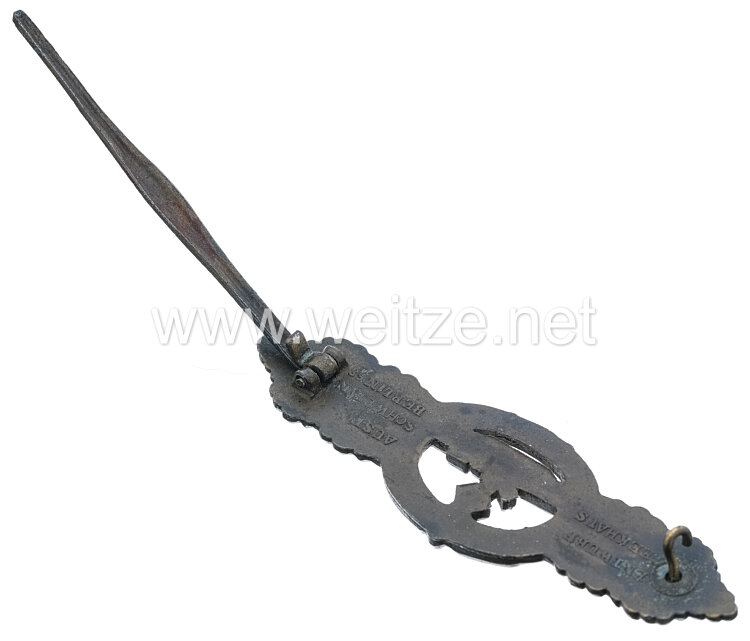
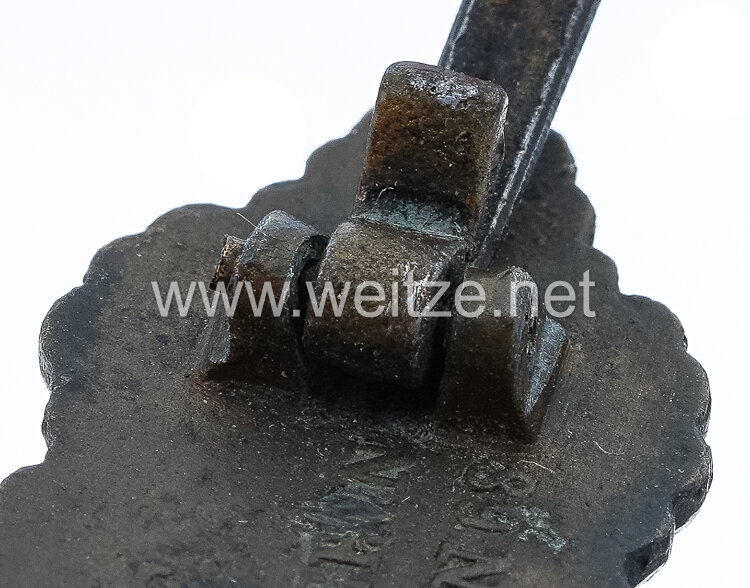
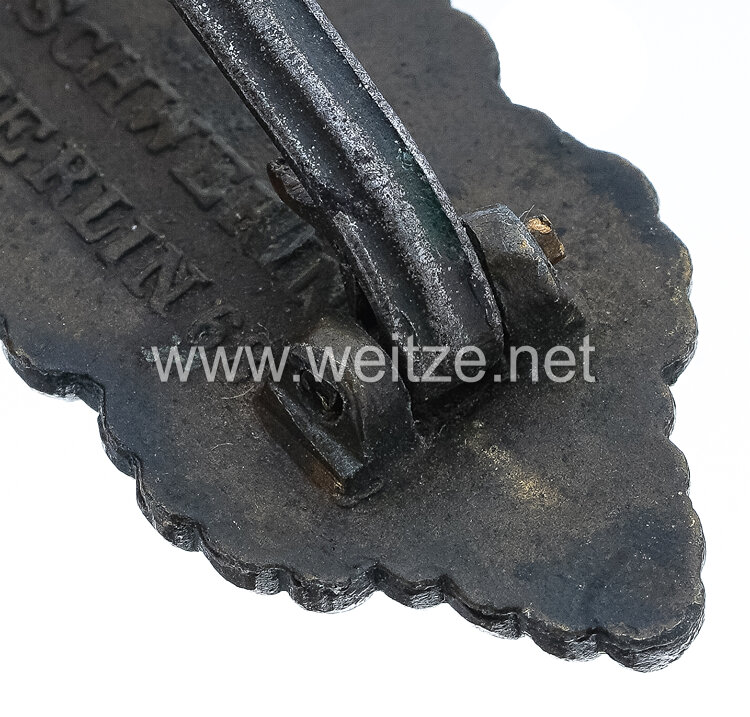
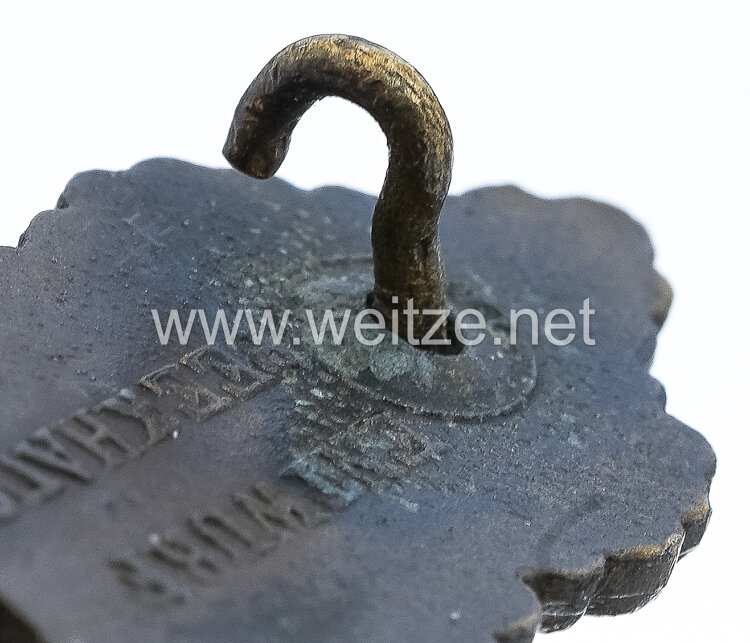
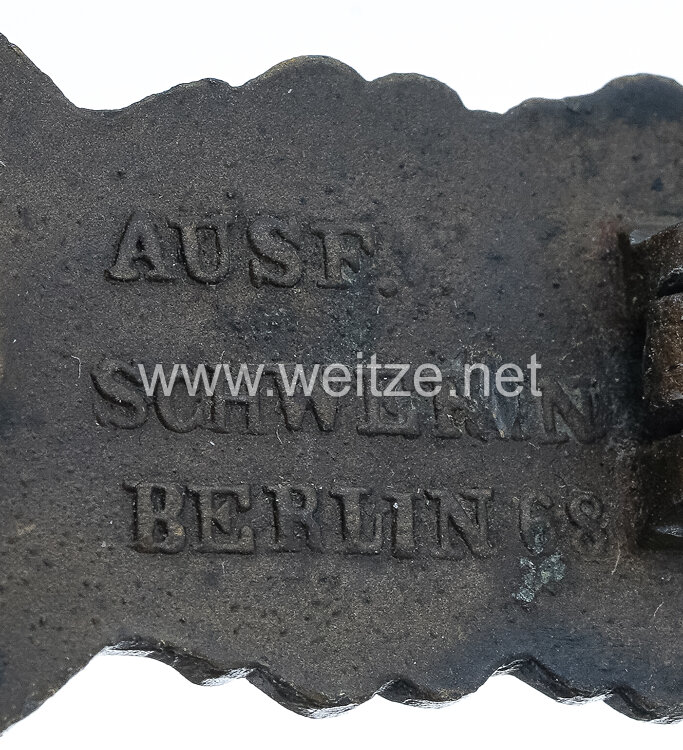
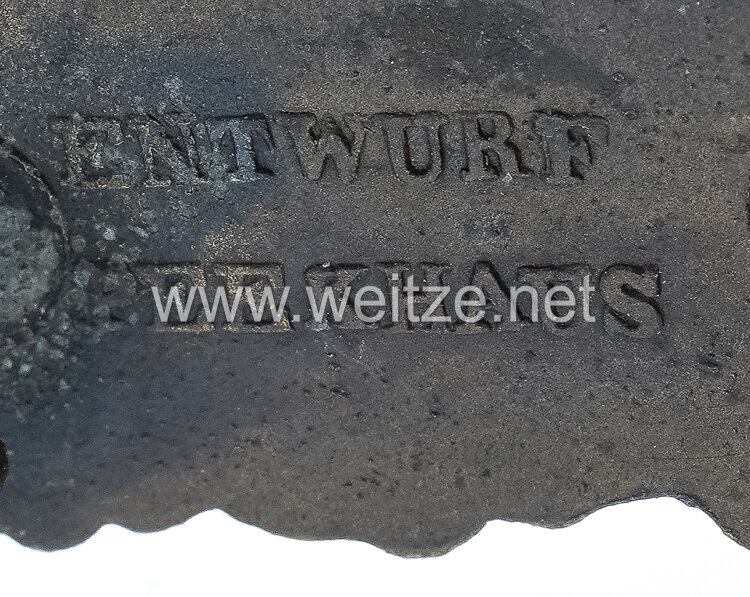
The present specimen was manufactured by the firms Peekhaus Berlin (design) and Schwerin Berlin S.W. (execution). The marking “Entw. Peekhaus Berlin Ausf. Schwerin Berlin S.W.” on the reverse documents this manufacturer combination. The production in bronzed fine zinc corresponds to the material specifications of the late war years, when precious metals became increasingly scarce and alternative materials had to be used.
The U-Boat Front Clasp was awarded in three grades: Bronze, Silver, and Gold. The bronze version was the entry level and could be awarded according to specific operational criteria. For the award of the Bronze Clasp, several successful war patrols or special combat actions were typically required. The Silver Clasp followed after additional missions, while the Gold Clasp was only awarded for exceptional achievements.
The design of the clasp typically shows a U-boat in frontal view, surrounded by an oak leaf wreath, which traditionally stands for military valor. The artistic design was intended to symbolize the power and determination of the submarine service. The magnetic beveled pin on the reverse served for attachment to the uniform and is characteristic of German military badges of this period.
Submarine warfare represented one of the most dangerous branches of service in World War II. German U-boats operated under extreme conditions: long diving times, cramped spaces, constant danger from depth charges and air attacks, as well as psychological stress from months-long deployments. Of approximately 40,000 German submariners, about 30,000 lost their lives – a loss rate of approximately 75 percent, the highest of all German military branches.
The manufacture by Schwerin Berlin indicates one of the established producers of military orders and badges. Berlin firms played a central role in the production of military decorations during the Third Reich. The quality of execution varied considerably due to war conditions, with early productions usually being of higher quality than late-war manufactures.
The bronzed surface of the fine zinc was intended to give the impression of genuine bronze execution. This production method enabled more cost-effective manufacturing while maintaining an appealing appearance. Over time, however, the bronzing can wear or corrode, which must be considered when evaluating historical specimens.
After the war ended in 1945, all National Socialist orders and badges were banned by Control Council Law No. 8. Wearing them was punishable, and many decorations were destroyed or hidden. Only the Law on Titles, Orders and Honorary Signs of 1957 again permitted, under certain conditions, the wearing of war decorations without National Socialist symbols.
Today, U-Boat Front Clasps are important military-historical documents that bear witness to a dramatic chapter of naval warfare history. They are preserved and studied in museums, collections, and by military historians. The scholarly examination of such objects serves historical understanding and the processing of this period without glorifying the ideology associated with it.