France Model 1829 Saber for Officers of the Mounted Artillery in Deluxe Execution for a High-Ranking Officer from the Period of the Citizen King Louis-Philippe

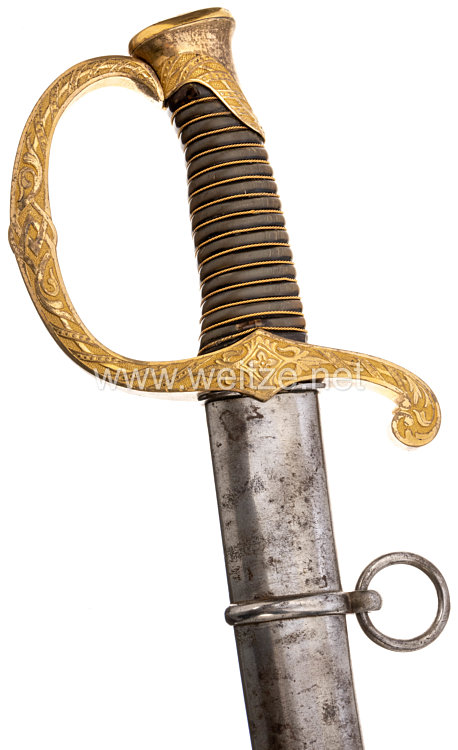
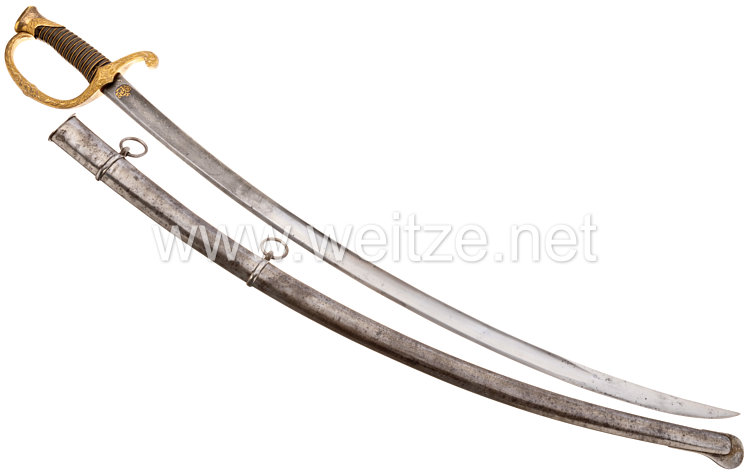
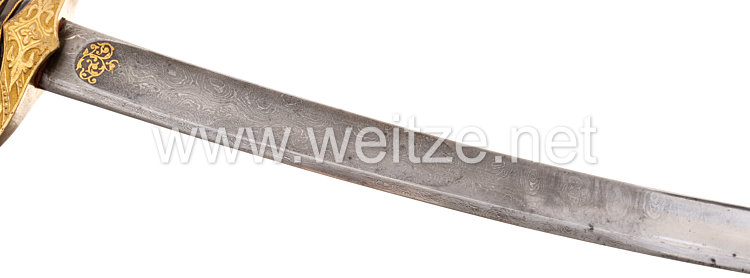
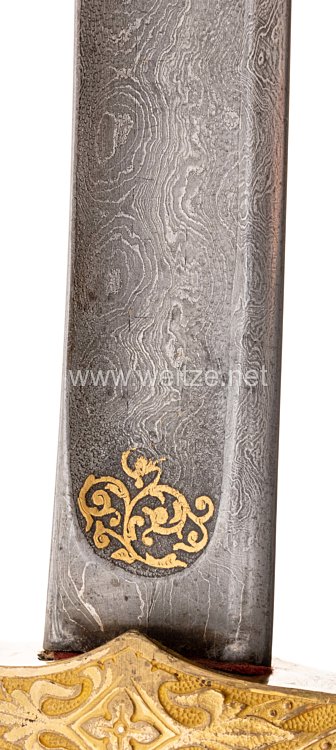
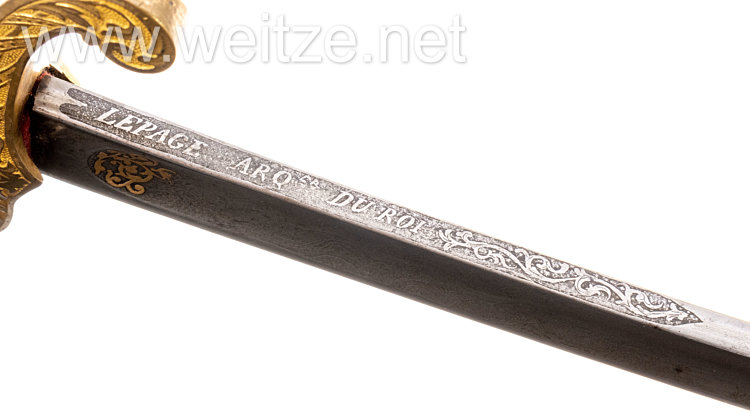
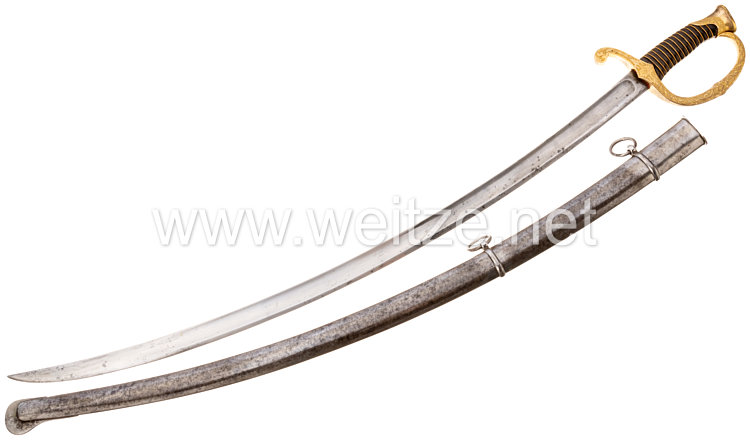
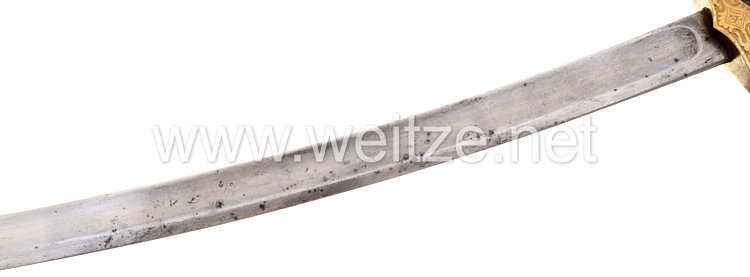
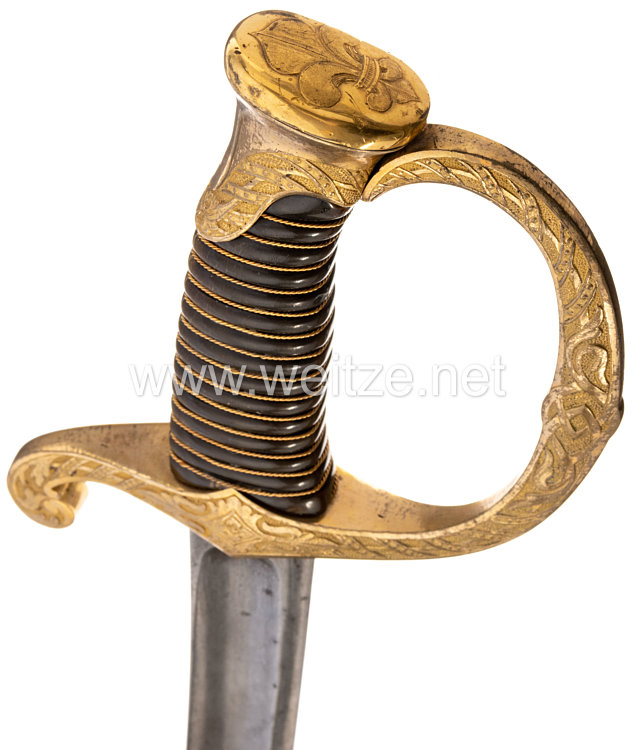
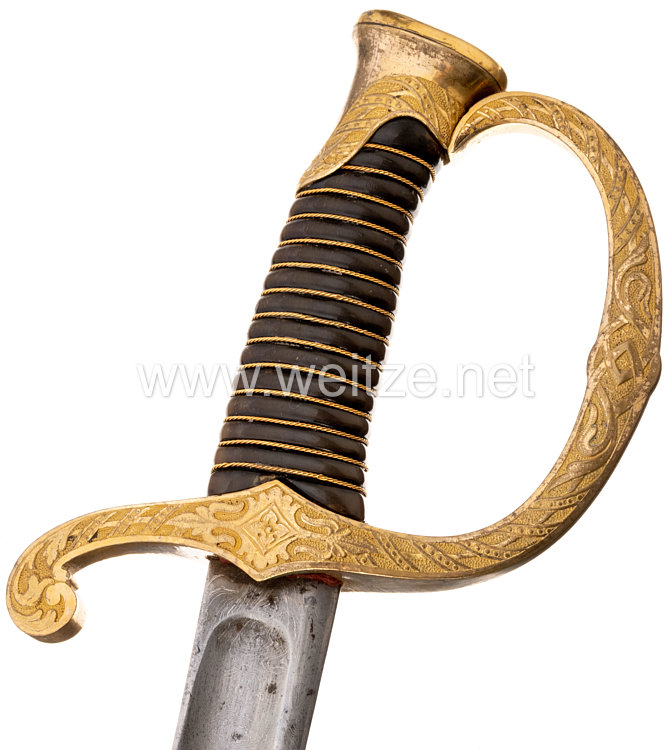
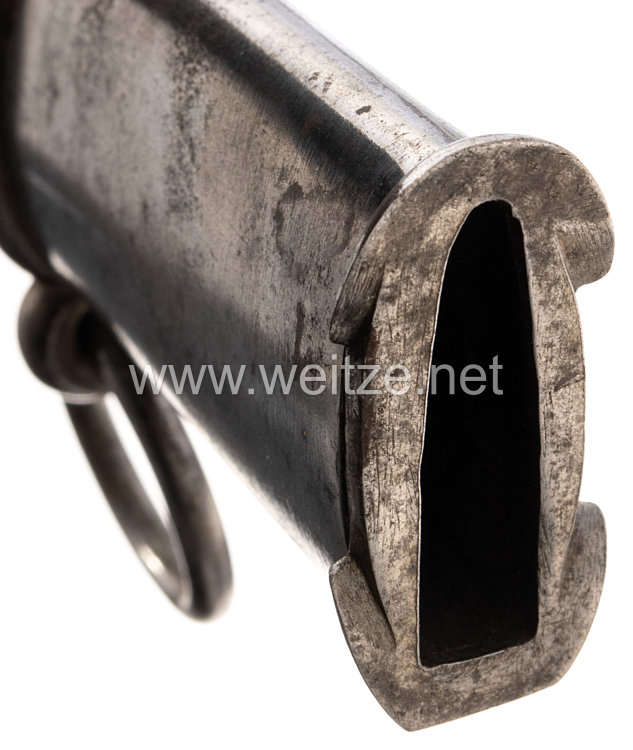
(Sabre d'Artillerie à cheval, modèle de 1819). Circa 1830/40. Curved damascus blade, with fuller on both sides and rounded back, the damascus pattern worked out only in the upper third for aesthetic reasons, obverse with gilt floral decoration, on the back the maker “Lepage” as well as the motto “Arq. du Roi”, the blade only slightly spotted. Gilt and finely chiseled brass hilt, the pommel cap decorated with a large fleur-de-lis, horn grip with intact gilt wire wrapping, the horn with two small damages. Bright steel scabbard with two ring bands and movable suspension rings, somewhat spotted. Condition 2.

Overall length 98 cm.
419532
3.650,00

France Model 1829 Saber for Officers of the Mounted Artillery in Deluxe Execution for a High-Ranking Officer from the Period of the Citizen King Louis-Philippe

The French Model 1829 officer's saber for mounted artillery represents a significant epoch in French military history, closely connected with the reign of the Citizen King Louis-Philippe (1830-1848). This magnificent example embodies not only military functionality but also the representative aspirations of high-ranking officers during the July Monarchy.

The mounted artillery (Artillerie à cheval) held a special position in the French army. This branch of service, which reached its zenith under Napoleon I, combined the firepower of artillery with the mobility of cavalry. After the Napoleonic Wars and the Bourbon Restoration, the French army underwent fundamental reorganization, with equipment and armament being modernized and standardized.

The Model 1829 represented a development of earlier saber models and was specifically designed for mounted artillery officers. The curved blade with round back and fuller met the tactical requirements of the period and offered both cutting and thrusting capabilities. The use of Damascus steel in this example indicates a special quality level that exceeded the standard regulation issue.

The signature “Lepage” on the blade is of extraordinary significance. The Lepage family belonged to the most renowned gunsmiths in France. Jean Lepage had already established the family's reputation in the 18th century, but his nephew Pierre-Nicolas Boutet de Lepage elevated the workshop to royal fame. The designation “Arq. du Roi” (Arquebusier du Roi - Royal Gunsmith) was an honorary title awarded only to the most distinguished weapons manufactories. These workshops supplied the royal court and high-ranking military officers with luxury weapons of the highest quality.

The gilt brass fittings with fine chasing demonstrate the craftsmanship of Parisian armorers. Particularly noteworthy is the fleur-de-lis on the pommel cap, the traditional symbol of the French royal house. Under Louis-Philippe, a member of the Orléans line, the fleur-de-lis continued to be used as a symbol of sovereignty, although the Citizen King owed his throne to the people rather than divine right. The fleur-de-lis on this saber underscores the connection between military and monarchy.

The horn grip with gilt wire binding was typical for high-quality officer sabers of this period. Horn provided a secure grip even under difficult conditions and could be elegantly worked. The wire binding, usually of gilt brass or bronze, served not only aesthetics but also prevented the hand from slipping in combat.

The bright steel scabbard with two ring bands and movable suspension rings met military functionality requirements. Mounted artillery officers wore their sabers on baldrics or sword belts, with the suspension rings allowing flexible adjustment. Unlike infantry officers who often preferred leather scabbards, the robust steel scabbard was more practical for mounted troops.

The era of Louis-Philippe was characterized by domestic political tensions and foreign policy challenges. The conquest of Algeria from 1830 onward engaged large parts of the French army. Mounted artillery officers played an important role in these colonial wars, as well as in suppressing internal unrest during the social conflicts of the 1830s and 1840s.

Luxury sabers such as the present example were not only combat weapons but also status symbols and signs of military honor. High-ranking officers frequently had private weapons made by renowned manufacturers that conformed to regulation requirements but demonstrated their rank and wealth through precious materials and artistic decoration.

The floral gilding on the blade was a popular decorative element of the epoch and testifies to the romantic aesthetic cultivated during the July Monarchy. The combination of military severity and artistic elegance was characteristic of French officer weapon culture in the 19th century.

Today, such sabers are important military-historical artifacts that provide insight into the social and cultural history of the officer corps. They document not only weapons development but also the social position of the military in the post-Napoleonic era and the continuing significance of traditional symbolism in a time of political change.

r