Pilot's Badge - J1

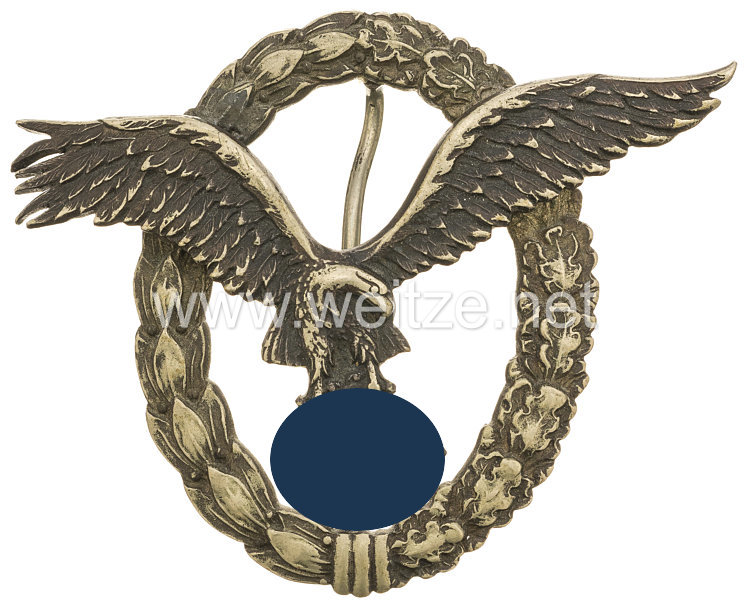
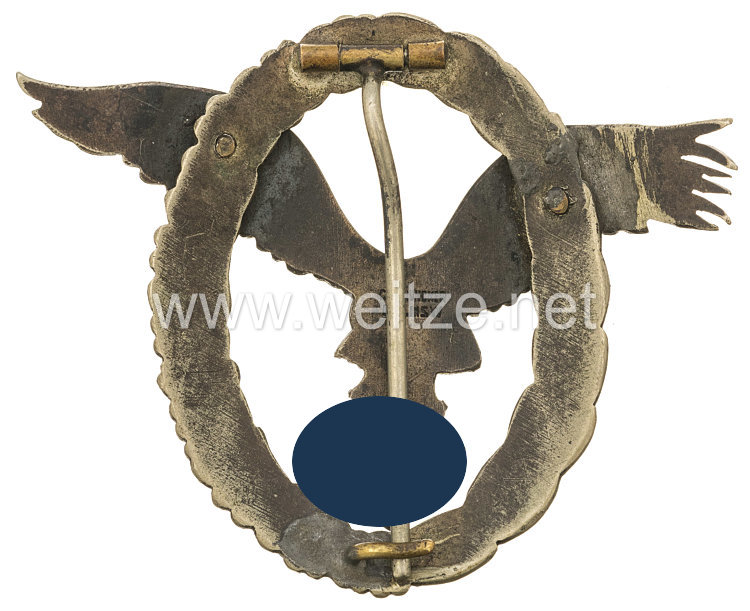
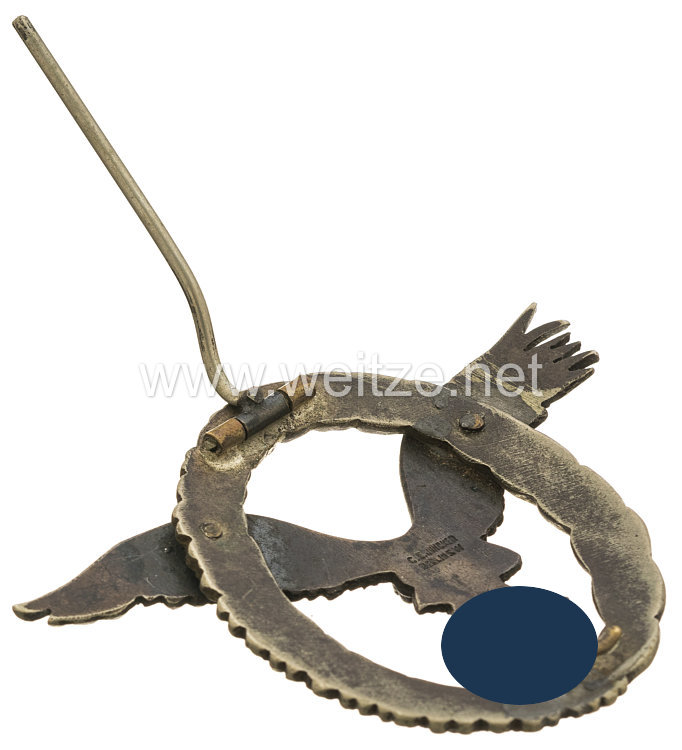
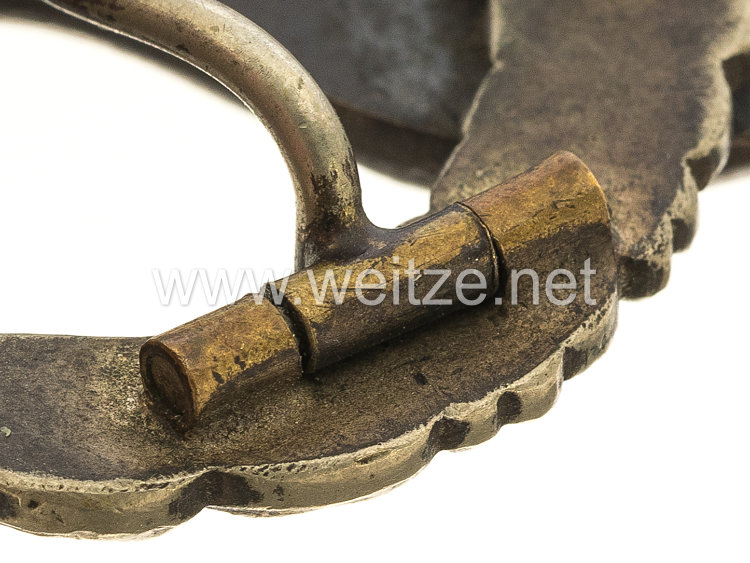
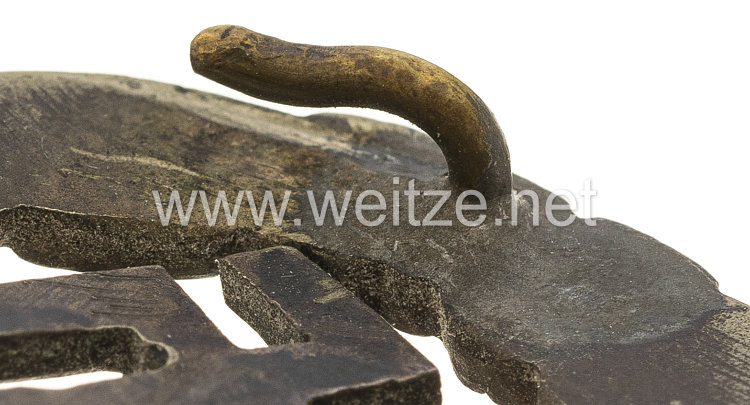
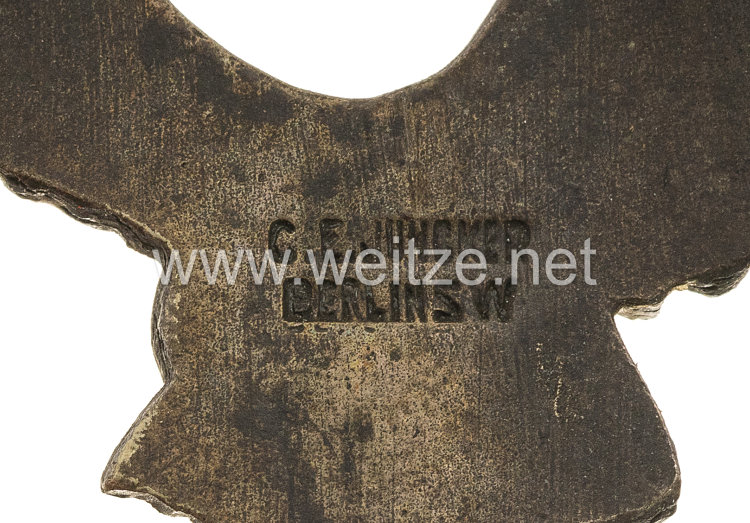
early flat design, reverse marked by manufacturer "C.E. Juncker, Berlin SW". Pin repaired. Eagle soldered to wreath. Worn for many years, condition 2-.
444532
1.350,00

Pilot's Badge - J1

The Pilot's Badge (Flugzeugführerabzeichen) of the German Luftwaffe represents one of the most recognizable and sought-after military awards of World War II. The badge symbolized not only technical competence but also the special status of the Luftwaffe within the German Wehrmacht. Within the context of National Socialist military organization, the Pilot's Badge also served an important symbolic function. It represented the modernity and technological superiority that the regime claimed for itself. The Luftwaffe was regarded as the youngest and most modern branch of service, and its pilots enjoyed high social prestige.

The regular pilot badge was instituted on August 12th, 1935 by Reichsmarschall Hermann Göring. It was awarded to Luftwaffe pilots who had successfully completed their flight training. The award criteria for the Pilot's Badge were strictly regulated. Candidates had to complete basic flight training, which included theoretical and practical components. The training lasted several months and encompassed navigation, aircraft mechanics, meteorology, and intensive flight practice. Only after passing the final examination was the badge awarded. After completion of the basic licenses (A and B) and months of flying theory and flight experience mastering the fundamentals of flying, the successful new pilot qualified for his Pilot Badge and was awarded in a protective case with a certificate (A4/A5 size) as well as his A and B Pilot Licenses.

The Pilot Badge was worn on the left breast pocket of the regular uniform tunic and for other jackets, such as the Fliegerbluse or the dinner jacket, the Pilot Badge was worn at about the same height, also on the left side. In the event that the recipient was awarded the Iron Cross 1st Class, the badge was then positioned below the EK1.

The J1 variant was produced by C. E. Juncker of Berlin between 1936-38. The company C.E. Juncker was founded in 1851 as a military effects shop at Alte Jakobstraße 13 in Berlin SW 68 and became one of the most significant producers of military decorations of the era, often described as the Tiffany and Company of German badge production. The early high quality Juncker versions can be found in two distinct patterns. The first, produced from 1936 to approximately 1939, has a very flat eagle and thinner wreath. The second pattern has a more massive eagle and thicker wreath and is the most commonly encountered high quality Juncker pilot badge. The J1 designation refers to the first Juncker pattern.

The design features a stylized eagle with outstretched wings grasping an oak leaf wreath, at the center of which sits a swastika. The pilot badge takes the form of a massive swooping eagle clutching a mobile swastika in its talons, superimposed on a wreath of half laurel (left) and half oak leaves (right). The early flat design is particularly noteworthy; in the initial production phase, roughly between 1936 and 1939, Pilot's Badges were frequently manufactured in a flatter form, with less pronounced relief than later variants. The J1 is a narrow type with no cut out between the legs of the eagle.

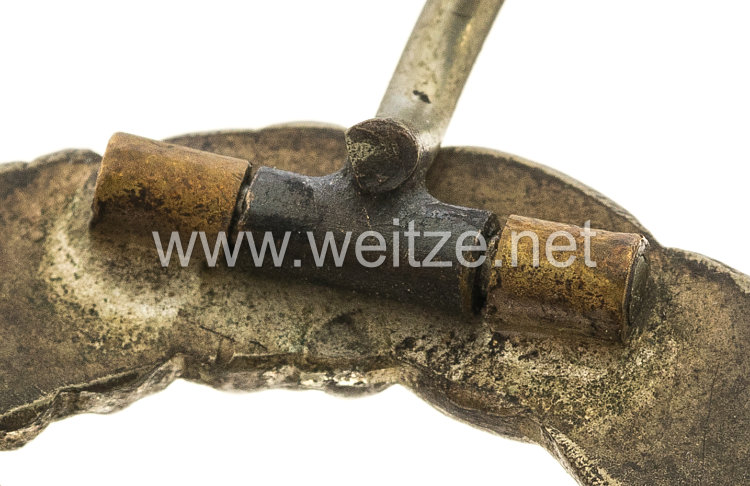
The reverse is correctly maker marked “C.E. Juncker Berlin SW”. The Juncker maker stamp uses distinctive stylized lettering that make the various strokes look almost like tiny triangles, with full stop periods after the C. and E., but not after the S and W. The reverse shows two rivets, a soldered on barrel hinge, soldered on round wire catch and round wire pin. Juncker badges have small, neatly finished dome rivets that often include a small flat spot on the top, and these rivets also frequently have a dark copper color on badges that were worn. The hinges are of the barrel variety and typically measure in the neighborhood of 13.2 mm, and the catches are formed from thick round stock and are soldered directly to the wreath.

The badge measures approximately 2 1/2 inches wide by 2 1/8 inches tall. It is constructed out of two pieces of die struck aluminum that have been black burnished and silver washed. Alternatively, it was constructed out of two pieces of die struck nickel-silver that have been black burnished and silver washed, or made of tombak (gilded brass). The earliest Luftwaffe Pilot and Combined Pilot and Observer Badges were made from high-quality Nickel Silver and Tombak (Copper color) with a very small period of aluminum production.

In the nearly ten years from the introduction of this badge, to the end of WWII, the manufacturers of these awards made many changes in the features of the designs; some companies, like Juncker, Assmann, and Deumer, had early first pattern badges which looked completely different from later pieces by the same manufacturers. From the middle of 1941, manufacturers turned toward zinc in an effort to rationalize material for the war effort. The Juncker factory was destroyed in a bombing raid in early February 1945.

Today, authentic Pilot's Badges, especially from renowned manufacturers like Juncker, are sought-after collector's items. They serve as material witnesses to a significant, albeit dark, epoch of German and European history.