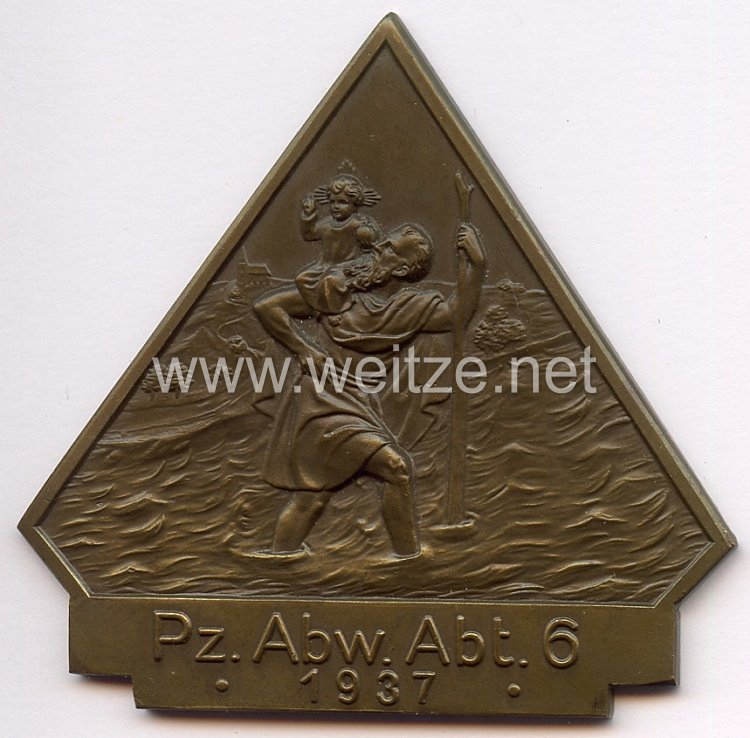
Commemorative Plaque of the Panzer-Abwehr-Abteilung 6 - St. Christopherus 1937

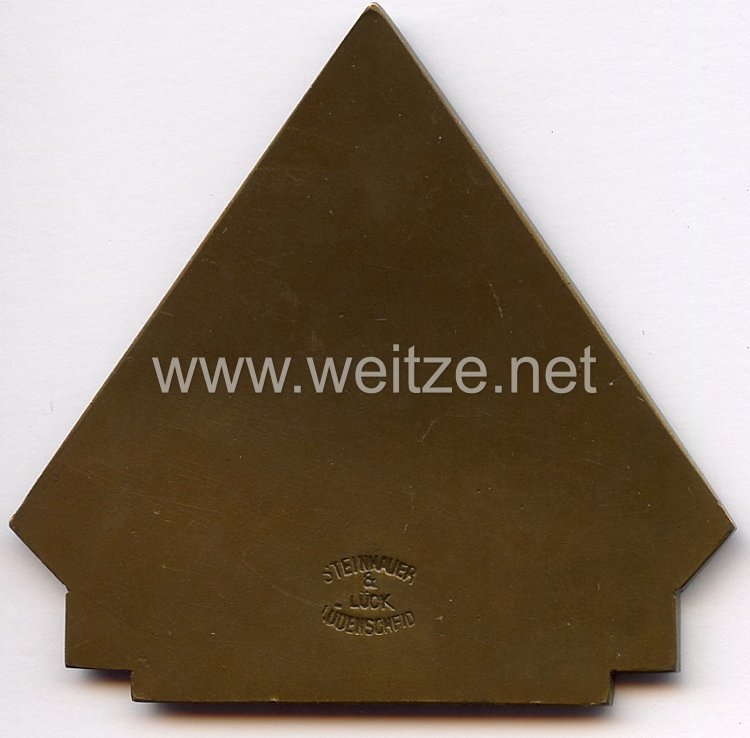
Brass construction, 70 x 68 mm, maker: Steinhauer & Lück Lüdenscheid, condition 2.
370531
400,00

Commemorative Plaque of the Panzer-Abwehr-Abteilung 6 - St. Christopherus 1937

The commemorative plaque of Panzer-Abwehr-Abteilung 6 (Anti-Tank Battalion 6) from 1937 represents a fascinating testament to German military history during the interwar period and the early phase of Wehrmacht rearmament. This brass-manufactured plaque, measuring 70 x 68 mm, was produced by the renowned firm Steinhauer & Lück of Lüdenscheid, one of the leading manufacturers of military badges and commemorative items of that era.

Panzer-Abwehr-Abteilung 6 was part of the systematic reorganization and modernization of German armed forces following the Nazi seizure of power in 1933. After the Treaty of Versailles of 1919 had severely restricted German military capabilities, a massive rearmament program began in the mid-1930s. Anti-tank troops gained increasing importance as modern warfare became progressively dominated by motorized and armored units.

The motif of Saint Christopher on this plaque holds particular symbolic significance. Christopher, traditionally venerated as the patron saint of travelers and soldiers, was frequently depicted on military commemorative items. The legend of the giant who carried the Christ child across a raging river symbolized strength, protection, and the overcoming of dangers – qualities considered especially desirable for soldiers. In the military tradition of the early 20th century, representations of patron saints served both religious edification and the strengthening of esprit de corps.

The firm Steinhauer & Lück in Lüdenscheid was one of the most significant manufacturers of military decorations, badges, and commemorative plaques in Germany. Lüdenscheid developed during the 19th and early 20th centuries into a center of metalworking and was particularly renowned for producing high-quality military insignia. The manufacturing quality of these workshops met the highest craftsman standards, with brass being a preferred material due to its durability and aesthetic appearance.

Such commemorative plaques fulfilled multiple functions within the military community. They served as symbols of comradeship, strengthened identification with one's own unit, and were frequently presented on special occasions such as anniversaries, transfers, or farewells. The year 1937 marks a phase of intense military expansion: the Wehrmacht was growing rapidly, new units were being established, and the specialization of various branches was advancing.

Anti-tank defense as a military branch developed parallel to the increasing mechanization of warfare. Already during World War I, the deployment of tanks had revealed the necessity for specialized defensive weapons and tactics. In the 1930s, these insights were systematically developed further. Anti-tank battalions were equipped with various weapons, including anti-tank guns of different calibers, and received specialized training in combating armored vehicles.

From a cultural-historical perspective, such plaques document the material culture of the military and the practice of commemorative culture. They were personal mementos that soldiers often kept throughout their lives, bearing witness to comradeship, service time, and shared experiences. The craftsmanship, choice of motifs, and quality of manufacture reflect the appreciation accorded to such objects.

Today, such military-historical objects represent important sources for researching military history. They provide insights into organizational structure, symbolic language, and the everyday culture of military units. For collectors and historians, they are valuable documents of a bygone era that contribute to the reconstruction and understanding of this historical period.

r