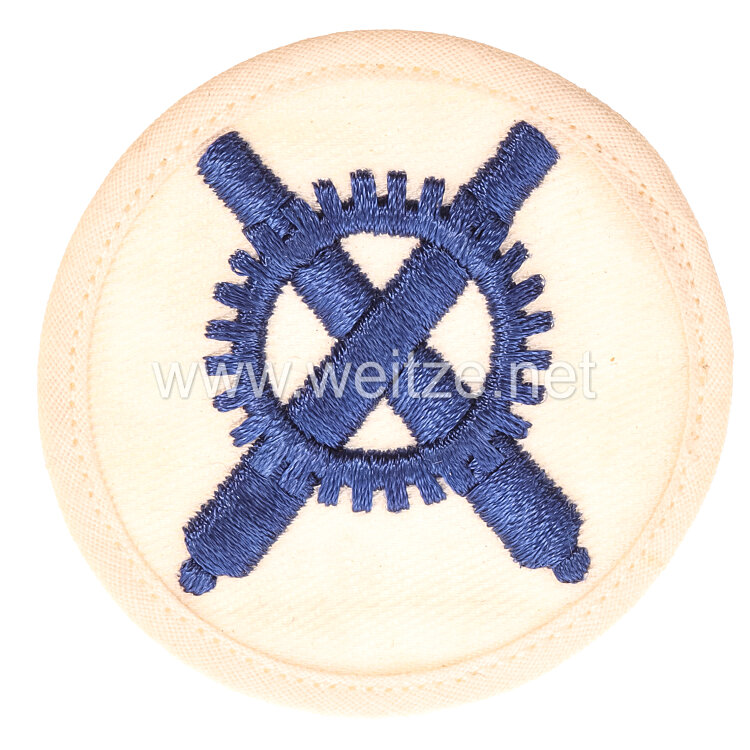
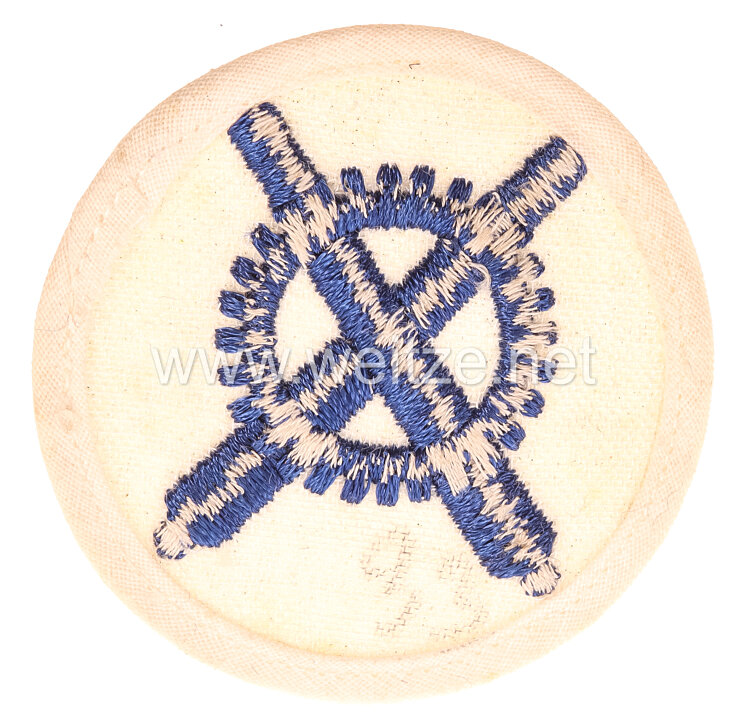
Kriegsmarine Enlisted Man's Sleeve Insignia for Artillery Mechanic

Machine-embroidered, for the white summer blouse. Unissued condition.
453630
30,00

Kriegsmarine Enlisted Man's Sleeve Insignia for Artillery Mechanic

The Kriegsmarine sleeve badge for artillery mechanics of enlisted ranks represents a fascinating example of the differentiated identification systems within the German Navy during World War II. This special form of trade badges evolved from the necessity to visibly identify the increasingly specialized technical professions within the Navy.

The Kriegsmarine, founded in 1935 as the successor to the Reichsmarine, introduced a complex system of badges and insignia to identify the various specializations and ranks of its personnel. Sleeve badges for enlisted men were worn on the left upper arm and displayed specific symbols indicating their particular trade or specialty.

The artillery mechanic belonged to the important technical specializations within the Kriegsmarine. These specialists were responsible for the maintenance, upkeep, and repair of naval artillery, including complex fire control systems, hydraulic mechanisms, and mechanical components of gun turrets. With the increasing mechanization of naval warfare, this specialization gained considerable importance.

The present badge is machine-embroidered, which corresponded to the standardized production method for such equipment items during wartime. Machine production ensured uniform quality and enabled mass production necessary for the rapidly expanding Kriegsmarine. Embroidery typically occurred on dark blue base fabric for the standard service uniform.

Particularly noteworthy is that this specimen was designated for the white blouse. The white uniform of the Kriegsmarine was worn in tropical deployment areas as well as at certain ceremonial occasions. Sleeve badges for the white uniform differed from standard badges through their lighter base fabric. This reflects the fact that the Kriegsmarine operated in various climate zones, from arctic waters to the Mediterranean and tropical regions.

Regulations for wearing sleeve badges were precisely defined in the Anzugsbestimmungen für die Kriegsmarine (Uniform Regulations for the Navy). These regulations were regularly updated and specified not only the type of badges but also their exact positioning on the uniform. The introduction of specialized trade badges occurred gradually and was adjusted several times during the war to meet changing organizational requirements.

The unworn condition of this badge is of particular interest from a historical perspective. Such unissued or unworn pieces can have various backgrounds: they could have been produced as reserves, never issued by war's end, or acquired by a naval member but never attached to a uniform.

Technical specializations within the Kriegsmarine developed parallel to the technological evolution of warships themselves. The naval artillery of the German Navy encompassed a broad spectrum of weapon systems, from light anti-aircraft guns to heavy naval guns with calibers of 380mm on battleships. Artillery mechanics had to be familiar with all these systems and were often specialized in particular weapon types.

Training to become an artillery mechanic took place in specialized naval schools and lasted several months. Recruits received thorough technical education combining theoretical knowledge with practical experience. After successful training, they received the right to wear the corresponding sleeve badge, which made their acquired qualification visible.

In the context of naval history, such sleeve badges document the professionalization and specialization of naval forces in the 20th century. They testify to a shift from traditional seamanship training toward highly specialized technical professions that were essential for operating modern warships.

The machine embroidery technique used for these badges represents the industrial standardization that characterized military equipment production during this period. Specialized workshops and contractors produced these items according to strict specifications, ensuring uniformity across the entire fleet.

These artifacts serve today as important historical documents, providing insights into the organizational structure, training systems, and technological sophistication of the World War II-era German Navy. They represent a tangible connection to the experiences of the thousands of specialized technical personnel who served aboard the vessels of the Kriegsmarine.