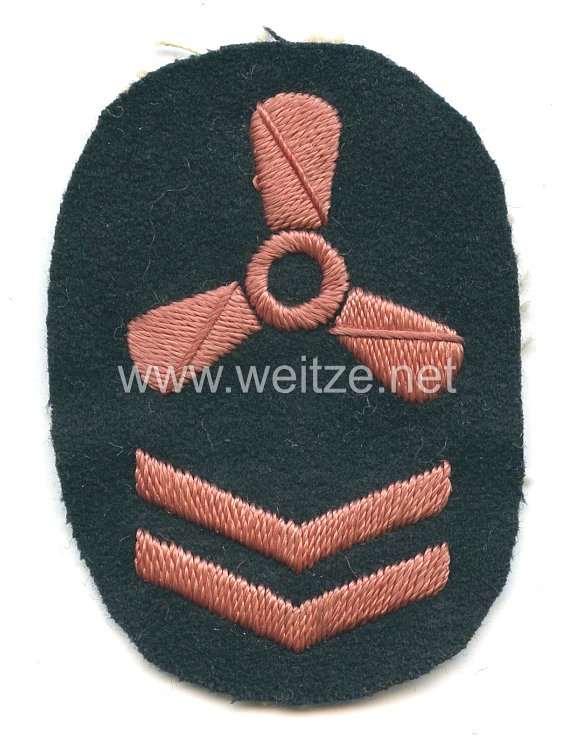
Kriegsmarine Sleeve Insignia Special Training Motor Course 2

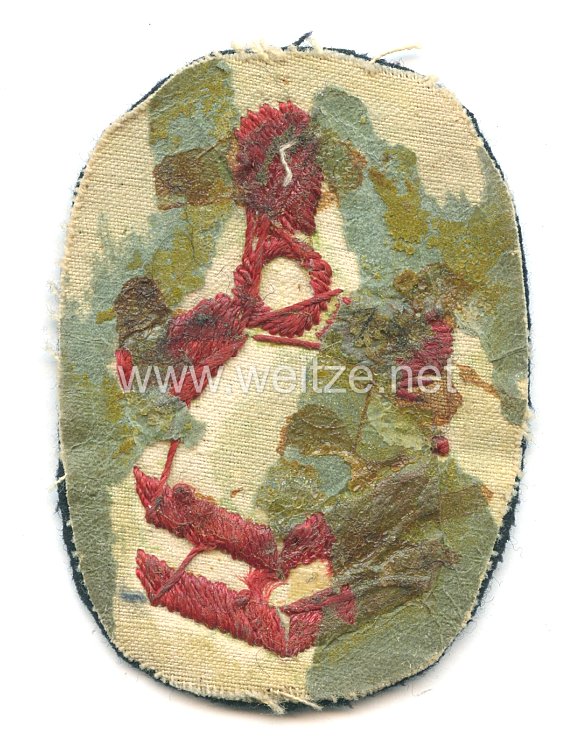
hand-embroidered, for the blue blouse, adhesive residue on reverse, border trimmed down, condition 2-3.
338229
35,00

Kriegsmarine Sleeve Insignia Special Training Motor Course 2

The Kriegsmarine Sleeve Badge for Special Training Motor Course 2 represents an important aspect of the training system of the German Kriegsmarine during World War II. These hand-embroidered badges served to identify specialized technical qualifications and were an integral part of the complex uniform system of the German Navy between 1935 and 1945.

The Kriegsmarine, officially founded on June 1, 1935, developed a comprehensive system of career and specialty badges to visibly display the various qualifications and training levels of its personnel. The motor courses were part of the technical training necessary for operating and maintaining complex ship machinery. The designation “Motor Course 2” indicates an advanced or second level of engine training.

The hand-embroidered execution of this badge is characteristic of quality pieces that were frequently privately procured. While the Kriegsmarine issued standardized badges, it was common for enlisted men and officers to acquire higher-quality, hand-embroidered versions from private manufacturers. These pieces often showed finer workmanship and better material quality than the machine-made standard issues.

The badge was worn on the blue blouse, referring to the working uniform of the Kriegsmarine. The Navy distinguished between different uniform types: the parade uniform, the walking-out uniform, and the working uniform. The blue work jacket or blouse was the daily worn uniform aboard ship and during practical duties. Specialty badges like this were worn on the upper arm and made the wearer's technical qualifications immediately recognizable.

The technical training in the Kriegsmarine was highly specialized and encompassed various areas. Motor courses focused on diesel engines, electric motors, and later also on the complex propulsion systems of submarines. Training took place in specialized naval schools and lasted several months. After successful completion, graduates received the corresponding sleeve badge that they were authorized to wear on their uniform.

The training system of the Kriegsmarine was constantly expanded and adapted during the war. With the increasing mechanization of warfare, particularly in submarine warfare, more and more specialized technicians were needed. The various levels of motor courses reflected this development and enabled differentiated qualification.

The adhesive traces on the reverse of this specimen suggest that it was possibly glued into an album or onto a backing for collection or documentation purposes. This was a common practice among veterans and collectors after the war ended. The cut-down edge could indicate removal from the original uniform piece, which also frequently occurred when badges were preserved while the uniforms themselves were disposed of or repurposed.

In the context of naval history, such badges document the professionalization and specialization of German naval forces in the 20th century. They show how important technical knowledge became for operating modern warships and how the Navy attempted to motivate its personnel and make their capabilities transparent through an elaborate system of qualifications and distinctions.

Today, such sleeve badges are important study objects for military historians and uniform researchers. They help reconstruct the training system of the Kriegsmarine and provide insight into the organizational structure and technical requirements of the Navy of that time. For collectors of military historical objects, hand-embroidered specimens are particularly interesting as they document the craftsmanship quality and personal procurement practices of the period.

These badges serve as tangible links to the complex administrative and training apparatus that supported one of the major naval powers of World War II, offering scholars and enthusiasts alike valuable insights into the daily realities and technical demands of German naval service during this tumultuous period of history.