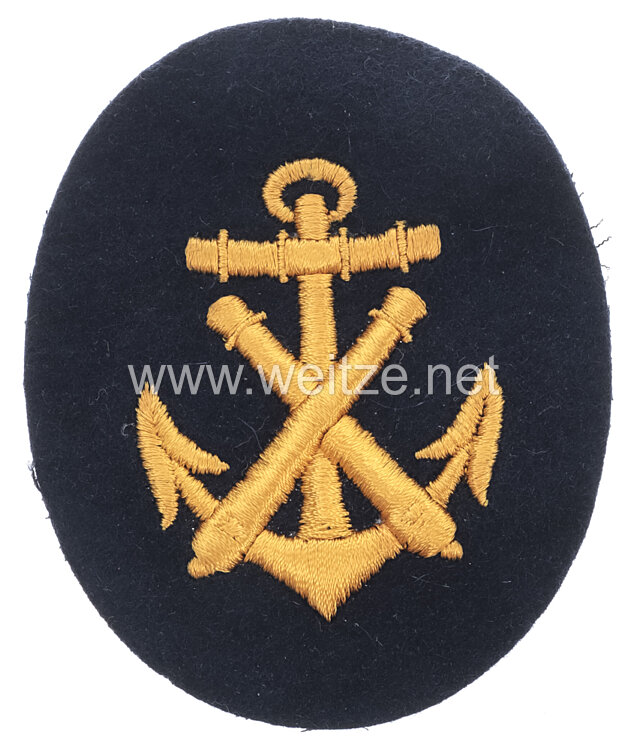
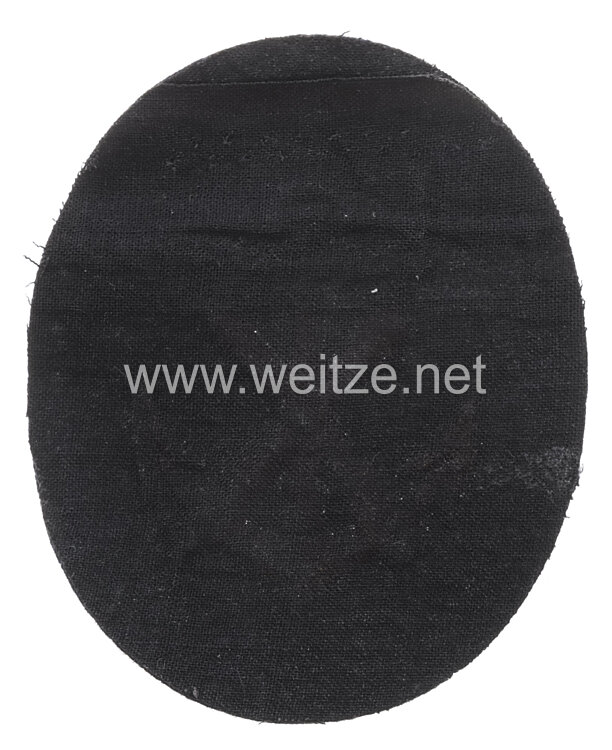
Kriegsmarine Sleeve Insignia Career Path Feuerwerksmaat (Ordnance Petty Officer)

for the blue blouse, condition 2.


466229
15,00

Kriegsmarine Sleeve Insignia Career Path Feuerwerksmaat (Ordnance Petty Officer)

The Kriegsmarine sleeve insignia for Feuerwerksmaat represents a significant piece of evidence documenting maritime rank identification during the Second World War. This specialized career insignia was worn on the blue blouse and identified petty officers of the ordnance career path within the German Kriegsmarine.

The ordnance career path (Feuerwerkerlaufbahn) belonged to the technical specialist careers of the Kriegsmarine and encompassed specialists for ammunition, torpedoes, mines, and other explosives. The term “Feuerwerker” has historical roots reaching back to the 17th century, when it originally designated pyrotechnicians and artillerists. In the navy, this evolved into a highly specialized technical career that encompassed extremely responsible duties.

The rank of Maat corresponded to the petty officer third class in the Kriegsmarine and was the first petty officer rank. A Feuerwerksmaat had already completed several years of training and practical experience and bore considerable responsibility for the proper storage, maintenance, and deployment of ammunition and explosives aboard ship.

The rank insignia of the Kriegsmarine were regulated by the Uniform Regulations for the Kriegsmarine (Anzugordnung für die Kriegsmarine - ANO), first issued in 1935 after the reintroduction of conscription and the buildup of the new navy. The sleeve insignia for petty officers consisted of a five-pointed star that identified the career group. For the ordnance career path, this was a golden-yellow star with a flaming grenade as the specialist badge.

The insignia was worn on the blue blouse, an important component of the naval uniform. The blue blouse was part of the working and shore leave uniform and differed from the white summer blouse and the dark blue dress coat of the parade uniform. The attachment of career insignia was done on the right upper arm, with the exact position and execution detailed in the uniform regulations.

The technical training of ordnance specialists was extraordinarily demanding. After basic training and initial shipboard service as a seaman, candidates had to complete specialized professional training at one of the navy's torpedo or gunnery schools. Here they learned to handle various types of ammunition, from shells for naval guns to torpedoes, depth charges, and mines. The knowledge encompassed not only practical handling but also the chemical and physical fundamentals of explosives as well as safety regulations.

Aboard a warship, the Feuerwerksmaate were responsible for the ammunition rooms and magazines. They supervised proper storage under controlled conditions, conducted regular inspections, and during combat were responsible for supplying ammunition to the guns. On U-boats, ordnance specialists had a particularly critical function in the maintenance and deployment of torpedoes in the cramped and dangerous conditions underwater.

The career opportunities within the ordnance career path ranged from Feuerwerksmaat through Oberfeuerwerksmaat and Stabsoberfeuerwerksmaat to the highest petty officer rank of Oberfeuerwerksmeister. Particularly qualified petty officers could also be promoted into the officer career path.

The production of sleeve insignia was carried out by various authorized manufacturers who produced according to navy specifications. The insignia were hand-embroidered or woven, with golden-yellow thread used for the stars and special symbols on dark blue cloth background. The quality of insignia varied depending on manufacturer and production period, especially toward the end of the war when material shortages led to quality deterioration.

The organizational structure of Kriegsmarine personnel included numerous specialized career paths beyond the ordnance specialists. Each technical specialty had its own training schools, regulations, and career progression. The technical expertise required for modern naval warfare necessitated this high degree of specialization, as the increasingly complex weapons systems and equipment demanded years of training and experience.

Today, original Kriegsmarine sleeve insignia are sought-after militaria collector's items. They document the complex organizational structure of the German Kriegsmarine and the specialization of its crews. The condition of such insignia varies greatly, as they were utilitarian items exposed to the rigors of naval service. Insignia in good condition that were not heavily worn are particularly valuable for historical research and documentation.

The study of these rank insignia provides insights into the personnel structure and organization of the Kriegsmarine as well as the technical requirements of naval warfare during the Second World War.

r