Luftwaffe Officer's Dagger with Etched Blade

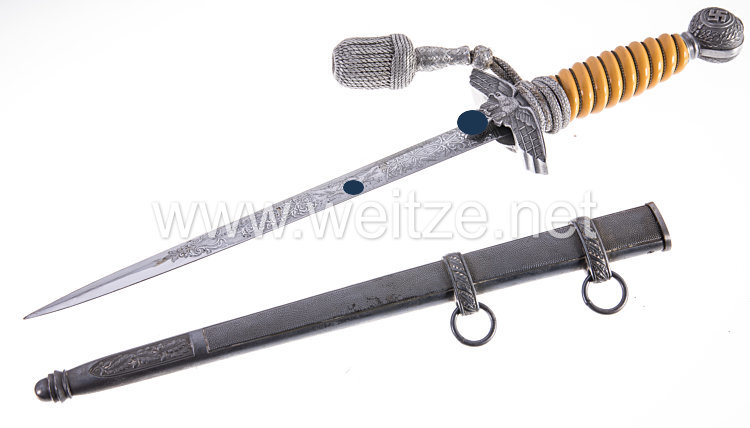
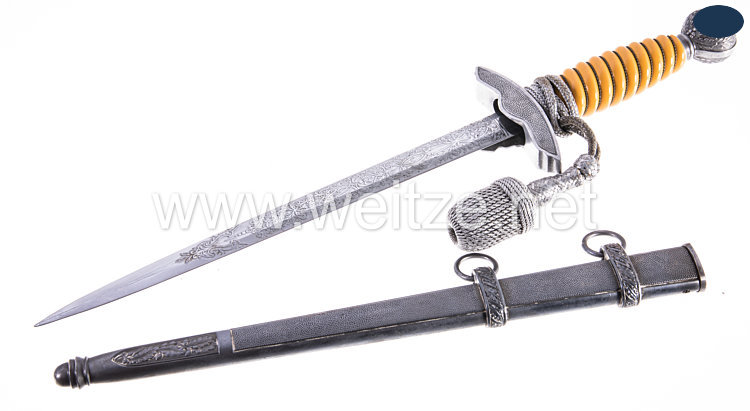
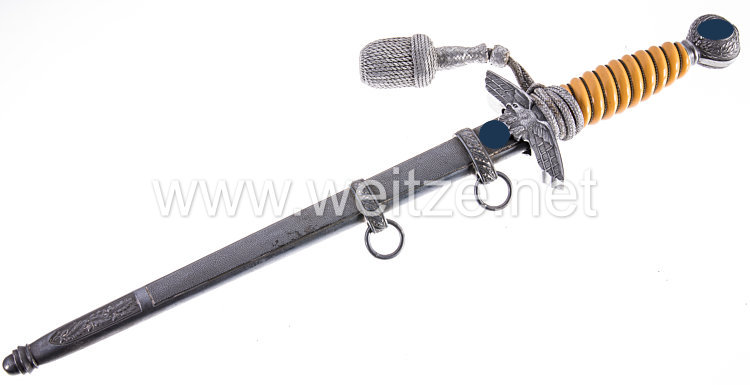
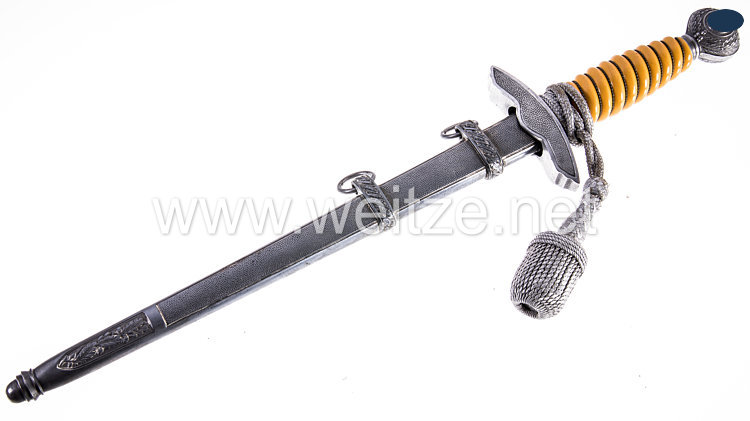
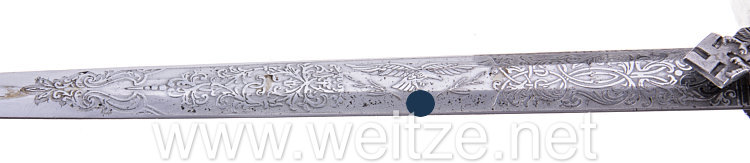
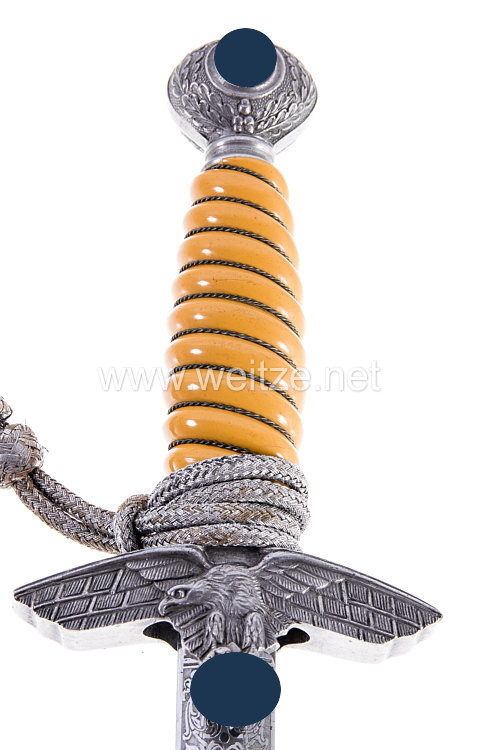
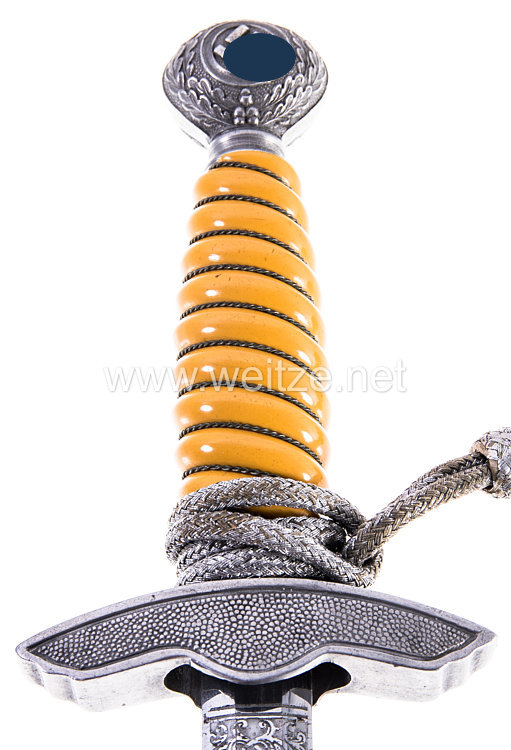
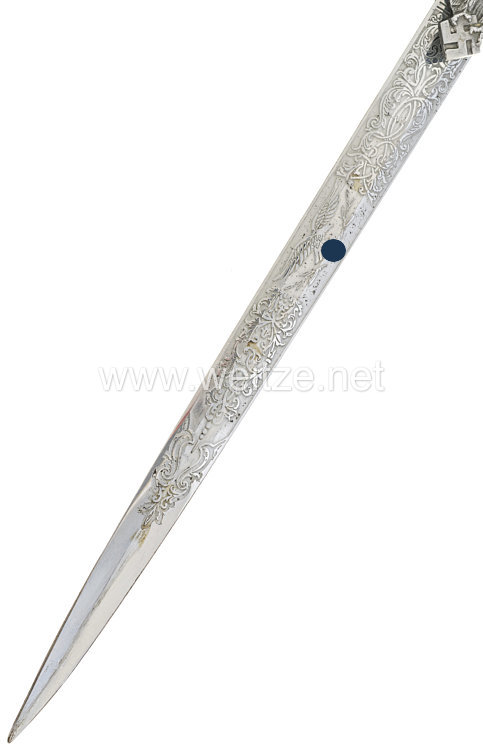
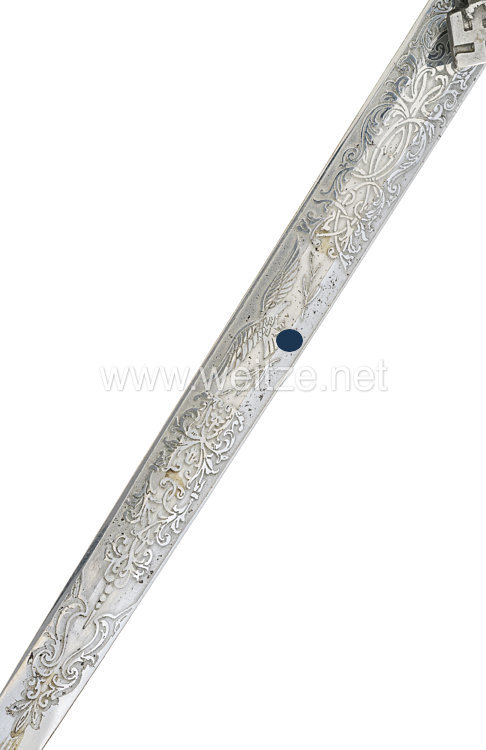
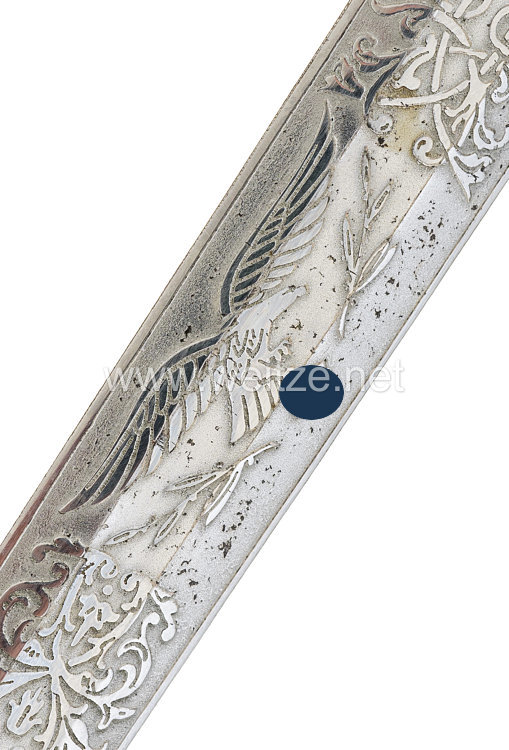
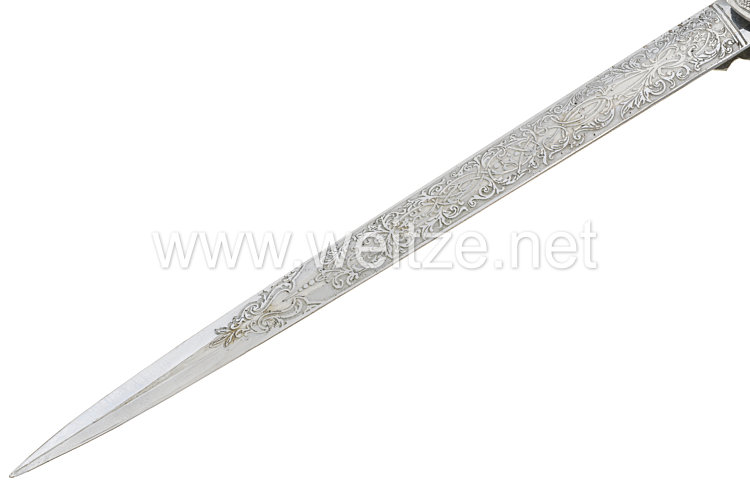
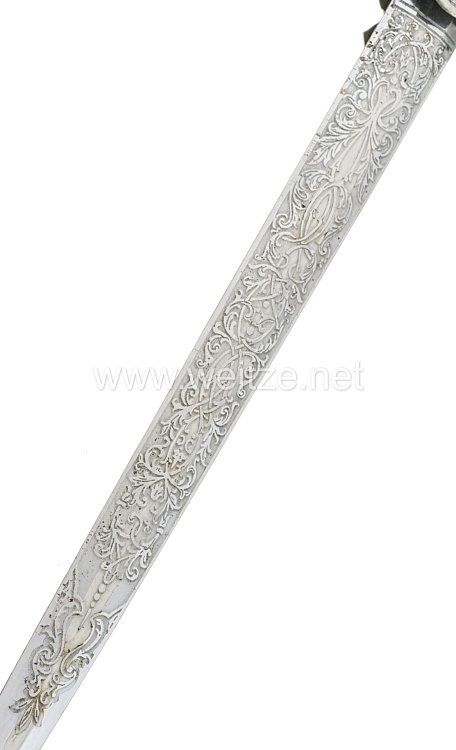
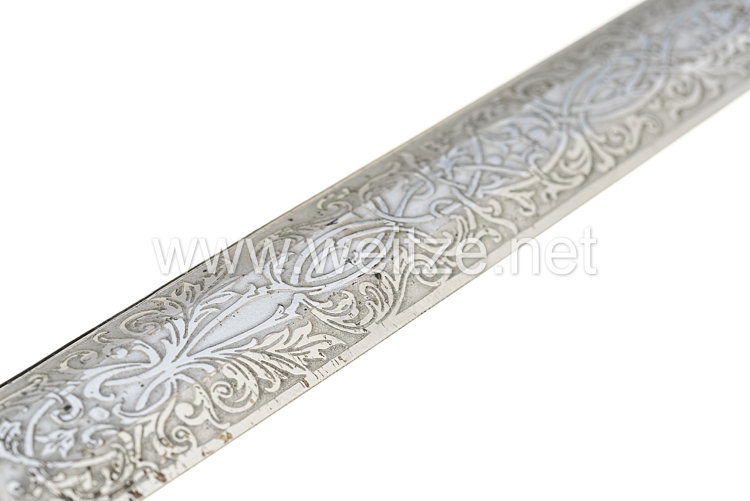
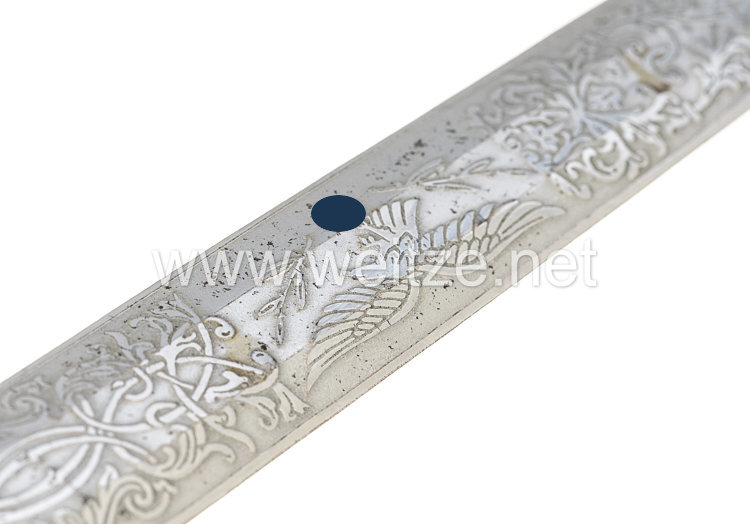
This is a very fine example, with aluminum fittings, yellow grip with original wire wrapping, nickel-plated blade, etched on both sides, obverse with LW eagle, reverse with foliate pattern, without maker mark, however featuring the characteristic blade etching of “Emil Voos Solingen”, the scabbard is blued and dent-free, complete with portepee. The dagger shows only light wear, still uncleaned with beautiful patina. Condition 2.
370428
3.200,00

Luftwaffe Officer's Dagger with Etched Blade

The Luftwaffe Officer's Dagger represents one of the most significant pieces of equipment of the German Air Force during World War II. Introduced as the official sidearm for Luftwaffe officers, this dagger embodied not merely a functional weapon but, above all, a symbol of rank and military tradition.

Historical Development and Introduction

With the official founding of the Luftwaffe on March 1, 1935, under the command of Hermann Göring, the need for distinctive uniforms and equipment became evident. The Luftwaffe Officer's Dagger was officially introduced as part of the officer's uniform through the Army Ordinance Gazette (Heeresverordnungsblatt) of July 1, 1937. The design was intended to distinguish itself from traditional Army daggers and reflect the modern, technology-oriented focus of the new service branch.

Construction and Characteristics

The typical Luftwaffe Officer's Dagger was characterized by distinctive construction features. The grip fittings were manufactured from aluminum, which corresponded to the light, modern character of the Luftwaffe. The grip itself consisted of yellow celluloid-like material wrapped with silver-plated or nickel-plated wire. This wrapping served not only aesthetic purposes but also provided a secure hold.

The blade was typically nickel-plated and measured approximately 25 centimeters in length. Particularly characteristic were the bilateral etchings: on the obverse side, the Luftwaffe eagle with spread wings clutching a swastika in its talons was prominently displayed. The reverse side typically showed artful vine patterns or oak leaf ornaments that incorporated traditional military symbolism.

Manufacturer Diversity

Numerous renowned Solingen blade manufacturers received contracts to produce these daggers. Among the most significant were Emil Voos, Carl Eickhorn, WKC (Weyersberg, Kirschbaum & Cie), E. & F. Hörster, and Alcoso. Each manufacturer had its own characteristic stylistic features, particularly in the execution of the etchings. The firm Emil Voos Solingen was known for particularly fine and detailed etching work that was distinguished by high artistic quality.

Many manufacturers applied their maker's marks to the blades, typically on the blade spine near the hilt. Some productions, especially toward the end of the war, bore no manufacturer designation, which can be attributed to the increasing rationalization of production.

The Scabbard

The scabbard of the Luftwaffe Officer's Dagger consisted of sheet steel and was characteristically blue-tinted or blued. It featured two suspension rings made of aluminum and was fitted with a chape (tip fitting) and a throat piece, both also made of aluminum. The scabbard was intended not only to protect the dagger but also to contribute aesthetically to the overall appearance.

The Portepee

The portepee (sword knot) was an essential component of the officer's dagger. For Luftwaffe officers, it consisted of silver-colored and blue threads interwoven into a characteristic pattern. The crown and slider were typically made of aluminum. The portepee served not only practical purposes but also indicated the wearer's rank – officers wore silver-blue portepees, while non-commissioned officers had different versions.

Manner of Wear and Use

The dagger was worn with the service dress uniform and at official occasions. It hung from two straps attached to the belt buckle and was worn on the left side. In the Luftwaffe, wearing the dagger was prescribed for officers, though certain ranks and assignments had exceptions.

Collector Value and Contemporary Significance

Today, originally preserved Luftwaffe Officer's Daggers are sought-after collector's items of military-historical provenance. Their condition is evaluated according to a standardized system, whereby “Condition 2” designates a very well-preserved dagger with only slight signs of use. Particularly valued are examples with originally preserved patina, complete equipment including portepee, and clearly identifiable manufacturer characteristics.

The historical significance of these objects lies in their function as period documents that provide insight into the material aspects of German military history of the 20th century. They serve as tangible connections to a complex historical period and are studied by historians, collectors, and museums worldwide as artifacts of military material culture.