Hessen-Darmstadt Cartridge Box and Parade Bandolier for Officers of Dragoon Regiments 23 and 24
A very rare and beautiful piece!
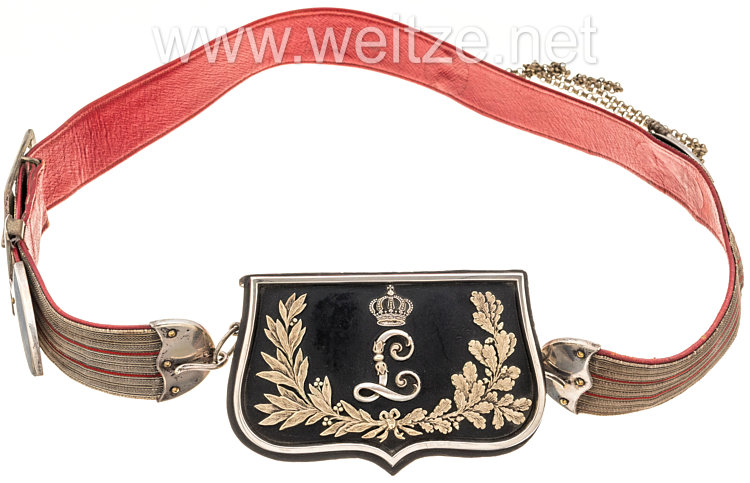
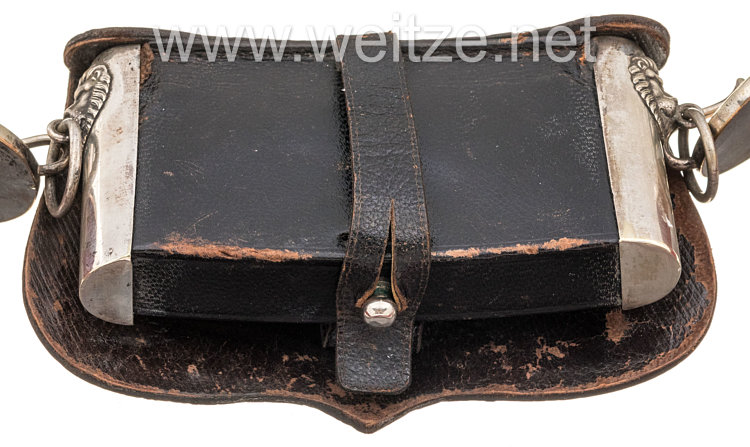
This ensemble of cartridge box and parade bandolier represents an outstanding example of military equipment from the Dragoon Regiments No. 23 and 24 of the Grand Duchy of Hesse-Darmstadt during the late Imperial period around 1910.
The two dragoon regiments of Hesse-Darmstadt were the Leib-Dragoon Regiment No. 24 and Dragoon Regiment No. 23, both affiliated with the Prussian army within the framework of the military conventions of the German Empire. After the founding of the German Reich in 1871, individual contingents retained their own uniform traditions and distinctions while being organizationally integrated into the Prussian army structure.
The cartridge box as a piece of military equipment originated from the necessity to transport ammunition safely and accessibly. While cartridges were actually stored in these containers originally, the cartridge box increasingly evolved during the 19th century into a purely ceremonial equipment item for parade uniforms. For officers, it served exclusively representative purposes and became a symbol of military tradition and class consciousness.
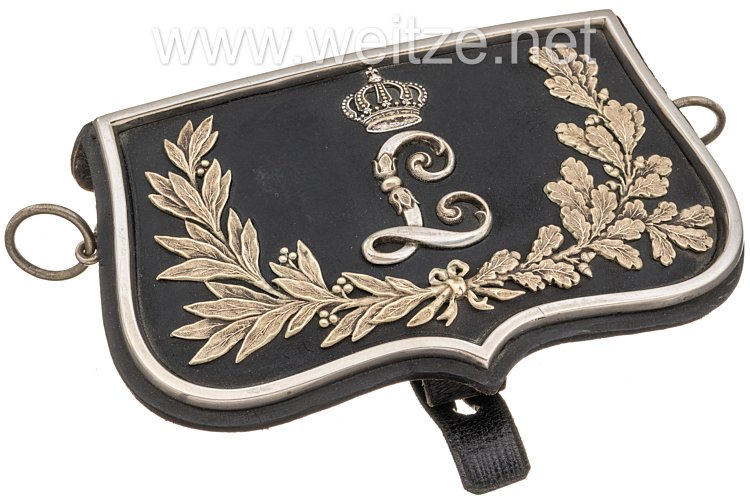
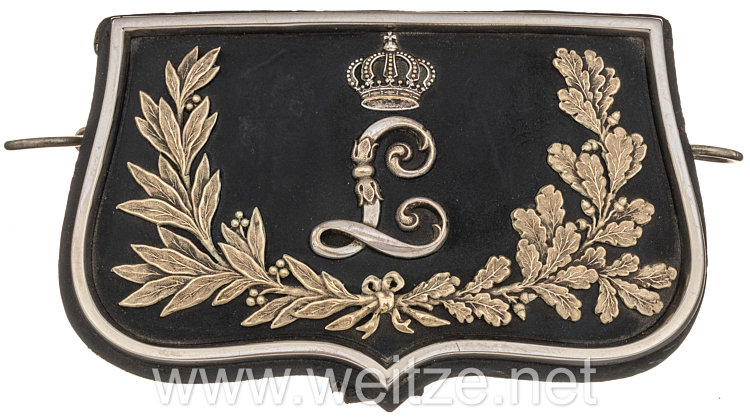
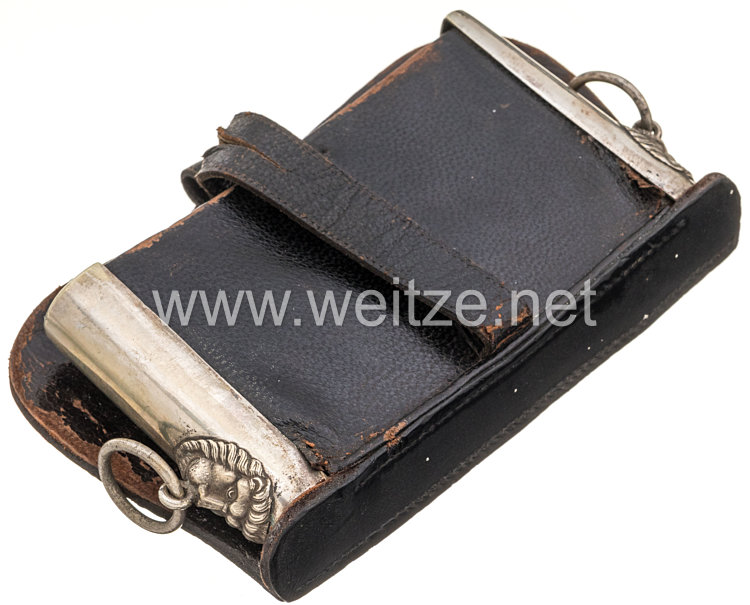
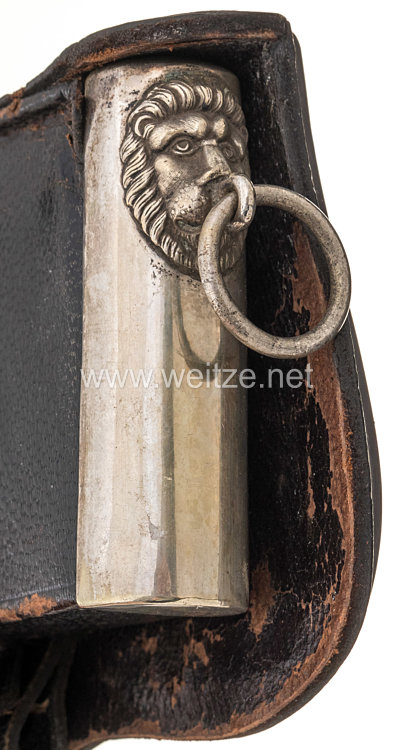
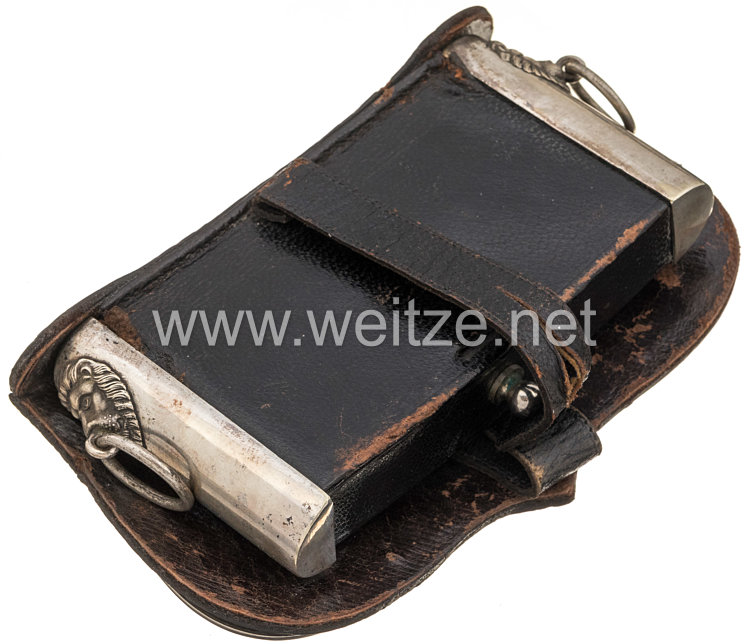
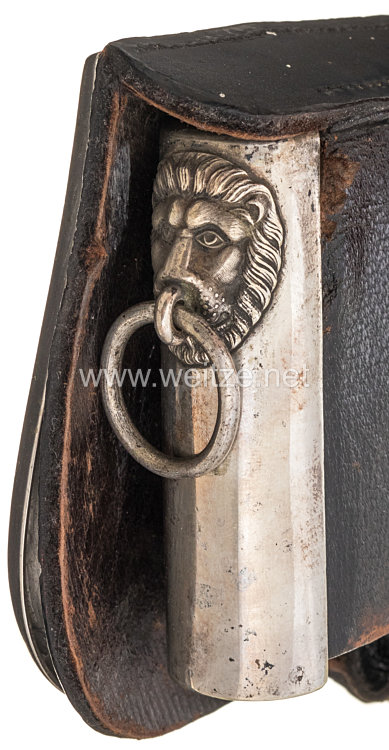
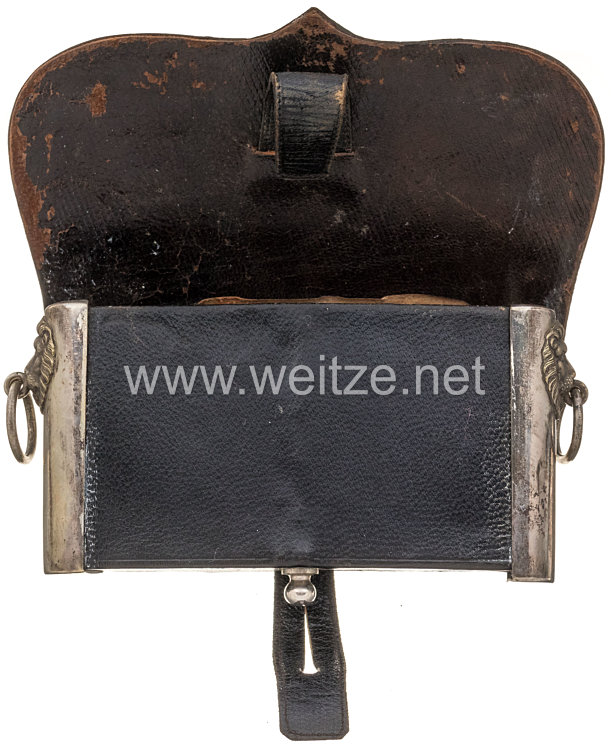
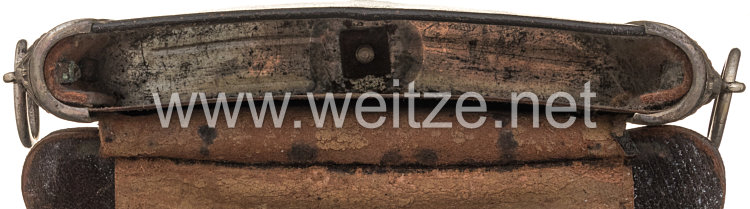
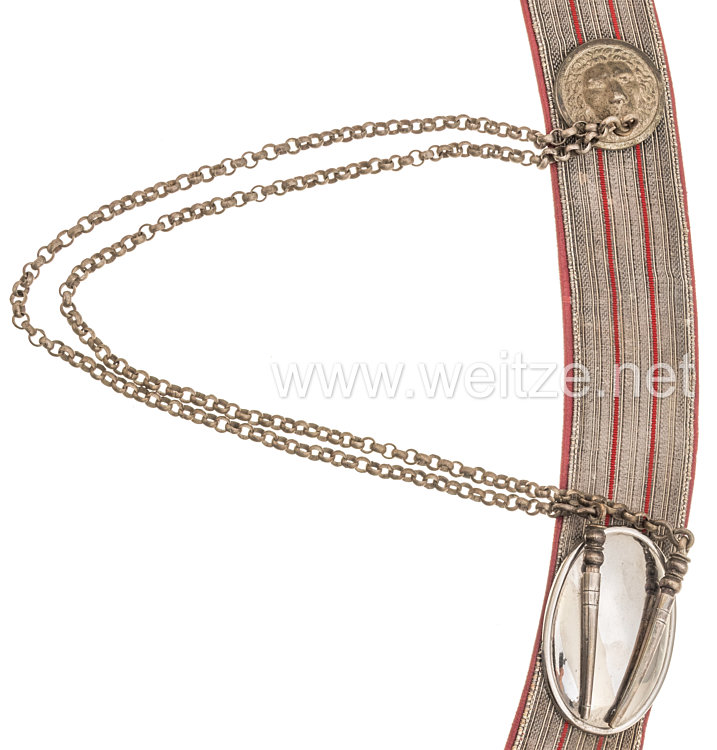
The present example displays the characteristic construction of this period: A metal body covered with black lacquered leather gives the piece both stability and an elegant appearance. The laterally attached rings on semi-sculptural lion heads are not only functional elements for attaching the bandolier, but also decorative components symbolizing dignity and military pride. The lion as a heraldic symbol had special significance in Hesse-Darmstadt and was firmly anchored in the Grand Duchy's coat of arms.
Particularly remarkable is the crowned cipher “L” on the lid, surrounded by a laurel and oak leaf wreath. This cipher stands for Grand Duke Ernst Ludwig of Hesse and by Rhine (1868-1937), who ruled from 1892 to 1918. Ernst Ludwig was the last Grand Duke of Hesse-Darmstadt and a significant patron of the arts, known for founding the Darmstadt Artists' Colony. The combination of laurel and oak leaf wreaths symbolizes military glory and German strength, motifs that were omnipresent in the Wilhelmine era.
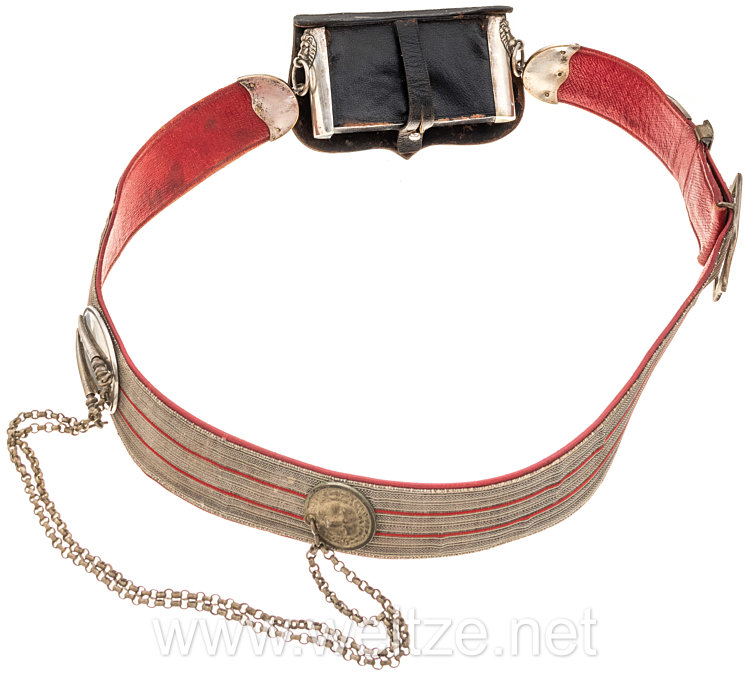
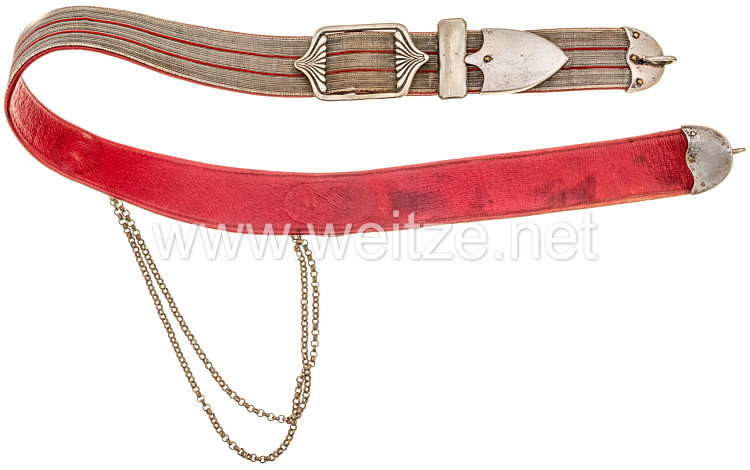
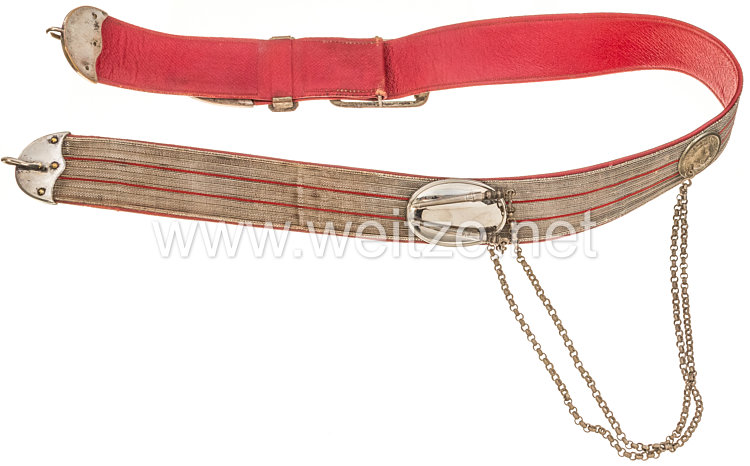
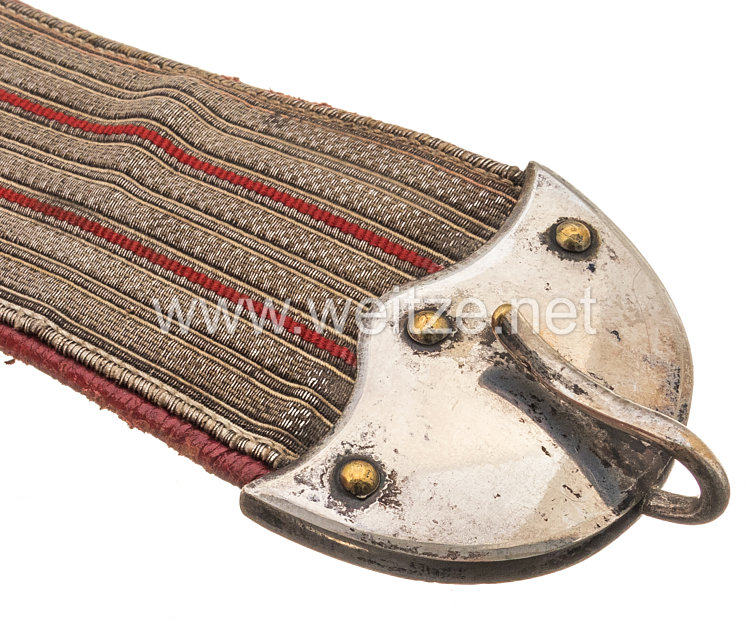
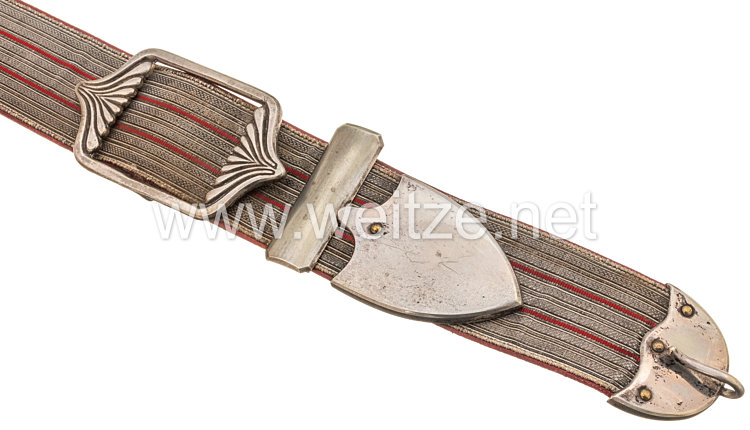
The parade bandolier made of red morocco leather with silver braid and two red threads corresponds to the regulations for cavalry officers of this epoch. Morocco leather, a fine material usually made from goat or sheep leather, was particularly suitable for representative purposes due to its quality and sheen. The silver braid as edge trimming was a distinguishing feature for officers and clearly stood out from the simpler versions worn by enlisted men.
The priming wires on silver chains are authentic details that underscore the completeness and exceptional state of preservation of this ensemble. Priming wires originally served to clean the touch holes of muzzle-loading weapons and remained as a traditional element of officer equipment even in the era of breech-loaders.
The dating “around 1910” places this piece in the high phase of the Wilhelmine era, a time characterized by military splendor and a pronounced parade culture. The German armed forces placed great emphasis on the distinction between different branches of service and regional contingents, which was reflected in a multitude of different uniforms and equipment items.
The dragoons as a branch of service held a special position between heavy and light cavalry. Originally conceived as mounted infantry, they developed into full-fledged cavalry units but retained certain traditional elements. The dragoon regiments of Hesse-Darmstadt were organized in the XVIII Army Corps and played an important role in the military structure of the southwestern German region.
Such parade equipment was worn on various occasions: at Imperial maneuvers, at parades in honor of the monarch, at ceremonial receptions, and other ceremonial occasions. They served to demonstrate military magnificence and strengthen esprit de corps. After World War I and the end of the monarchy in 1918, these objects lost their practical significance and became historical relics of a bygone era.
The excellent state of preservation of this ensemble makes it a valuable testimony to the military history of the Grand Duchy of Hesse-Darmstadt and the German Imperial period as a whole. Such complete sets with all original fittings and accessories are rare to find today, as many of these objects were lost or disassembled during the upheavals of the 20th century.