General Assault Badge - Cupal
The General Assault Badge (Allgemeines Sturmabzeichen) ranks among the most significant decorations of the German Wehrmacht during World War II. This military valor award was instituted on June 1, 1940, by the Commander-in-Chief of the Wehrmacht, Colonel General Wilhelm Keitel, and was intended for members of all branches of service who did not qualify for the Infantry Assault Badge.
The award criteria were clearly defined: The badge could be awarded to soldiers who participated in at least three combat days at the front line in attacks or counterattacks. Alternatively, participation in three armored assaults or being wounded during such an engagement was sufficient for the award. These regulations were officially documented in the Army Ordinance Gazette (Heeres-Verordnungsblatt).
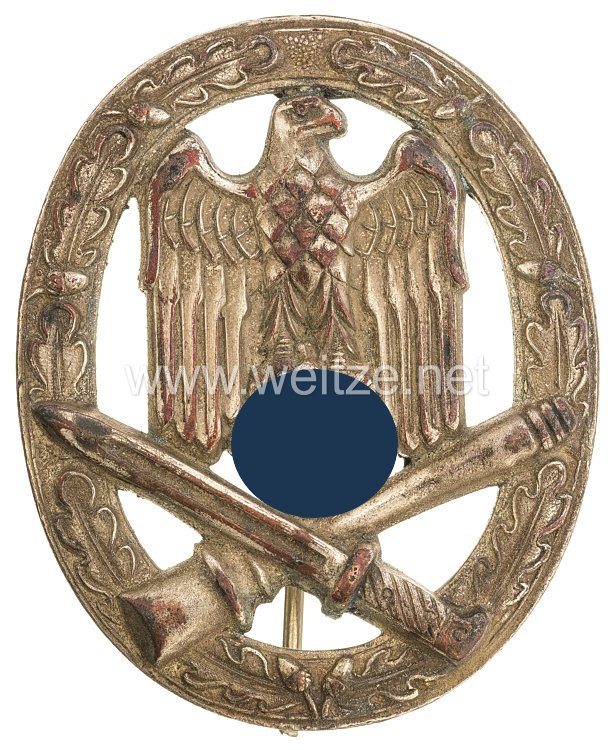
The badge's design features an upright M35 steel helmet surrounded by an oak leaf wreath, representing the traditional German symbolism of strength and valor. Below the helmet were two crossed Model 24 stick grenades. The overall composition measured approximately 50 x 40 millimeters and was worn as a pin on the left breast of the uniform.
The present example made from Cupal represents a special variant. Cupal was a substitute metal used during the war due to increasing raw material shortages. It was a copper-aluminum alloy that served as a replacement for the originally used materials such as zinc or brass. The silver plating was intended to give the badge a high-quality appearance despite being made from substitute material.
Production of assault badges was carried out by various manufacturers, each showing their own characteristics in execution. Known manufacturers included firms such as Friedrich Linden from Lüdenscheid, Josef Feix & Söhne from Gablonz, and Rudolf Souval from Vienna. Each manufacturer used different production techniques and materials, resulting in considerable variety in execution.
The use of Cupal as material indicates production in the later war period, probably from 1943 onwards, when resource scarcity in the German Reich became increasingly noticeable. The war economy required the use of all available substitute materials, and the production of orders and decorations was no exception.
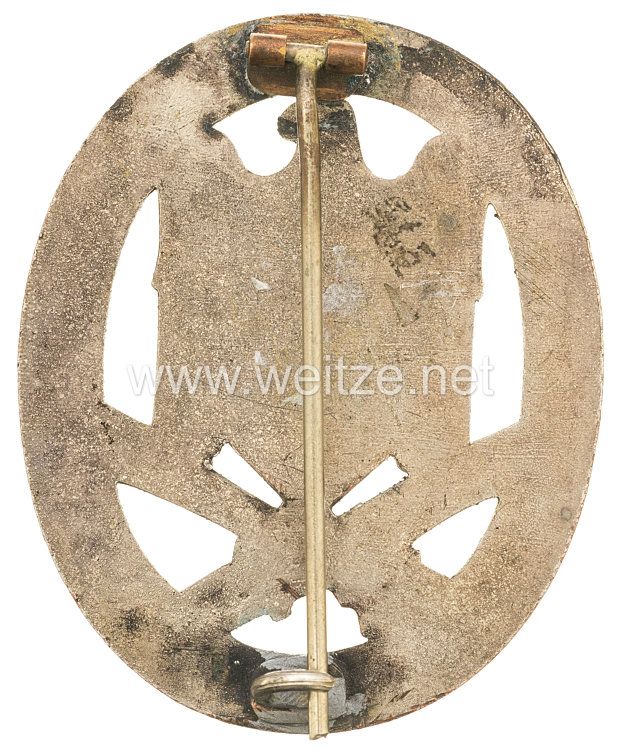
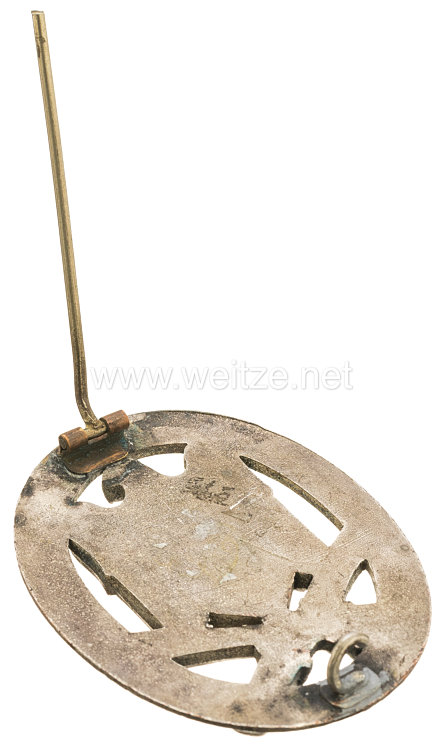
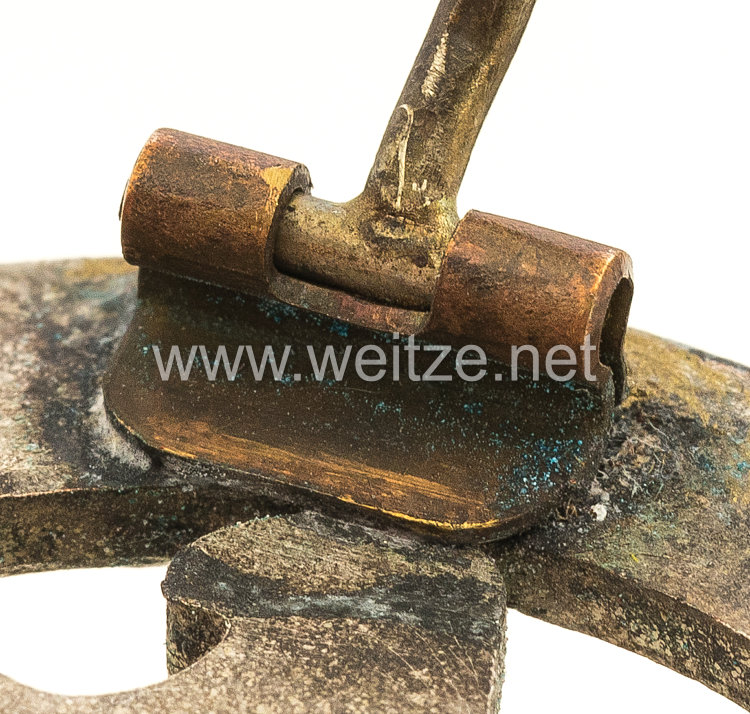
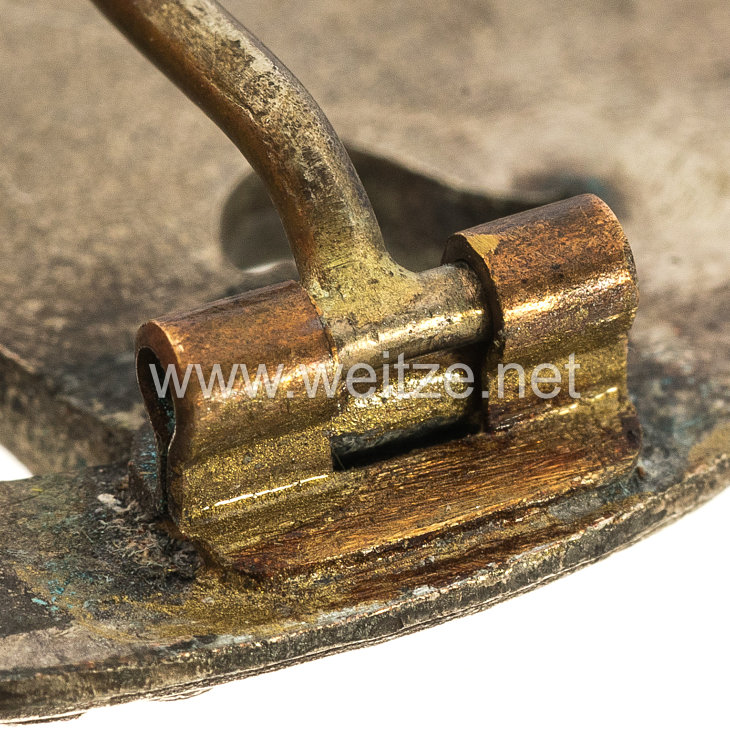
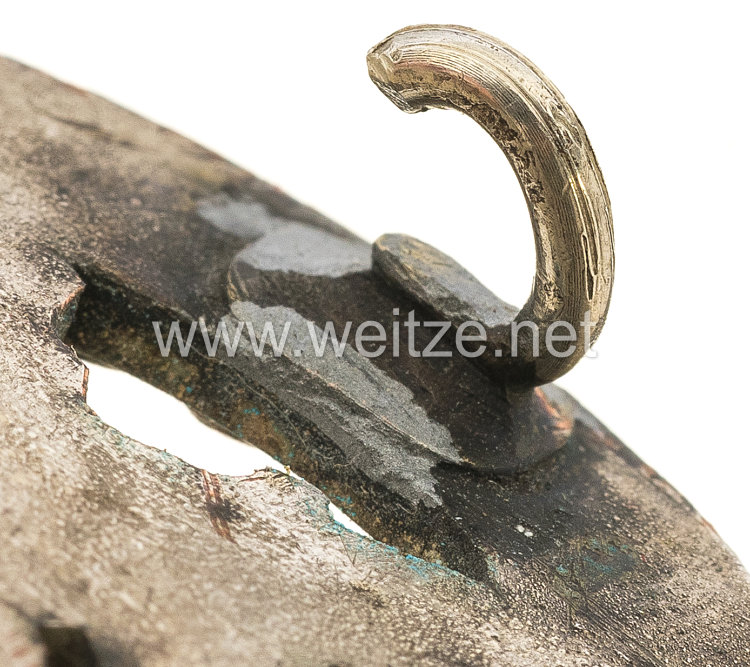
Attachment was typically accomplished through a horizontal pin with hook fastener on the reverse. In the present example, the pin hook has been repaired, indicating intensive wear and possibly combat service by the original bearer. Such repairs were quite common during the war, as replacements were not always readily available and soldiers placed great value on their earned decorations.
The General Assault Badge was awarded in various grades. Besides the standard version described here, there were also versions in Bronze (after 25 combat days), Silver (after 50 combat days), and Gold (after 100 combat days). These graded awards were only introduced later in the war, from 1944 onwards.
After the end of World War II, the Law on Titles, Orders and Decorations of July 26, 1957, in the Federal Republic of Germany fundamentally prohibited the wearing of awards from the Nazi era. An exception was made for specially denazified versions without swastikas, which could be worn under certain conditions.
Today, assault badges made from Cupal are particularly sought after by collectors because they are rarer than standard versions made from other materials. The condition and authenticity play a crucial role in the historical and collector evaluation of such objects. The worn patina and signs of use such as the repaired pin give the piece a special historical character and document the military reality of that time.
The General Assault Badge represents an important piece of military history, reflecting both the German military decoration system and the material hardships of the later war years. Examples made from substitute materials like Cupal provide tangible evidence of the economic pressures faced by the Third Reich as the war progressed and resources became increasingly scarce.