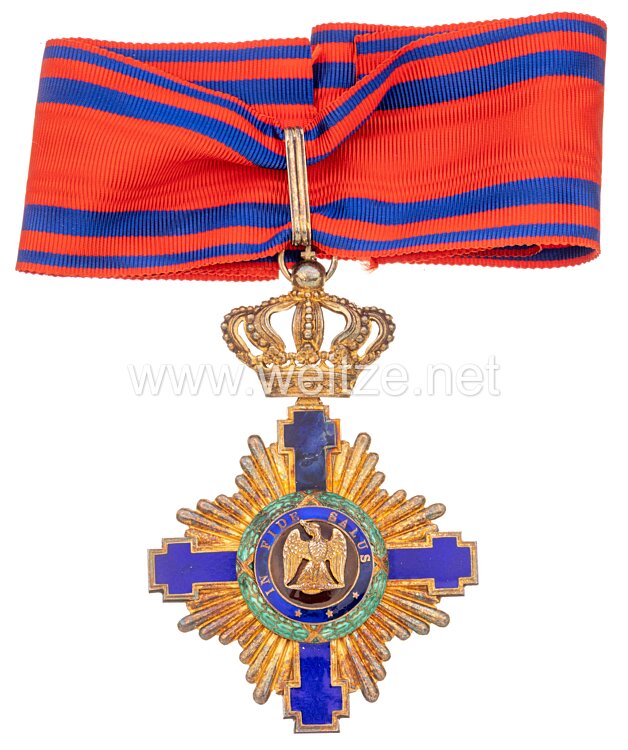
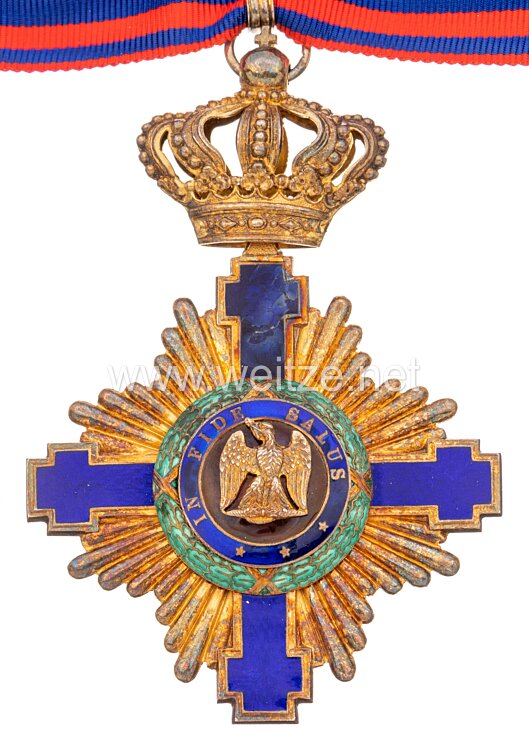
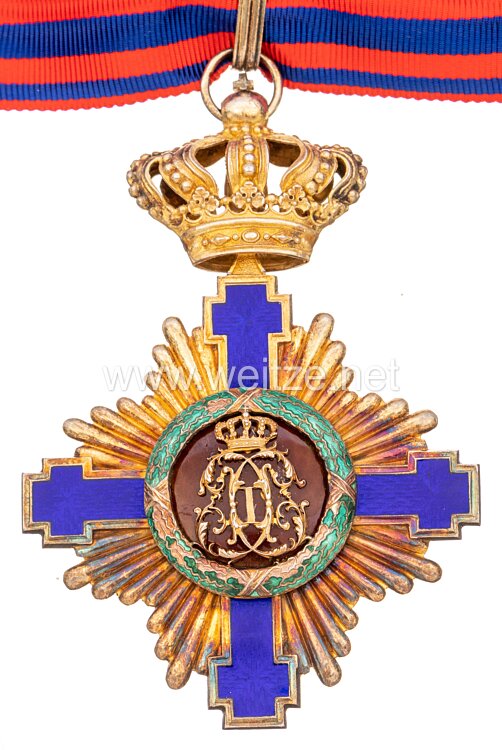
Kingdom of Romania: Order of the Star of Romania 1st Model 1877-1932, Commander's Cross

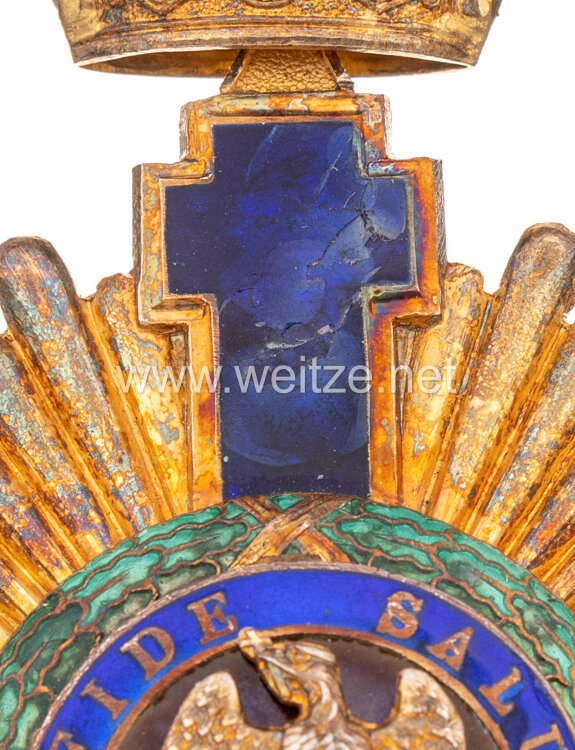
Neck cross, silver gilt, enameled on both sides, on original neck ribbon, enamel on reverse within green oak leaf wreath slightly damaged.
454727
620,00

Kingdom of Romania: Order of the Star of Romania 1st Model 1877-1932, Commander's Cross

The Order of the Star of Romania (Romanian: Ordinul Steaua României) ranks among the most significant and historically important decorations of the Kingdom of Romania. It was instituted on May 10, 1877 by King Carol I during the Russo-Turkish War, in which Romania fought for its independence from the Ottoman Empire. This decoration symbolizes not only military valor but also diplomatic merit and exceptional service to the Romanian state.

The present Commander's Cross represents the second-highest grade of the order and belongs to the first model, which was awarded from 1877 to 1932. The structure of the order followed the classical five-grade system of European knightly orders: Grand Cross, Grand Officer, Commander, Officer, and Knight. The Commander's Cross was traditionally worn as a neck decoration, in contrast to the lower grades, which were attached to ribbons on the chest.

The craftsmanship of this order cross reflects the high quality of Romanian order production in the late 19th and early 20th centuries. The cross is made of silver-gilt and is enameled on both sides, with the enamel work executed in the characteristic colors of the order. The green oak leaf wreath on the reverse symbolizes loyalty, strength, and the Romanian nation. The oak tree held special significance in Romanian symbolism and referred to the rootedness in national tradition.

The first model of the order differed in several details from later versions. The enameling was typically done in dark blue for the cross arms, while the central star was rendered in white enamel. The production of these orders was initially carried out by French manufacturers, and later by Romanian workshops, leading to slight variations in execution. The best-known manufacturers were the Parisian firm Lemaitre and Romanian goldsmiths in Bucharest.

King Carol I, who reigned from 1866 to 1914, used the Order of the Star of Romania as an important diplomatic instrument. He awarded it not only to Romanian military officers and officials but also to foreign heads of state, diplomats, and officers to consolidate political alliances and strengthen Romania's position in Europe. During World War I and the interwar period, the order remained a central element of the Romanian honors system.

The award practices were subject to strict rules laid down in the royal statutes. For the Commander's Cross, outstanding merit in the military or civil sphere was generally required. Recipients usually belonged to the higher officer corps, the diplomatic service, or the administrative elite of the country. Foreign recipients typically had to hold the rank of general, admiral, or senior diplomat.

The original neck ribbon to which this cross is attached traditionally consists of a broad silk ribbon in Romania's national colors: blue, yellow, and red. This color combination had been the symbol of the Romanian national movement since 1848 and became the official state colors after the unification of the principalities of Moldavia and Wallachia.

The damage to the enamel on the reverse side mentioned in this specimen is characteristic of first model orders that were actually worn. Unlike purely display pieces, such signs of wear indicate that the order served its actual purpose. Enamel work of this period was of high quality but sensitive to mechanical stress.

The year 1932 marks the end of the first model, when a reform of the order system was carried out under King Carol II. The new model featured stylistic changes reflecting the altered artistic taste of the 1930s. However, the first model remained in use until the end of the monarchy in 1947 and is particularly valued by collectors today.

Today, Orders of the Star of Romania of the first model are sought-after collectibles that represent important testimonies to Romanian history. They document not only the artistic skill of order production but also the political and social structures of the Kingdom of Romania in an era of profound change in Europe.