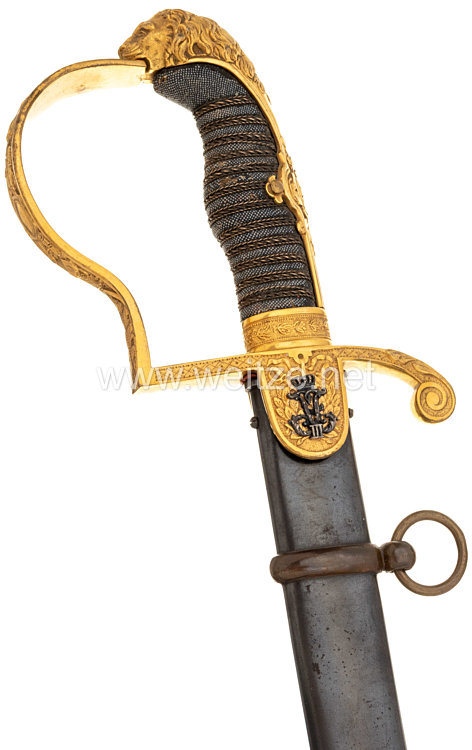
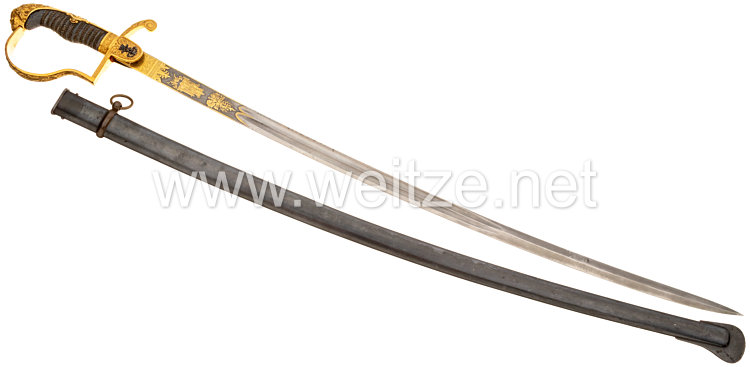
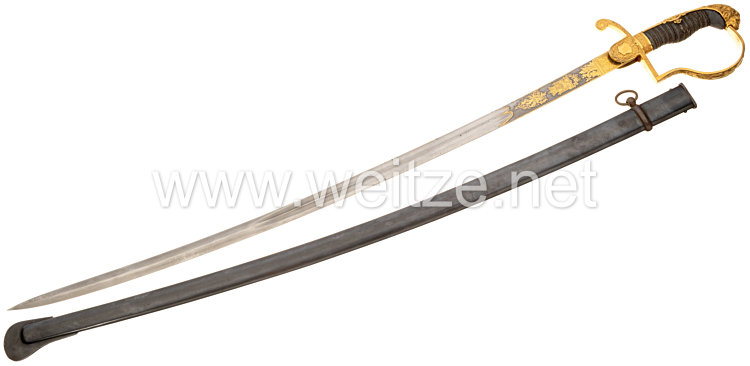
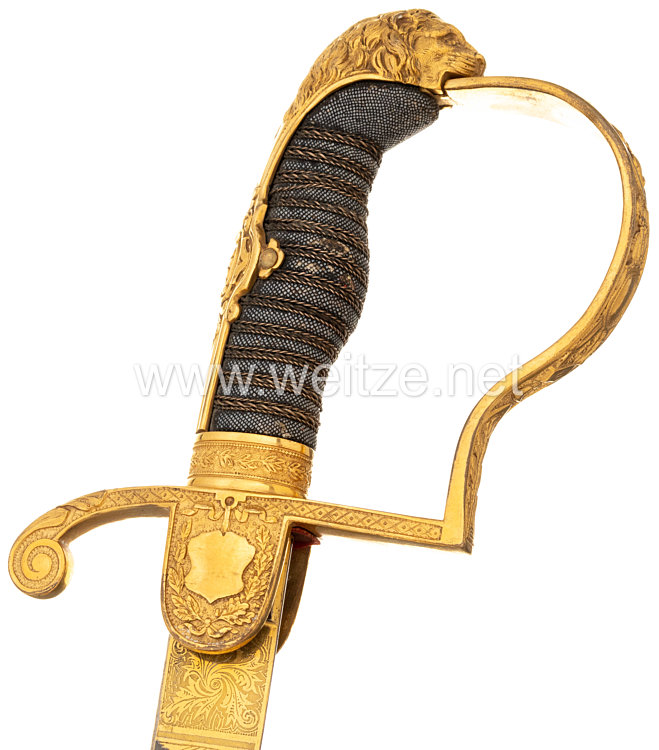
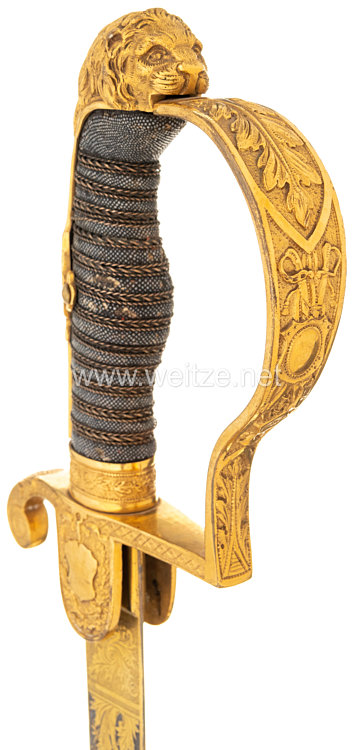
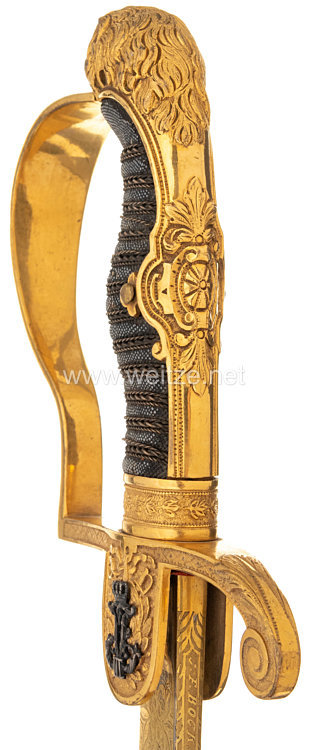
The Mecklenburg Lion's Head Sabre from the personal possession of Friedrich Franz IV of Mecklenburg-Schwerin represents the highest quality of military ceremonial weapons in the late German Empire. Created as a luxury piece around 1910, this sabre embodies not only the military position of a reigning Grand Duke but also the outstanding craftsmanship of German weaponsmiths in the pre-war era.
Historical Context
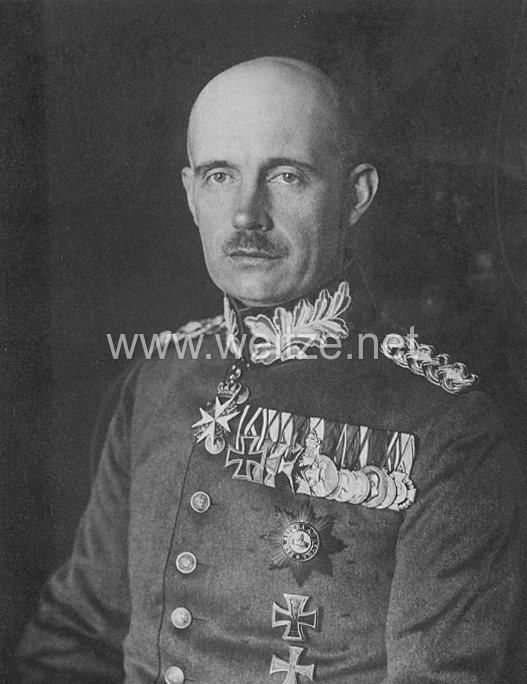
Friedrich Franz IV was born on April 9, 1882, in Palermo and assumed regency over Mecklenburg-Schwerin after his father's death in 1897, initially under the guardianship of his uncle Duke Johann Albrecht until 1901. As the last reigning Grand Duke of Mecklenburg-Schwerin, he led the state until the November Revolution of 1918. In his capacity as General of Cavalry and chief of the 1st Grand Ducal Mecklenburg Dragoon Regiment No. 17 in Ludwigslust, he wore this magnificent sabre at ceremonial occasions.
Regimental History
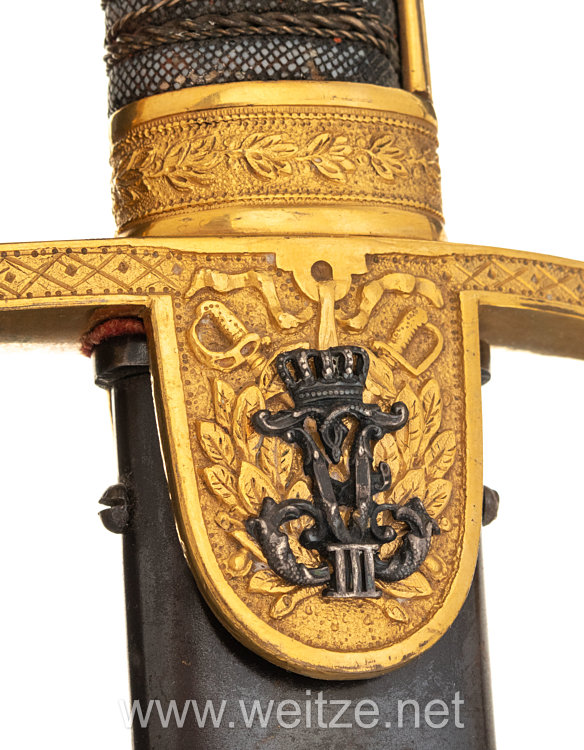
The Dragoon Regiment No. 17 belonged to the most traditional cavalry units of the German Army. As Grand Duke, Friedrich Franz IV was its chief, an honorary position that reflected the personal connection of the sovereign with his troops. The regimental cipher “FF III” on the guard honored his father Friedrich Franz III, who reigned from 1883 to 1897 and likewise maintained close ties with the Mecklenburg cavalry.
Masterful Craftsmanship
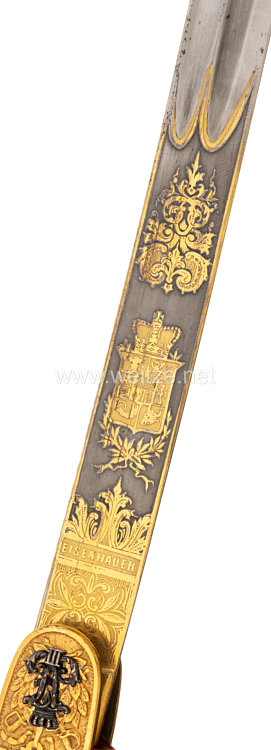
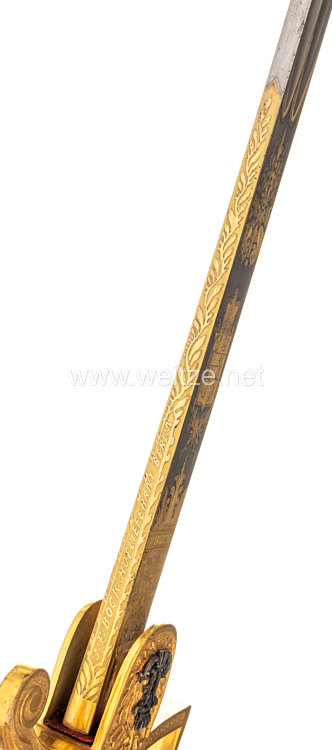
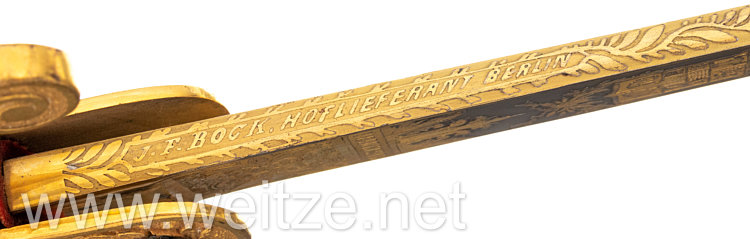
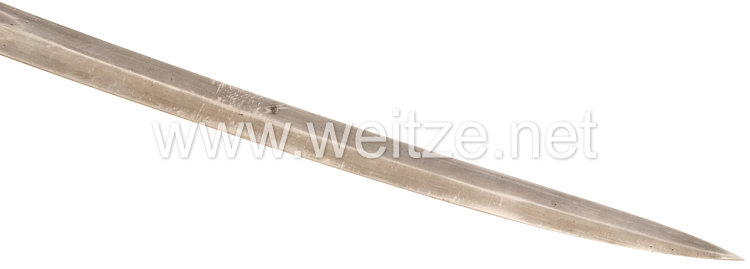
The sabre was manufactured by the renowned Berlin court supplier J. F. Bock, whose signature appears on the blade's spine. The front of the blade bears the designation “Eisenhauer,” referring to the weapon type or blade style. The Bock firm was among the leading military equipment manufacturers in the Empire, supplying the court and high-ranking military officials with custom pieces of the highest quality.
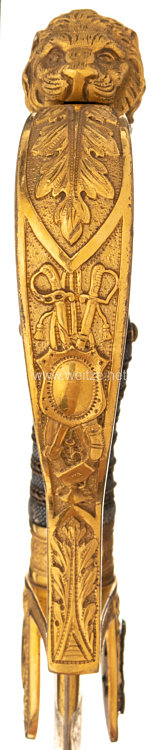
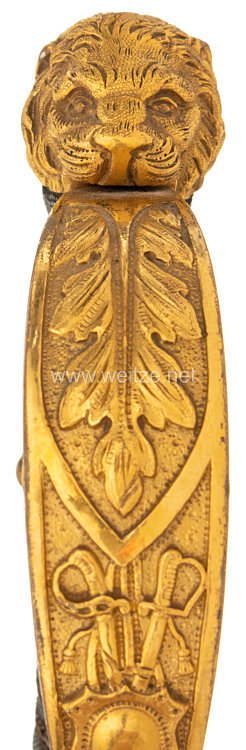
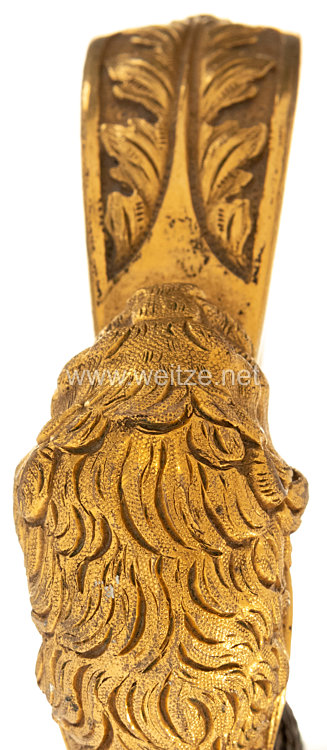
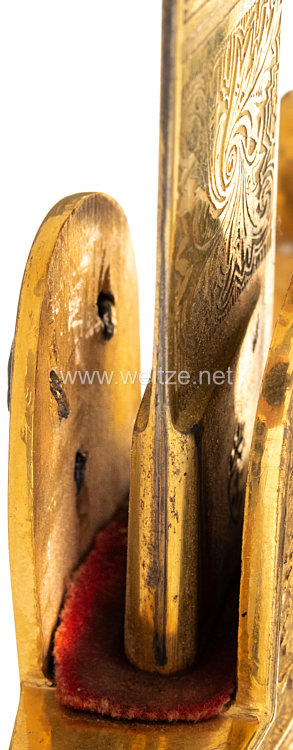
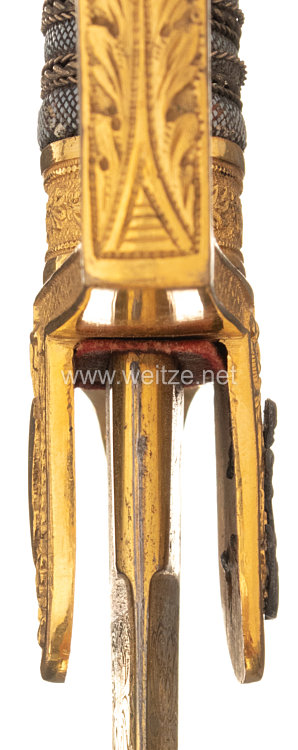
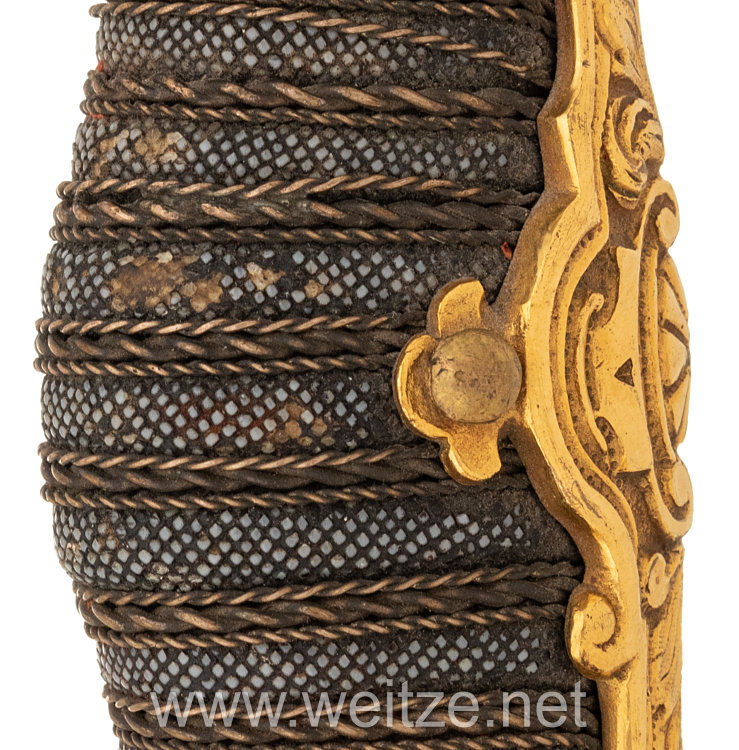
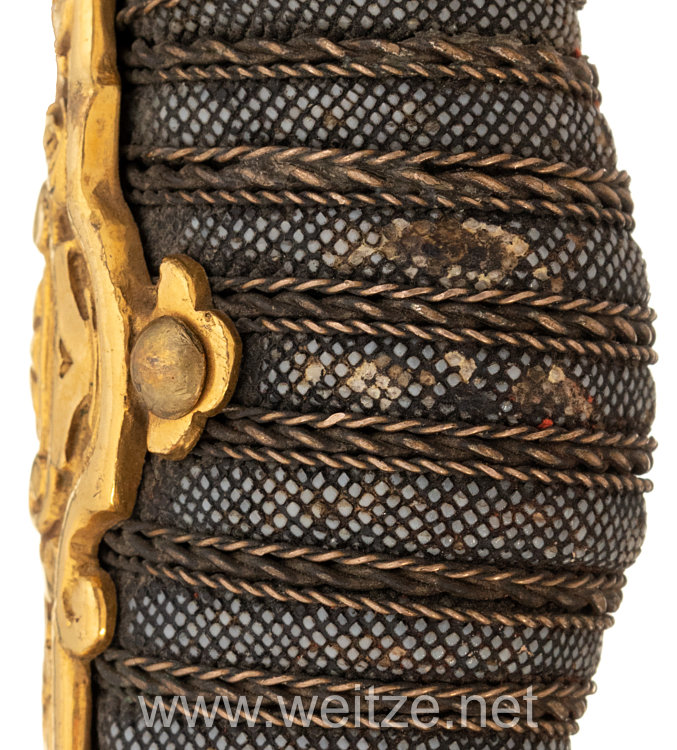
The fire-gilded hilt of non-ferrous metal was entirely hand-chased, a laborious technique in which ornaments and figures are worked into the metal. The pommel displays a magnificent lion's head, the heraldic beast of Mecklenburg. The knuckle bow is decorated with crossed sabres and acanthus leaves, classic motifs of military iconography of this era. The original sharkskin grip with intact silver wire binding ensured a secure hold while maintaining aesthetic elegance.
The Blade and Its Decorations
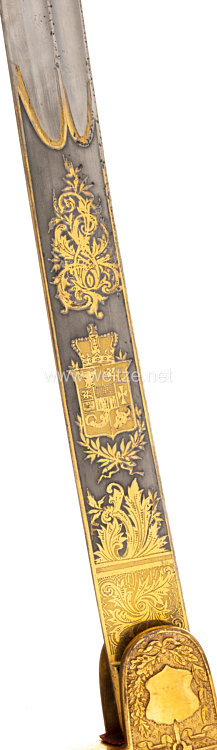
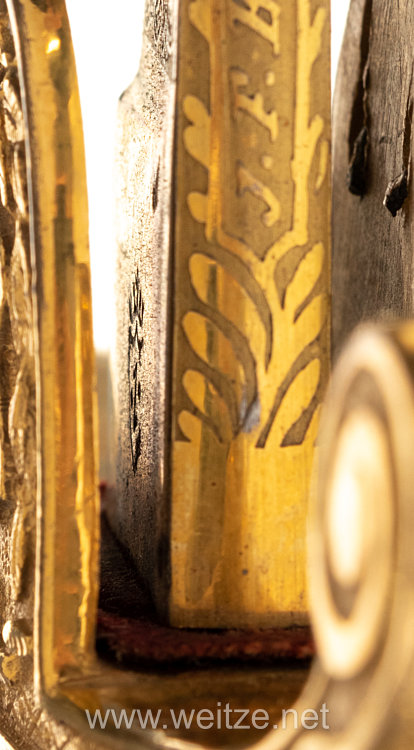
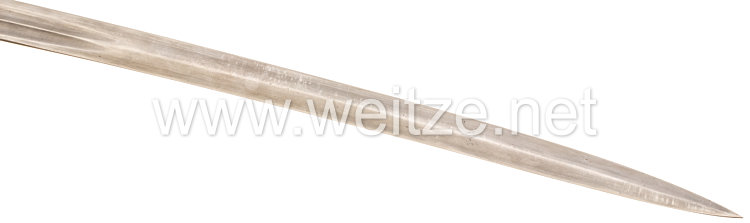
The bright, double-fullered steel blade without a ricasso corresponds to the traditional form of German cavalry sabres. On the false edge – the unsharpened part of the blade near the hilt – appears the crowned arms of Mecklenburg etched and gilded on both sides, within a laurel wreath with vine decoration. This etching technique required the highest craftsmanship: the ornaments were introduced into the steel through acid etching and subsequently gilded to make them permanently prominent.
Military and Ceremonial Significance
During World War I, Friedrich Franz IV held no active troop command despite his rank as General of Cavalry. His role was limited to visiting Mecklenburg troops on the Western Front, where as sovereign he was meant to bolster the morale of his soldiers. On such occasions, a parade sword or sabre like this would have been part of the ceremonial uniform.
Typological Classification
The lion's head sabre belongs to the category of court supplier special commissions, manufactured specifically for high-ranking personalities. Unlike standardized officers' sabres according to army regulations of 1889 or 1899, such ceremonial weapons were individual masterpieces. They served less for combat than for the representation of status, power, and military dignity.
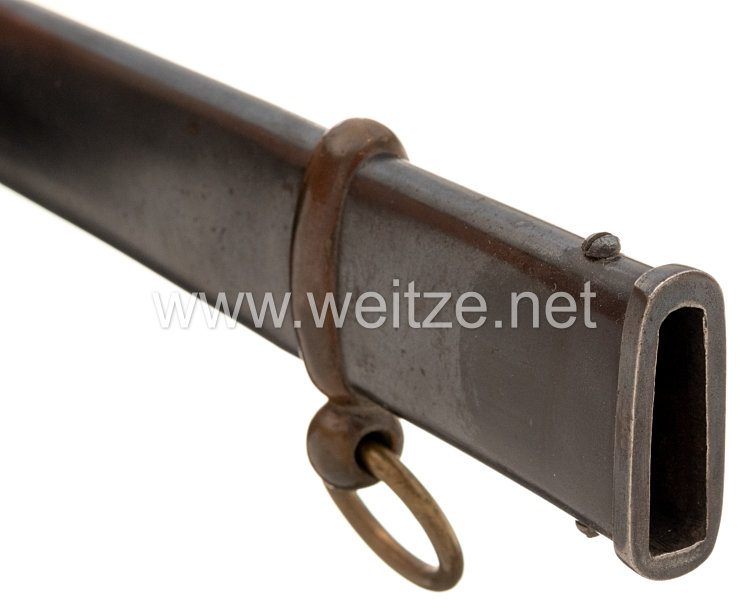
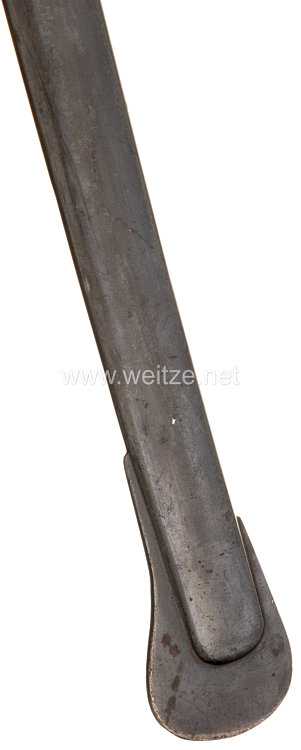
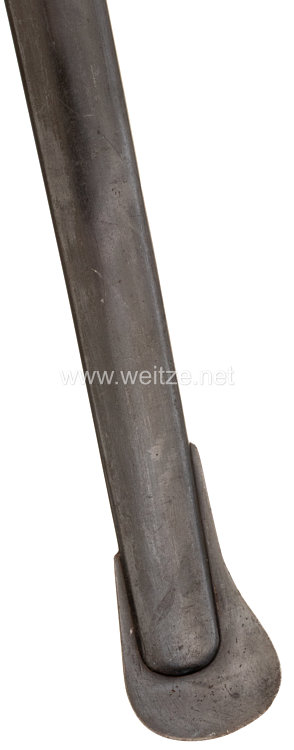
The blued steel scabbard with one carrying ring completes the equipment. The blueing – a chemical blackening of the steel – provided corrosion protection and aesthetic elegance. With a total length of 103 cm, the sabre corresponded to the usual dimensions for higher-ranking cavalry officers.
Historical Context and Significance
This sabre exemplifies the connection between military tradition and princely representation in the German Empire. The years around 1910 marked the zenith of an era in which military ceremony and courtly splendor were still seamlessly merged. Only a few years later, World War I would fundamentally change this world, and the November Revolution of 1918 ended monarchical rule.
As the personal possession of a reigning German Grand Duke, this sabre possesses not only artistic and military-historical value but also documents the personal history of Friedrich Franz IV, who as Mecklenburg's last monarch formed a bridge between old and new times. After his death in 1945 in Flensburg, his legacy remained preserved in such extraordinary objects that are today of museum significance.
The End of an Era
The sabre represents the twilight of an aristocratic military culture that would disappear forever in the upheavals of the twentieth century. Such pieces were crafted at a time when military rank, noble birth, and personal valor were still inseparably linked. Today, they serve as tangible reminders of a vanished world, offering insights into the values, aesthetics, and hierarchies of Imperial Germany. For collectors and museums, objects of this provenance and quality are of immeasurable historical importance, documenting not just military history but the broader cultural and social history of the German states before 1918.