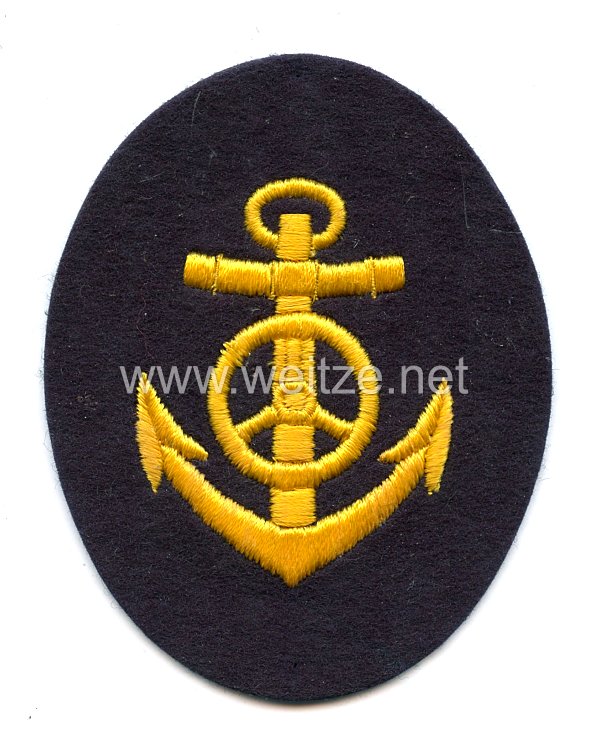
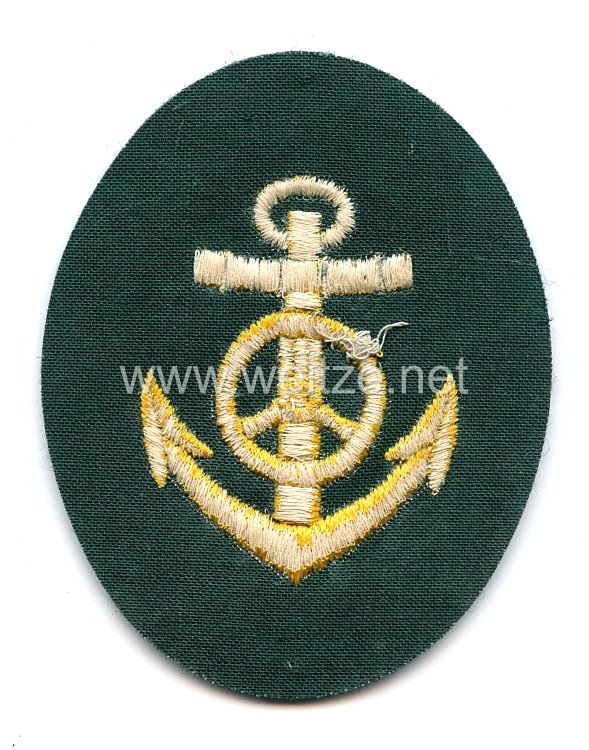
Kriegsmarine Sleeve Insignia for a Kraftfahrmaat (Motor Transport Petty Officer)
The Kriegsmarine sleeve badge for a Kraftfahrmaat (motor vehicle petty officer) represents a fascinating testament to German naval organization during World War II. This specialized badge was worn on the blue service tunic and identified a petty officer with specialization as a motor vehicle operator within the Kriegsmarine.
The Kriegsmarine, Germany's navy from 1935 to 1945, developed a complex system of rank insignia and specialist badges to identify the various grades and specializations within its organization. The rank of Maat corresponded to a non-commissioned officer without sword knot and was comparable to a sergeant in the Wehrmacht. The prefix “Kraftfahr-” (motor vehicle) designated special training and responsibility in the area of motor vehicles.
The introduction of specialized motor vehicle badges in the Kriegsmarine reflected the increasing motorization and mechanization of the armed forces in the 1930s. Following the reintroduction of universal conscription in 1935 and the massive expansion of German armed forces, the navy required qualified personnel for the maintenance and operation of motor vehicles in naval ports, shipyards, and coastal facilities.
The blue service tunic on which this badge was worn was the standard working and service uniform of the Kriegsmarine. It was made from blue cloth and differed significantly from the white parade uniform or sailor suit. Sleeve badges were typically attached to the left upper arm, approximately 10 to 15 centimeters below the shoulder seam.
The badge itself followed the standardized uniform regulations of the Kriegsmarine, which were detailed in various service instructions and the “Dress Regulations for the Kriegsmarine.” These regulations precisely governed the position, size, and manner of wearing all uniform items and badges. Specialist badges were usually executed in dark blue or black embroidery on a matching background.
Kraftfahrmaate held important positions within the naval organization. They were responsible for the operation and maintenance of various motor vehicles, from passenger cars to trucks and specialized military vehicles. In naval ports, they coordinated the transport of material, equipment, and personnel. Their training encompassed not only driving skills but also mechanical abilities and organizational knowledge.
The use of such specialist badges served several purposes: they enabled quick identification of specialist personnel, promoted esprit de corps among specialists of the same specialty, and documented completed training. For the wearer, the badge represented recognition of their special qualification.
From a collecting and historical perspective, Kriegsmarine sleeve badges are important military historical documents today. They illustrate the complex organizational structure of the German Navy and the diversity of specializations required to operate a modern naval force. The preservation of such badges, particularly in good condition, enables historians and researchers to reconstruct the uniforms and organization of the Kriegsmarine in detail.
The classification as condition 2 indicates a well-preserved example that may show slight signs of use but is overall in very good condition. Such badges were typically sewn onto the uniform and frequently removed after service or when changing uniforms, which explains their preservation as separate objects.
In the context of military history, this badge represents the increasing specialization and professionalization of military organizations in the 20th century. The Kriegsmarine required not only sailors but also numerous specialists in land-based positions who were indispensable for supporting the fleet. Motor vehicle operations constituted an essential area of military logistics.
Today, such artifacts serve as tangible connections to the past, allowing us to understand the organizational complexity and operational requirements of naval forces during this period. They remind us of the many individuals who served in various capacities, including those whose duties kept them primarily on land, supporting the maritime operations of the Kriegsmarine.