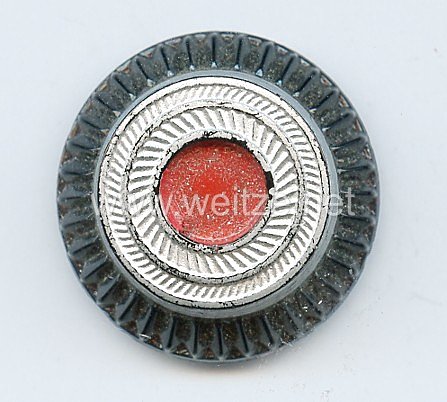
Kriegsmarine Cockade for Enlisted Men's Peaked Cap

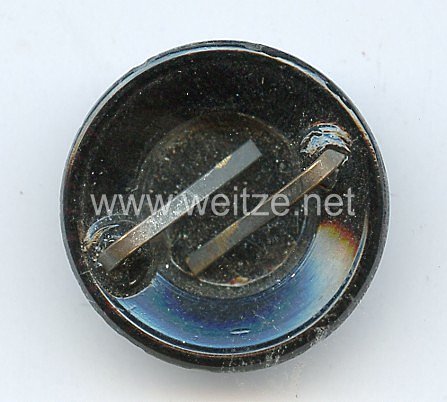
circa 1943/44. Manufactured from glass (!), color lacquered, reverse with 2 attachment prongs. Unissued, Condition 2.
431725
20,00

Kriegsmarine Cockade for Enlisted Men's Peaked Cap

The Kriegsmarine cockade for the peaked cap represents a fascinating example of maritime uniform insignia from the German Reich during World War II. This particular specimen, manufactured around 1943/44, documents a remarkable phase in the production of military equipment, when wartime material shortages led to innovative manufacturing solutions.

The Tellermütze (peaked cap or visor cap) was the traditional headgear of German naval personnel and had its roots in the maritime traditions of the 19th century. The cockade, as a national sovereign emblem, served to identify affiliation with the German Kriegsmarine and was mounted centrally on the front portion of the cap.

The distinctive feature of this specimen lies in its manufacture from glass. This is a remarkable testimony to the wartime economic conditions in the later war years. From 1943 onwards, the resources of the German Reich became increasingly scarce, particularly strategically important metals such as aluminum, copper, and zinc, which were needed for the armaments industry. The Reich Office for Economic Development and other authorities ordered extensive material savings that also affected the production of uniform insignia.

Traditionally, cockades were manufactured from metal, often with enamel inlays in the Reich colors of black-white-red. The conversion to glass as a carrier material represented a practical solution, as glass was sufficiently available in Germany and the required colors could be applied through lacquering. The colored lacquer finish imitated the appearance of traditional metal cockades and ensured compliance with uniform regulations.

The rear attachment splints enabled secure mounting on the peaked cap. This construction was standardized and corresponded to the Army Regulation Sheets and naval service regulations, which provided precise specifications for the placement and attachment of sovereign emblems.

The unworn condition of this specimen is of particular historical interest. Many of these late war productions never reached their intended wearers, as supply routes were increasingly disrupted by Allied bombing raids and toward the end of the war, the production and distribution of military equipment collapsed. Unworn pieces from this period are therefore comparatively rare and document industrial production without the traces of actual wartime use.

The Kriegsmarine itself underwent various organizational and material changes during World War II. Grand Admiral Karl Dönitz, who served as Commander-in-Chief of the Kriegsmarine from 1943, had to deal with increasing losses and material shortages. The U-boat arm, the backbone of German naval warfare, suffered devastating losses after 1943 due to improved Allied anti-submarine techniques.

The uniform regulations of the Kriegsmarine were detailed in the Dress Regulations for the Kriegsmarine (M.Dv. No. 55). This regulation precisely governed the appearance of every uniform component, including cockades and other insignia. Standardization was essential for military discipline and the recognizability of rank hierarchy.

For enlisted ranks, meaning ranks without officer status, specific uniform regulations applied that differed from those of non-commissioned officers and officers. Enlisted ranks included sailors (Matrosen), able seamen, and similar grades. Their cockades were designed more simply than those of higher ranks, which often featured additional elements such as oak leaves or metal borders.

The glass manufacture of military insignia was not a German invention, but it was increasingly employed in the late war years. The substitute material regulations of 1943 and 1944 led to numerous improvisations in uniform production, from cloth insignia instead of metal embroidery to simplified designs in all equipment items.

The production methods for these glass cockades involved specialized techniques. Glass manufacturers adapted their processes to meet military specifications, applying layers of colored lacquer to achieve the required black-white-red pattern. Quality control remained important even under wartime conditions, as uniform appearance was considered essential for military morale and discipline.

The period of 1943-44 marked a turning point in the war. The Battle of the Atlantic was reaching its critical phase, with German U-boats facing increasingly effective Allied countermeasures. Naval casualties mounted, and recruitment for the Kriegsmarine intensified, creating greater demand for uniform items even as production capabilities diminished.

Today, such objects are important military historical documents that provide insight into wartime economic conditions and the industrial production of the Third Reich. They document not only military hierarchies and uniform traditions, but also the material constraints of a nation at war and the adaptability of its industry under extreme conditions.

r