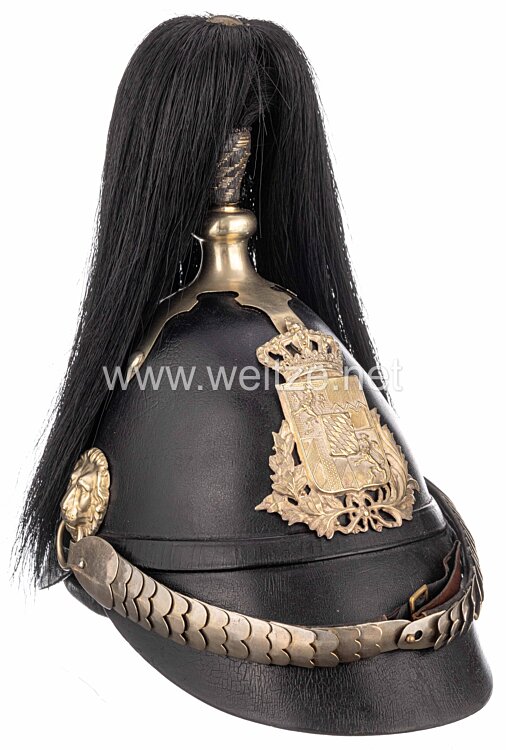
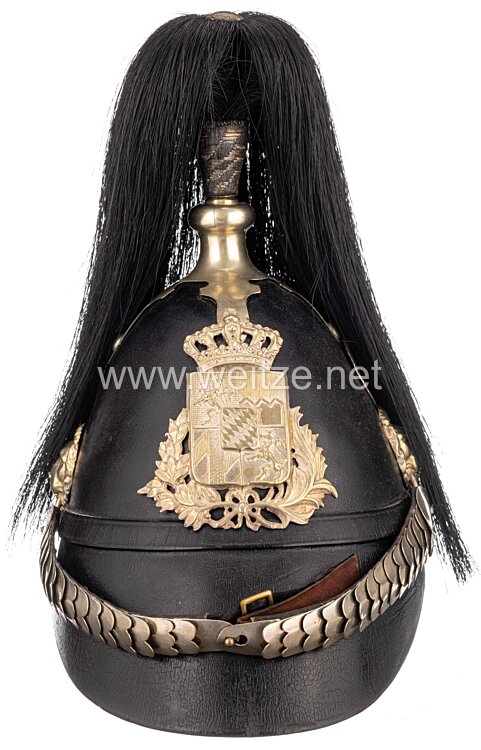
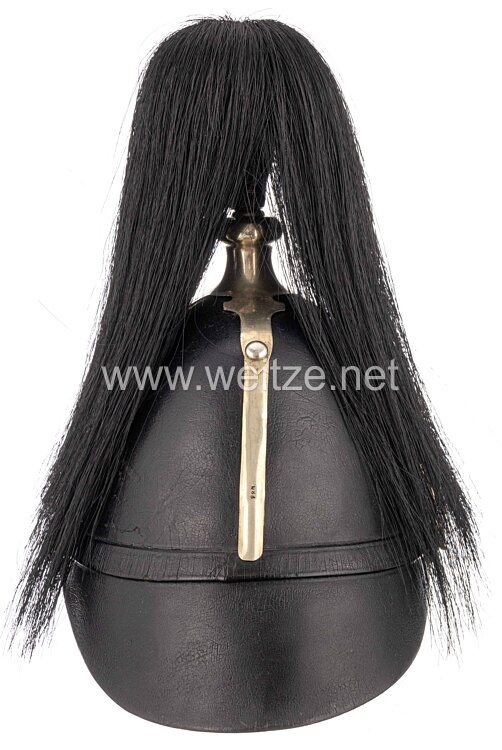
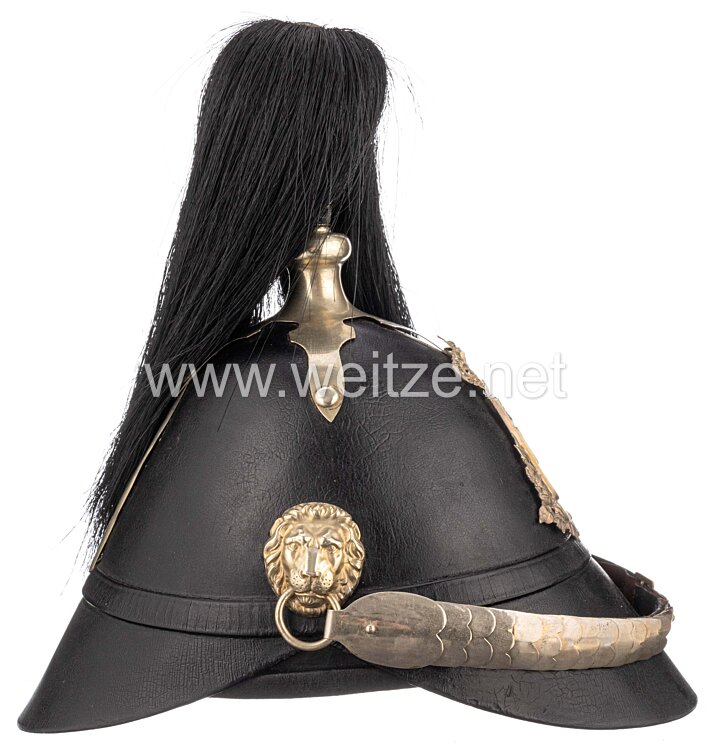
Kingdom of Bavaria Model 1848 Helmet for an Officer of the Bürgerwehr
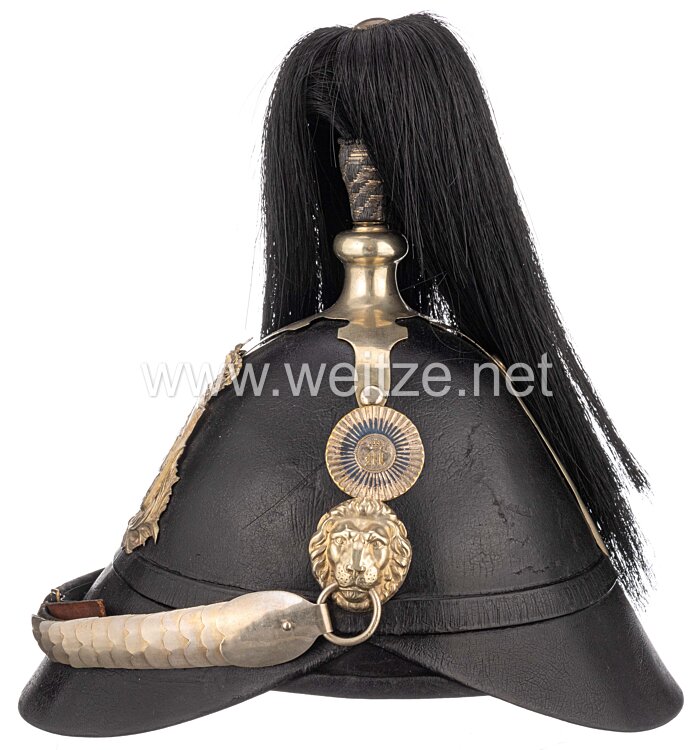
The Bavarian Civic Guard Helmet Model 1848 represents a fascinating testimony to the revolutionary upheavals in the German states during the mid-19th century. Following the events of the Revolution of 1848/49, the Kingdom of Bavaria recognized the necessity of organizing the civic guard as a loyal and well-equipped institution that would serve both internal security and support the monarchical order.
The Bürgerwehr (Civic Guard) in Bavaria had a long tradition dating back to the Middle Ages. In the 19th century, it evolved from a local defense organization into a paramilitary institution that mediated between the regular military and the civilian population. The Revolution of 1848 had demonstrated that an armed citizenry could be both a danger and a pillar for the established order. King Maximilian II of Bavaria, who ascended the throne in 1848, recognized the importance of channeling these forces and integrating them institutionally.
The Helmet Model 1848 was introduced as part of a comprehensive uniform reform for the Bavarian civic guard. The tall leather helmet was modeled after Prussian and other German examples, though the Bavarian version displayed characteristic peculiarities. The use of nickel silver (German silver) for the fittings was typical of officer pieces, while ordinary enlisted men often wore brass fittings. Nickel silver, a copper-nickel-zinc alloy, offered the advantage of resembling silver in appearance while being more cost-effective and durable.
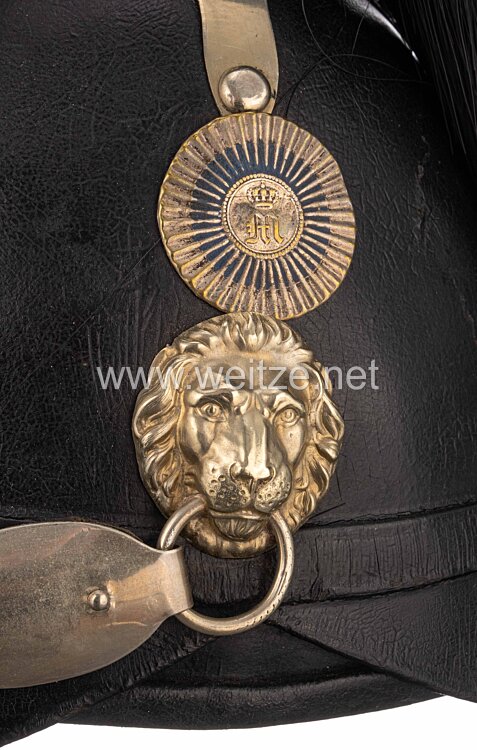
The Bavarian state coat of arms on the front of the helmet clearly demonstrated royal authority and the civic guard's loyalty to the crown. The characteristic scale chains with lion head attachments were not merely decorative but also served a practical function as chin straps. The lion, as Bavaria's heraldic animal, emphasized regional identity. The Bavarian cockade in white and blue colors was another unmistakable identifying feature that distinguished Bavarian troops from those of other German states.
The silver cruciform plate with the black parade plume made of horsehair was typical of officers' helmets. Such parade plumes were worn during ceremonial occasions, parades, and official ceremonies. The use of genuine horsehair was standard for high-quality helmet decorations, with the black color being characteristic of Bavaria. The length and quality of the plume signaled the wearer's rank and status.
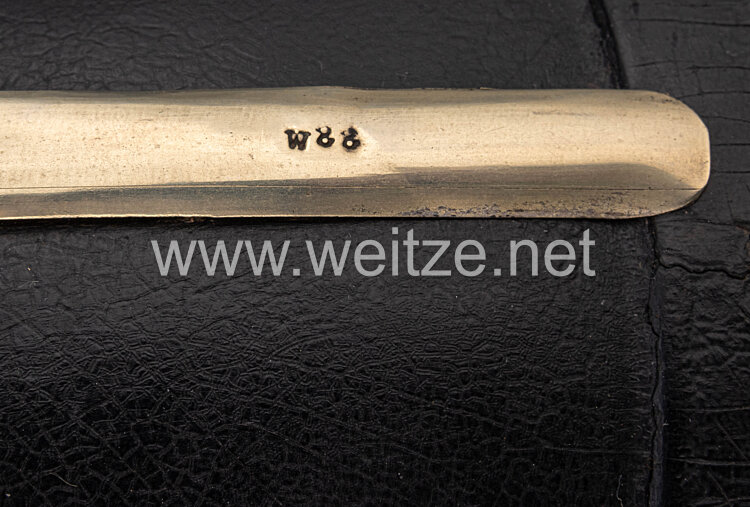
The short neck guard provided additional protection for the neck area but was less pronounced on civic guard helmets than on those of the regular army. The stamp “W88” might indicate a manufacturer, workshop, or internal marking. Such stamps were common and served quality control and traceability purposes.
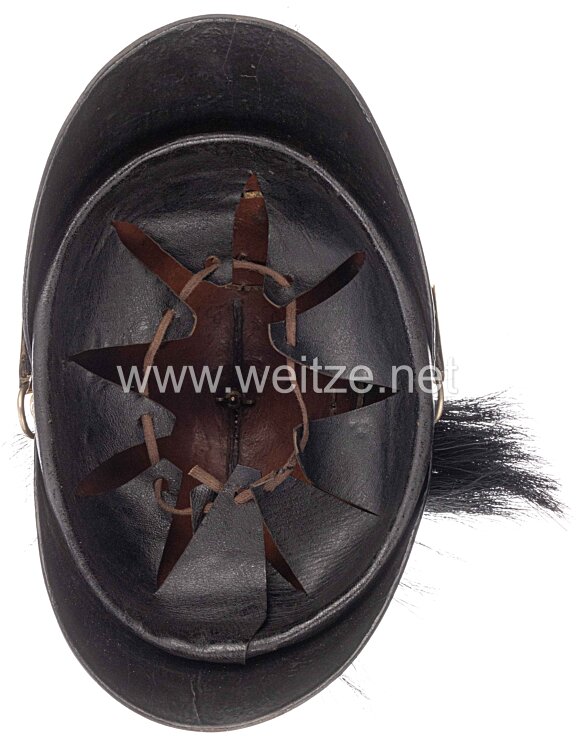
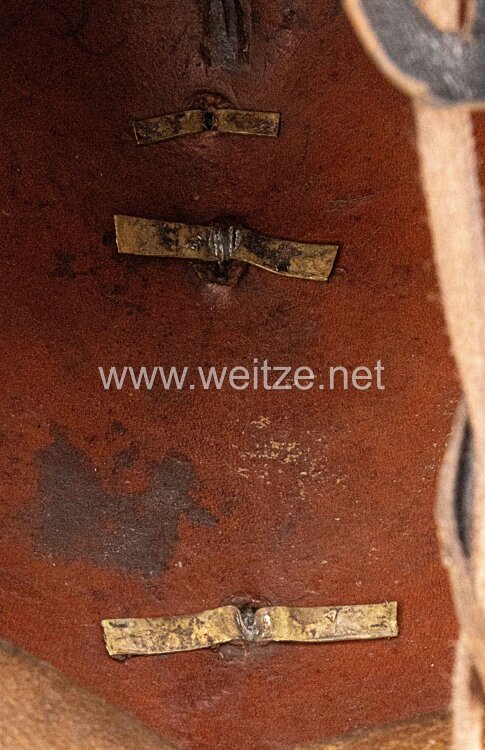
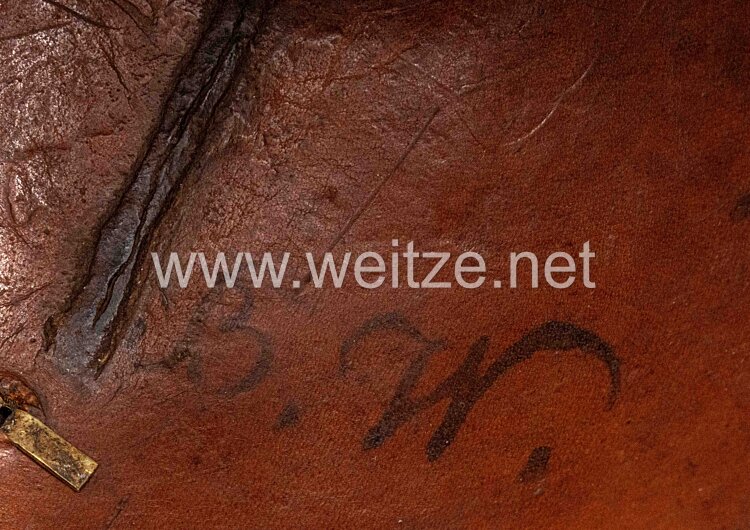
The lasched leather lining inside was an elaborate construction that improved wearing comfort and fit. The handwritten inscription “KL B.W.” could stand for “Königliche Bürgerwehr” (Royal Civic Guard) or a specific location, indicating the helmet's personal assignment. The indicated size 58 corresponds to a head circumference of approximately 58 centimeters, which was in the upper range of the contemporary average size.
The organization of the civic guard in Bavaria was structured according to military models, with officers, non-commissioned officers, and enlisted men. Officers were typically recruited from the educated bourgeoisie - merchants, master craftsmen, civil servants, and academics. They had to finance their uniforms and equipment themselves, which explains why officer pieces were often of higher quality than the standard issue for enlisted men.
The period around 1850 was a phase of reaction following the revolutionary unrest. The civic guard was seen as a reliable instrument for maintaining public order but remained under royal control. Their duties included guard duties, supporting the police during disturbances, and participating in state ceremonies. At the same time, the civic guard remained an expression of bourgeois self-confidence and local autonomy.
In the context of the German unification movement, the Bavarian civic guard represented the particularism of the individual states. While Prussia increasingly dominated, Bavaria preserved its military peculiarities and traditions. This would continue until the founding of the German Empire in 1871, in which Bavaria retained extensive special military rights.
Such helmets are today important museum objects that document the complex history of German state formation, the role of the bourgeoisie, and the development of military equipment. They combine craftsmanship quality with symbolic significance and offer insights into social structures and political conditions of the 19th century.