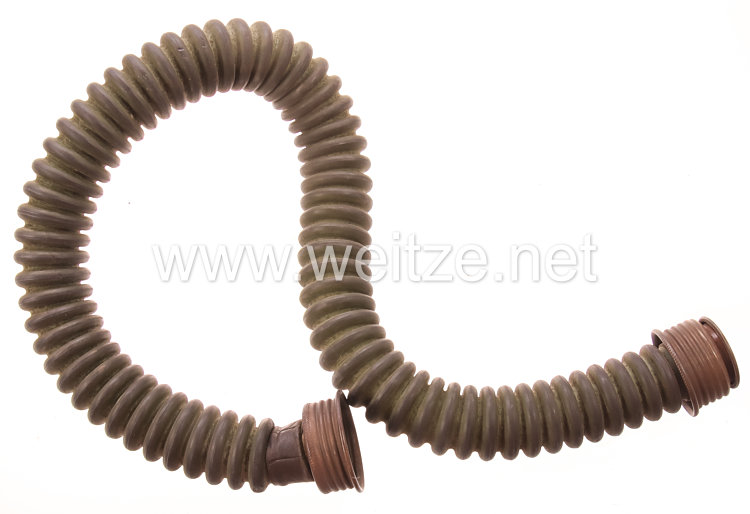
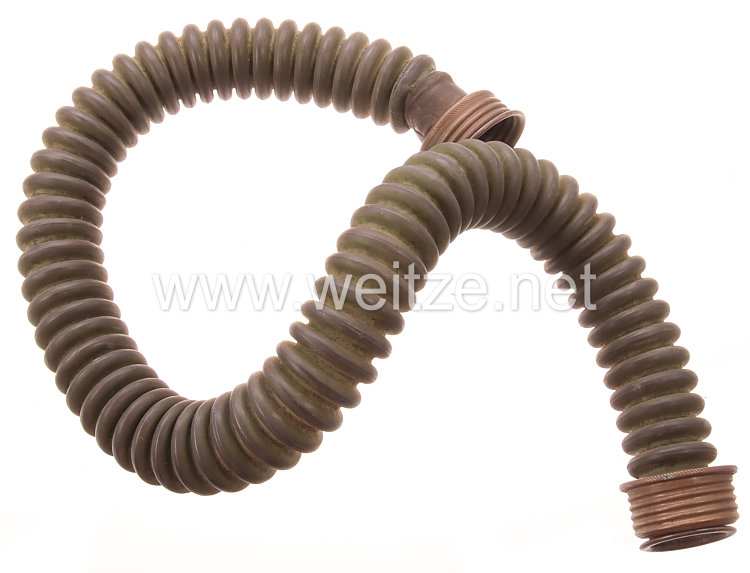
World War II Soviet Union (USSR) Gas Mask Hose

Rubberized coating still in good condition, used condition.
420225
75,00

World War II Soviet Union (USSR) Gas Mask Hose

Red Army Gas Mask Hose from World War II

The described gas mask hose represents a characteristic component of Soviet gas masks during World War II. This component was an essential part of various Soviet gas mask models used by the Red Army and the civilian population of the USSR between 1939 and 1945.

The Soviet Union had already established a comprehensive program for the development and production of gas protection equipment in the 1920s and 1930s. Following the experiences of World War I, during which chemical weapons were used on a large scale for the first time, the Soviet leadership considered preparation for possible gas warfare a priority task of national defense. The People's Commissariat for Defense issued numerous regulations for the mass production of gas masks and for training the population in gas protection.

The most common Soviet gas mask models during World War II were the predecessors of the GP-5, the ShM (Shlem) series, and the PMG (Protivogaz Model G). The hose connected the face piece of the gas mask to the filter canister and allowed flexible wearing of the relatively heavy filter. This construction differed from the directly mounted filters common in many German and British models.

The rubberization of the hose was a technological challenge for Soviet industry. The material had to meet several requirements: it had to remain flexible at temperatures of minus 40 degrees Celsius during Russian winters, while being gas-tight and resistant to chemical warfare agents. Soviet chemical plants developed special rubber compounds, often reinforced with textile inserts to increase mechanical strength.

During the Great Patriotic War, as World War II is called in Russia, millions of such gas masks and hoses were produced. Factories in the Urals, Siberia, and unoccupied territories manufactured this vital equipment. The evacuation of important industrial enterprises eastward in 1941 enabled production to continue despite the German invasion.

Although chemical weapons were not actually used on a large scale on the Eastern Front during World War II, gas protection equipment remained mandatory for all soldiers. Soviet military doctrine required every soldier to have their gas mask ready at all times. Regular exercises and inspections ensured that the equipment was functional.

The maintenance and care of rubber hoses was precisely regulated in service regulations. Soldiers were instructed to protect the hoses from direct sunlight, treat them regularly with talcum powder, and check for cracks or porous areas. At low temperatures, the hose should be thawed slowly to prevent material breakage.

The “used” condition and still well-preserved rubberization of the described specimen testify to robust Soviet manufacturing technology. Many of these hoses have survived to this day, which underscores the quality of the materials used. This is remarkable, as rubber products normally harden and become porous after decades.

After the war, many of these gas masks and their components were continued in use, modernized, or delivered to allied states of the Warsaw Pact. Soviet gas protection technology influenced development in many Eastern European countries into the 1980s.

Today, such objects represent important testimonies of military history and document the comprehensive preparations of the Soviet Union for various war scenarios. They remind us of the constant threat under which the Soviet population and army stood during World War II, and of the industrial achievements of the USSR under wartime conditions.

For collectors and historians, these items provide tangible connections to one of history's most significant conflicts. The preservation of such equipment allows researchers to study the technological solutions employed by the Soviet military-industrial complex and understand the daily realities faced by Soviet soldiers who carried this equipment throughout their service.

r