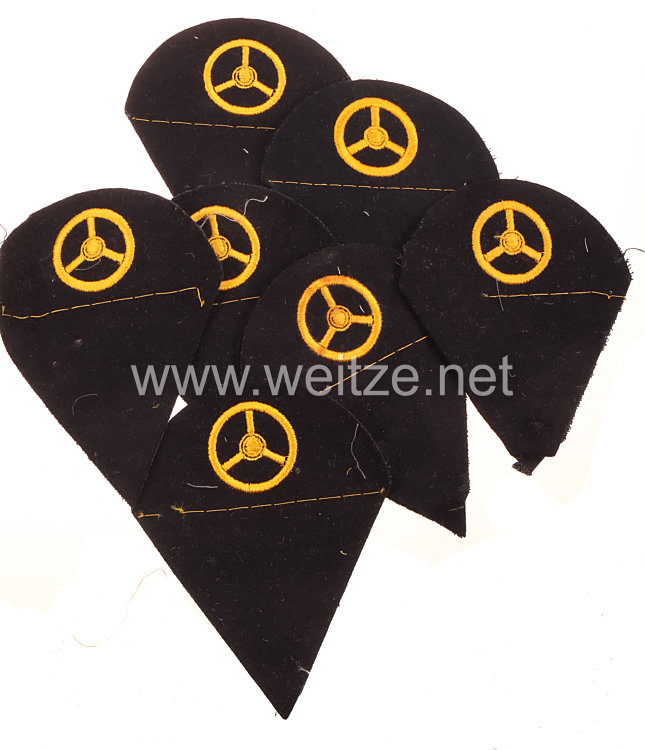
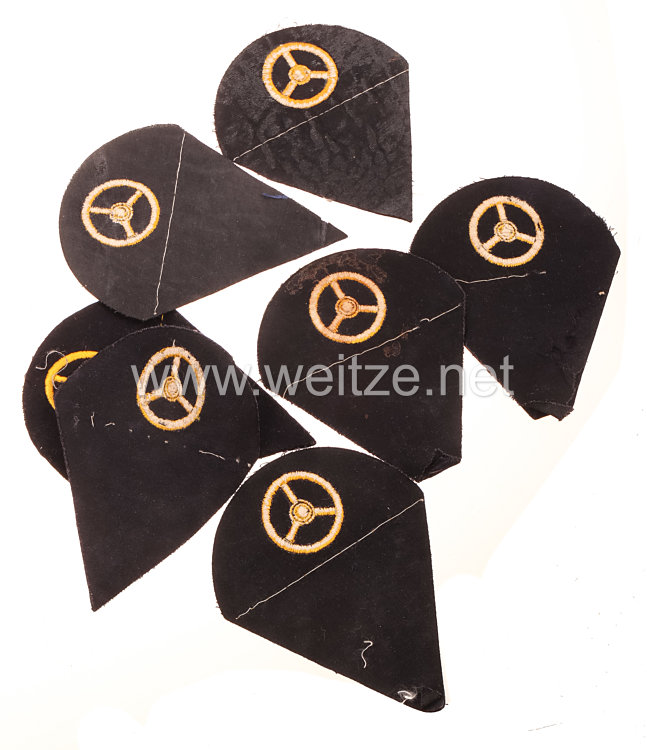
Kriegsmarine Enlisted Personnel Sleeve Insignia Motor Vehicle Specialist Career Path

Version for blue collar uniform, condition 2-3.

Price per piece: 10 Euro.

Condition may vary.
440824
10,00

Kriegsmarine Enlisted Personnel Sleeve Insignia Motor Vehicle Specialist Career Path

The Kriegsmarine sleeve badge for the motor vehicle career path (Kraftfahrerlaufbahn) represents a fascinating example of the complex rank insignia and career designation systems used in the German Navy during World War II. These special badges served to visibly identify the professional specialization of enlisted personnel within the maritime forces of the Third Reich.

The Kriegsmarine, as successor to the Reichsmarine, was officially founded in 1935 and represented Nazi Germany's naval forces until 1945. With the rapid expansion of the fleet under Grand Admiral Erich Raeder and later Karl Dönitz, the need for specialized personnel in various technical areas also grew. The motor vehicle career path was one of these specializations, which was particularly important in coastal areas, at naval bases, and in logistics.

The sleeve badge was typically worn on the left upper arm of the uniform and consisted of an embroidered or woven emblem depicting a stylized automobile wheel with wings. This symbolism conveyed the connection between mobility and the maritime mission. The version for enlisted ranks differed significantly from badges for non-commissioned officers and officers in terms of material quality and backing fabric.

The described version for the Kolani (Koluft suit) refers to the dark blue-black working and service uniform of the Kriegsmarine. The Kolani was the everyday service dress for enlisted men and non-commissioned officers, as opposed to the white summer suit or parade uniform. Sleeve badges for this uniform variant were manufactured on dark blue cloth backing, usually embroidered with light blue or silver-gray threads.

The motor vehicle career path itself was part of the Kriegsmarine's comprehensive training and specialization system. Motor vehicle operators were needed not only for transporting personnel and materials but also for maintaining and servicing the vehicles essential to operating naval bases, shipyards, and coastal fortifications. Training included both practical driving skills and technical knowledge of engines and vehicle mechanics.

According to the uniform regulations of the Kriegsmarine, which were updated several times between 1935 and 1945, wearing career path badges was mandatory and precisely regulated. Badges had to be attached at a specific height above the cuff, and their quality and execution were subject to strict regulations. Various manufacturers produced these badges, leading to variations in quality and execution.

Production was carried out by both military depots and private suppliers. Hand-embroidered variants were generally of higher quality than machine-made or woven examples. Materials used included cotton, rayon, or genuine silk for embroidery, with the latter primarily used in the early war years. As the war progressed and material shortages increased, badge quality often deteriorated.

The stated condition 2-3 according to the standard collector grading system indicates a worn example with visible signs of use. Condition 1 would designate mint, unworn condition, while higher numbers indicate increasing wear. Typical signs of use include fading of colors, slight damage to embroidery, or residue from attachment to the uniform.

In historical context, such sleeve badges represent the highly organized and specialized structure of the Kriegsmarine. They testify to a military system that placed great emphasis on identification, hierarchy, and specialization. For naval warfare, well-trained specialists in all areas were essential, and motor vehicle operators played an important, if often overlooked, role in the logistical infrastructure.

The insignia system of the Kriegsmarine was meticulously detailed, with separate badges for dozens of different career paths including torpedo mechanics, radio operators, artillery specialists, medical personnel, and many others. This specialization reflected the technical complexity of modern naval operations and the need for highly trained personnel in each area.

Today, such badges are important objects of study for military historians and collectors interested in the material culture and organization of the Kriegsmarine. They provide insights into the everyday reality of naval service beyond the major sea battles and strategic operations, revealing the vast logistical and support apparatus that sustained the German navy throughout the war.